For readers searching for a Changgyeonggung Moonlight Lotus review, the most useful starting point is that the 2026 spring run has already ended: it operated from April 24 to May 3, 2026, around Chundangji Pond at Changgyeonggung Palace. The program was presented as a free-viewing nighttime media art experience, but visitors still needed to issue a Changgyeonggung admission ticket priced at 1,000 won before entering the palace grounds.1
Because the available source material is event information and reporting rather than first-person visitor accounts, this guide does not invent personal impressions. Instead, it explains what a review-minded reader can reliably evaluate: timing, route expectations, admission rules, the type of media art shown, and the difference between the spring 2026 notice and the broader yearlong operating plan.
Changgyeonggung Moonlight Lotus Review: What the 2026 Spring Notice Confirms
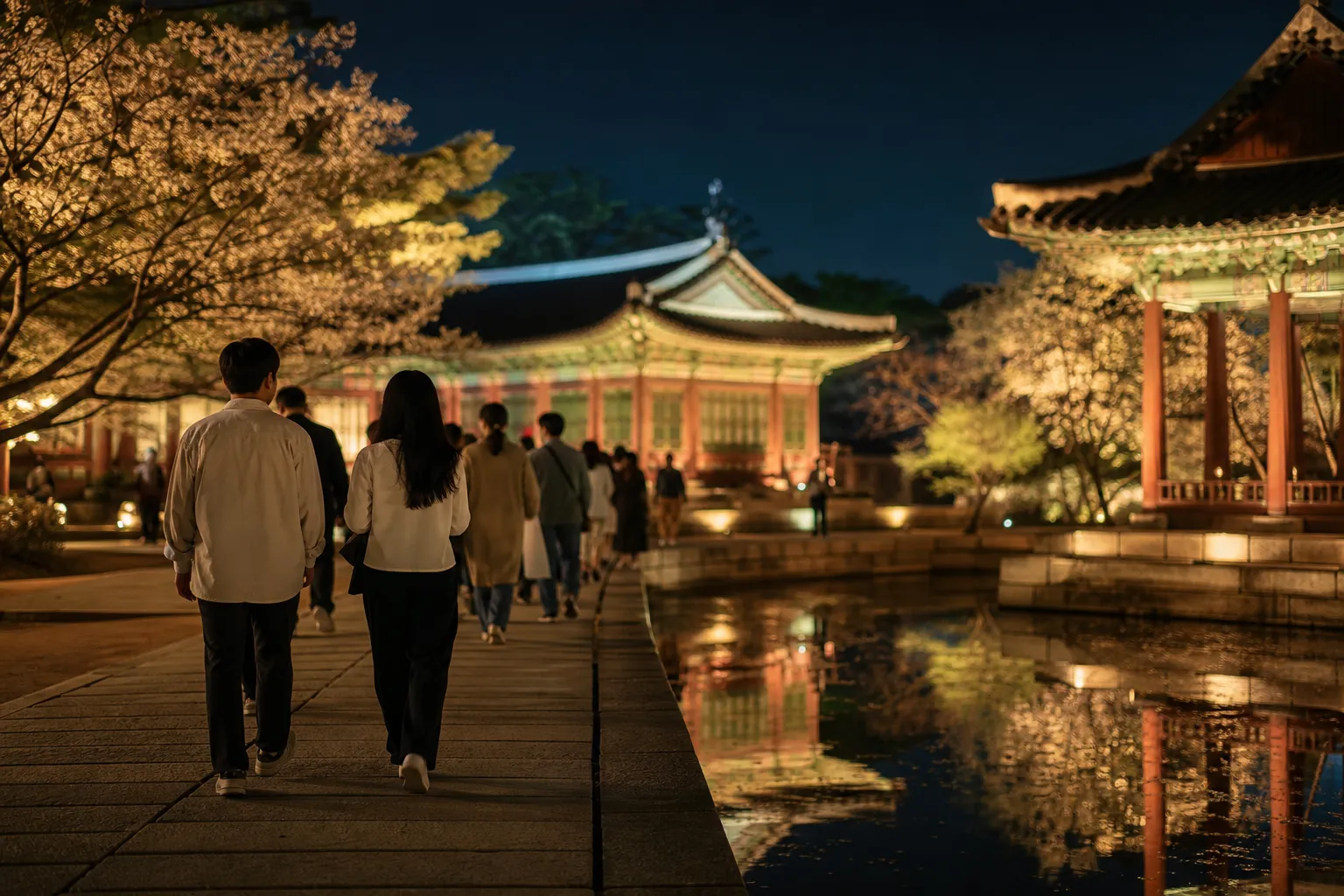
The official National Heritage Promotion Agency listing names the event as the 2026 first-half Changgyeonggung Moonlight Lotus and places it around Chundangji Pond inside Changgyeonggung Palace. Its confirmed spring operating period was April 24 to May 3, 2026.1 Seoul Culture Portal also listed the same period and venue, categorizing the program as an exhibition and art event.2
For anyone reading or writing a review, the format matters. The spring 2026 event was not described as a seated performance or a reservation-based tour. It was listed as free viewing, meaning the practical experience was built around moving through the palace area and viewing the media art at the visitor’s own pace.1 That makes review points such as entry timing, walking flow, crowding, and visibility more relevant than seat location or ticket class.
The official spring schedule split the operation times by section. The second and fifth scenes operated from 20:00 to 20:37, while the other sections ran from 19:00 to 20:40.1 This difference is important when comparing 후기-style comments, because a visitor who arrived late may not have had the same access to every scene. The palace entry deadline was 20:00, so the practical latest arrival was earlier than the last listed viewing time.1
The cost structure was simple but easy to misread. The program itself was free, yet Changgyeonggung admission was still required. The National Heritage Promotion Agency listing states that visitors had to issue the 1,000 won palace admission ticket before viewing, and Seoul Culture Portal also lists the fee as 1,000 won.12
What the Media Art Experience Was About
The broader Moonlight Lotus program was reported in 2025 as a nighttime viewing program centered on Chundangji, with media art works arranged across eight locations. Newsis reported that Changgyeonggung visitors could view the program without a separate reservation, and that it had first appeared as a special program during the 2024 Royal Culture Festival before being expanded into a regular program in 2025.3
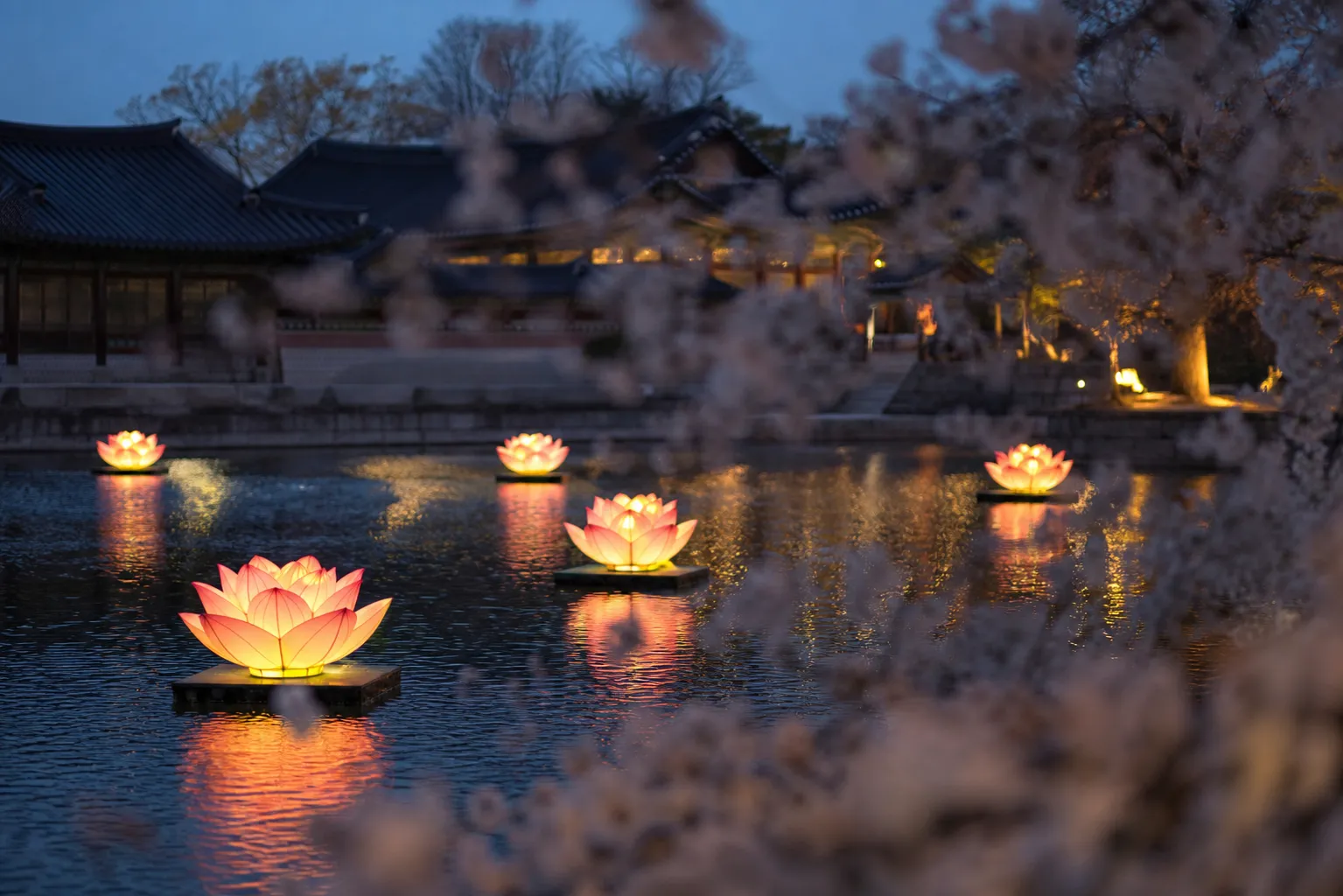
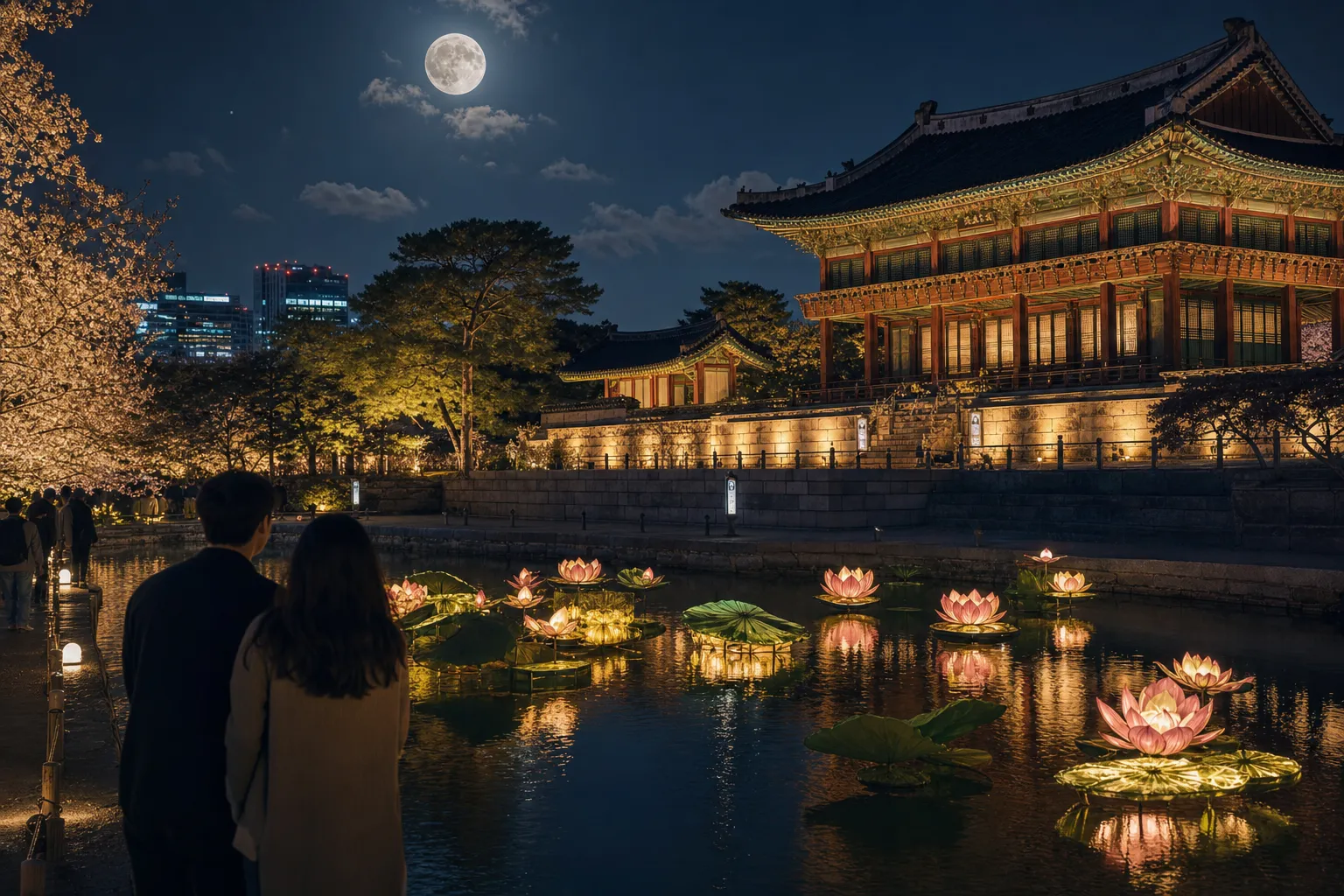
The visual concept is best understood as a combination of palace landscape, water, light, and projection-based media art. Asia Economy described the experience as a walk around the Chundangji area where natural scenery, light, and advanced video technology were combined.4 That description gives review readers a more useful frame than simply calling it a night event: the appeal depends on how the projected works interact with the pond and surrounding palace environment.
Specific scene details from the 2025 reporting help explain why Chundangji is central to the event. At Daechundangji, the program included works titled “From Honghwa to Chundang” and “Changgyeonggung Moonlight Lotus,” while Sochundangji expressed the joy, anger, sorrow, and pleasure associated with Changgyeonggung through movements of light.4 CPN Culture Heritage Cultural Heritage TV also reported that the program was composed of themed media art at eight locations around Chundangji, with three additional media art videos using advanced video technology shown in spring and autumn.5
A short official statement quoted in coverage said the organizers sought to “expand opportunities to enjoy old palaces in a different way.”5 That line fits the practical value of the program: it was not presented as a historical lecture, but as a night-viewing media art route using the palace setting itself as part of the experience.
How to Read 2026 Schedule Information Without Confusion
There are two different 2026 time frames in the source material, and they should not be treated as identical. The public spring event notice confirms a specific first-half program from April 24 to May 3, 2026, with detailed viewing hours and admission information.1 That is the most relevant source for anyone checking whether the spring 2026 event could still be visited; by May 7, 2026, that listed spring run had already finished.
A separate procurement task document connected to the 2026 operation describes a broader project period from January to December 2026 and an actual event period of 250 days between March 10 and December 31, excluding Monday palace closure days. It also outlines 186 days of partial screenings and 64 days when all eight sections would operate, with Daechundangji and Sochundangji classified as major sections during the full-screening period.6
For review-seekers, the key point is that the procurement document supports a larger operating plan, but it does not replace the more visitor-facing spring notice. If planning a future visit or comparing reviews from different dates, check whether the comment refers to the April 24-May 3 spring notice, a partial screening day, or a full eight-section operation day.
Quick FAQ
Did visitors need a reservation for Changgyeonggung Moonlight Lotus?
The spring 2026 notice described the viewing method as free viewing, and 2025 reporting said Changgyeonggung visitors could view the program without a separate reservation. Visitors still needed the palace admission ticket.13
Was Moonlight Lotus free?
The program itself was listed as free, but Changgyeonggung admission was required. The published admission amount was 1,000 won, and entry closed at 20:00 during the spring 2026 run.12 !Changgyeonggung Moonlight Lotus 2026 spring program viewing guide In practical terms, a fair Changgyeonggung Moonlight Lotus review should focus on the night walking route around Chundangji, the staggered section times, the 1,000 won palace admission requirement, and whether the visitor attended a partial or fuller version of the media art program. The 2026 spring event confirmed in public listings ran only from April 24 to May 3, 2026, so readers checking 후기 content after that period should treat those accounts as past-visit references, not as proof that the same spring schedule is still available.
References
- 2026년 상반기 창경궁 물빛연화 (국가유산진흥원)
- 2026년 상반기 창경궁 물빛연화 (서울문화포털)
- 미디어아트 '창경궁 물빛연화' 내달부터 연말까지 상시 상영 (뉴시스, 2025-02-27)
- '빛'으로 전하는 창경궁의 시간…'물빛연화' 상설 전시 (아시아경제, 2025-02-27)
- 창경궁 빛의 향연, ‘창경궁 물빛연화’ (CPN문화유산 문화재TV, 2025-02-27)
- 2026년 창경궁 물빛연화 운영 대행 용역 과업내용서 (조달청 나라장터 / 국가유산진흥원 과업내용서)
About the Author