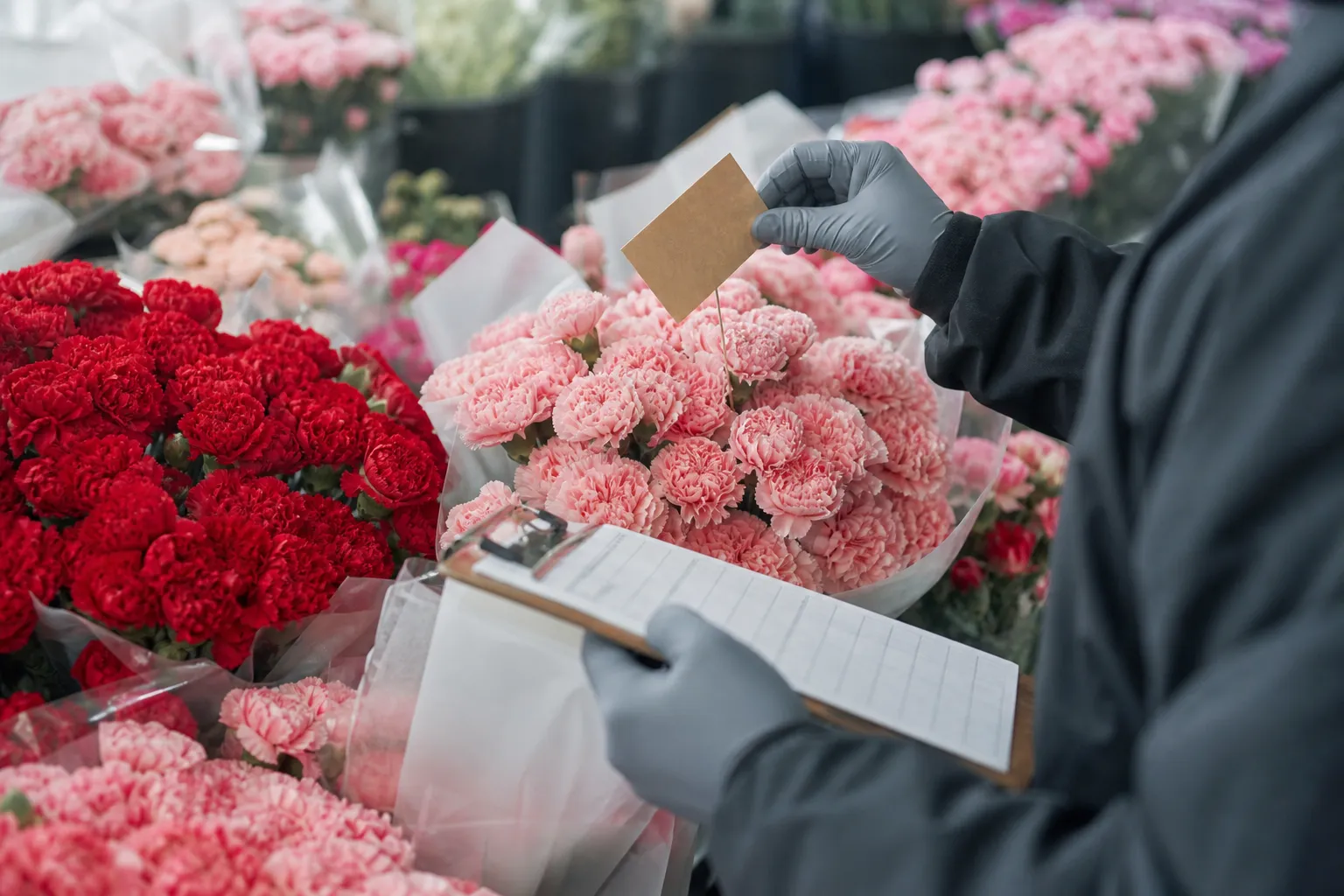
Korea’s carnation origin inspections are taking place during the peak flower-buying season around Parents’ Day and Teachers’ Day, a period closely tied to Korean Carnation Culture. From May 4 to 19, 2026, the National Agricultural Products Quality Management Service is checking country-of-origin labeling for carnations and other flowers, along with labeling for reused wreaths.1
The practical point is simple: buyers should check origin labels before paying, and sellers should make sure flower origins are displayed correctly in stores and online. The campaign is focused on preventing imported flowers from being passed off as domestic products when demand rises in May.2
Carnation Origin Inspections: Dates, Targets, and Scope

The nationwide inspection period announced by the National Agricultural Products Quality Management Service runs from May 4 to 19, 2026. The inspection covers 11 types of domestic cut flowers, including carnations, chrysanthemums, and roses, as well as all imported flowers that are imported and sold in Korea.1
The timing matters because carnations are among the most visible flowers during May gift-giving. Parents’ Day and Teachers’ Day increase demand, and that makes country-of-origin labeling more important for both consumer choice and fair competition among sellers. Newsis reported that the inspection is aimed at the period when flower consumption rises around Parents’ Day and Teachers’ Day.2
The checks are not limited to physical flower shops. Online sales monitoring is also being carried out, which means marketplace listings and other online distribution routes can fall within the inspection net.1 In Gyeongbuk, the regional office said it would use a cyber inspection team to monitor online sales while checking flower retailers that sell cut flowers such as carnations, chrysanthemums, and roses.3
The inspection also includes reused wreath labeling. This is relevant because May overlaps not only with family-related flower demand but also with wedding-season wreath demand. Gyeongbuk officials said reused wreath labeling would be checked alongside origin labeling.3
What Consumers Should Check Before Buying Carnations
For consumers, the main action is to look for the country-of-origin label before buying carnations, whether the purchase is made at a flower shop, flower market, large retailer, or online. The available source material does not specify a required label format for every sales setting, so the safest reader takeaway is to confirm that the origin is shown clearly and consistently before purchase.
If a bouquet, arrangement, or listing claims the carnations are domestic, that claim should match the actual origin. The inspection focus is on blocking cases where foreign flowers are disguised as Korean-grown flowers during the May demand spike.4
The numbers explain why carnations are receiving special attention. Carnation imports rose from 2,050 tons in 2023 to 2,298 tons in 2024 and 2,535 tons in 2025, according to figures reported in coverage of the Gyeongnam inspection.4 The national agency also stated that 2025 carnation imports reached 2,535 tons, up 10.3% from the previous year.1
A useful buying checklist is short: check whether the origin is displayed, compare the label with any sales description, and be especially careful with online listings where the product photo and text may not make origin clear. If a listing or shop does not show the origin, the source-backed issue is not the flower quality itself but the lack of required consumer information.
The National Agricultural Products Quality Management Service chief Kim Cheol said the agency would continue origin inspections “to protect flower-producing farmers and meet consumers’ right to know.”1 That statement captures the two sides of the campaign: it is about fair treatment for domestic growers and clear information for buyers.
What Florists and Online Sellers Should Review
For florists, wreath makers, flower wholesalers, flower auction markets, and online sellers, the key compliance points are origin non-labeling, false labeling, and violations of labeling method rules. Namyangju City said its May 4 to 21, 2026 inspection would check flower wreath manufacturers and sellers, flower shops, and flower auction markets for those issues, while also reviewing online marketplace distribution routes.5
The national penalty framework is significant. False country-of-origin labeling can lead to up to seven years in prison or a fine of up to 100 million won, while failure to label can result in an administrative fine of up to 10 million won.2 These are not minor paperwork risks for sellers, especially during a short period when many carnation orders are processed quickly.
Past enforcement also shows why the 2026 checks matter. In May 2025, the National Agricultural Products Quality Management Service found 72 businesses with flower origin-labeling violations after checking flower auction markets, flower wholesalers and retailers, mail-order sellers, and large marts nationwide. Carnations accounted for 65 violation cases, and three companies were criminally booked, including cases involving Chinese carnations sold as domestic. Sixty-nine businesses with missing labels received fines.6
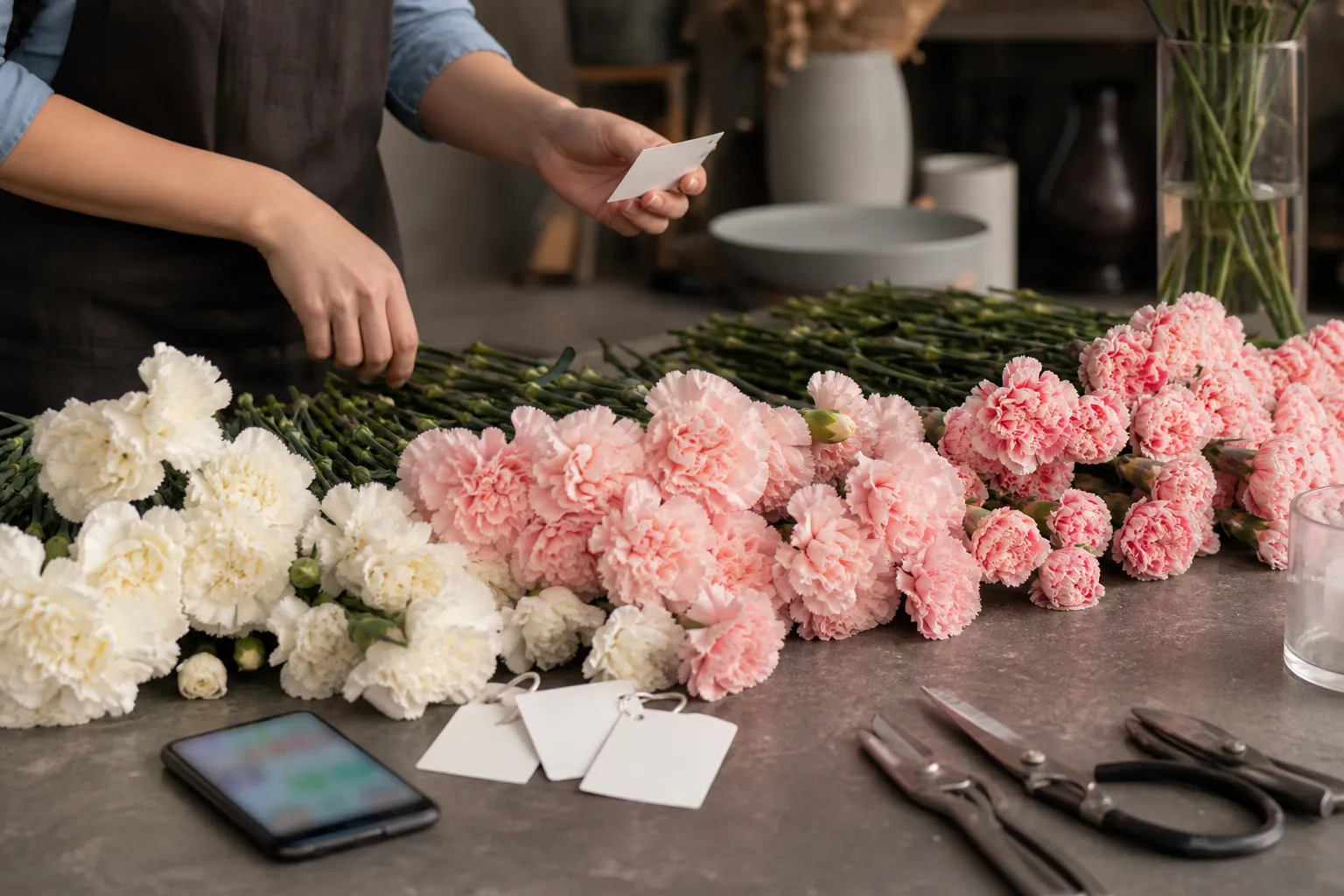
Sellers should therefore review both storefront displays and online product pages. The available sources specifically mention online monitoring, so treating online descriptions as separate from shop-floor labeling would be risky. A practical internal check would include product names, bouquet descriptions, origin fields, photos with embedded text, and any repeated template language used across marketplaces.
Quick FAQ
When are the 2026 carnation origin inspections taking place?
The national inspection period announced by the National Agricultural Products Quality Management Service is May 4 to 19, 2026. Namyangju City announced a local inspection period from May 4 to 21, 2026.15
Which flowers are included besides carnations?
The national inspection covers 11 domestic cut-flower items, including carnations, chrysanthemums, and roses, and all imported flowers that are imported and sold in Korea.1 The May 2026 carnation origin inspections are a practical reminder that Korean Carnation Culture is also tied to transparent labeling. Buyers should look for clear origin information, and sellers should make sure every store display and online listing accurately reflects where the flowers come from.
References
- 가정의 달 5월, 화훼류 원산지 정기단속 실시 (농림축산식품부/국립농산물품질관리원, 2026-04-27)
- 가정의 달 '수입꽃→국산 둔갑' 잡는다…원산지 집중단속 (뉴시스, 2026-04-27)
- 경북농관원, 가정의 달 화훼류 원산지 단속…카네이션·화환 점검 (뉴시스/파이낸셜뉴스, 2026-05-04)
- 5월 가정의달 화훼류 수요 쑥…경남농관원, 원산지 단속 (뉴시스, 2026-05-04)
- 남양주시, 가정의 달 앞두고 ‘카네이션 원산지’ 집중 단속 (경기일보, 2026-04-30)
- 가정의 달, 화훼류 원산지 표시 위반 72개소 적발…3건 형사 입건 (뉴스1/파이낸셜뉴스, 2025-05-25)
About the Author