
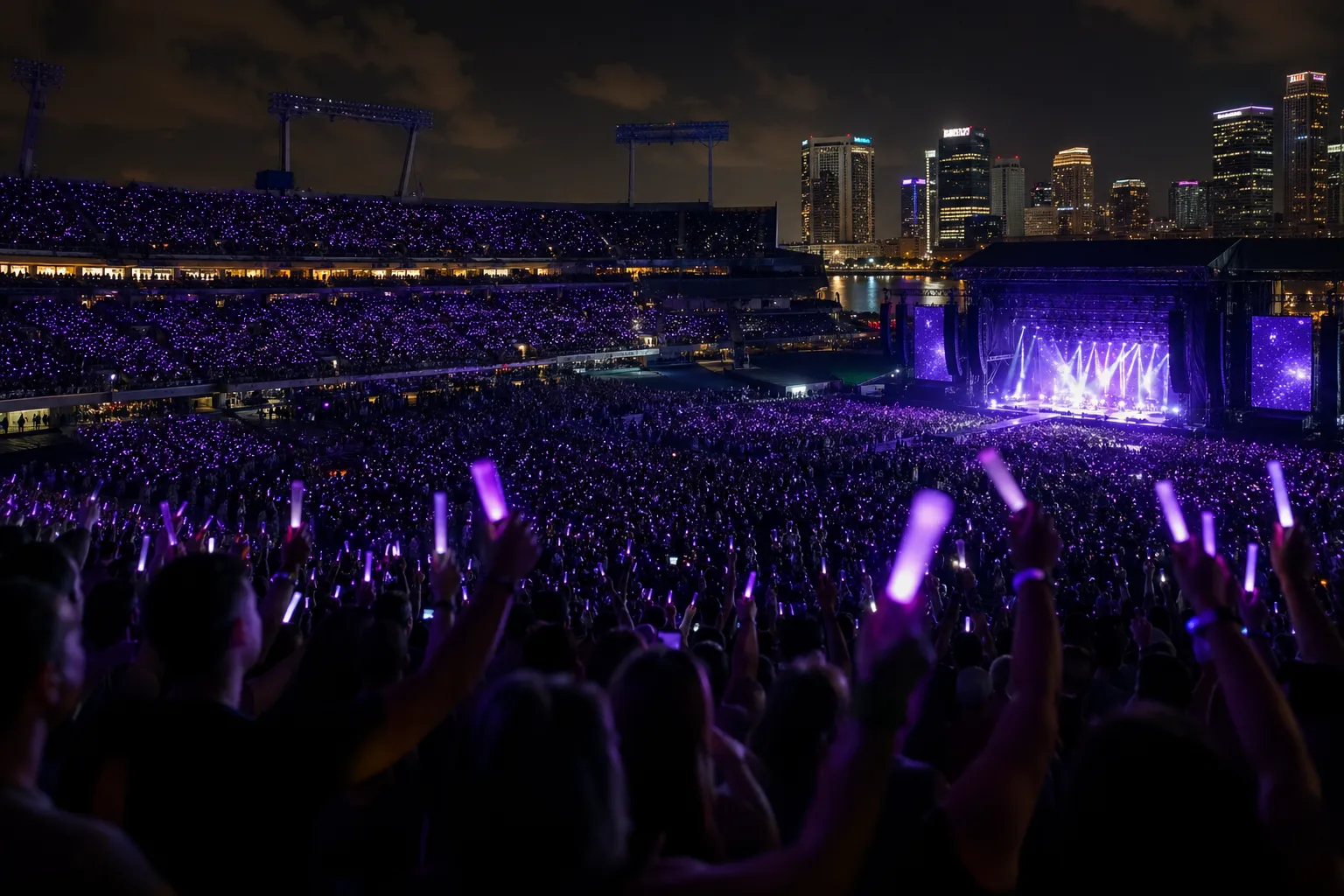
The BTS Tampa impact has turned three sold-out concerts into one of the city’s most closely watched entertainment economy stories of 2026. With about 180,000 people expected for the group’s Raymond James Stadium performances, Tampa has been handling not only a major stadium run but a concentrated wave of visitors, spending, traffic planning and fan activity.1
BTS’ Tampa dates were scheduled for April 25, April 26 and April 28, placing the city at the center of the North American opening of the group’s world tour.2 Local reporting framed the run as both a cultural event and an economic moment, with fans arriving early, airport welcome messaging visible, merchandise demand building and officials preparing for a surge around the stadium district.3
BTS Tampa Impact Centers on 180,000 Fans
The scale of the event begins with the attendance estimate. Three sold-out shows at Raymond James Stadium were expected to bring about 180,000 people to Tampa, a figure large enough to affect hotels, restaurants, transportation, retail and public safety planning across the city.1
The economic projection attached to the concerts was striking. ChosunBiz reported, citing local Tampa reporting, that the concerts were projected to generate about $800 million to $900 million in local economic impact, equivalent to roughly 1.2 trillion to 1.3 trillion won.3 That figure reflects the broader spending environment surrounding a multi-night stadium event: visitors need lodging, meals, rides, parking, merchandise and local services before and after the performances.
Local officials and businesses described the lift in direct terms. Alan Clendenin said, “The economic impact is going to be enormous,” in a local news interview carried by WWSB / MySuncoast.4 The remark captured the central issue for Tampa: BTS was not simply filling a venue, but bringing a short, intense burst of visitor traffic into the local economy.
| Fact | Detail |
|---|---|
| Venue | Raymond James Stadium in Tampa |
| Concert dates | April 25, April 26 and April 28, 20262 |
| Attendance estimate | About 180,000 people across three sold-out shows1 |
| Economic impact projection | About $800 million to $900 million, or roughly 1.2 trillion to 1.3 trillion won3 |
| Tour context | Tampa was the first stop on the North American leg of the world tour5 |
Merchandise, Roads and Visitor Flow
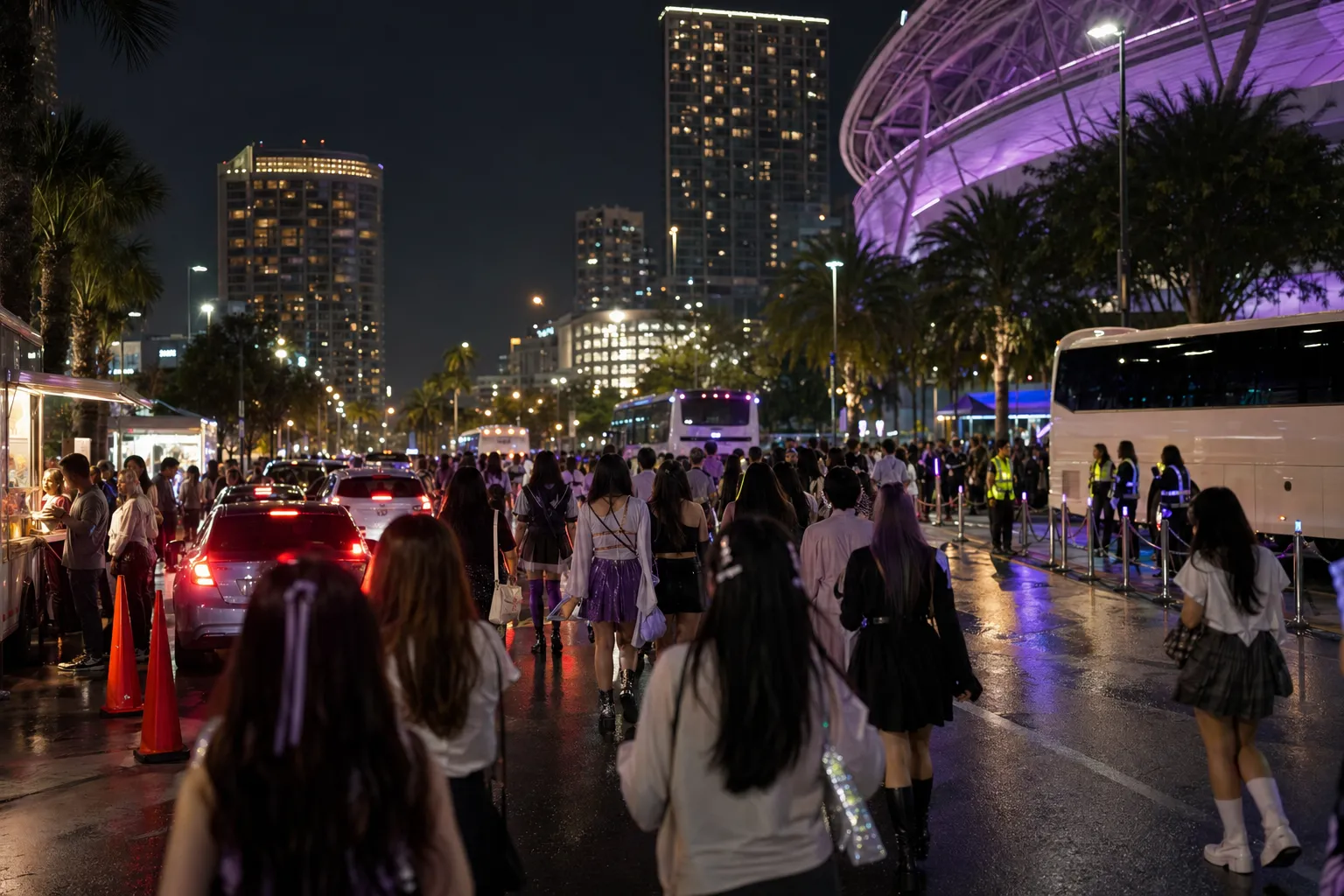
The most visible preparation began before the first concert. The City of Tampa announced that Tampa Bay Boulevard would close starting April 22 so crews could set up a large BTS merchandise tent in front of Raymond James Stadium. The city said thousands of fans were expected to visit the merchandise site daily before the April 25, April 26 and April 28 performances.2
That advisory matters because merchandise spending is a central part of the modern concert economy, especially for a global act with a deeply engaged fan base. WWSB / MySuncoast reported that local K-pop retailer K-Pop Nabi expected heavy merchandise demand, with Yasmin Serrano saying, “We’re working on ordering thousands of albums.”4 The quote points to a wider retail effect beyond the stadium itself: fan spending was not limited to tickets, parking or food at the venue.
Traffic was also a core part of the citywide impact. Spectrum News reported that the sold-out BTS concerts at Raymond James Stadium were among the biggest events affecting Tampa traffic during the weekend, with the first of three shows taking place Saturday night.5 For local residents, that meant the economic upside came with practical disruptions, including road controls and heavier movement near the stadium.
FOX 13 Tampa Bay placed the shows in a broader cultural frame, reporting that BTS began the North American leg of its world tour in Tampa with three sold-out Raymond James Stadium shows.6 Ray Seol told the station, “K-pop is not simply a genre of music,” a concise way of describing why the concerts carried significance beyond a standard tour stop.6
Why Tampa Became a K-pop Economy Case Study
The Tampa concerts show how a global pop act can turn a U.S. city into a temporary destination market. BTS fans were not only attending performances; they were arriving early, gathering around merchandise, moving through airports, interacting with local retailers and shaping traffic patterns around the venue.
For Tampa, the significance is partly the concentration of activity. A single concert can produce a busy night. Three sold-out stadium shows create a multi-day event economy, with visitors cycling through the same hospitality, retail and transit systems across several days. The city’s preparations, from the merchandise tent setup to traffic advisories, show that the concerts were treated as a large civic operation as well as an entertainment booking.2
The first-stop status also added weight. Tampa was described as the first stop on the North American leg of the group’s world tour, giving the city heightened attention among fans tracking BTS’ comeback performances across the region.5 That helped explain why local coverage emphasized airport welcomes, fan excitement and visible preparations before the concerts had fully unfolded.3
How many people were expected to attend BTS’ Tampa concerts?
About 180,000 people were expected across BTS’ three sold-out Raymond James Stadium concerts in Tampa.1 The estimate made the run one of the largest entertainment-driven visitor events in the city during that period.
What was the projected economic impact of BTS in Tampa?
The projected local economic impact was reported at about $800 million to $900 million, equal to roughly 1.2 trillion to 1.3 trillion won.3 The figure was tied to the broader spending expected around the concerts, including travel, hospitality, merchandise and related local activity.
Why did Tampa close part of Tampa Bay Boulevard?
Tampa Bay Boulevard was set to close starting April 22 so crews could install a large BTS merchandise tent in front of Raymond James Stadium. The City of Tampa said thousands of fans were expected to visit the site daily before the three performances.2

The BTS Tampa impact stands out because it combined stadium-scale attendance, international fan travel, retail demand and city operations into one concentrated week. By the time the April 28 show arrived, Tampa had already become a clear example of how a global music tour can move through a city as both a cultural event and a major local economic force.
References
- 180,000 people will see BTS in Tampa. The impact is already huge. (Tampa Bay Times, 2026-04-24)
- Traffic Advisory: BTS Merchandise Sales (City of Tampa, 2026-04-21)
- BTS ignites Tampa and drives $1.3 trillion local economic impact (ChosunBiz, 2026-04-26)
- BTS tour dates in Tampa have Suncoast K-pop fans reeling with excitement (WWSB / MySuncoast, 2026-04-24)
- Sold-out BTS concerts to bring heavy traffic to Tampa (Spectrum News, 2026-04-25)
- K-pop’s reach: How decades of musical evolution brought BTS to Tampa (FOX 13 Tampa Bay, 2026-04-23)
About the Author