Bongcheon Jungang Market Sundae Omakase is best understood through Sangol, a long-running market-style restaurant known for generous assorted plates of sundae, head meat, and offal. The phrase Sundae Omakase may sound trendy, but in this Seoul market setting it points to something more grounded: a filling, old-school spread served in a compact neighborhood market atmosphere.
The focus is not a formal chef’s tasting menu in the fine-dining sense. Instead, the appeal comes from the way Sangol’s assorted plate gathers several classic Korean pork dishes into one hearty order, making it easy for diners to sample a little of everything. Food coverage in 2026 described Sangol as a standout inside Bongcheon Jungang Market, especially for sundae soup and its abundant assorted plate, with weekend waits often beginning soon after opening.1
Bongcheon Jungang Market Sundae Omakase Starts With Sangol
Bongcheon Jungang Market sits at 211 Gwanak-ro in Gwanak-gu, Seoul, near Seoul National University Station. The Korea Tourism Organization’s tourism data describes the market as a small building-type market that opened in Bongcheon-dong in 1969, with about 40 shops clustered together and popular eateries, including sundae soup restaurants, blending into the alley atmosphere.2
That setting matters because the food here is part of a market rhythm. Siksin’s 2026 coverage places Sangol inside Bongcheon Jungang Market and gives the same address, 211 Gwanak-ro, while noting that it is about a 5- to 10-minute walk from Exit 6 of Seoul National University Station.1 For visitors, that makes the restaurant accessible without needing a complicated route, and it also helps explain why the place can draw lines: it is both local and easy to reach.
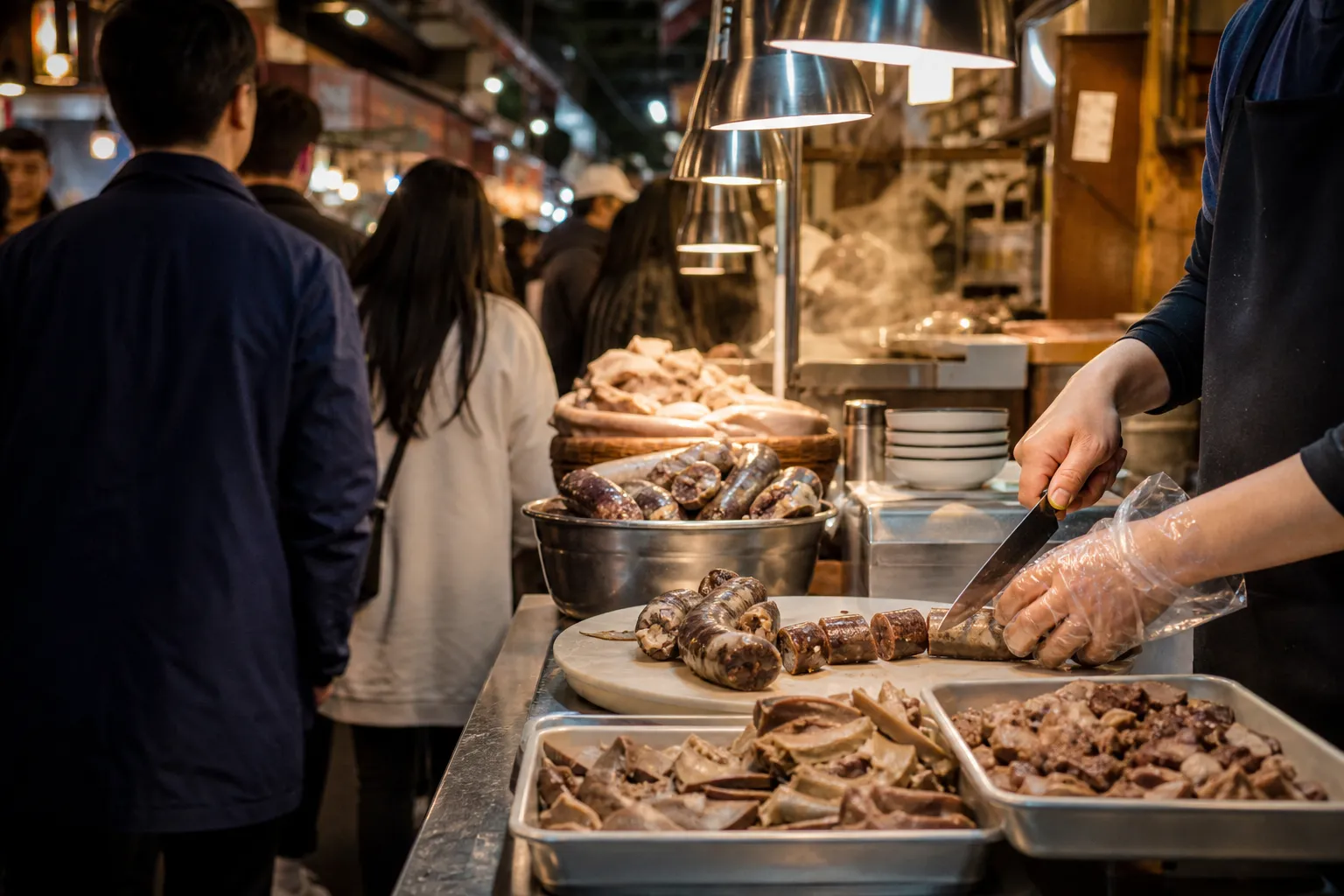
Sangol is repeatedly described as a market “nopo,” a term often used for older, no-frills local restaurants with a deep neighborhood feel. The surrounding market area is also characterized by old-school foods such as sundae, head meat, and naejang-tang, or spicy offal soup.3 In other words, this is not a one-dish novelty stop. It sits inside a food culture where pork, offal, soup, and shared plates are already part of the local identity.
The “omakase” nickname comes from how people talk about the experience online rather than from a formal course structure. Food blog GeniusJW wrote that Sangol became known on Instagram through terms such as “sundae omakase,” “imo-kase,” and “sundae-kase,” all playful labels for the restaurant’s spread of sundae and head meat.4 The word “imo” in Korean can affectionately refer to an auntie-like restaurant worker, so the nickname carries a casual, market-counter warmth rather than a polished tasting-room mood.
What You Can Expect on the Plate
The main draw is the assorted plate, listed in 2026 coverage at 20,000 won, while sundae soup is listed at 9,000 won.1 Those prices are useful because they show why Sangol often appears in value-focused market food coverage. It is not presented as a luxury tasting menu; it is presented as a filling, practical meal built around portions and variety.
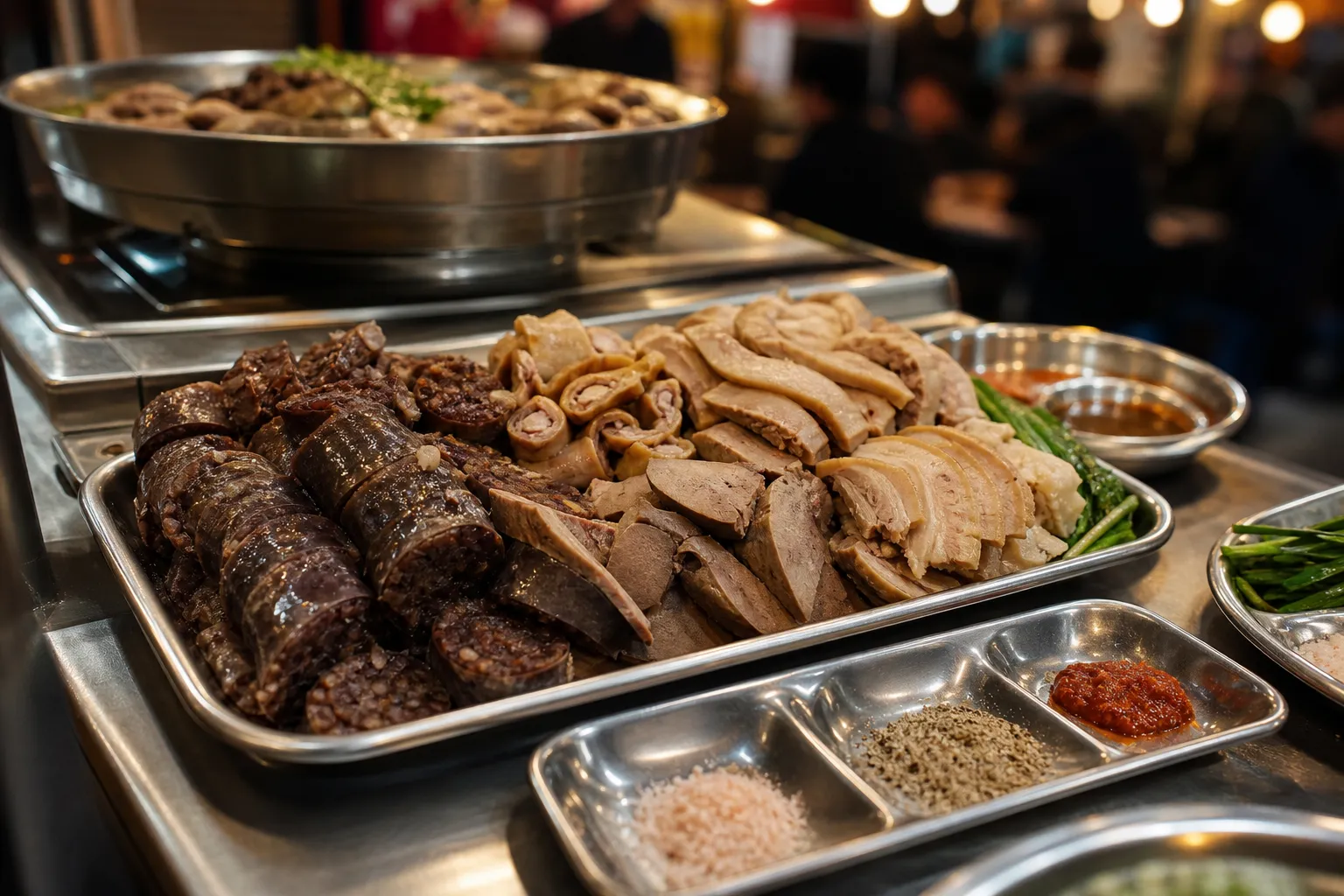
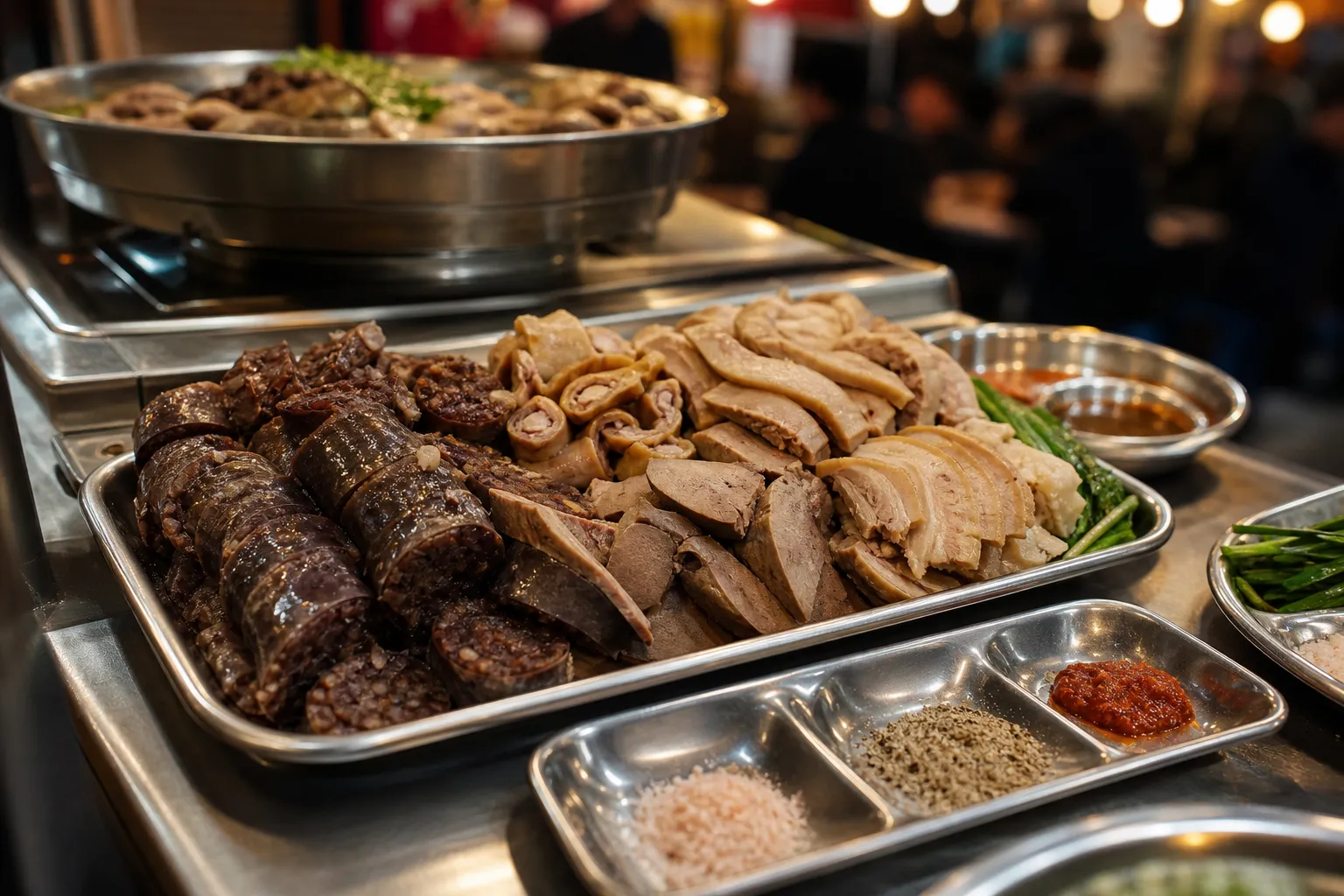
The assorted plate is where the Sundae Omakase nickname makes the most sense. GeniusJW described the assorted order as including boiled head meat, sundae, liver, and osori, served across two plates.4 Siksin’s earlier comparison of Bongcheon Jungang Market sundae restaurants also described Sangol’s assorted plate as a mix of head meat, sundae, and innards.5 Put simply, the pleasure is in the range: soft, chewy, rich, lean, mild, and deeply savory elements arrive together.
Sangol’s sundae soup is another anchor. Coverage has described it as available in regular and spicy versions, which gives diners a choice between a more classic bowl and a sharper, warmer version.5 A 2026 value-focused article also grouped Sangol with hearty market food, pointing to its head meat and sundae assortment and spicy sundae soup as satisfying options in a market alley atmosphere.6
If you are unfamiliar with Korean sundae, it is helpful to think beyond the English phrase “blood sausage,” which can sound narrower than the actual eating experience. In a market restaurant like this, sundae is often part of a larger plate that may include different textures and cuts. The appeal is not only the sausage itself, but the way it pairs with sliced meats, offal, soup, dipping seasonings, and the informal pace of a busy market table.
Why the Buzz Fits the Market
Part of the popularity comes from timing and scarcity. Siksin’s April 2026 article noted that many reviews mention waits starting soon after opening on weekends.1 Another 2026 article stated that lunch and dinner peak times often bring queues, and it recommends nearby paid or public parking lots, or public transportation, for market visits.6 That is practical information, but it also tells you something about the restaurant’s current pull: people are willing to plan around it.
The official-style details are straightforward. Siksin lists Sangol’s operating hours as 11:00 to 22:00, with Sundays closed.1 The Korea Tourism Organization’s broader market listing says opening hours and closing days vary by shop, which is a reminder that market-level information and individual restaurant information are not always the same.2 For Sangol specifically, the repeated restaurant coverage points to 11:00 to 22:00 and a weekly Sunday closure.13
There is also a backup option within the same food scene. Siksin’s 2025 and 2026 coverage mentions Jungang Sundae as another Bongcheon Jungang Market choice, especially when Sangol’s wait is long.3 The 2025 comparison described Jungang Sundae as a local market-style alternative where diners can enjoy assorted plates and sulguk, a drinking-style soup, at bar seats.5 That does not take attention away from Sangol; it helps frame the wider market as a compact sundae destination rather than a single viral doorway.
The charm of Bongcheon Jungang Market’s Sundae Omakase is that it turns familiar market food into a shareable discovery. Sangol’s appeal rests on clear, source-backed basics: a reachable location near Seoul National University Station, a long-standing market setting, a 20,000 won assorted plate, 9,000 won sundae soup, and a reputation for lines at busy times. For readers curious about Seoul’s practical, generous, deeply local food culture, this is exactly why the phrase Sundae Omakase has found such a natural home in Bongcheon Jungang Market.
References
- 봉천 중앙시장 맛집 추천 오픈런 인기 TOP 1 (식신, 2026-04-05)
- 봉천중앙시장(@ko) (한국관광공사 관광정보 데이터)
- 봉천 중앙시장 근처 맛집 요즘 가볼 만한 TOP 3 (식신, 2026-04-04)
- 관악구 산골 봉천동 순대・머릿고기 맛집 (GeniusJW, 2024-03-17)
- 봉천중앙시장 맛집 추천 시장 순대국 위주 TOP 2 (식신, 2025-11-25)
- 봉천시장 가성비 맛집 실속 메뉴 TOP 4 (식신, 2026-04-04)
About the Author