
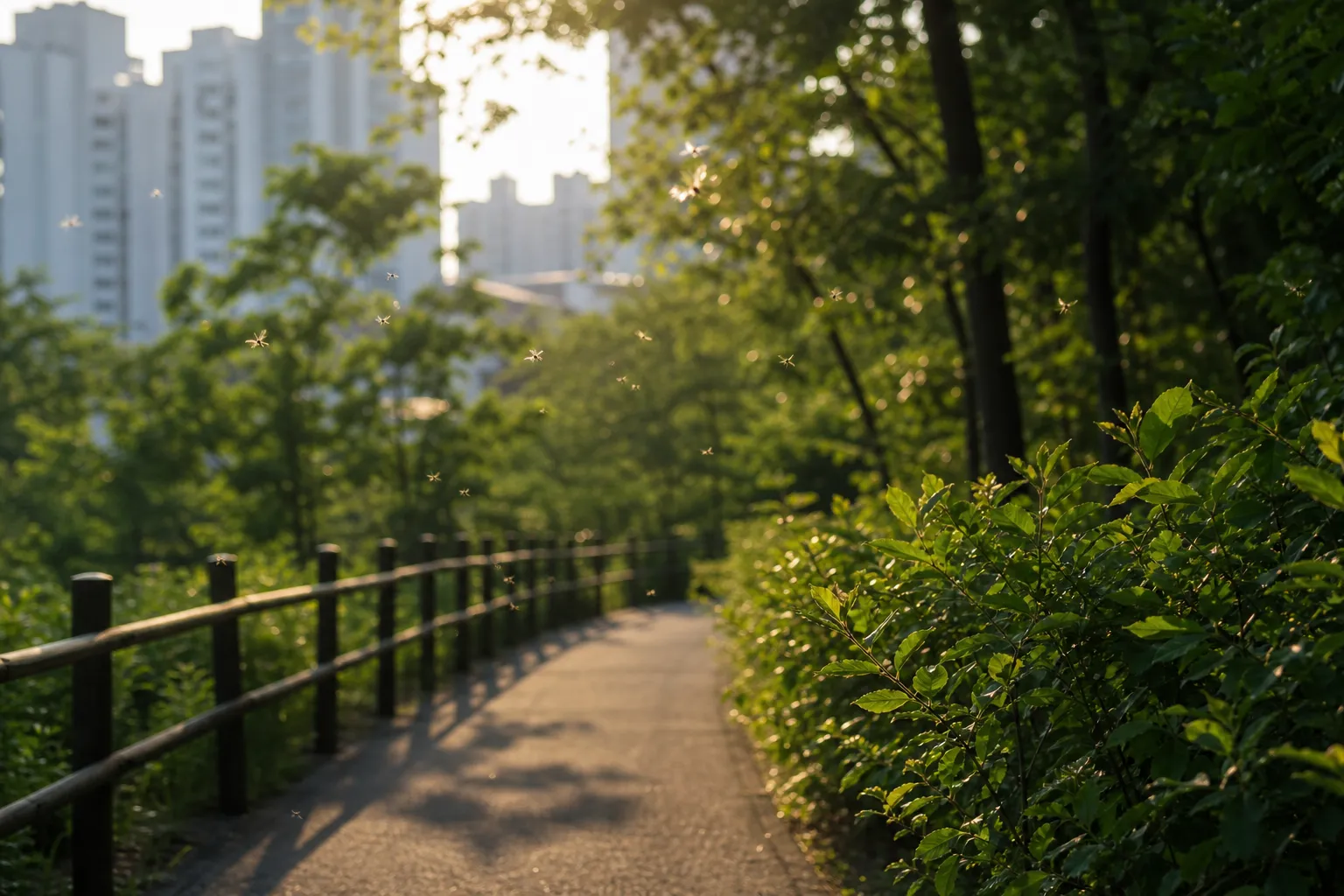
Baengnyeonsan in Eunpyeong-gu is one of the clearest local focus areas in the 2026 Seoul Lovebug Surge. The response around Baengnyeonsan centers on early larval control, adult-stage trapping, monitoring, and a temporary emergency system for resident complaints.
The insect involved is the red-backed velvet fly, widely called the lovebug in Korean public notices and media reports. It does not bite people or transmit disease, but large appearances can create serious discomfort for residents when adults emerge in noticeable numbers.1
Baengnyeonsan Lovebug Response: What Is Being Done
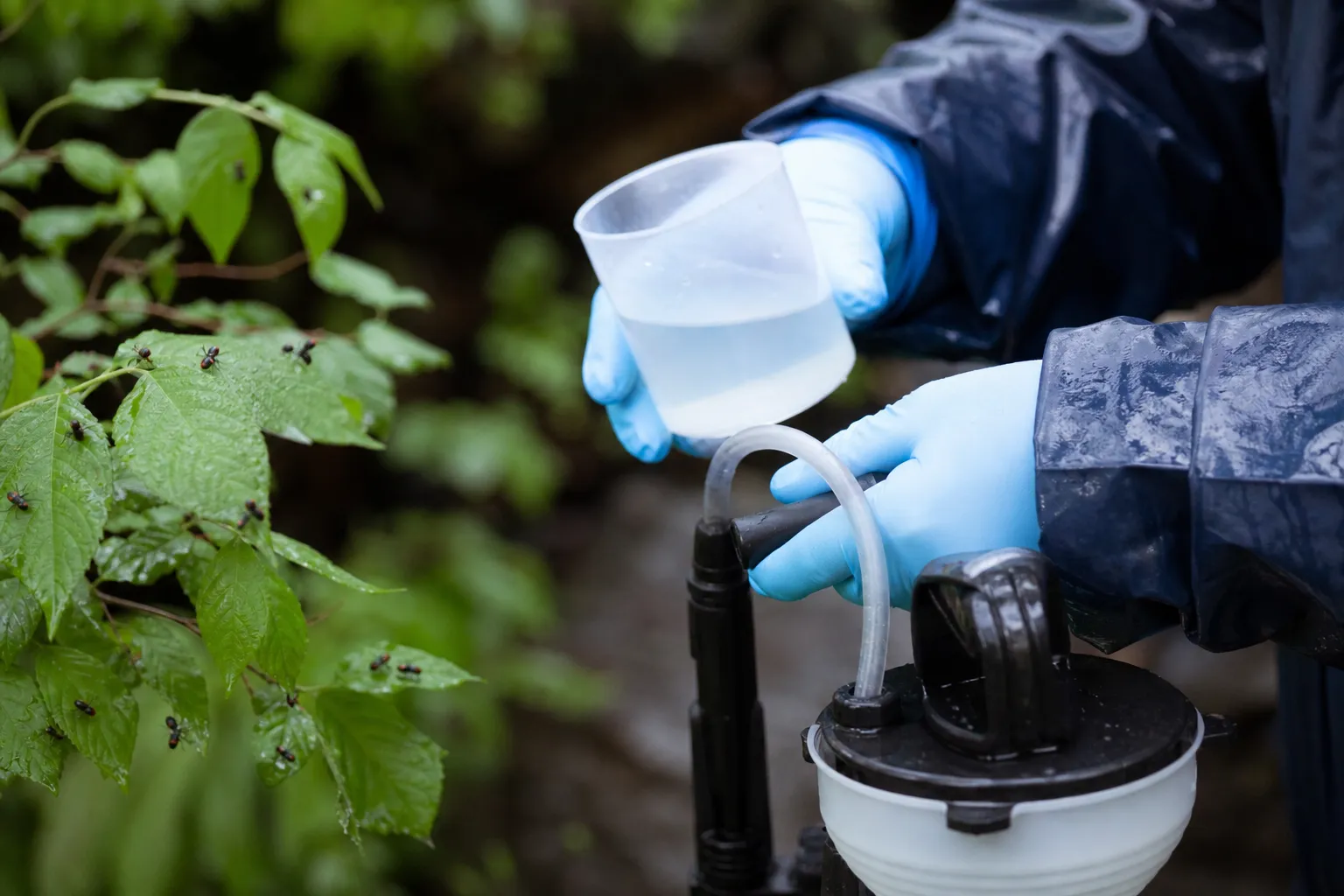
Seoul said on May 7, 2026 that it would operate daily monitoring and complaint-response systems with all 25 autonomous districts before major outbreaks of public-nuisance insects, including lovebugs. For areas where large larval emergence was predicted, the city named Eunpyeong-gu’s Baengnyeonsan and Nowon-gu’s Buramsan and said Bti microbial control would be applied over a combined 12,600㎡. Seoul also said it would continue operating light traps at Baengnyeonsan during the adult stage.2
This means the Baengnyeonsan response is not only a reaction to visible adult insects. It starts with the larval stage, when control work may reduce the number of adults that later appear. Seoul’s public-health official Cho Young-chang described the problem in practical terms, saying mass-outbreak insects appear intensively over a short period and that “post-outbreak control alone has limits.”2
Eunpyeong-gu’s local measures add more detail for residents near Baengnyeonsan. Yonhap reported on May 7, 2026 that the district was pursuing three integrated ecological safety control measures to manage lovebug numbers. The plan included seven experimental nets around Baengnyeonsan, each covering 900㎡, and field application of BTI control to reduce the population at the larval stage. For adults, the district said it would install six light traps and 50 scent-attractant traps.3
By mid-June, the local response had expanded into an emergency operating system around Baengnyeonsan and Bongsan. Eunpyeong-gu was reported to be operating an emergency pest-control duty system and reporting center from June 13 to July 19, 2026. Weekend emergency pest-control work was scheduled from 9 a.m. to 6 p.m., and the district applied BTI around Baengnyeonsan and Bongsan while installing light traps and 150 scent-attractant traps.1
For residents, the practical takeaway is that multiple tools are being used at the same time. Bti is aimed at larvae. Light traps and scent-attractant traps are aimed at adults. The emergency duty and reporting center are intended to support response during the main period of resident inconvenience around Baengnyeonsan and Bongsan.
Why Baengnyeonsan Is Being Treated Early
Baengnyeonsan is not being treated as an isolated nuisance spot. It appears in city, district, research, and national-level response plans because it has been identified as an important field site for lovebug control.
The National Institute of Forest Science said on May 19, 2026 that outdoor field verification tests were underway at Seoul’s Baengnyeonsan and Incheon’s Gyeyangsan using three organic agricultural materials. In laboratory inoculation tests, two entomopathogenic fungal control agents and one plant-extract-containing control agent showed insecticidal rates in the 60% to 90% range. The institute said field verification would continue at Baengnyeonsan and Gyeyangsan, with researchers comparing cumulative adult emergence rates between treated and untreated plots.4
That matters because the stated research approach focuses on whether treatment changes actual adult emergence, not only whether a material works in a laboratory. A short quote from Park Yong-hwan of the National Institute of Forest Science gives the direction of the work: the team aims to use the results to prepare “optimal control timing and treatment methods.”4
The Ministry of Climate, Energy and Environment also named Baengnyeonsan in its 2026 response. On May 21, 2026, the ministry said Bti field demonstrations were being prioritized in areas with high past complaint levels, including Baengnyeonsan in Eunpyeong-gu, Suraksan and Buramsan in Nowon-gu, and Gyeyangsan in Incheon. The ministry said some larval removal effect had been confirmed and that adult-stage response would combine eco-friendly and physical methods, including drones, suction devices, light traps, and attractant traps.5
Yonhap separately reported that, after Bti pilot control in high-complaint areas such as Baengnyeonsan, Suraksan, Buramsan, and Gyeyangsan, some larval removal effect was confirmed. The same report said authorities planned to expand application areas to places including Incheon Seo-gu and parts of Gyeonggi such as Gwangmyeong, Anyang, Bucheon, Goyang, and Siheung.6
What Residents Should Do During the Control Period
Residents near Baengnyeonsan and Bongsan should understand the response window and the type of measures being used. The emergency pest-control duty and reporting center were reported for June 13 to July 19, 2026, with weekend work from 9 a.m. to 6 p.m.1 If lovebugs appear in large numbers around homes, building entrances, paths, or nearby public spaces, the available source material supports using the district’s emergency reporting channel during that operating period, though it does not provide a specific phone number.
It is also useful to set expectations. The available sources describe a layered response, not an instant disappearance. Seoul’s plan includes monitoring and complaint handling, Bti treatment in predicted larval emergence areas, and light traps during the adult stage. Eunpyeong-gu’s measures include BTI, light traps, scent-attractant traps, and weekend emergency duty around Baengnyeonsan and Bongsan.21
Residents should also avoid treating the insect as a disease risk based on the available reporting. The source material states that lovebugs do not bite people or transmit disease, while still recognizing that mass appearances can cause inconvenience and discomfort.1 That distinction is important: the public response is about reducing nuisance and managing outbreaks, not warning residents about biting or infection.
Quick FAQ
Are lovebugs around Baengnyeonsan dangerous to people?
No. The available reporting says lovebugs do not bite people and do not transmit disease. The concern is mass appearance and the discomfort it causes residents.1
What control methods are being used around Baengnyeonsan?
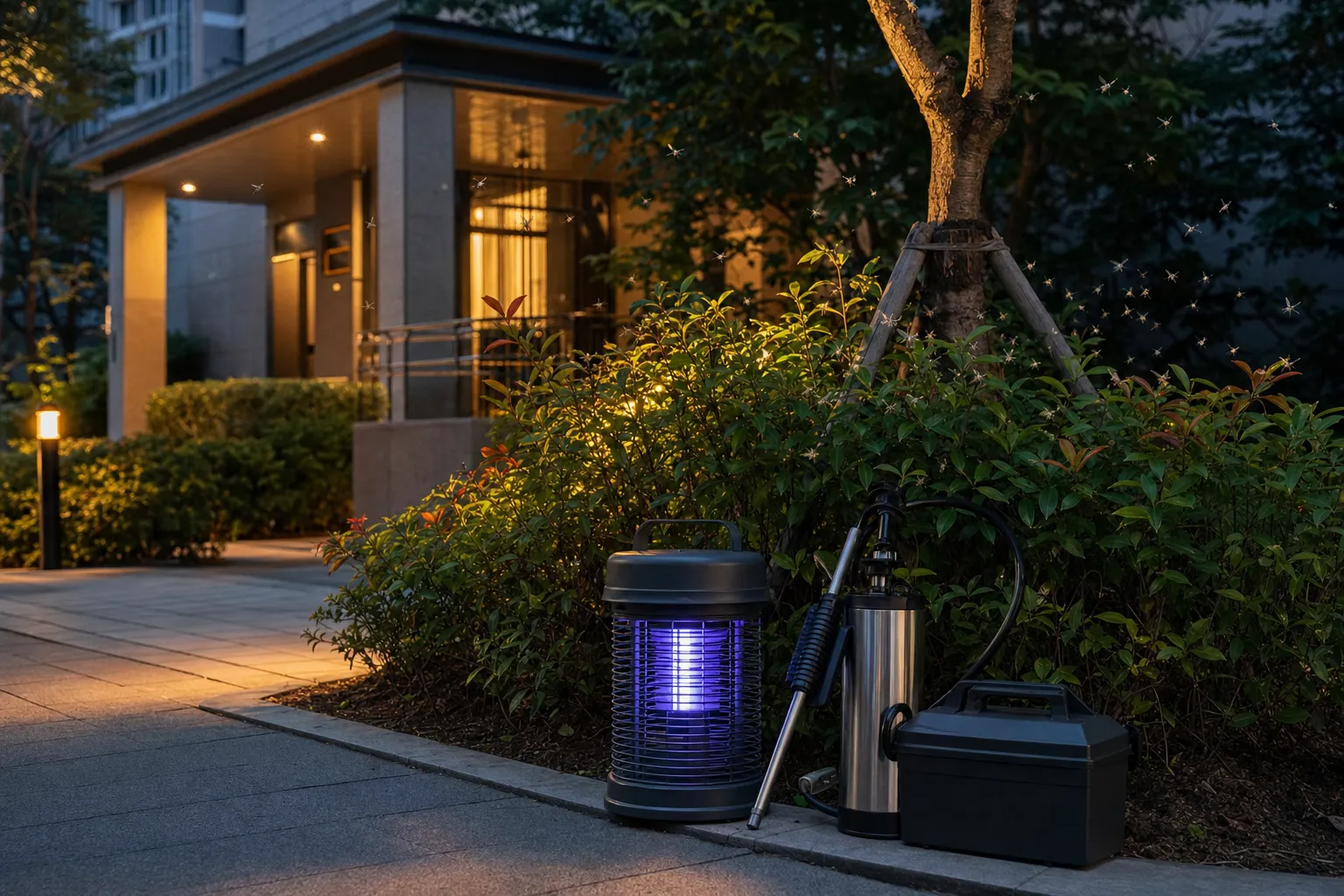
The response includes Bti or BTI treatment aimed at larvae, light traps for adults, scent-attractant traps, monitoring, complaint response, and a temporary emergency pest-control system around Baengnyeonsan and Bongsan.231 Baengnyeonsan’s 2026 lovebug response is best understood as a staged public-nuisance control effort: reduce larvae before adult emergence, trap adults when they appear, and keep a complaint-response structure in place during the peak inconvenience period. For residents, the most important points are the June 13 to July 19 emergency period, the weekend 9 a.m. to 6 p.m. pest-control schedule, and the fact that the insect is unpleasant in large numbers but not described in the available sources as a biting or disease-transmitting threat.
References
- “물진 않아도 징그러워···” 스멀스멀 나오는 러브버그 비상방역 나선 은평구 (경향신문, 2026-06-15)
- 러브버그·동양하루살이 등 시민 불편 곤충… 서울시, 발생 이전 미리 친환경 방제 (서울특별시, 2026-05-07)
- 여름 불청객 러브버그 줄인다…은평구 생태안전방제 3종 추진 (연합뉴스, 2026-05-07)
- 러브버그 꼼짝마! 친환경 방제제로 살충률 확인, 실증 실험 박차 (국립산림과학원, 2026-05-19)
- 붉은등우단털파리(러브버그) 총력 대응한다… 국민불편 최소화 체계 가동 (기후에너지환경부, 2026-05-21)
- '러브버그' 경기 북부까지 확산…동두천·포천·연천 유충 발견 (연합뉴스, 2026-05-21)
About the Author