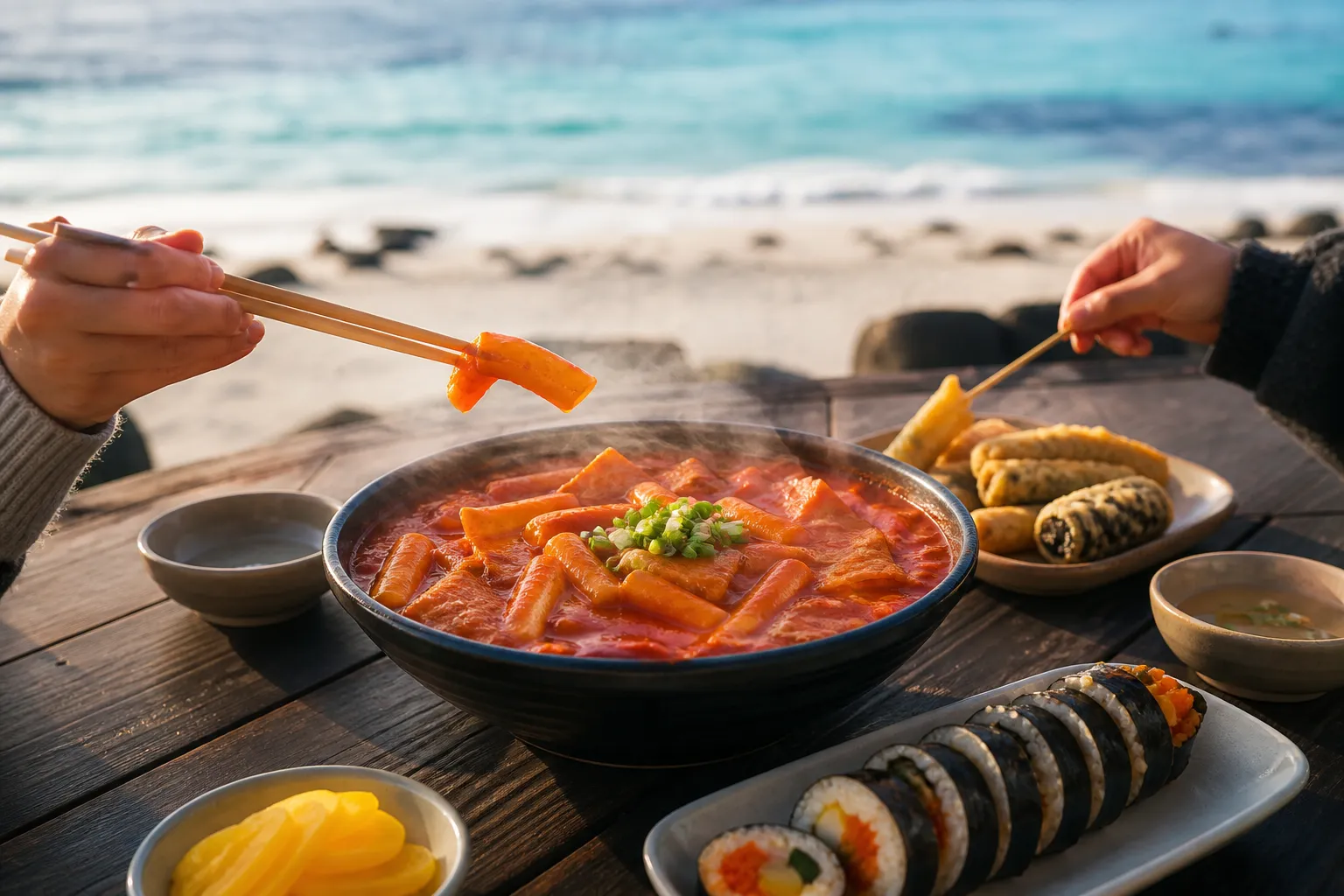
Hamdeok tteokbokki is a useful way to understand one of Jeju’s clearest beach-dining shifts in early summer 2026. From June 1 to July 6, 2026, WOWPASS payment data analyzed by Orange Square placed the Hamdeok Beach commercial area first in foreign visitor spending among major Jeju beach districts, while bunsik, including kimbap and tteokbokki, made up the largest share of Hamdeok restaurant spending.1
For readers searching for Jeju Tteokbokki, the practical point is simple: the available data supports Hamdeok as a local beach-area food district, not as a guide to one named restaurant. The strongest source-backed pattern is everyday consumption around casual food, cafes, convenience stores, food purchases, and K-beauty shopping rather than spending centered on large resort zones.2
What the Hamdeok Tteokbokki Trend Shows
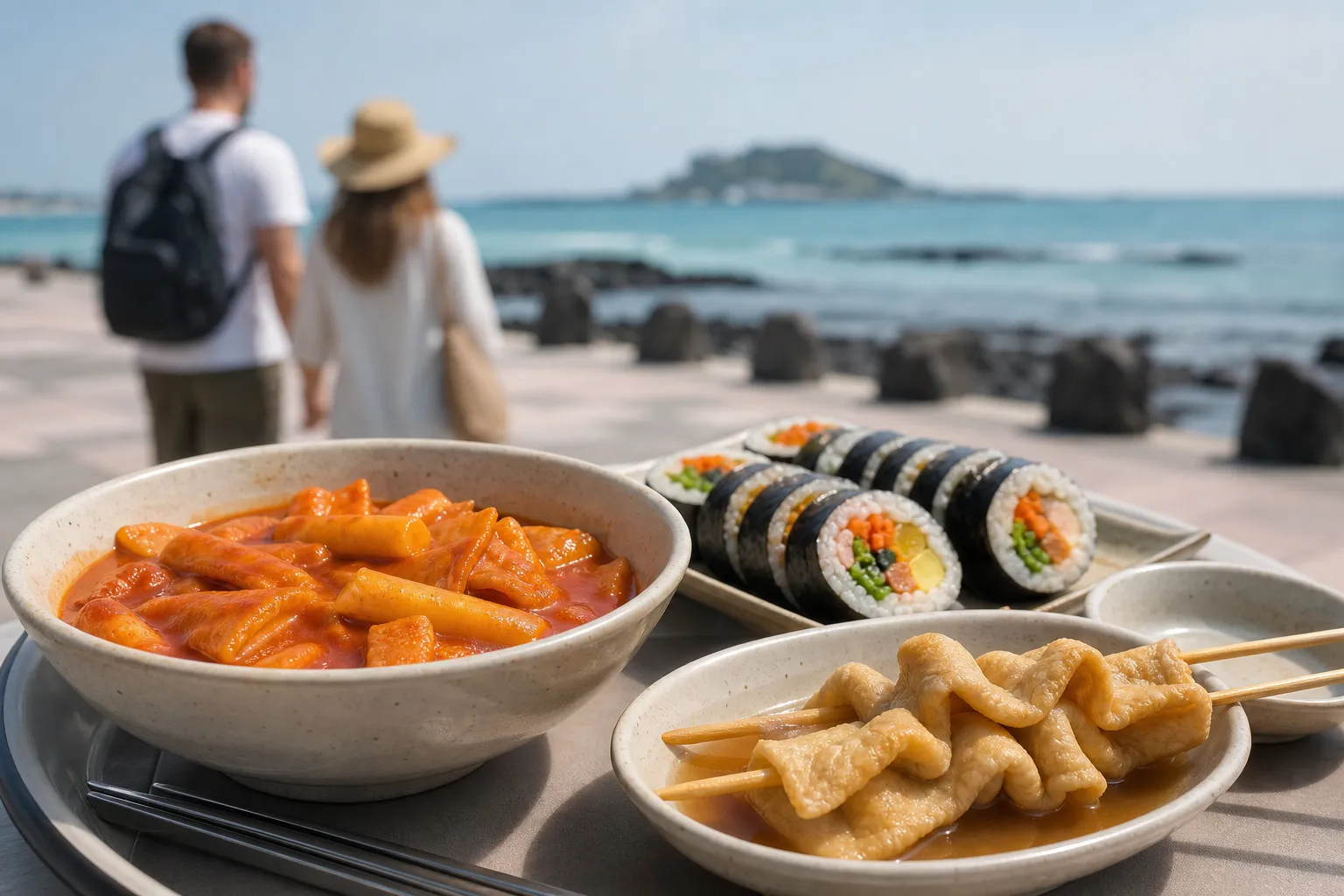
The Hamdeok trend is best read at district level. Multiple Korean reports cite Orange Square’s WOWPASS analysis showing that Hamdeok Beach’s nearby commercial area ranked first in foreign visitor payment amount among Jeju’s major beach-area districts during the June 1 to July 6, 2026 period.3 News1 also reported that Hamdeok surpassed the Jungmun and Saekdal Beach commercial area, which had ranked first the previous year.4
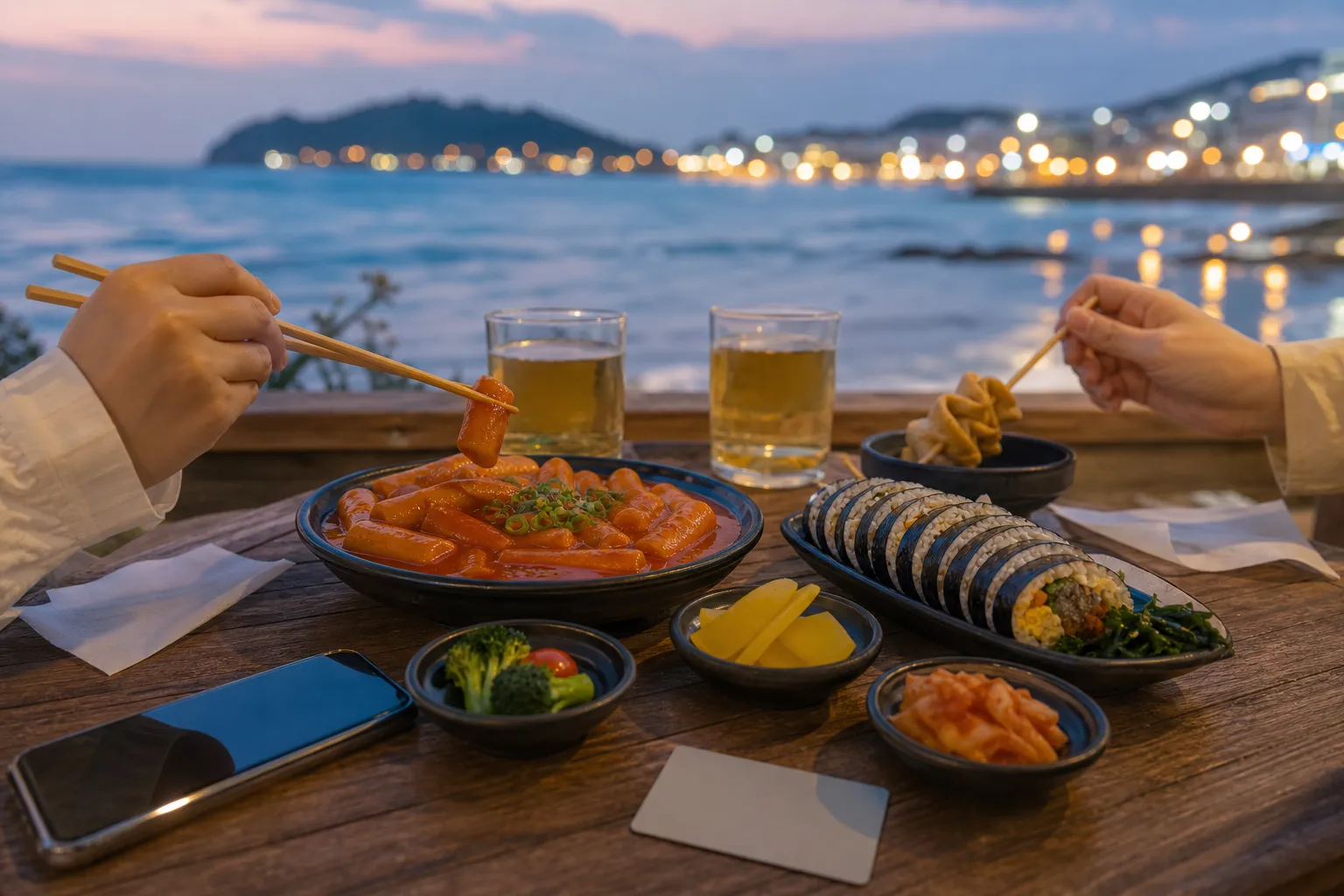
The food category is the clearest signal for tteokbokki searches. In Hamdeok restaurant spending, bunsik accounted for 36%, the largest share. That category includes familiar casual items such as kimbap and tteokbokki. Other restaurant categories followed: meat and grilled dishes at 22%, chicken at 13%, hairtail and fish dishes at 8%, and gukbap or hangover soup at 8%.3
This does not prove that every visitor bought tteokbokki, and it does not identify individual shops, menus, prices, or opening hours. What it does show is that casual Korean snack food was the leading restaurant-spending category in the Hamdeok Beach area during the measured period. For travelers, that makes Hamdeok a reasonable area to consider when looking for tteokbokki near the beach, while still checking current local listings before choosing a specific eatery.
The contrast with Jungmun also matters. Reports noted that sashimi, which held a strong position in Jungmun, accounted for only 3% in Hamdeok, while kimbap and tteokbokki-led bunsik was Hamdeok’s top restaurant category.1 In practical terms, Hamdeok’s food profile appears more casual and everyday, while the available data does not support presenting it as a formal seafood-dining destination.
How to Plan a Hamdeok Food Stop
Use Hamdeok as a beach-area stop where a casual meal can fit around walking, swimming, cafes, convenience purchases, and nearby shopping. Jeju’s 2026 beach season was set for June 24 to September 6, a 75-day operating period, and Hamdeok Beach was again identified as a pet-friendly “pet beach.” The same report cited 700,000 visitors to Hamdeok Beach in the previous year, which helps explain why nearby food spending is commercially important in summer.5
If tteokbokki is the priority, search for bunsik-oriented places around Hamdeok Beach rather than assuming all restaurants in the beach area serve it. The source data groups kimbap and tteokbokki under bunsik, so it confirms category strength but not individual shop availability. A practical plan is to identify nearby bunsik shops, confirm their current menus and hours, then combine the stop with the beach or cafe area.
The broader spending pattern supports that kind of flexible visit. Hamdeok’s total payment amount rose by about 68% year over year, while restaurant payments rose by about 22%, convenience store payments by about 38%, and total payment transactions by about 33%.1 Daily Hankook also reported that restaurants, convenience stores, food purchases, and K-beauty consumption increased together in Hamdeok.2
That mix is important because it shows Hamdeok functioning as more than a single-meal destination. A visitor interested in Jeju Tteokbokki can treat the area as a compact casual-consumption zone: snack food, a cafe stop, convenience shopping, and beach time in one outing. The data does not say how long to stay, where to park, or which shop is best, so those details should be checked through current maps or local listings before visiting.
Quick FAQ
Is Hamdeok now the top place for tteokbokki in Jeju?
The data does not rank individual tteokbokki destinations. It shows that Hamdeok ranked first in foreign visitor spending among major Jeju beach districts during the measured period, and that bunsik including kimbap and tteokbokki was the largest Hamdeok restaurant category.1
Does the source material name specific Hamdeok tteokbokki restaurants?
No. The available reports describe payment trends by commercial area and food category, not shop names, menus, prices, or opening hours. !Hamdeok Beach tteokbokki foreign visitor spending trend Hamdeok’s tteokbokki relevance comes from a documented shift toward local, casual beach-area spending by foreign visitors. For a practical visit, treat Hamdeok as a strong area to search for bunsik near the beach, then verify the exact restaurant details before going.
References
- "외국인도 함덕에서 떡볶이 먹는다"…달라진 제주도 해변 소비 (뉴시스, 2026-07-11)
- 와우패스 결제 데이터 분석, 일상 먹거리·편의 업고 로컬 해변 상권 급성장 (데일리한국, 2026-07-10)
- 외국인 소비도 로컬로…함덕, 제주 해수욕장 결제 1위 (월요신문, 2026-07-09)
- "회 대신 떡볶이"…제주 찾는 외국인, '로컬'로 향한다 (뉴스1 / Daum, 2026-07-11)
- 지난해 144만명 찾은 제주 해수욕장 ‘6월 24일’ 열린다 (제주의소리, 2026-05-10)
About the Author