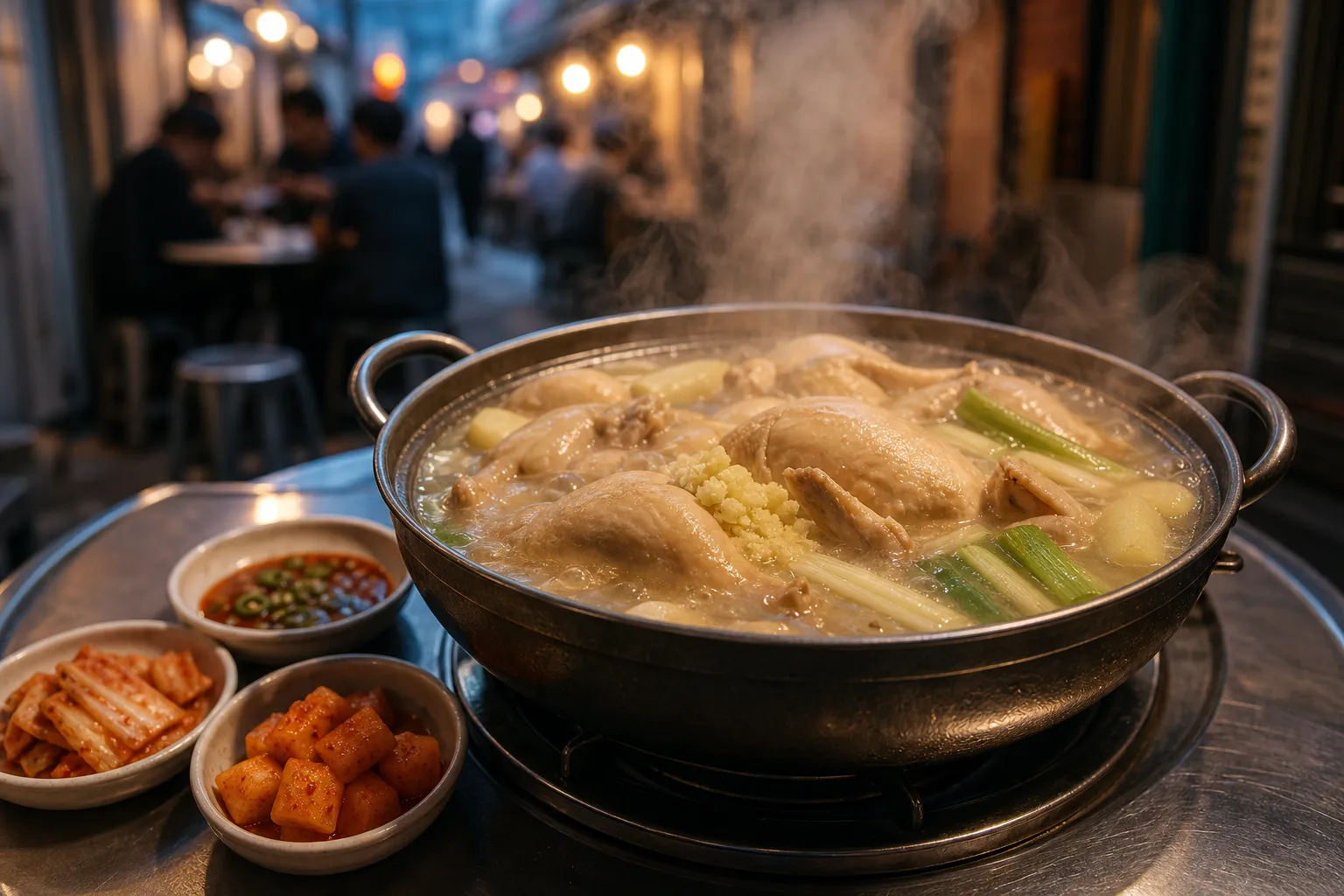
Chobok in Jongno has a very specific flavor: steaming pots of Dak Hanmari, the whole-chicken hot pot that many diners associate with the market lanes around Jongno 5-ga. For anyone looking up Jongno Dak Hanmari around the first boknal of summer, the story is not just about one meal, but about how Seoul’s summer stamina-food culture has been changing.
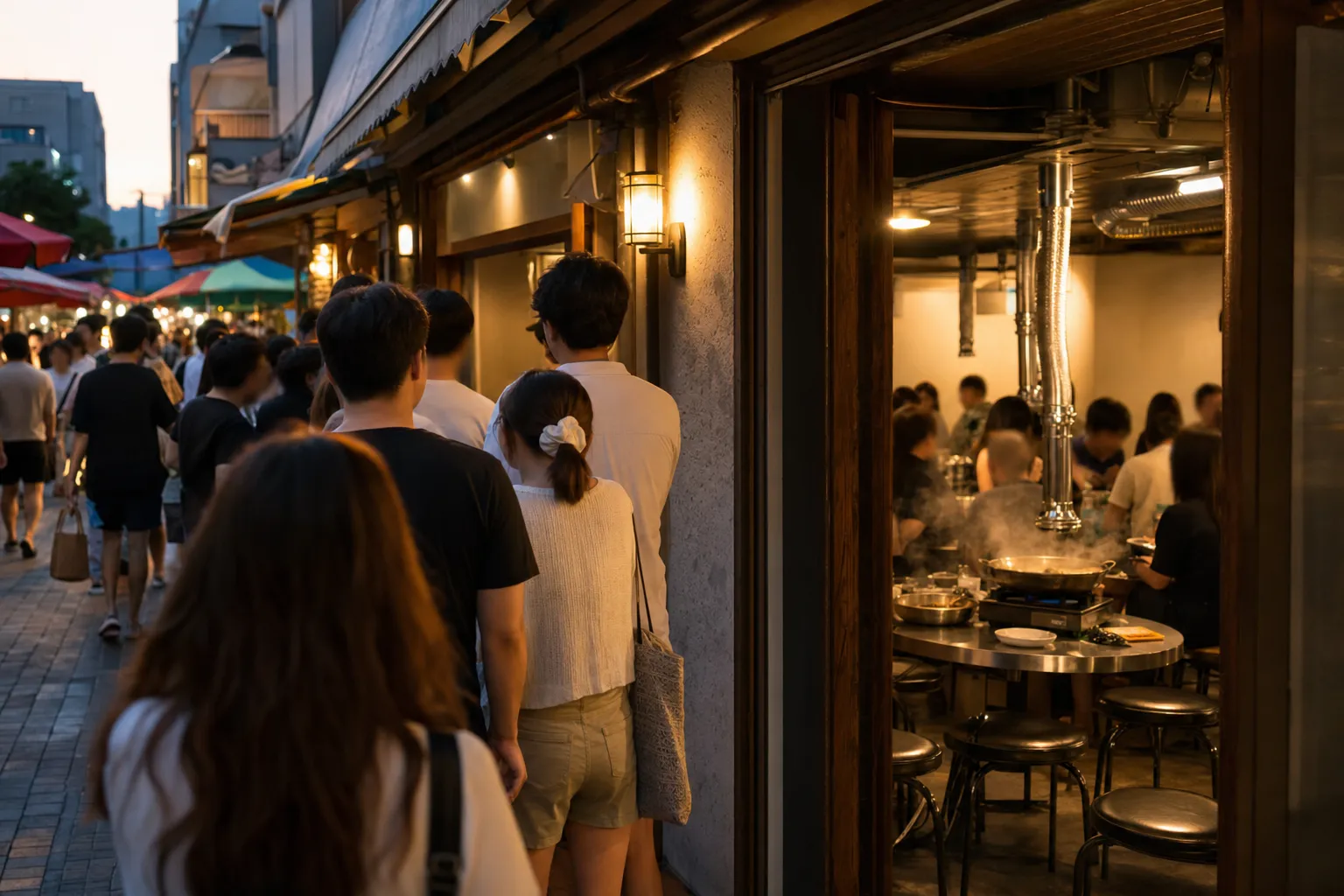
On 2025 Chobok, July 20, News1 reported from the Sinjin Market area in Jongno-gu that Dak Hanmari and samgyetang restaurants were busier than some nearby boshintang restaurants, with lines forming in front of Dak Hanmari shops inside the market. The report framed the scene as part of a broader shift after South Korea’s dog meat ban law, with more boknal diners turning toward chicken dishes instead.1
Jongno Dak Hanmari and the Chobok Mood
Chobok is traditionally one of the hottest-season markers when Koreans seek out nourishing meals. The sources here do not give a full 2026 street report from Jongno itself, but they do show why Dak Hanmari fits so naturally into the Chobok conversation. It is hearty, communal, and built around chicken, a familiar boknal ingredient.
The 2025 scene in Sinjin Market is especially useful because it shows the dish in its seasonal setting. While some dog-meat soup restaurants near Jongno 5-ga reportedly had fewer customers even on boknal, Dak Hanmari shops in the market area drew waiting diners. One owner of a nearby boshintang restaurant was quoted as saying, “Last year and the year before, business was just the same on boknal,” describing the lack of seasonal boost for that older category of stamina food.1
That contrast helps explain why the phrase “Jongno Dak Hanmari Chobok” feels timely. It points to a food alley where the old idea of eating something restorative in summer remains strong, but the menu many people choose has moved toward chicken. The change is not presented in the sources as a sudden overnight replacement. Rather, it appears as a visible shift in dining patterns, with Dak Hanmari and samgyetang standing out in a holiday once more strongly associated with other forms of boyangsik, or nourishing food.
From Market Workers’ Meal to Seoul Food Culture
The alley often called Dongdaemun Dak Hanmari Alley is introduced by the Korea Tourism Organization as a food street that fed merchants from Dongdaemun General Market and nearby markets. Its location is given as the Jongno 5-ga area of Jongno-gu, Seoul, which is why travelers may encounter both “Dongdaemun” and “Jongno” when searching for the same food district.2
The dish itself has practical roots. The Korea Tourism Organization explains that Dak Hanmari developed from dak-kalguksu, or chicken noodle soup, and that kalguksu noodles are still added as a finishing or accompanying element.2 That detail matters because it makes the dish easier to understand: it is not simply a boiled chicken placed in broth, but a meal that moves from chicken to noodles, letting the pot become richer as it cooks.
Seoul Sarang, a Seoul city magazine, describes Dak Hanmari as a distinctive food culture that originated in Seoul. It traces the growth of Dongdaemun Dak Hanmari Alley to the meal needs of market merchants and factory workers, and says the alley expanded through the 1980s and 1990s as demand also came from the Dongdaemun market district and nearby office workers.3
The cooking style also reflects that busy urban background. Seoul Sarang explains that restaurants commonly use chicken that has been parboiled in advance, then boil it again after an order is placed; diners eat the meat along with noodle additions.3 It is a format made for speed, warmth, and sharing, which helps explain why it has remained so durable in a dense market neighborhood.
One short quoted memory in Seoul Sarang gives the history a human scale. Ahn Bok-sun of Wonjo Won Halmae Somunnan Dak Hanmari referred to the origins by saying, “It was in the 1970s.”3 The quote does not give a full chronology by itself, but it supports the broader picture of a dish that has been part of Seoul’s market food landscape for decades.
Why the Alley Still Appeals to Visitors
Jongno Dak Hanmari is not only a local summer option. BizHankook reported on December 4, 2023, that the Dongdaemun and Dongmyo areas were seeing many Japanese tourists, and that Dongdaemun Dak Hanmari Alley was also busy with foreign guests. On the afternoon of December 3, the article observed many Japanese tourists visiting in friend groups, with some restaurants displaying notices in both Korean and Japanese.4
A restaurant employee quoted in that report said Japanese customers had “increased by more than 50% recently,” while also mentioning reservation demand.4 The sources do not provide a comprehensive tourism dataset for the alley, so that quote should be read as a restaurant-level observation rather than a citywide statistic. Still, it shows how Dak Hanmari has become legible to visitors as a Seoul food experience: the dish is simple to recognize, fun to share, and closely tied to a walkable market district.
For Chobok in 2026, the broader chicken-food environment also looks active. Yonhap News reported on July 6, 2026, that convenience-store companies were releasing easy-to-eat stamina-food products ahead of Chobok, including items using chicken, eel, and smoked duck. GS25 planned discounts on Chicken25 made-to-order products and a buy-one-get-one samgyetang promotion, while CU said it would release six convenience meals using samgye, eel, and smoked duck starting July 7.5
The Ministry of Agriculture, Food and Rural Affairs also addressed summer chicken supply on June 30, 2026. It said Vice Minister Kim Jong-gu visited Hangang Food in Hwaseong, Gyeonggi Province, to inspect supply conditions, and the ministry cited stabilization measures including support for importing 17 million broiler hatching eggs after concerns linked to highly pathogenic avian influenza in winter. For June 1-26, the ministry said broiler slaughter numbers rose 5.3% year on year, while samgye chicken slaughter numbers rose 6.0%.6
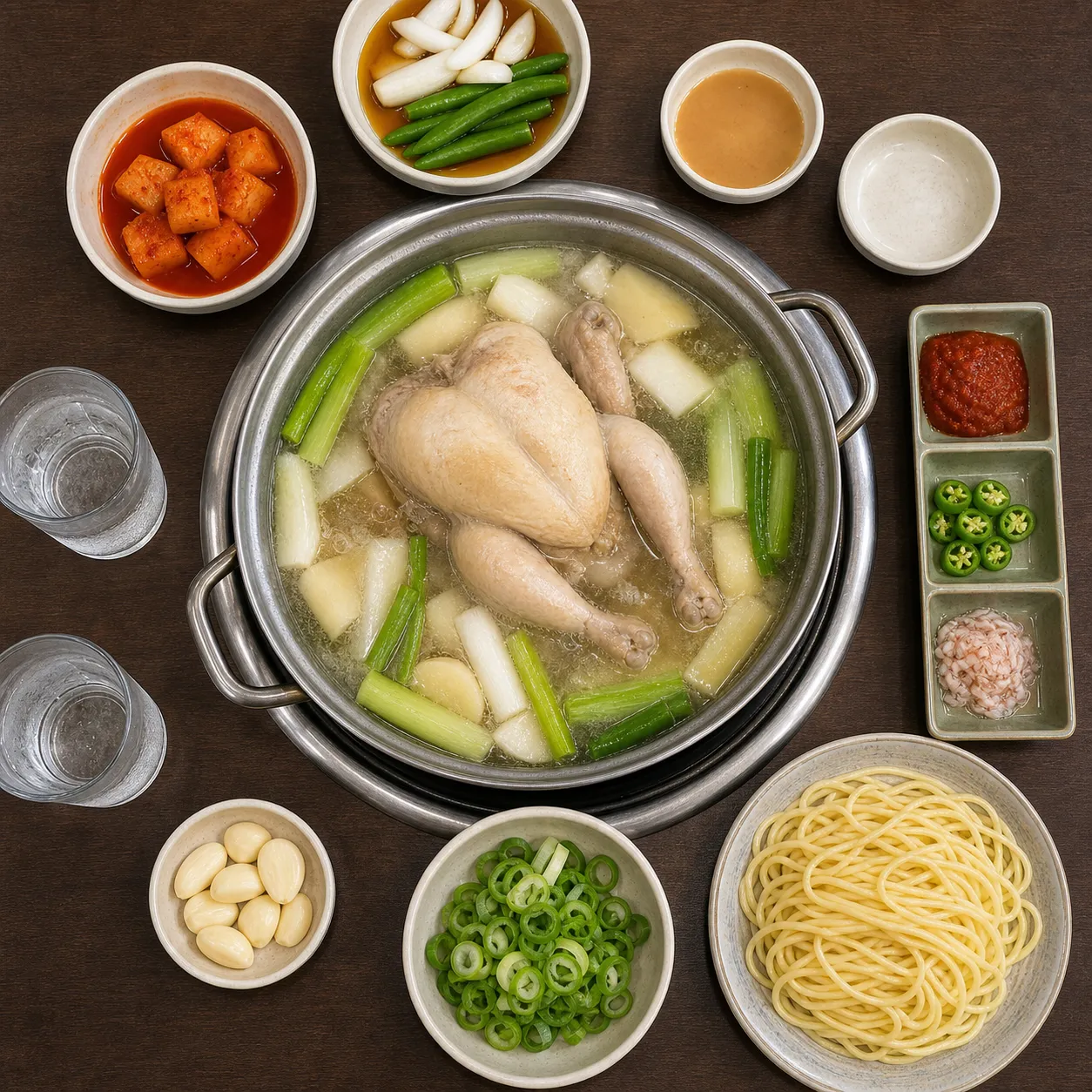
That wider context makes Jongno’s Dak Hanmari scene feel both traditional and current. The alley’s appeal comes from its roots in Seoul’s working market culture, but Chobok gives the dish a seasonal meaning that many readers can understand immediately: a hot pot of chicken, broth, and noodles shared during the hottest stretch of the year. If you are mapping Seoul food culture through one summer meal, Jongno Dak Hanmari offers a clear and comforting place to start.
References
- "보신탕 안 먹어요" 변해버린 복날의 풍경…닭한마리 집은 문전성시 (뉴스1/다음뉴스, 2025-07-20)
- 서울 동대문 닭한마리 골목 (한국관광공사 대한민국 구석구석)
- 서울의 역사가 담긴 닭한마리 냄비 (서울사랑)
- [현장] 동묘 구제의류 매장, 동대문 닭한마리 골목에 일본인 관광객 와글 (비즈한국, 2023-12-04)
- 삼계버거·장어김밥…초복 앞두고 편의점서 이색 보양식 출시 (연합뉴스, 2026-07-06)
- 농식품부, 여름철 복날 닭고기 수급 ‘이상 무!’ (농림축산식품부, 2026-06-30)
About the Author