
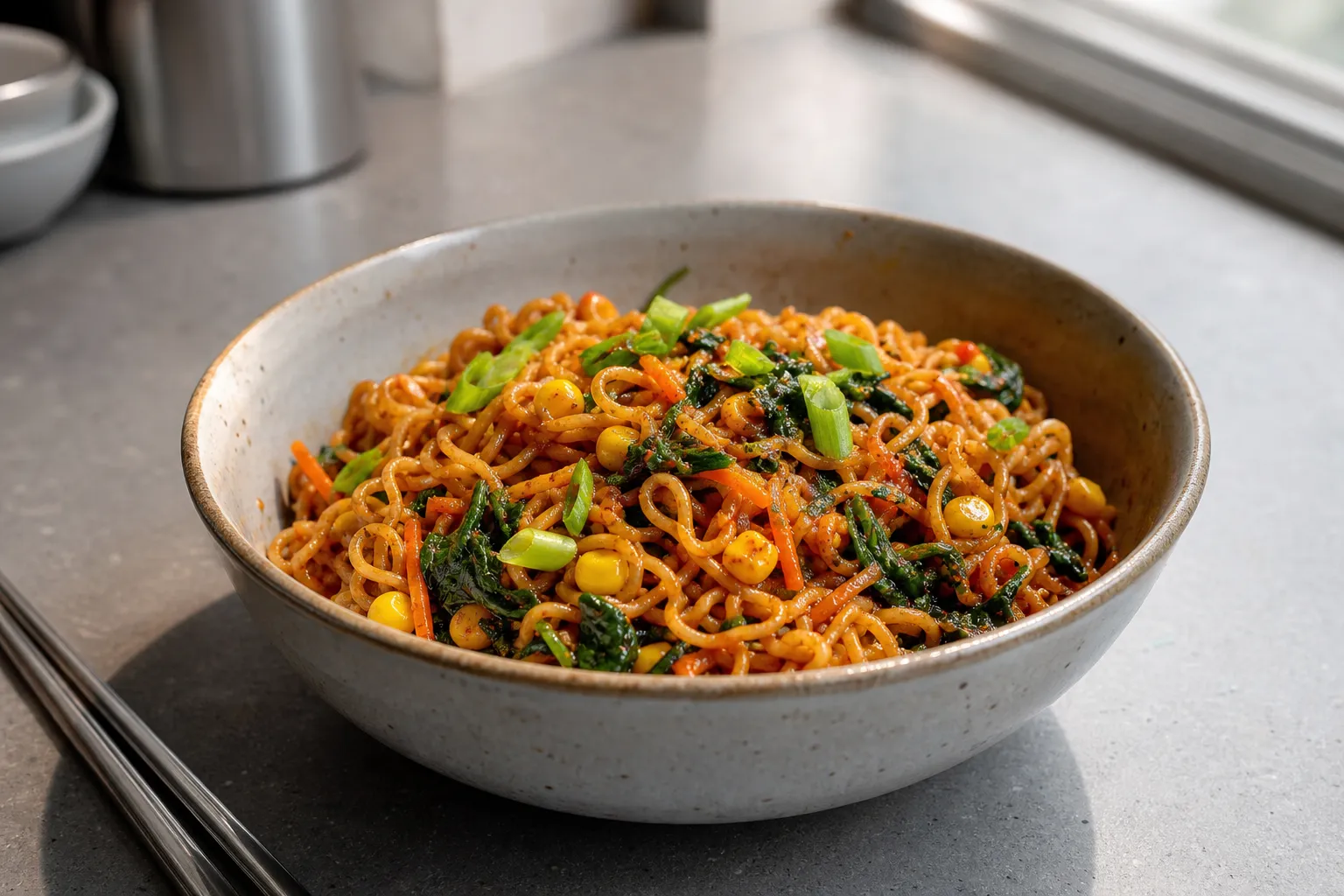
Kenyan spice ramen is becoming a useful way to understand how K-ramen travels once it leaves Korea. Rather than simply boiling noodles exactly as printed on the packet, some consumers are folding Korean ramen into local food habits, including Kenya-style spices, vegetables, and drier cooking methods.
That matters because the story of Kenya K-Ramen is not just about adding heat. The available reports point to a broader pattern: K-food is being accepted, adapted, and sometimes rebuilt around familiar local tastes. OpenSurvey’s “K-Food Trend Report 2026,” published on May 18, 2026, surveyed 100 foreign undergraduate and graduate students living in Seoul from April 16 to 20, 2026, and found that only about four in ten foreign respondents cooked K-ramen exactly according to the recipe.1
Kenyan Spice Ramen and the Shift Away From One-Recipe K-Ramen
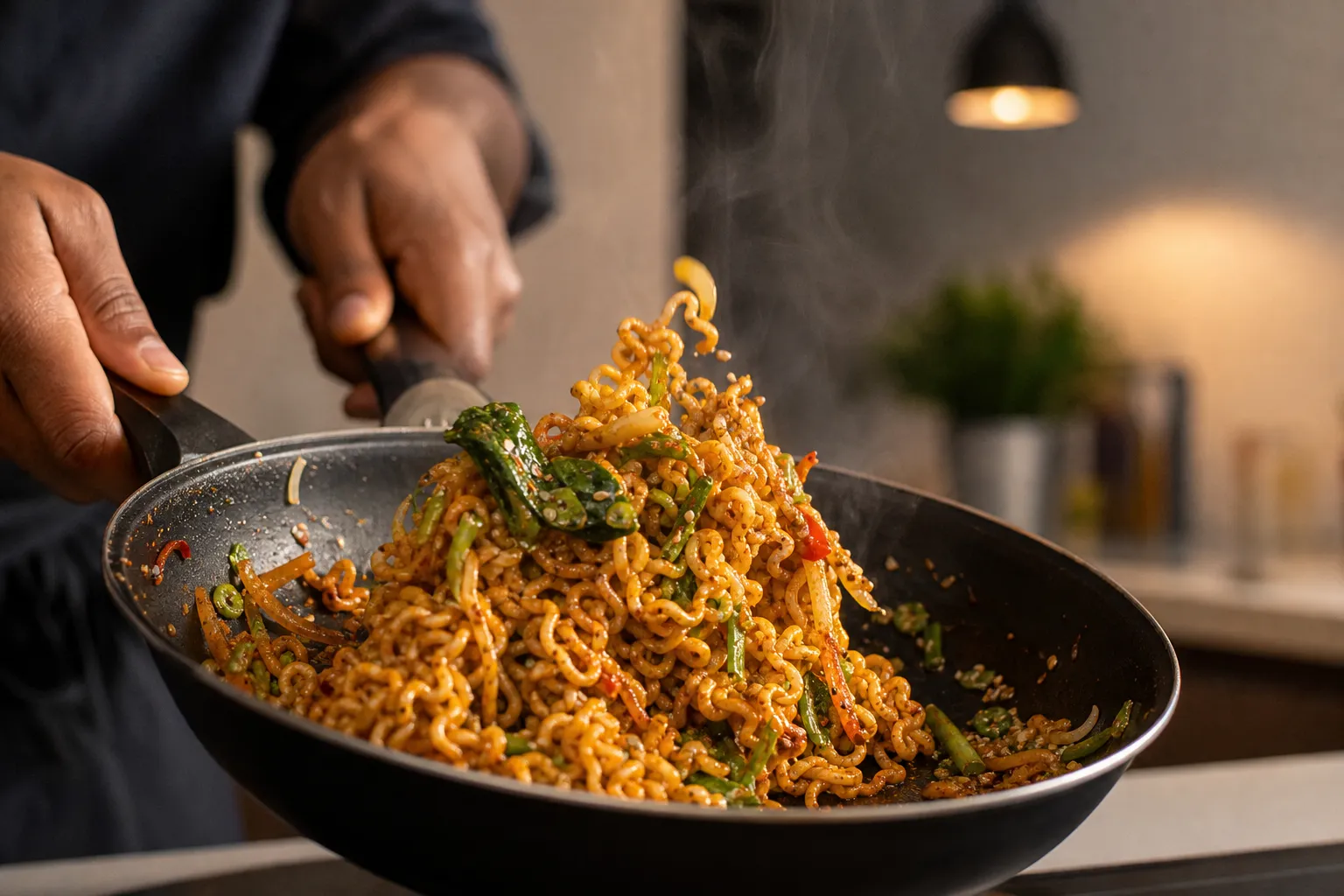
The most interesting part of the Kenyan spice ramen example is how ordinary it makes customization feel. K-ramen may begin as a Korean packaged food, but the act of cooking it becomes local. The sources describe a Kenyan respondent adding local spices to ramen and combining Kenya-style spices with vegetables to recreate a ramen flavor previously eaten at a restaurant.2
That is a small detail, but it says a lot. For many readers, instant ramen sounds like a fixed product: noodles, seasoning powder, hot water, and a few minutes of waiting. Yet the reported behavior shows K-ramen functioning more like a flexible base. Local spices can change the aroma, vegetables can make the bowl feel closer to a meal, and dry-style preparation can move the dish away from soup and toward something more like a stir-fried noodle or pasta-style plate.
The numbers support that idea. Among respondents with ramen purchase experience, 38.1% said they cooked ramen according to the instructions, while 52.4% said they added ingredients and 31.0% said they made major changes to the recipe.2 In other words, following the packet is only one part of the K-ramen story. Adding, changing, and reinterpreting are part of the experience too.
Food & Beverage News also summarized the same trend as a move beyond the idea that K-food is mainly about spiciness. Its coverage described K-food’s appeal as expanding toward diversity and abundance, with K-ramen consumers adding ingredients or changing cooking methods to fit their own food cultures.3 That framing helps explain why Kenyan spice ramen feels less like a gimmick and more like a sign of how global food habits actually work.
Dry-Style Cooking Makes K-Ramen Easier to Localize
The dry-style ramen detail is especially important. OpenSurvey’s report presented cases from emerging regions, including Kenya, where K-ramen was reworked without broth through dry-style cooking.1 Food & Beverage News similarly described emerging-market consumers removing broth, cooking ramen more like pasta, or adding local spices as part of a meal-style reinterpretation.3
This changes how you can think about K-ramen. Soup-based ramen has a clear Korean identity, but once the broth is reduced or removed, the noodles become more adaptable. They can hold spices differently. They can sit beside vegetables more easily. They can match eating habits where a dry noodle dish may feel more familiar than a hot bowl of soup.
Metro Economy’s May 19, 2026 coverage placed this behavior inside a larger shift from simple localization to recreation. It reported that overseas consumers were not just accepting K-food as-is, but reinterpreting it according to their own food cultures; in ramen, it again cited the 38.1% figure for cooking according to instructions and mentioned cases such as reducing broth or adding dairy for a creamier style.4
That context matters because Kenyan spice ramen is not an isolated curiosity. It fits a wider pattern in which K-ramen becomes a platform for local cooking. Some versions may lean spicy, some creamy, some dry, and some vegetable-heavy. The common thread is not one flavor profile, but the freedom to adjust.
There is also a product-side echo to this trend. Metro Economy connected brothless, pasta-style K-ramen demand with product examples such as Nongshim Shin Ramyun Toomba and Shin Ramyun Rosé.4 The source material does not say those products were designed specifically for Kenya, but it does show that soup-free or creamy ramen formats are being discussed as part of the same market direction.
Why Kenya Matters for K-Food Brands
Kenya also appears in the sources as more than a recipe example. Yonhap News reported on May 31, 2026 that the Korea International Trade Association’s Institute for International Trade identified Honduras, Latvia, and Kenya as three promising K-food markets in its report on K-food export competitiveness and market diversification.5
The same coverage said those markets drew attention because of Korean Wave acceptance and openness in food import markets, while Kenya was described as a place where region-level flavor localization and online marketing centered on TikTok and WhatsApp could be advantageous.5 That gives the Kenyan spice ramen example extra weight. If local spices and vegetables are already part of how some consumers imagine K-ramen, then flavor localization is not just a marketing theory. It is connected to observed cooking behavior.
The export backdrop is also strong. South Korea’s Ministry of Agriculture, Food and Rural Affairs announced on April 3, 2026 that K-Food+ exports reached $3.35 billion in the first quarter of 2026, up 3.5% year over year. Agricultural food exports reached $2.56 billion, up 4.0%, and processed foods including ramen, snacks, beverages, rice-processed foods, and ice cream helped drive growth.6 Ramen exports alone reached $434.5 million, a 26.4% increase.6
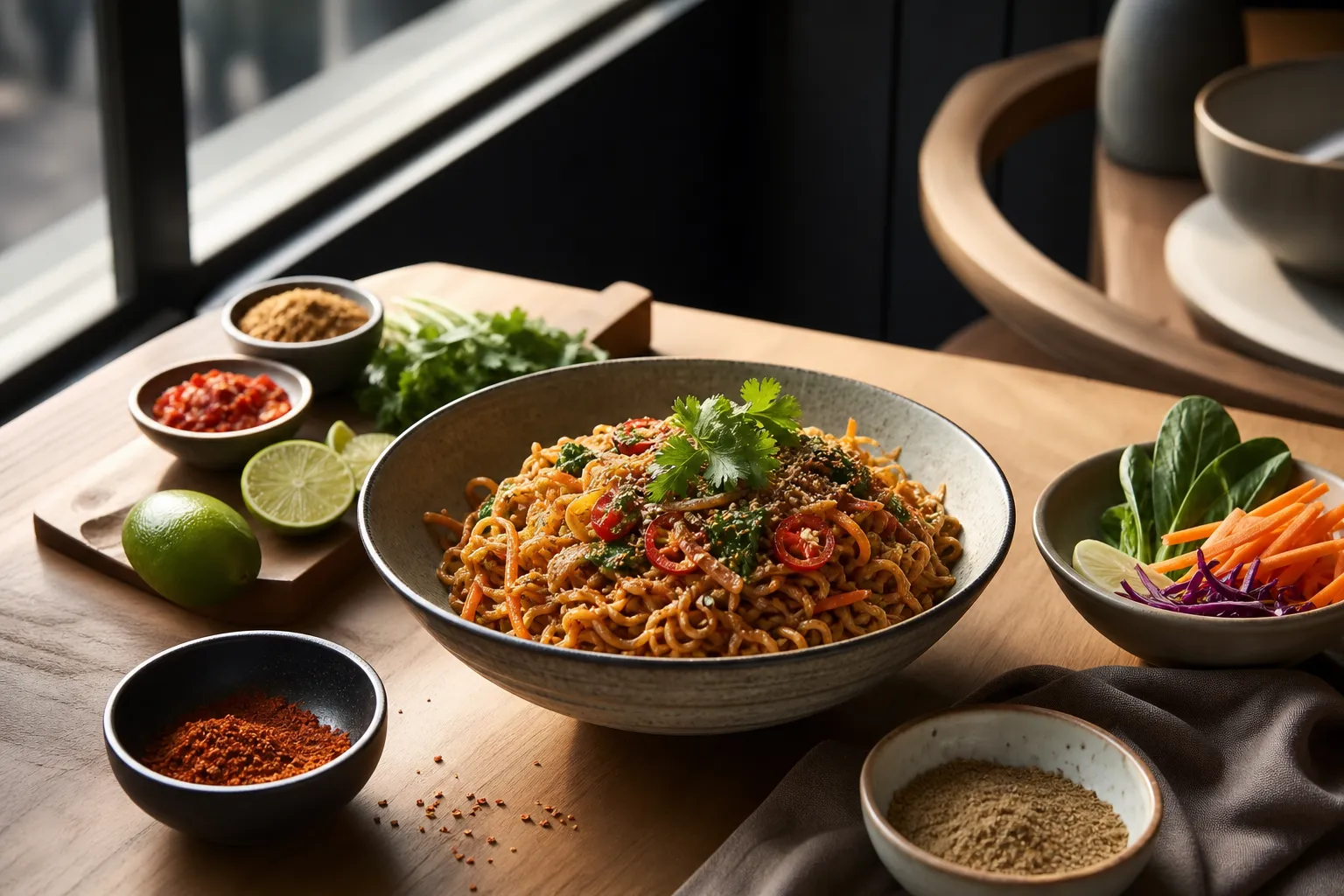
Kenyan spice ramen, then, is best understood as a small but revealing example of K-food’s next phase. K-ramen is still Korean, but its global appeal increasingly depends on how naturally people can make it their own. The Kenya K-Ramen story shows that a packet of noodles can become a local meal when spices, vegetables, and dry-style cooking meet Korean ramen’s flexible foundation.
References
- K-푸드 트렌드 리포트 2026 (오픈서베이 블로그, 2026-05-18)
- 라면에 물 대신 '이것' 넣는다…외국인 K푸드 취향에 '화들짝' [트렌드+] (한국경제, 2026-05-18)
- “매운맛이 전부가 아니다”…외국인이 말하는 K-푸드의 진짜 매력은 ‘다양성’ (식품음료신문, 2026-05-18)
- K-푸드 소비방식이 달라졌다…현지화 넘어 재창조 (메트로경제/다음뉴스, 2026-05-19)
- "K푸드 수출 다변화해야…온두라스·라트비아·케냐 유망" (연합뉴스, 2026-05-31)
- 2026년 1분기 케이-푸드 플러스(K-푸드+)수출은 전년 대비 3.5% 증가한 33.5억 달러 (농림축산식품부, 2026-04-03)
About the Author