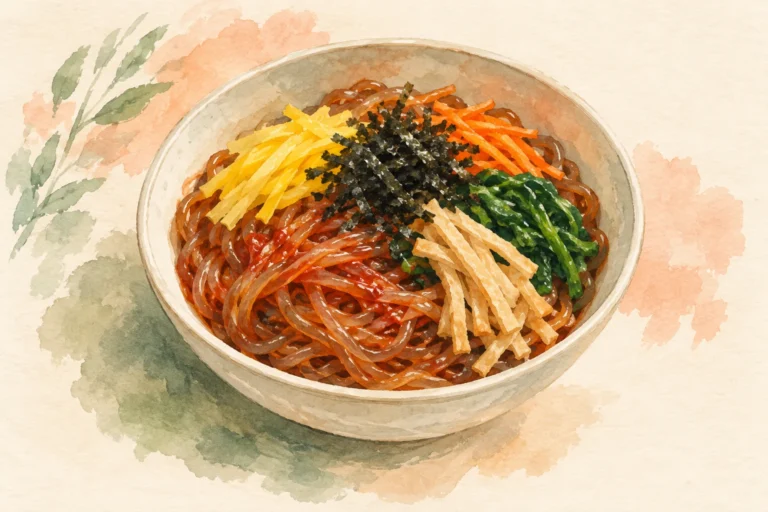
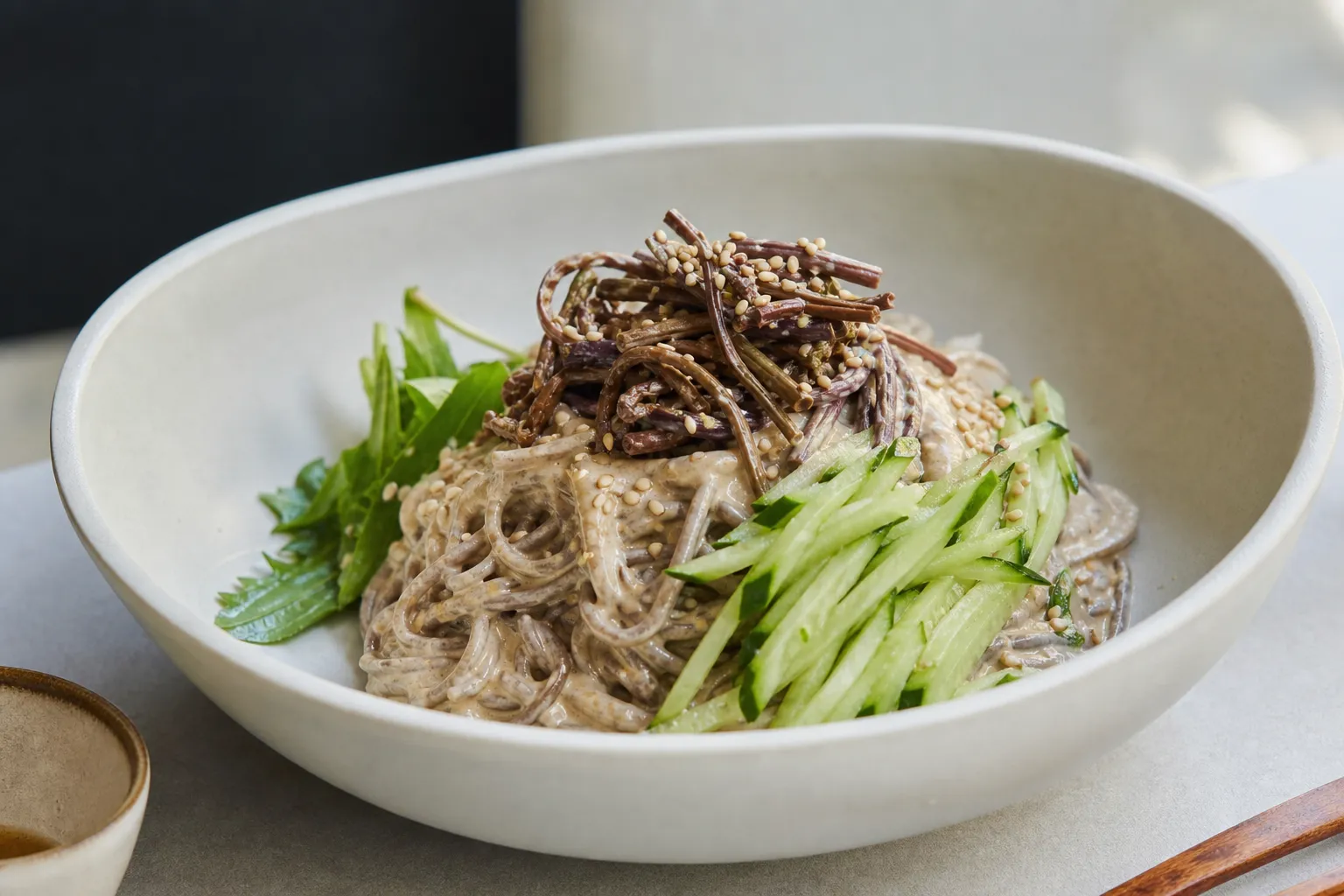
Gosari perilla bibim noodles are the dish putting Gosari Express Sindang into a wider conversation about vegan Korean dining. The bowl, known in Korean as gosari deulkkae bibim-myeon, centers on freshly boiled noodles mixed with gosari oil sauce, bringing together a casual noodle-shop format with a fully plant-based approach.1
The restaurant behind it, Gosari Express, is located around Sindang Central Market in Seoul and is associated with Kim Je-eun, the chef and Bad Carrot representative behind the brand. Yonhap described the shop as a noted spot in Seoul’s Sindang-dong Central Market, while other coverage identifies it as a vegan noodle restaurant in a market alley in Jung-gu, Seoul.23 For anyone searching for Gosari Express Sindang, the perilla bibim noodle is the most direct way to understand why this small noodle-focused concept has drawn attention beyond its neighborhood.
Gosari Express Sindang and the Casual Vegan Noodle Idea
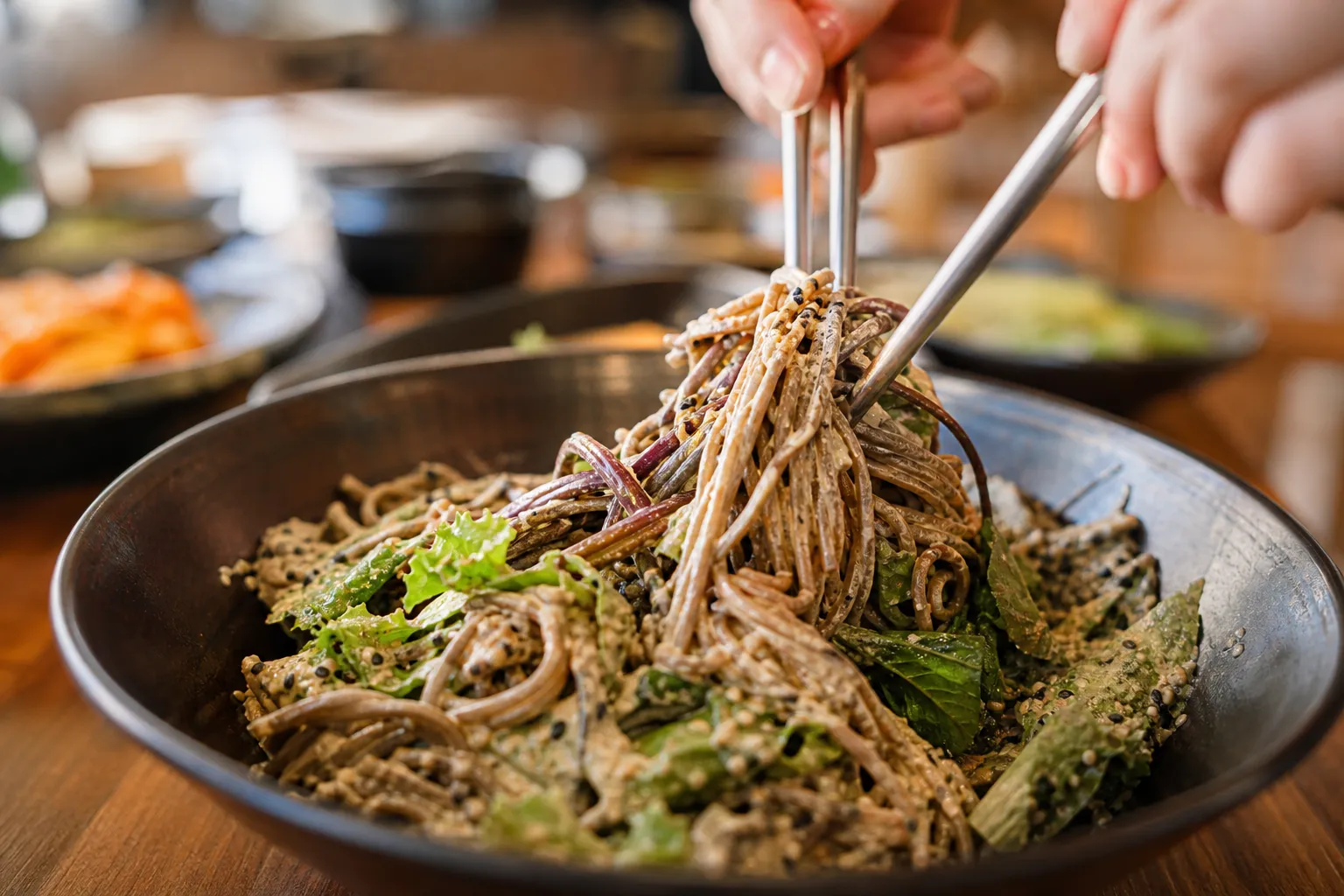
Gosari Express did not position vegan food as something formal or distant. In an interview with Pitch by Pitch, Kim Je-eun described it as Bad Carrot’s dining brand and “a noodle shop aiming to casualize vegetarian eating.”4 That phrase helps explain the appeal: the restaurant takes a familiar format, noodles, and uses it to make plant-based cooking feel easy to approach.
The focus on gosari, or bracken, is also central to the identity of the shop. Cook&Chef reported that all menu items are 100% vegan and that most dishes use the restaurant’s self-developed gosari oil sauce.3 Rather than treating plant-based cooking as a substitute for something else, Gosari Express builds flavor from its own sauce system, with gosari oil acting as a signature thread across the menu.
That matters because bibim noodles are all about balance. They need sauce, texture, aroma, and enough depth to keep each bite interesting. The Michelin Guide’s inspector note introduced Gosari Express’s gosari perilla bibim noodles as one of the notable dishes in its 2026 Seoul and Busan edition, describing the dish as freshly boiled noodles finished with gosari oil sauce.1 The same Michelin item marked Gosari Express as a Seoul Bib Gourmand and Green Star restaurant, placing the dish within a broader sustainability-minded dining context.1
What Goes Into the Gosari Perilla Bibim Noodles
The best source-backed description of the restaurant version comes from Cook&Chef, which identifies the representative dish as gosari perilla bibim noodles flavored with gosari oil sauce, perilla powder, chickpea hummus, and veggie rayu.3 That combination suggests a dish built around nuttiness, oil-based aroma, and creamy texture, while staying fully vegan.
The SSG.com home-meal version broadened access to the dish. On April 15, 2025, Shinsegae Group Newsroom announced that SSG.com was collaborating with the Sindang-dong vegetarian restaurant Gosari Express to sell four home-meal products online for the first time. The lineup included gosari perilla bibim noodles in an 870 g format, mugwort-crown daisy noodles, gosari noodle tteokbokki, and gosari oil pasta sauce.5
For the packaged gosari perilla bibim noodles, Shinsegae Group Newsroom stated that the product uses 100% plant-based ingredients, including gosari oil sauce and domestic perilla.5 Yonhap also reported that the four products were sold through SSG.com’s Gourmet Hall at prices in the 10,000 won range.2 That detail is useful because it shows the dish moving from a restaurant menu into Korea’s home-meal market without losing the vegan positioning that defines the brand.
SSG.com’s product development team also emphasized texture and flavor. Lee Nan-young, an MD on SSG.com’s product development team, said the newly released ready meals are “100% vegan,” while the flavor and umami of gosari oil sauce are added to the ingredients to create a pleasing texture.5 It is a concise explanation of what the packaged line is trying to do: make the restaurant’s plant-based flavor profile work in a convenient format.
Michelin Recognition Added a Wider Spotlight
Gosari Express’s profile rose further with the Michelin Guide Seoul & Busan 2026 announcements. On February 26, 2026, the Michelin Guide announced eight newly selected Bib Gourmand restaurants for Seoul and Busan 2026, including Gosari Express as a new Seoul Bib Gourmand selection.6 The official announcement described the restaurant, located in Sindang Central Market, as serving vegan dishes such as spicy bibim noodles and a Taiwanese-style pancake topped with gosari chili sauce.6
The same Michelin announcement gave the full 2026 Bib Gourmand scale as 71 restaurants: 51 in Seoul and 20 in Busan.6 Within that group, Gosari Express stood out because it connected market-area casual dining, vegan cooking, and a distinctive gosari-centered sauce identity.
Cook&Chef later reported that Gosari Express was newly selected for both Bib Gourmand and Green Star in the 2026 Michelin Guide Seoul and Busan edition.3 The Green Star mention is especially relevant to how the restaurant is discussed, because it ties the shop’s vegan menu and ingredient approach to a larger sustainability frame, not just to taste or trendiness.
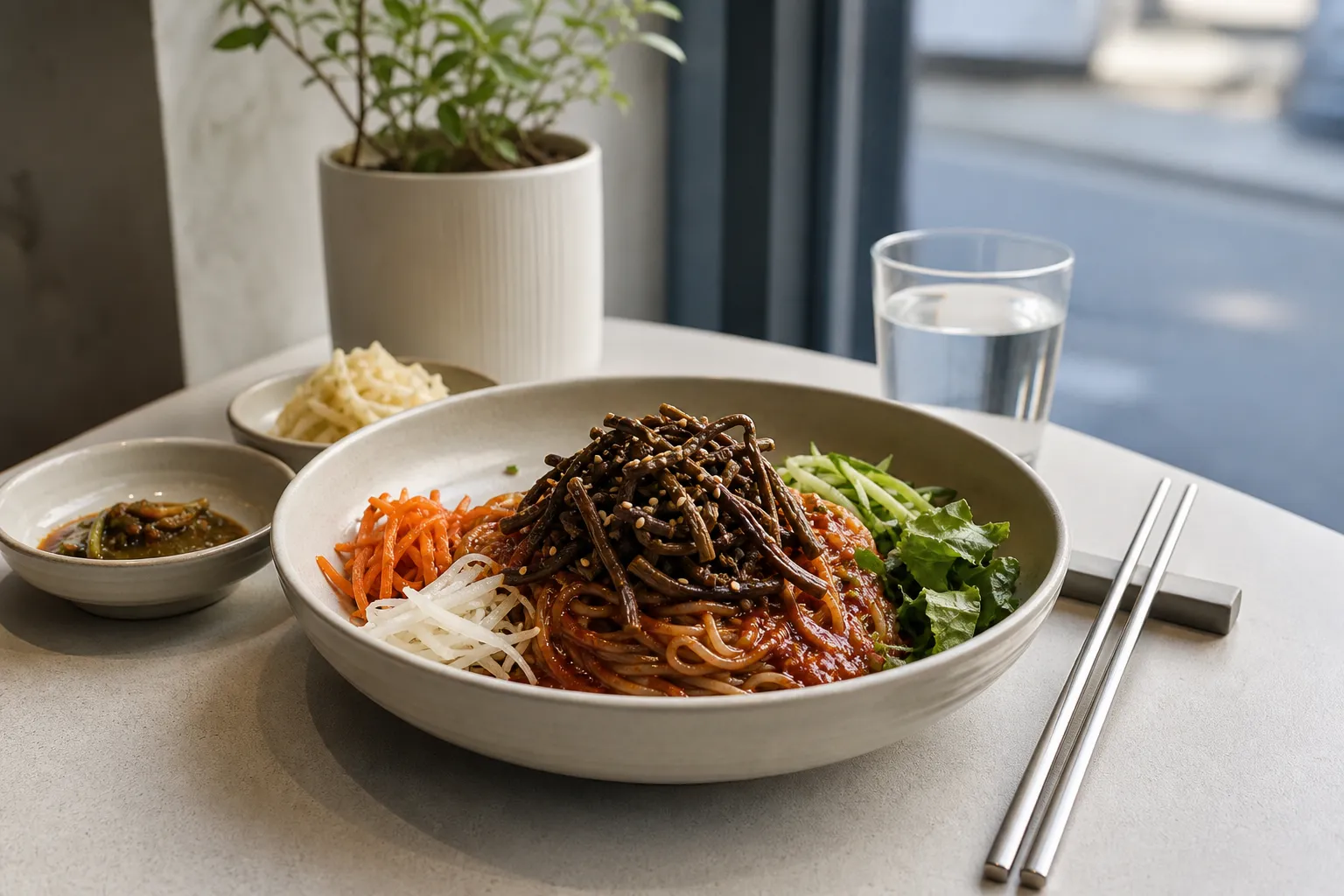
For readers, the simplest takeaway is that gosari perilla bibim noodles are not just another cold noodle variation. They are the most visible expression of Gosari Express’s idea: a casual, fully vegan noodle shop built around a self-developed gosari oil sauce, now recognized by Michelin and adapted into an SSG.com home-meal product. If you are trying to understand why Gosari Express Sindang has become a name to know, the gosari perilla bibim noodles are the place to start.
References
- 2026 미쉐린 인스펙터 노트: 올해 주목할 요리 8가지 (MICHELIN Guide)
- SSG닷컴, 채식맛집 '고사리 익스프레스' 간편식 첫 출시 (연합뉴스, 2025-04-15)
- [미슐랭 스토리] “고사리, 이렇게도 먹을 수 있다니!” 미쉐린 그린스타로 신규 선정 ‘고사리 익스프레스’ (Cook&Chef, 2026-03-09)
- 고사리 혁명, 고사리 익스프레스 (피치바이피치, 2025-02-13)
- 맛있는 채식이 뜬다… SSG닷컴 ‘고사리 익스프레스’ 간편식 출시 (신세계그룹 뉴스룸, 2025-04-15)
- 미쉐린 가이드 서울 & 부산 2026, 빕 구르망 8곳 신규 선정 (MICHELIN Guide, 2026-02-26)
About the Author