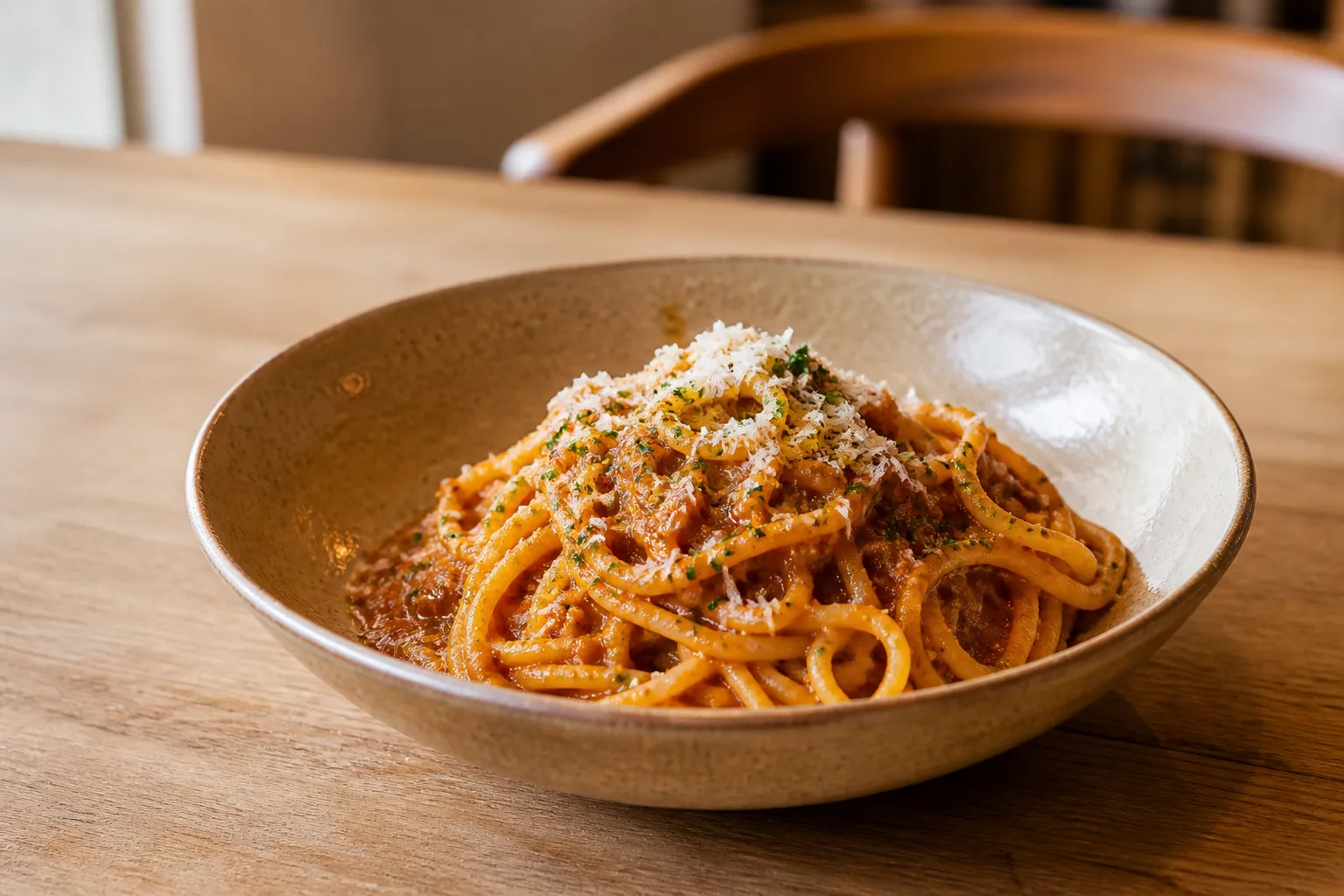
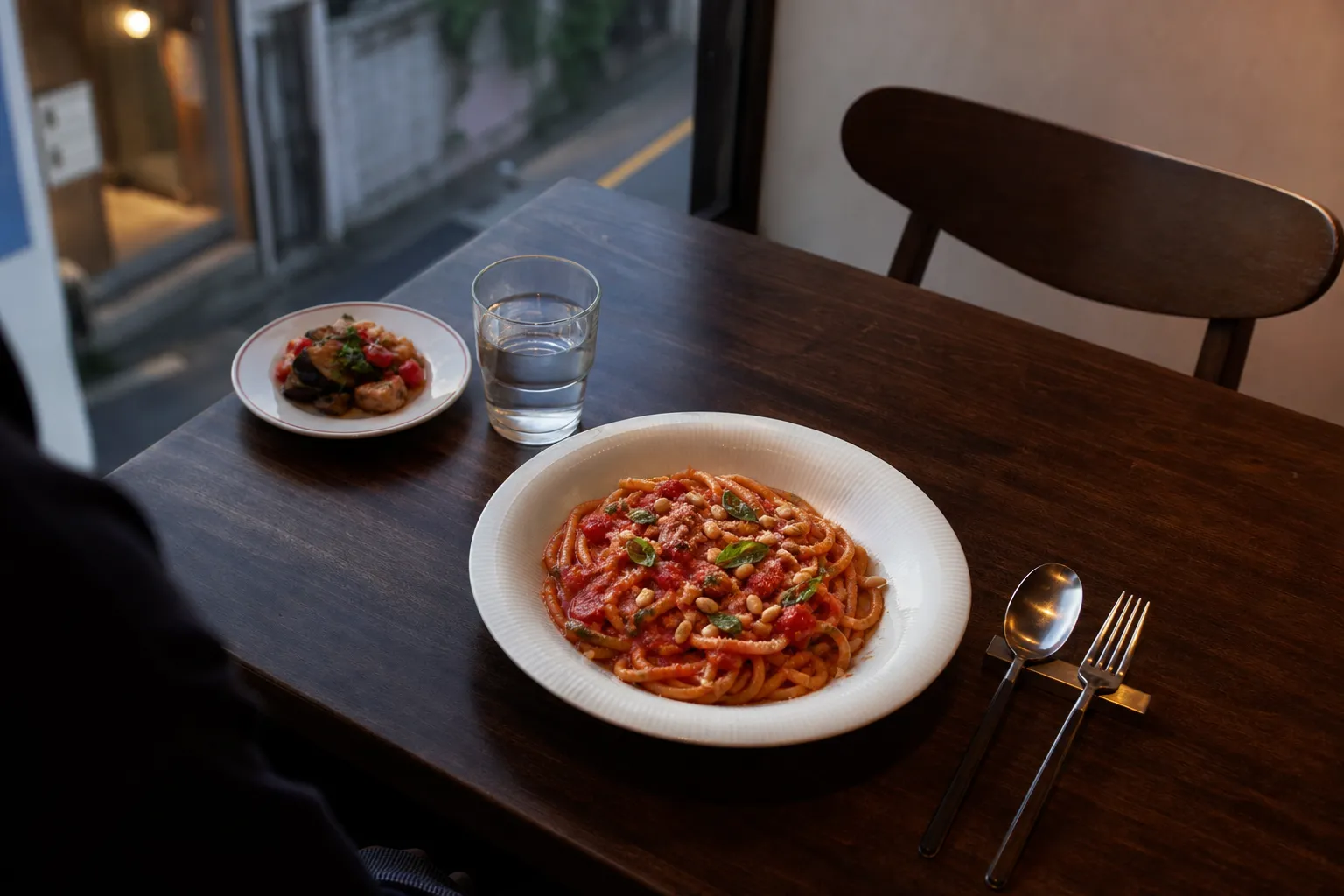
Tarai bigoli pasta is the clearest reason this Yeonhui-dong Italian spot has drawn attention from food media. At Yeonhui Tarai, the focus is not a long, scattered menu but fresh pasta, especially thick bigoli noodles served in home-style Italian combinations that feel specific, handmade, and quietly confident.
The restaurant has been introduced as an Italian brunch cafe and fresh pasta space in Yeonhui-dong, with multiple sources pointing to homemade bigoli pasta as its representative menu item. Maison Korea, in a February 24, 2026 feature on three Yeonhui-dong restaurants, described Tarai as a wood-toned space of about 50 square meters with an Italian home-cooking concept and thick fresh bigoli pasta as a signature dish.1
What Makes Tarai Bigoli Pasta Stand Out
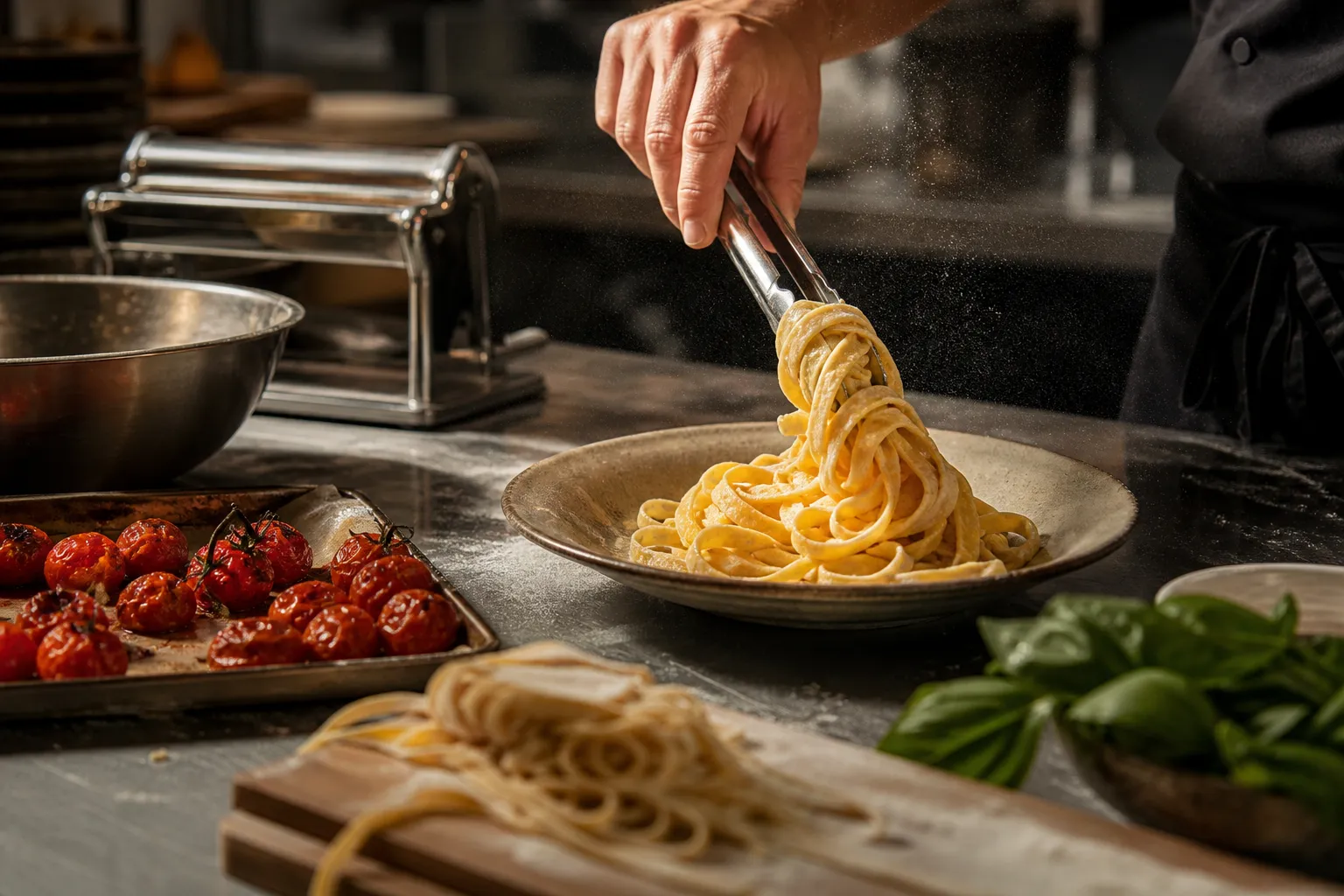
Bigoli is the detail that gives Tarai its identity. Luxury magazine described the restaurant as a fresh pasta space introducing traditional Italian pasta, noting that Chef Patricia makes long bigoli pasta using only water and flour, with a bigolaro fitted with a copper mold brought from Italy.2 That detail matters because bigoli is not simply another spaghetti shape. It is thicker, more tactile, and built for sauces that cling to the noodle rather than slide away.
Several source descriptions reinforce the same handmade direction. Siksin’s April 14, 2025 feature on new fresh pasta restaurants introduced Tarai as a place that makes pasta every morning and prepares everything from sauces to fresh noodles in-house.3 Maison Korea also emphasized that Tarai makes basic elements such as broth, pesto, and jam directly, which helps explain why the restaurant is framed around the comfort of Italian home cooking rather than just a fashionable pasta trend.1
The best-known version is the homemade bigoli pasta with tomato pesto. Siksin’s restaurant page describes the representative dish as using fresh bigoli noodles with tomato pesto, roasted tomatoes, parmesan slices, and basil.4 That combination gives a useful picture of the dish even if you have not seen it in person: roasted tomato for depth, pesto for richness, parmesan for salt and savoriness, and basil for lift.
The Menu Around the Bigoli
Tarai’s menu identity is still centered on fresh pasta, but the sources show a little more range around that core. Maison Korea mentions tomato pesto bigoli, carbonara bigoli, and Nonna Bisa’s meatballs.1 Siksin’s fresh pasta roundup lists bigoli pasta with roasted tomato pesto, carbonara bigoli, octopus ragu spaghetti, and polenta among the menu items.3
Luxury magazine also points to bigoli pasta and polenta as major menu items, which suggests Tarai is not only leaning on noodles but also building a small Italian comfort-food vocabulary around them.2 For readers trying to understand the appeal, that is probably the simplest way to frame it: Tarai appears to be less about maximal choice and more about a compact set of dishes that support the fresh pasta concept.
There is also a family-friendly detail in the available listings. Tabling lists a kids pasta at 7,000 won, while Diningcode describes the kids pasta as a half portion of tomato pesto bigoli for children.56 That does not turn the restaurant into a children’s restaurant, of course, but it does show that the bigoli dish has been adapted into a smaller format for younger diners.
One important note for expectations: Diningcode states that the homemade fresh pasta changes by season.6 So while the tomato pesto bigoli and carbonara bigoli are repeatedly mentioned across sources, anyone planning around a specific dish should treat menus as subject to change rather than fixed forever.
Where It Fits in Yeonhui-dong
Tarai is listed at 45-21 Yeonhui-ro 11-gil, Seodaemun-gu, Seoul, with some listings specifying the first floor.26 The same address appears across multiple source records, including Siksin, Tabling, and Diningcode, giving a consistent location picture for readers searching for the restaurant.456
The space itself sounds modest rather than grand. Maison Korea’s description of an approximately 50-square-meter, wood-toned room is useful because it hints at the mood: warm, compact, and probably more neighborhood-focused than showy.1 That matches the restaurant’s broader positioning as an Italian brunch cafe and fresh pasta spot rather than a formal fine-dining venue.
For practical planning, Tabling lists Tarai as closed on Wednesdays and open from 10:00 to 20:30 on the other days, with pet entry, baby chairs, and reservations available.5 Diningcode also lists Wednesday as the regular closing day, 10:00 to 20:30 operating hours, and a 19:40 last order.6 Because restaurant hours can change, these details are best read as the currently listed information in the cited platforms, not as a permanent guarantee.
A Small Fresh-Pasta Address With a Clear Signature
What makes Yeonhui Tarai easy to understand is that its identity is unusually focused. The restaurant is repeatedly described through fresh pasta, handmade elements, and bigoli noodles, with tomato pesto bigoli appearing as the clearest signature across restaurant pages and editorial coverage.
If you are drawn to pasta places with a visible point of view, Tarai’s appeal is straightforward: thick fresh noodles, house-made sauces, Italian home-style framing, and a Yeonhui-dong setting that seems compact and warm rather than flashy. Based on the available source material, Tarai bigoli pasta is not just one menu item among many; it is the dish that explains why this restaurant is being noticed.
References
- 연희 한 바퀴 (메종코리아, 2026-02-24)
- ITALIAN FRESH PASTA (LUXURY)
- 탱글하고 녹진한 면! 생면파스타 신상 맛집5 (식신, 2025-04-14)
- 타라이 – 서울 강북, 연희동 (식신)
- 타라이 – 테이블링 (테이블링)
- 타라이 – 연희동 이탈리아음식, 생면파스타 맛집 (다이닝코드)
About the Author