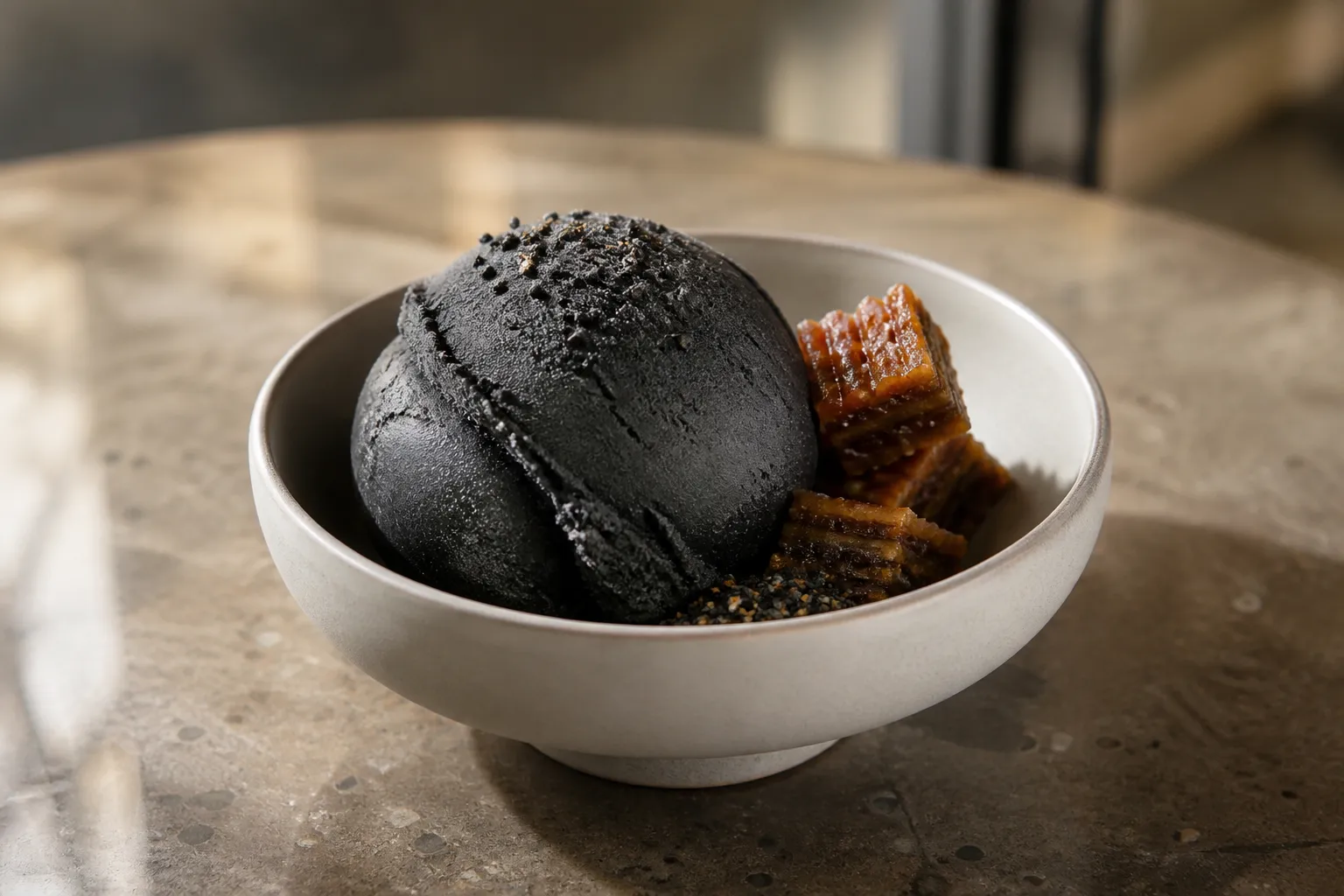
Aeum black sesame gelato sits at an interesting meeting point: a Changjeon-dong dessert cafe known for reworking Korean sweets, and a wider K-Heritage Dessert wave that brings traditional flavors into formats people already recognize. The menu detail that stands out in the available records is sumaksae black sesame gelato, connected through visitor records from the Royal Culture Festival K-Heritage Market at Heungnyemun Square in Gyeongbokgung Palace.1
Aeum itself is listed as a dessert cafe at 36 Seogang-ro 11-gil, Mapo-gu, Seoul, with another source identifying it as a Changjeon-dong dessert cafe under the name “aeum.”2 That address matters because it places the brand not in an abstract trend report, but in a real neighborhood cafe context: a small modern dessert shop building its identity around Korean confections, texture, and presentation.
Aeum Black Sesame Gelato and the Sumaksae Detail
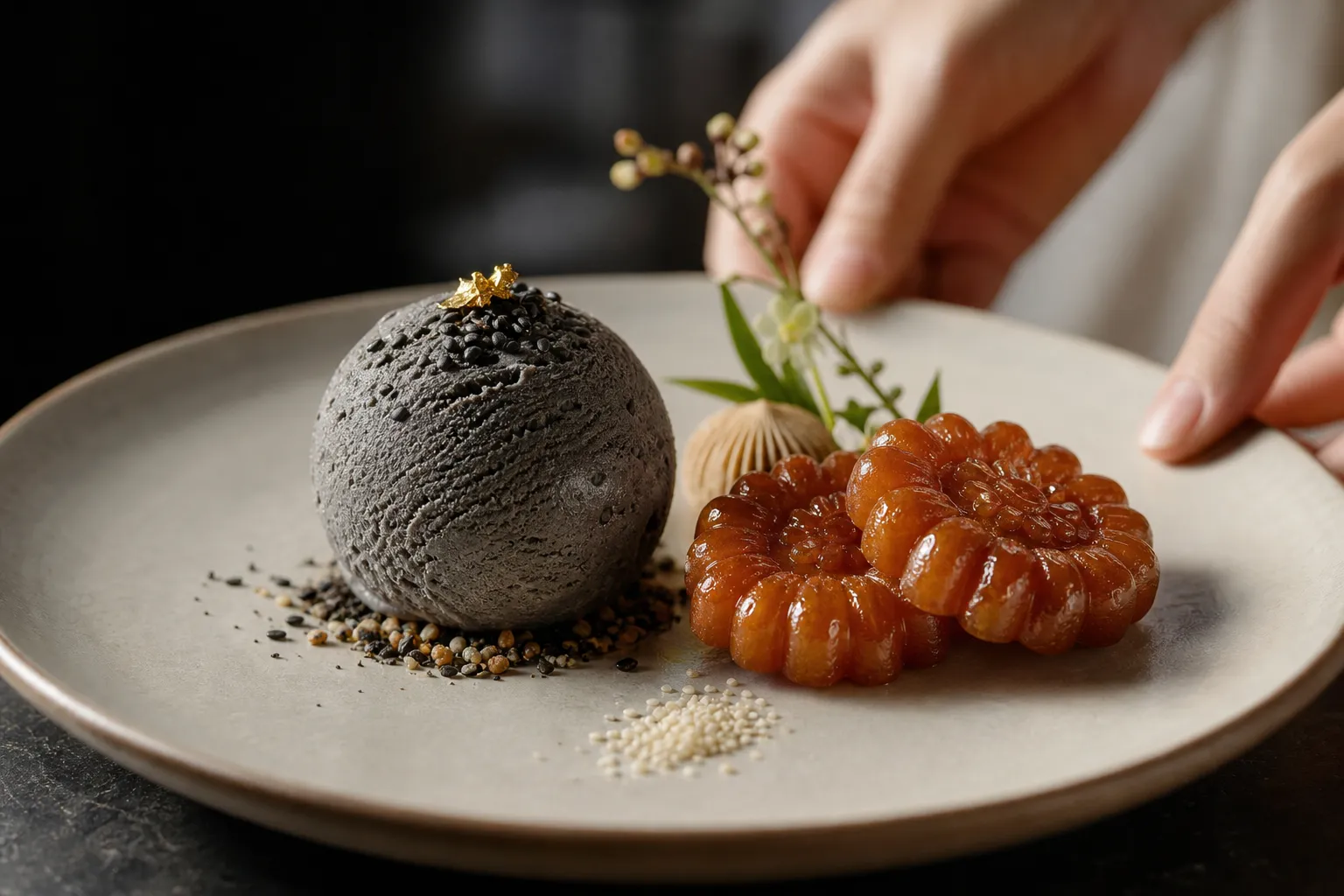
The most specific source-backed angle for Aeum’s black sesame gelato is its appearance as “sumaksae black sesame gelato.” In the available store-review records, Aeum is connected with the Royal Culture Festival K-Heritage Market at Gyeongbokgung Palace’s Heungnyemun Square, where sumaksae black sesame gelato and a cookie expressing the sumaksae motif were recorded as being sold.1 Polle’s Aeum page also cross-checks the same idea by noting a recent review from the Royal Culture Festival K-Heritage Market where a visitor recorded eating Aeum’s sumaksae black sesame gelato.2
That gives the dessert a more layered identity than “black sesame ice cream” alone. Black sesame is already a familiar ingredient in Korean sweets and drinks, but the sumaksae reference adds a heritage-design dimension. The sources do not provide a full ingredient list, recipe, price, or production method for the gelato, so those details should be left unstated. What can be said is more precise: Aeum’s black sesame gelato has been publicly associated with a heritage market setting, and it has been described in visitor records through the sumaksae motif.
If you are reading about Korean desserts from outside Korea, this is exactly why the category can feel so fresh. The appeal is not only sweetness. It is the way a traditional image, a familiar ingredient, and a contemporary dessert format can sit together without making the result feel like a museum object. Aeum’s available profile suggests that this is also consistent with the brand’s broader direction.
Why Aeum Fits the K-Heritage Dessert Moment
Aeum is introduced by the Korean Culture Portal as a food-sector company located at 36 Seogang-ro 11-gil, first floor, in Seoul’s Mapo-gu. The same profile says Aeum develops and serves items such as gyeol yakgwa sand, sliced yakgwa, seolgi yanggaeng, baked chalpyeon, and baked jeungpyeon, while its main showroom offers Korean dessert plating and drinks.3
That list is helpful because it shows that black sesame gelato is not floating separately from the brand’s identity. Aeum is already positioned around Korean-style sweets and modern serving formats. In a 2024 interview published by the Korean Culture Portal, CEO Jang Ha-jin described Aeum as a dessert brand that reinterprets Korean hangwa through modern manufacturing methods.4 In the same interview, Jang explained that gyeol yakgwa sand is made with layered yakgwa that goes through a 72-hour process of dough preparation, frying, drying, syrup coating, and aging, then filled with sweet, soft cream in flavors including vanilla, black sesame, coconut, and strawberry.4
That quote matters because it gives context for the brand’s black sesame sensibility. The source does not say the gelato is made the same way as the cream in gyeol yakgwa sand, and it should not be treated as proof of that. But it does show that black sesame is part of Aeum’s documented flavor language, alongside a broader practice of translating hangwa into a more contemporary dessert experience.
Elle Korea’s profile adds another angle, introducing AEUM as a dessert shop near Gyeongui Line Forest Park and describing it as a place that reinterprets Korean traditional desserts, including gyeol yakgwa sand and baked chalpyeon, for modern tastes.5 The same article says Aeum’s signature gyeol yakgwa sand combines elements of mo-yakgwa and the French dessert mille-feuille.5 That comparison is useful because it shows how Aeum’s work can bridge Korean pastry references and globally recognizable dessert structures.
From Changjeon Cafe to Festival Pop-Up Culture
Aeum’s presence is not limited to its shop listing. The Korea Craft and Design Foundation announced that the 2025 Oneul Traditional Festival would run from September 25 to 28, 2025, at S Factory in Seongsu-dong, Seoul, under the theme “Pungryu Yechan,” where tradition and modernity meet.6 The release said visitors could experience and purchase products that reinterpret tradition in contemporary ways, including hangwa and drinks, at first-floor pop-up booths, and that menus from specialty coffee brand Lowkey and premium hangwa brand Aeum would be offered.6
Because that festival date has already passed by May 7, 2026, it is best understood as part of Aeum’s documented public-facing activity rather than an upcoming schedule. Still, it reinforces a pattern visible across the sources: Aeum’s work belongs to a broader ecosystem of contemporary Korean craft, food, and design events where dessert becomes a cultural format as much as a cafe menu.
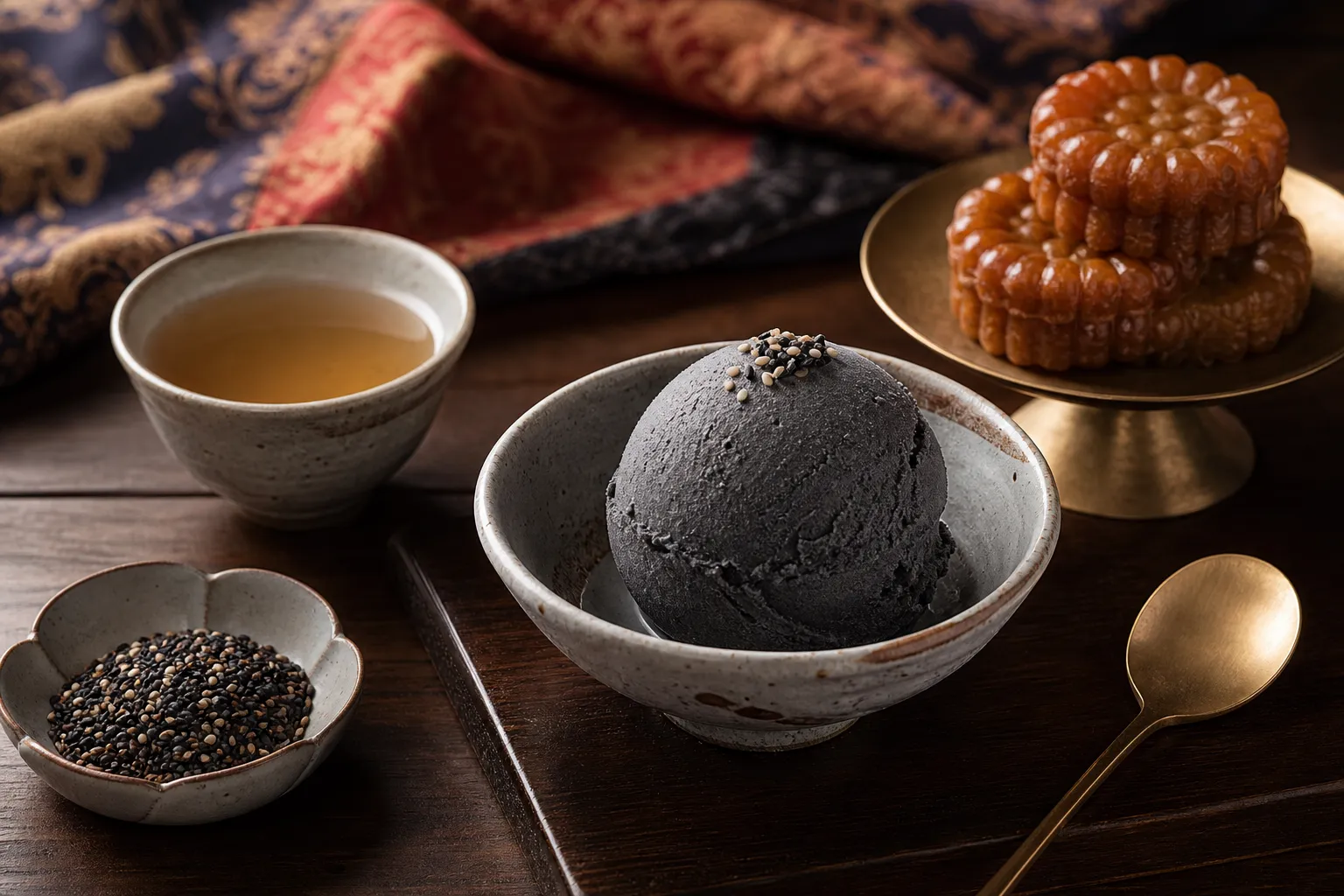
Aeum black sesame gelato is compelling because the available facts point to more than a single flavor. It connects a Changjeon-dong dessert cafe, a documented black sesame dessert vocabulary, heritage-market exposure, and a sumaksae-inspired presentation into one compact example of how Korean traditional dessert culture is being reimagined for modern eaters.
References
- 에움 – 테이블링 매장 정보 (테이블링)
- 에움 – 창전동 디저트카페 (뽈레 Polle)
- 에움(aeum) – 오늘전통창업 기업 먹거리 (전통문화포털)
- 한국 전통 다과로 담아낸 느림의 미학, 에움 (전통문화포털, 2024-11-22)
- 한식 디저트의 새로운 얼굴들 (엘르 코리아)
- 2025 오늘전통축제 개최 – 전통과 현대가 만나는 성수 ‘풍류예찬’ (뉴스와이어 / 한국공예디자인문화진흥원, 2025-09-23)
About the Author