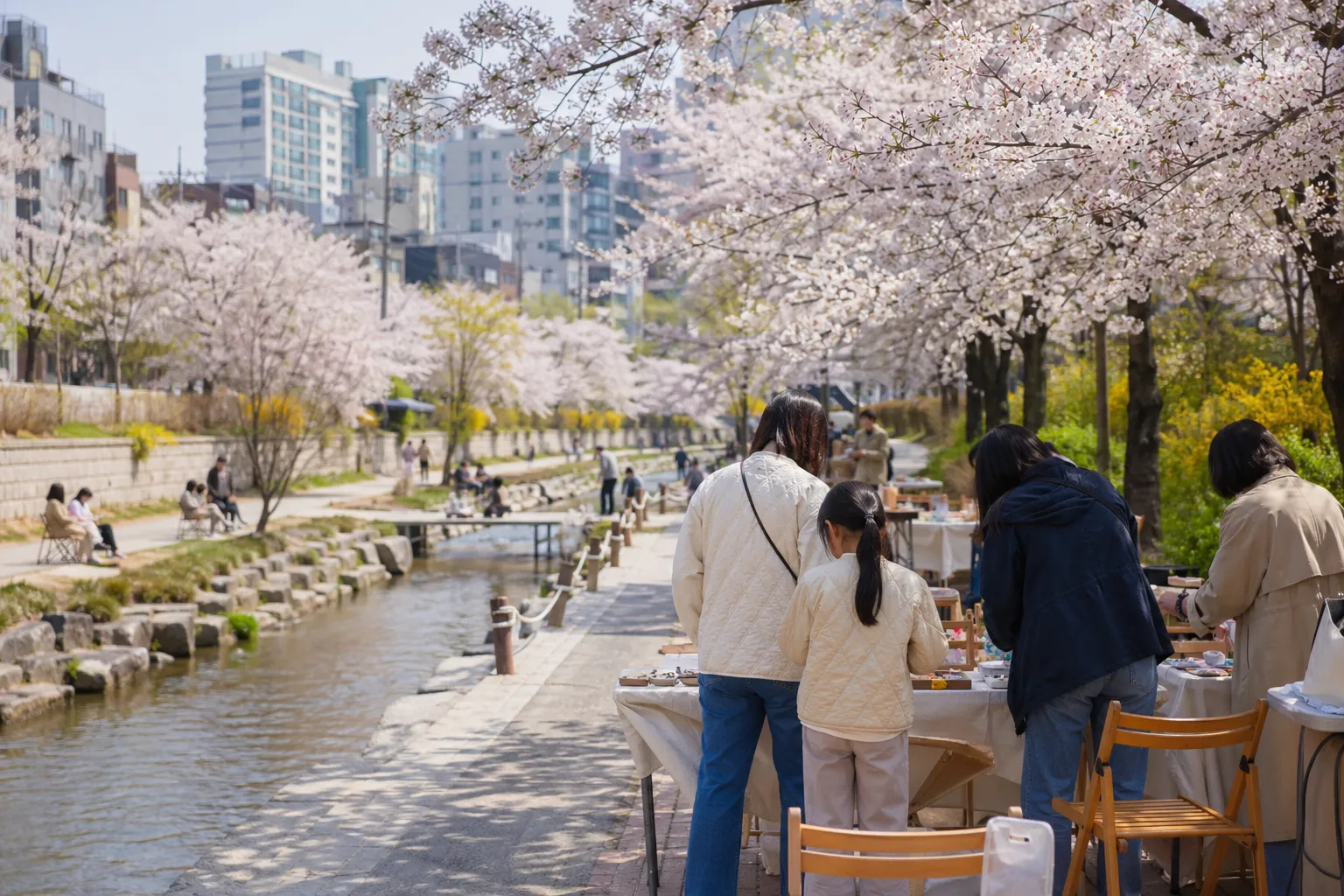
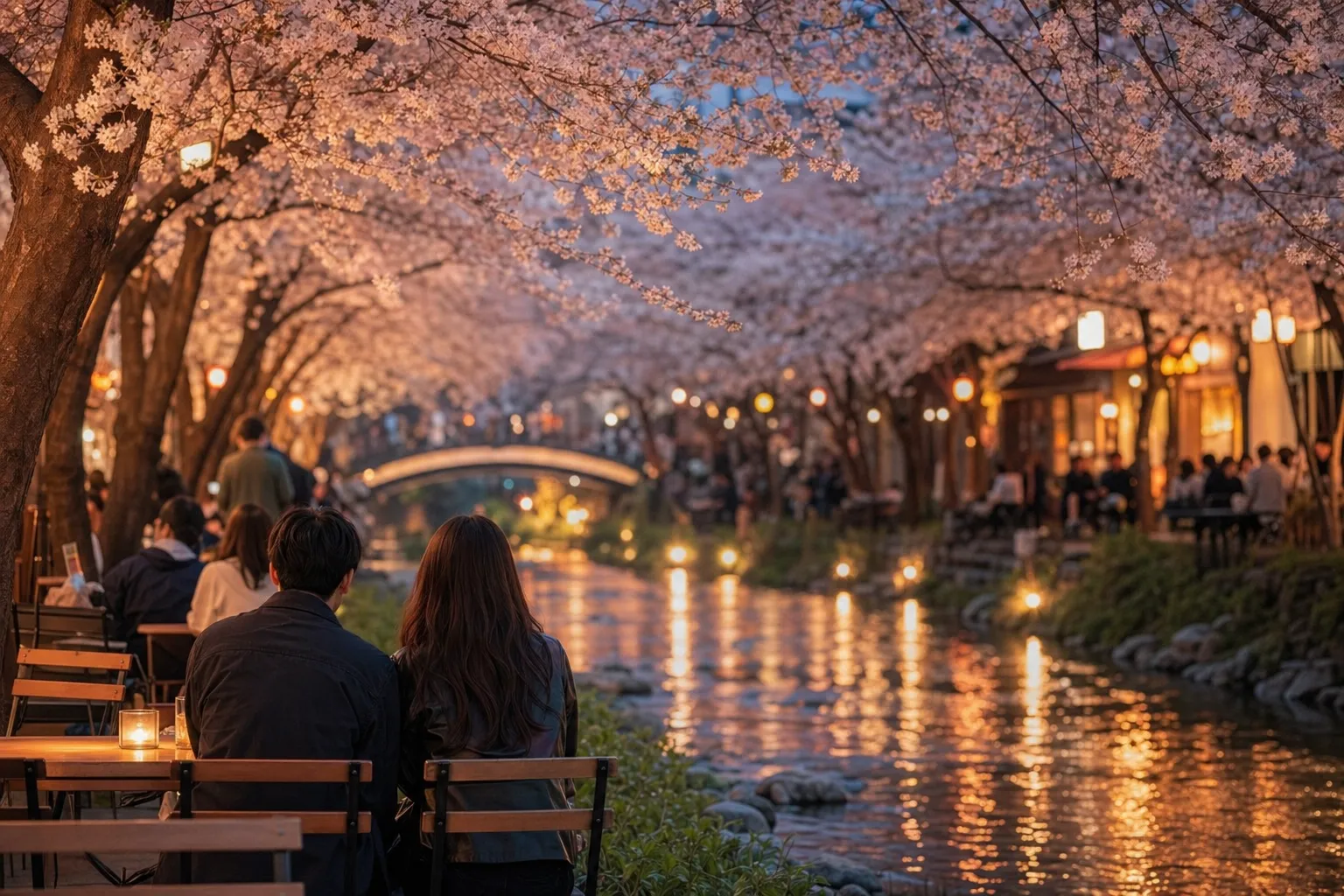
Seongbuk Stream cherry blossom yajang became one of Seoul’s most talked-about spring dining scenes in April 2026, especially around the Hansung University Station area. For anyone searching for Seongbuk Stream Yajang, the key point is practical: the area drew major crowds during blossom season, but outdoor dining there also raised complaints about blocked sidewalks, road use, trash, noise, and enforcement.
Seongbuk Stream Cherry Blossom Yajang: Where the Crowds Gathered
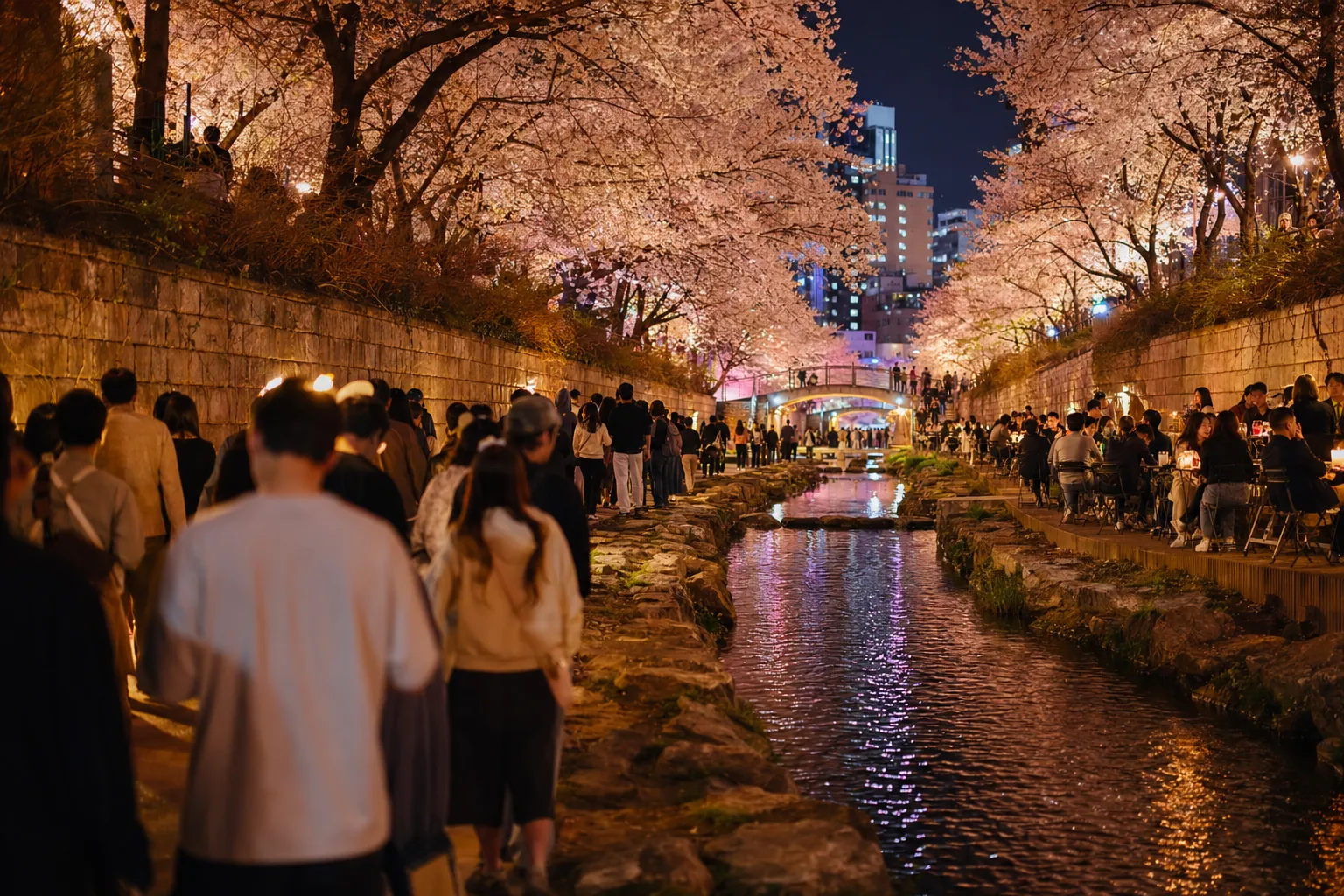
The 2026 attention centered on Seoul’s Seongbuk-gu, around Seongbuk Stream near Hansung University Station. News1 reported that on the evening of April 3, 2026, outdoor tables and cherry blossom visitors made both roads and sidewalks crowded, as the area spread on social media as a “cherry blossom yajang” spot among visitors in their 20s and 30s. Some restaurants reportedly had waiting lists reaching about 300 teams by 8 p.m. that evening.1
Korea JoongAng Daily later described the Hansung University Station area near Seongbuk Stream as having emerged within recent weeks as one of Seoul’s representative yajang spots. During a site visit on April 11, 2026, the cherry blossoms had already passed their peak, but most outdoor seats were still full, and many businesses reportedly had more than 50 teams waiting.2
That means visitors should not treat the area like a quiet riverside stroll during peak evening hours in blossom season. The strongest source-backed pattern is that demand was concentrated around dinner time, with long waits and dense foot traffic. One restaurant worker quoted by Korea JoongAng Daily said that when the blossoms were at their peak in early April 2026, waiting lists at some shops exceeded 300 teams.2
A local visitor quoted in News1 summed up the change in atmosphere: “Wherever the rumor came from this spring, there are too many people.”1 The comment reflects the central visitor issue: the attraction is not only the blossoms or restaurants, but the sudden crowding created when both arrive at once.
Rules, Complaints, and What to Check Before Going
The most important caution is that outdoor business around Seongbuk Stream was not simply presented as a fully permitted festival-style setup. Korea JoongAng Daily reported Seongbuk-gu’s explanation that outdoor business in the Seongbuk Stream area was, in principle, not allowed, and that in early April the district received about five pedestrian-inconvenience complaints per day.2
The complaints were not limited to a single inconvenience. Reports raised concerns about unauthorized road occupation, blocked walking space, trash, noise, and fire risk. The Fact reported that spring yajang activity in central Seoul alleys, including Seongbuk Stream, was creating difficulties for local districts because of resident complaints about pedestrian access, waste, noise, and fire-related concerns.3
For visitors, this changes how to plan a trip. First, assume that visible outdoor seating may be subject to district guidance or enforcement, not a guaranteed public event. Second, do not block sidewalks or roads while waiting. Third, if a restaurant has a long queue spilling into pedestrian space, it may be better to return at another time rather than add to crowding.
Seongbuk-gu’s response also became more active as complaints continued. The Fact reported that the district was carrying out weekly joint inspections by the health hygiene and construction management departments, weekend food hygiene guidance checks, twice-weekly nighttime enforcement, distribution of notices to business owners, and on-site guidance.3
For a practical visit, the safest expectation is simple: go for the stream, blossoms, and nearby businesses, but do not assume that every outdoor table arrangement is officially approved or stable. If the goal is a meal, prepare for a long wait during peak evenings. If the goal is a walk, choose a less crowded hour and keep moving through narrow areas.
Public Spring Programs Along Seongbuk Stream
The yajang crowds overlapped with official spring cultural programming along Seongbuk Stream. Seongbuk-gu operated “Culture Flows Through Seongbuk Stream” from April 3 to April 12, 2026, at the Seongbuk Stream waterfront vitality hub. The program included the daytime outdoor library “Reading Seongbuk Stream,” the nighttime street performance program “Again, Spring,” and media facade lighting.4
Herald Economy reported that “Reading Seongbuk Stream” and “Again, Spring” were scheduled from April 3 to April 12, 2026, around the Seongbuk Stream waterfront vitality hub in front of Seongbuk-gu Office. During the event period, the outdoor library operated from 3 p.m. to 8 p.m. with about 500 books, and street performances ran daily from 7 p.m. to 8 p.m.5
The same program included classical music, magic, and busking performances by university and young artists, along with a media facade at Donam Cathedral.5 These official programs matter because they explain why the stream area had a broader spring draw beyond dining alone: visitors had blossoms, restaurants, reading space, performances, and nighttime lighting concentrated in one area.
There is also older precedent for blossom-season programming. In 2023, Seongbuk-gu held the “Seongbuk Stream Cherry Blossom Spring Festival” from April 6 to April 8, organized by the Seongbuk Stream alley-type shopping district merchants’ association as a Seoul 2023 local commercial district revitalization project. That event included a car-free street from 5 p.m. to 9 p.m., cultural performances, experience booths, and a cherry blossom wish tree.6
However, the 2023 festival details should not be read as rules for 2026 yajang visits. They show that Seongbuk Stream has been used for blossom-season commercial and cultural activity before, but the 2026 reports focus on crowding, outdoor dining disputes, complaints, and district enforcement.
Quick FAQ
Is Seongbuk Stream Yajang an official cherry blossom festival?
The sources do not describe the 2026 yajang crowds as an official festival. They describe a popular outdoor dining and blossom-viewing scene near Hansung University Station, alongside separate official cultural programs such as “Reading Seongbuk Stream” and “Again, Spring.”4
When was the 2026 Seongbuk Stream spring program held?
The official “Culture Flows Through Seongbuk Stream” program ran from April 3 to April 12, 2026. The outdoor library operated from 3 p.m. to 8 p.m., and street performances were scheduled daily from 7 p.m. to 8 p.m. during the event period.5 !Seongbuk Stream cherry blossom spring programs near Hansung University Station Seongbuk Stream’s cherry blossom yajang appeal is easy to understand: riverside scenery, spring weather, restaurants, and nighttime activity all came together in a compact Seoul neighborhood. The practical takeaway is just as clear: expect crowds, check the situation on-site, respect pedestrian space, and treat outdoor seating as a regulated issue rather than a guaranteed part of the visit.
References
- '벚꽃 야장' 떠오른 성북천…차도는 아수라장, 인도는 쓰레기장 (뉴스1(네이트 재전송), 2026-04-04)
- 날 풀리자 북적이는 서울의 ‘야장’ 식당 (Korea JoongAng Daily, 2026-04-17)
- 봄 맞아 '낭만 야장' 활기…주민 민원에 자치구는 골치 (더팩트(네이트 재전송), 2026-04-22)
- 성북구, 벚꽃길 따라 ‘문화가 흐르는 성북천’…낮엔 독서·밤엔 공연 (문화일보(다음 재전송), 2026-04-09)
- 성북구 ‘책읽는 성북천’·문화공연 ‘다시, 봄’ 운영 (헤럴드경제/미주헤럴드경제, 2026-03-30)
- 성북천 벚꽃 봄맞이 축제 개최 (뉴스로, 2023-04-05)
About the Author