
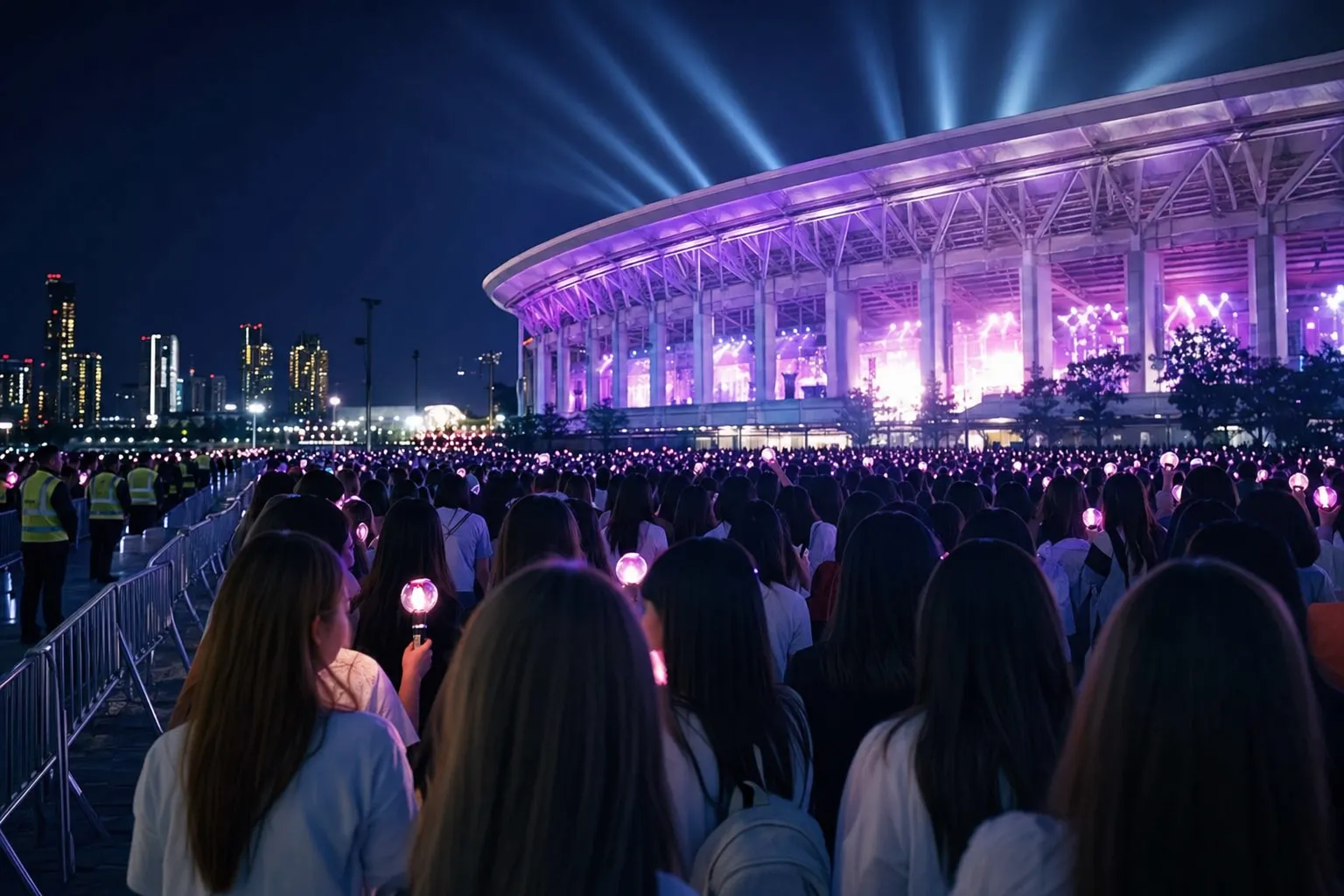
The BTS venue crisis has become a clear test of South Korea’s live performance infrastructure. BTS opened its 2026 world tour, “ARIRANG,” on April 9 at Goyang Stadium in Gyeonggi Province, drawing fans to a major return after the members’ military-service hiatus. The concert itself showed the scale of global demand for the group. At the same time, the choice of a roofless football stadium outside central Seoul highlighted a practical problem: South Korea has limited options for very large concerts when its key stadiums are unavailable or restricted.
Why the BTS venue crisis matters
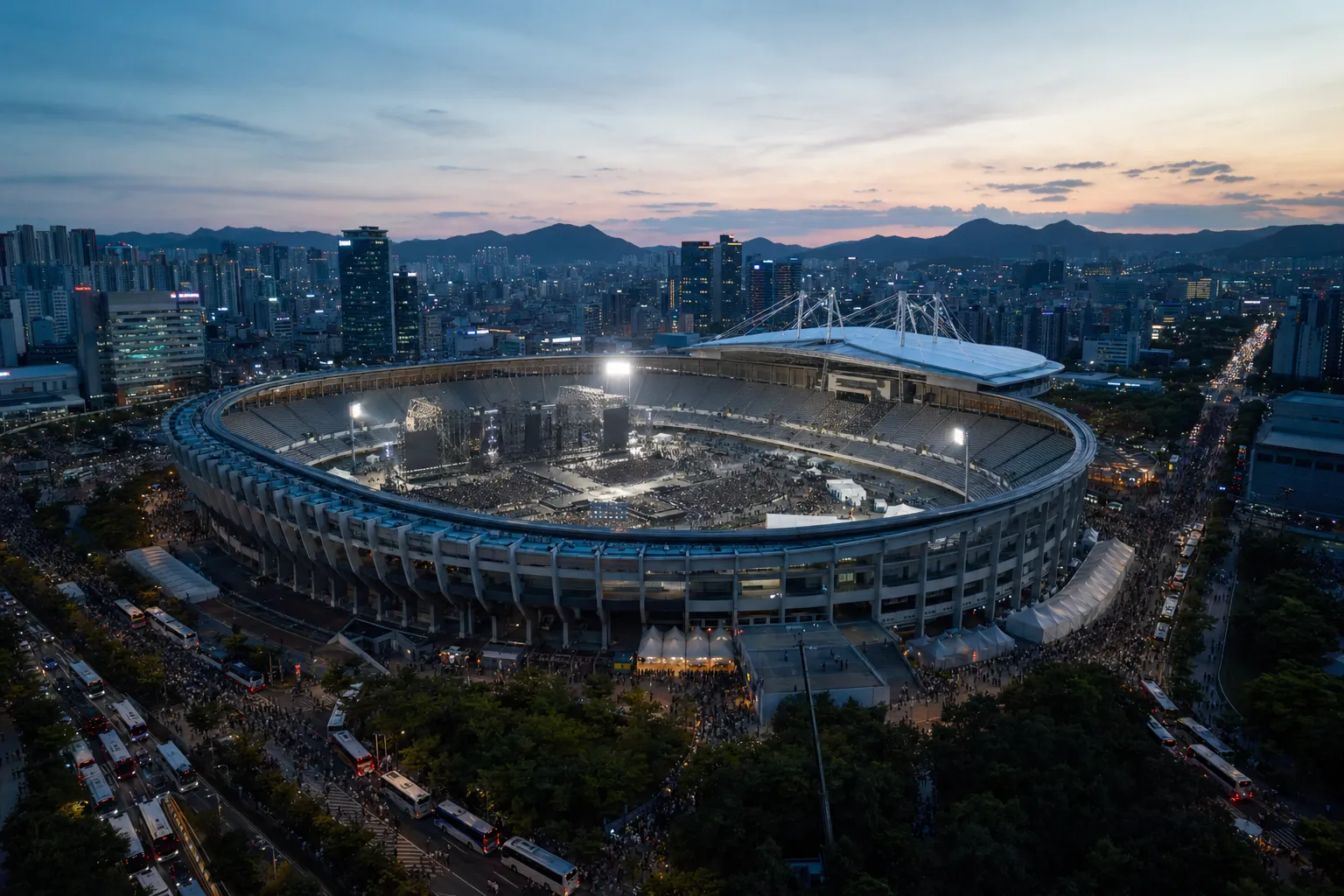
BTS’s return was a major event by any standard. The “ARIRANG” tour is scheduled for 85 performances across 34 cities. The opening concert in Goyang featured a 360-degree open stage placed at the center of the stadium, and the venue was filled despite bad weather. Fans gathered in the rain at a stadium described as holding more than 40,000 people, with the Goyang concerts also discussed as events on a roughly 50,000-seat scale.
The pressure on tickets appeared well before the first performance. BTS’s three Korea concerts on April 9, 11, and 12 sold out during fan-club presales. After that, demand moved into resale markets, where some tickets for the April 11 Goyang Main Stadium show were listed at more than 39 times the highest official price. Ticketing notices warned that transfers, proxy purchases, and counterfeit tickets were prohibited, and that irregular reservations could be canceled.
These details matter because they show that the venue question is not abstract. BTS can fill a very large stadium in difficult weather, and demand can still exceed supply. For an artist at this scale, a lack of suitable venues is not simply an inconvenience. It affects where performances can be held, how many fans can attend, and how smoothly a major tour can begin at home.
Seoul-area constraints pushed the tour to Goyang
Goyang Stadium was able to host the opening, but it also illustrated the limits of available infrastructure. The stadium is an outdoor football facility and has been described as 22 years old. Because it has no roof, concerts there are exposed to weather. As an outdoor sports venue, it can also face constraints involving sound use and the practical demands of staging a large concert in a space not built primarily for live music.
The shortage became more visible because other major Seoul-area options are constrained. Jamsil Olympic Main Stadium is undergoing renovation. Seoul World Cup Stadium has become a less available concert option because of complaints and concerns related to grass damage. Those two factors have narrowed the list of large venues near Seoul at the same moment when K-pop’s biggest acts require stadium-level capacity and complex production setups.
The result is a contradiction. South Korea is closely associated with the global rise of K-pop, yet the country does not have an abundant supply of modern large concert venues capable of comfortably handling events at the 50,000-person level. BTS’s Goyang opening made that tension visible. The concert succeeded as a major homecoming performance, but it also showed how dependent the market can be on temporary or imperfect alternatives.
The Goyang concerts also brought local benefits. Attention focused on nearby accommodations and merchandise sales as fans gathered for the shows. That local economic activity is part of the reason large concerts matter beyond the performance itself. A major tour stop can affect lodging, retail, transport, and surrounding commercial areas. But those benefits depend on the ability to host events reliably and repeatedly.
Dome stadium plans and the search for alternatives
The debate has drawn attention to possible alternatives outside central Seoul. One proposal under discussion is a 50,000-seat dome stadium in the Cheonan and Asan area of South Chungcheong Province. The idea has been presented as a potential response to rising demand for major performances and the shortage of large replacement venues.
A dome stadium could address some of the specific problems exposed by the Goyang opening. A roofed facility can reduce weather risk, and a modern large venue could offer more predictable conditions for sound, production, and audience management. The available information does not establish that such a project would solve every issue, but it shows why the discussion has moved beyond a single concert. The problem is structural: demand for large K-pop performances has grown, while the supply of suitable venues remains limited.
There is also a delayed venue project near Goyang Stadium. A dedicated concert arena in the area has been delayed and is being pursued again with a target completion year of 2030. That timeline underscores why the current debate is urgent for the live entertainment sector. BTS has already begun a tour that will continue beyond Korea to the United States, Europe, Asia, and other regions, while the domestic venue pipeline remains a work in progress.
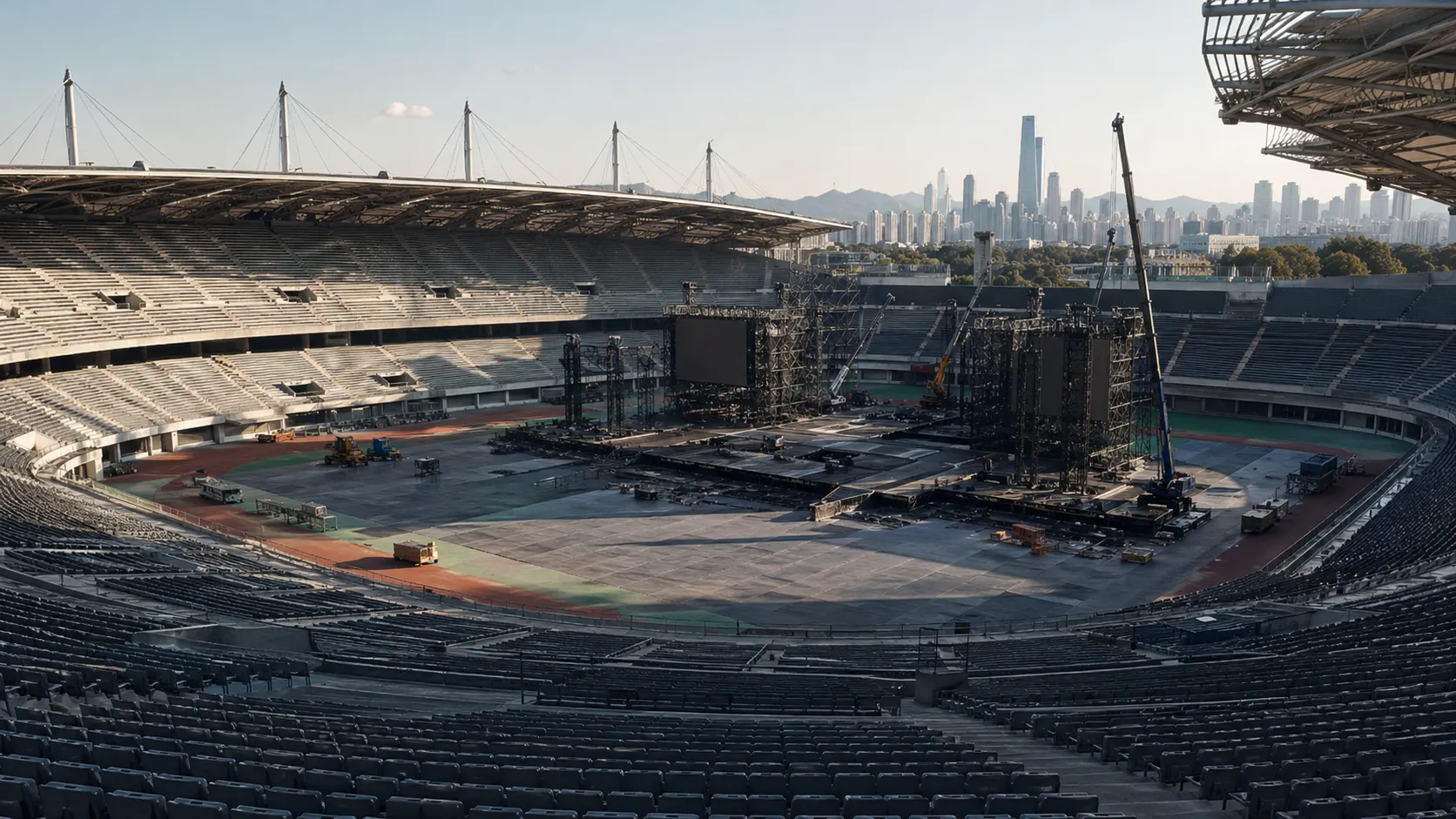
In the end, the BTS venue crisis is not a question of whether one concert could be staged successfully. It was. The opening of “ARIRANG” filled Goyang Stadium, drew fans in poor weather, and launched a major international tour. The larger issue is whether South Korea has enough modern, large-scale venues for the level of demand its own pop industry now creates. BTS’s homecoming made that gap impossible to ignore.
About the Author