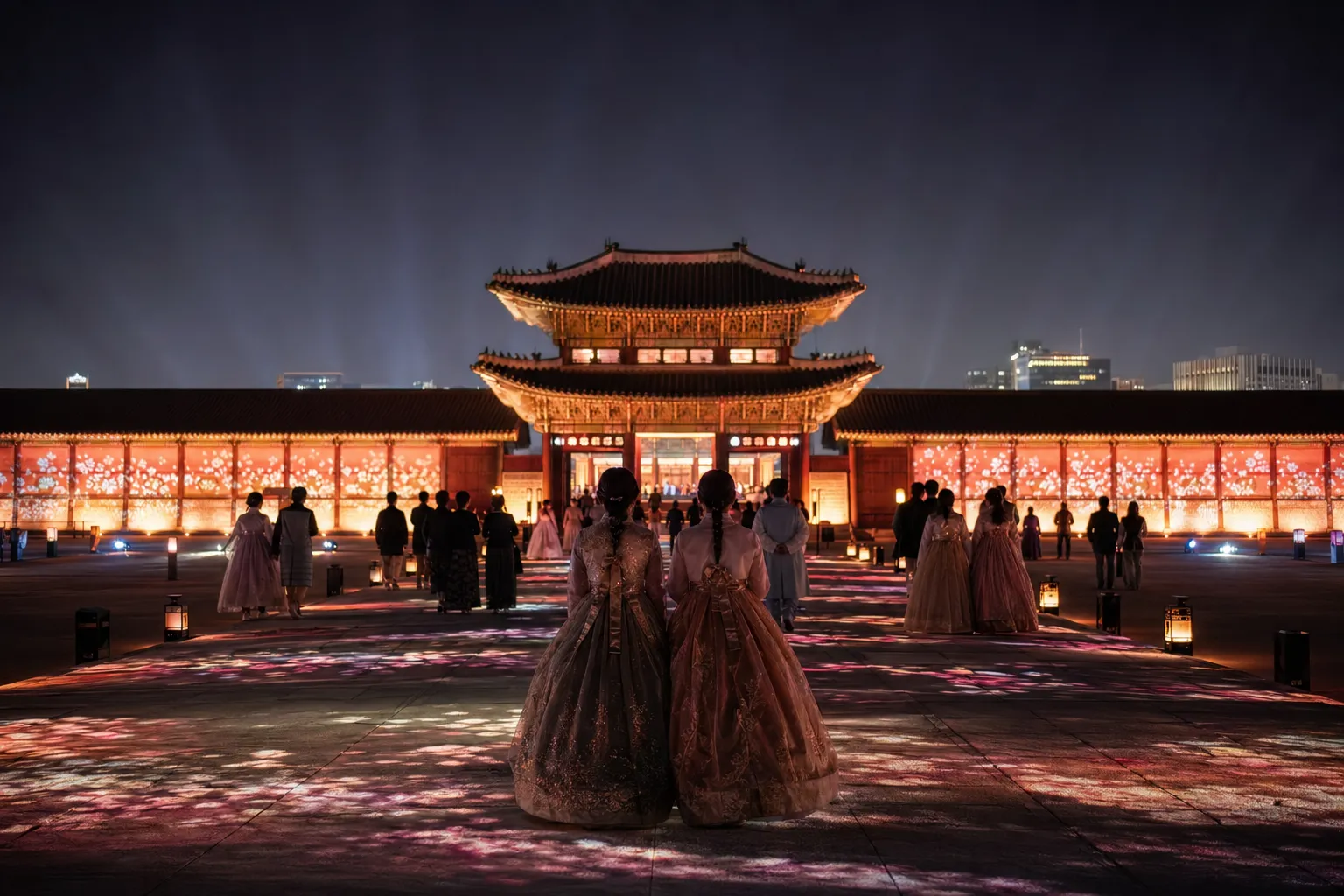
The Gyeongbokgung Festival opened spring in Seoul with a vivid palace celebration at Heungnyemun Square, bringing together royal aesthetics, K-content, media art, traditional performance, and contemporary stage energy. Held at Gyeongbokgung Palace in Jongno-gu, Seoul, the opening ceremony set the tone for the 2026 Spring Royal Culture Festival, which runs from April 25 to May 3 across Seoul’s five major palaces and Jongmyo. If you love Korean heritage but also want to feel how it can speak in a modern language, this festival is exactly the kind of cultural moment worth paying attention to.
Gyeongbokgung Festival Opening: Hyper Palace at Heungnyemun
The opening ceremony took place on April 24, 2026, from 7:30 p.m. to 8:40 p.m. at Heungnyemun Square in Gyeongbokgung Palace. Admission was announced as free, with an audience capacity of 800 people and a viewing age of 7 and older. The event was held just before the main festival period began, giving the wider celebration a dramatic first impression in one of Seoul’s most symbolic palace spaces.
The theme was “Palace, Awakening Art – Hyper Palace,” a concept that blended court culture with today’s creative language. The ceremony was directed by Yang Jung-ung, who served as artistic director for the opening stage. His approach presented the palace not only as a place of tradition, but also as a space that can hold the present and future.
That idea feels especially fitting at Gyeongbokgung. Heungnyemun, the palace gate area where the ceremony unfolded, became more than a historic backdrop. It acted like part of the performance itself, connecting architecture, light, movement, music, and fashion into one spring night program.
Where Palace Aesthetics Met K-Content
The performance program brought together several forms that might sound very different at first: rap, Ganggangsullae, a reinterpretation of Bongsan mask dance, a hanbok fashion show, media facade art, Korean traditional music, and EDM. But the point of the evening was precisely that crossover. Rather than treating heritage as something still or distant, the ceremony placed it in conversation with contemporary performance.
One of the highlighted moments was a media facade by media artist Han Yo-han projected on Heungnyemun. The historic gate became a visual surface for digital art, making the palace architecture part of a modern light-based performance. This kind of staging is one reason the “Hyper Palace” theme worked naturally: the palace was not replaced by technology, but awakened through it.
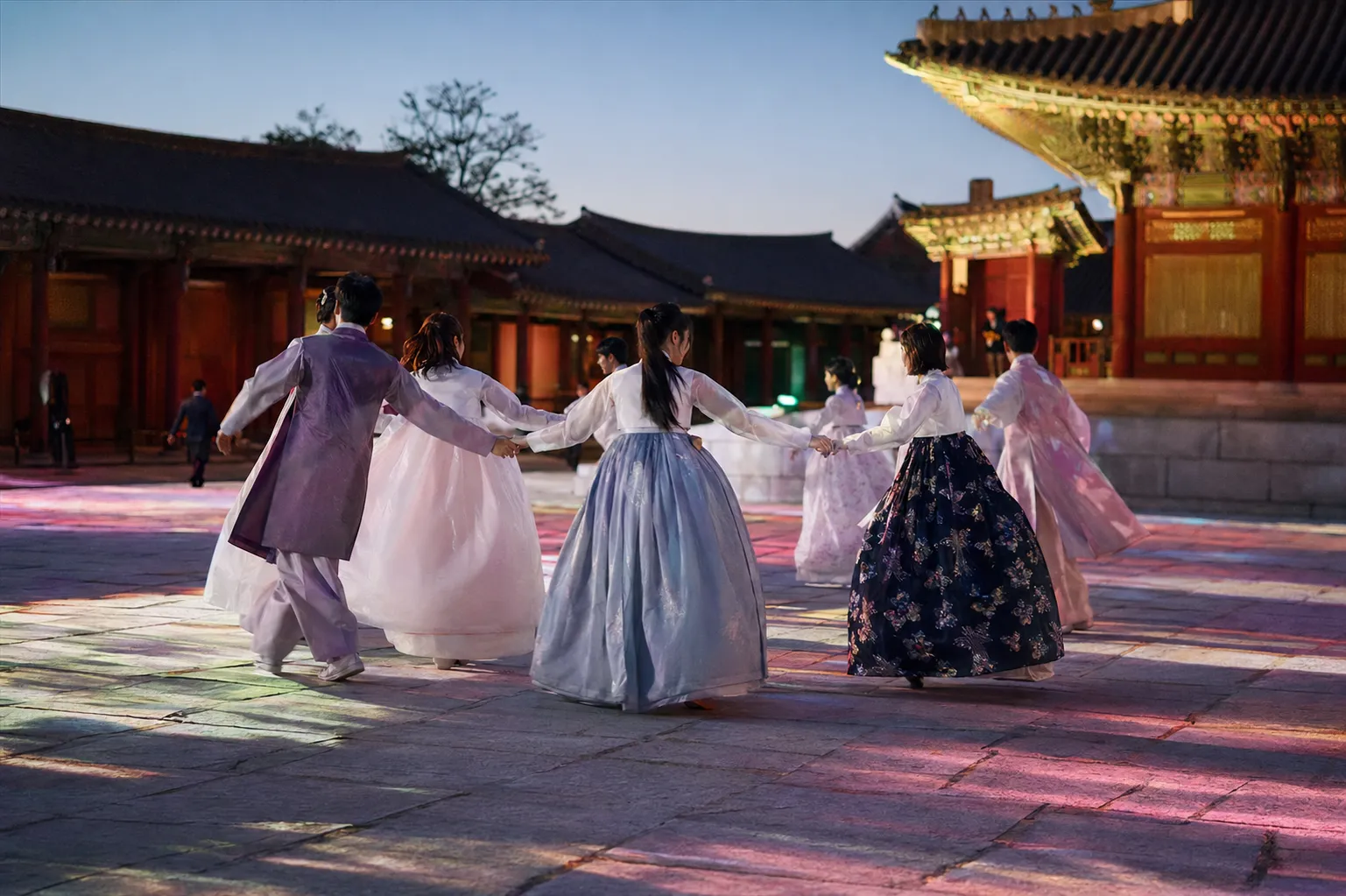
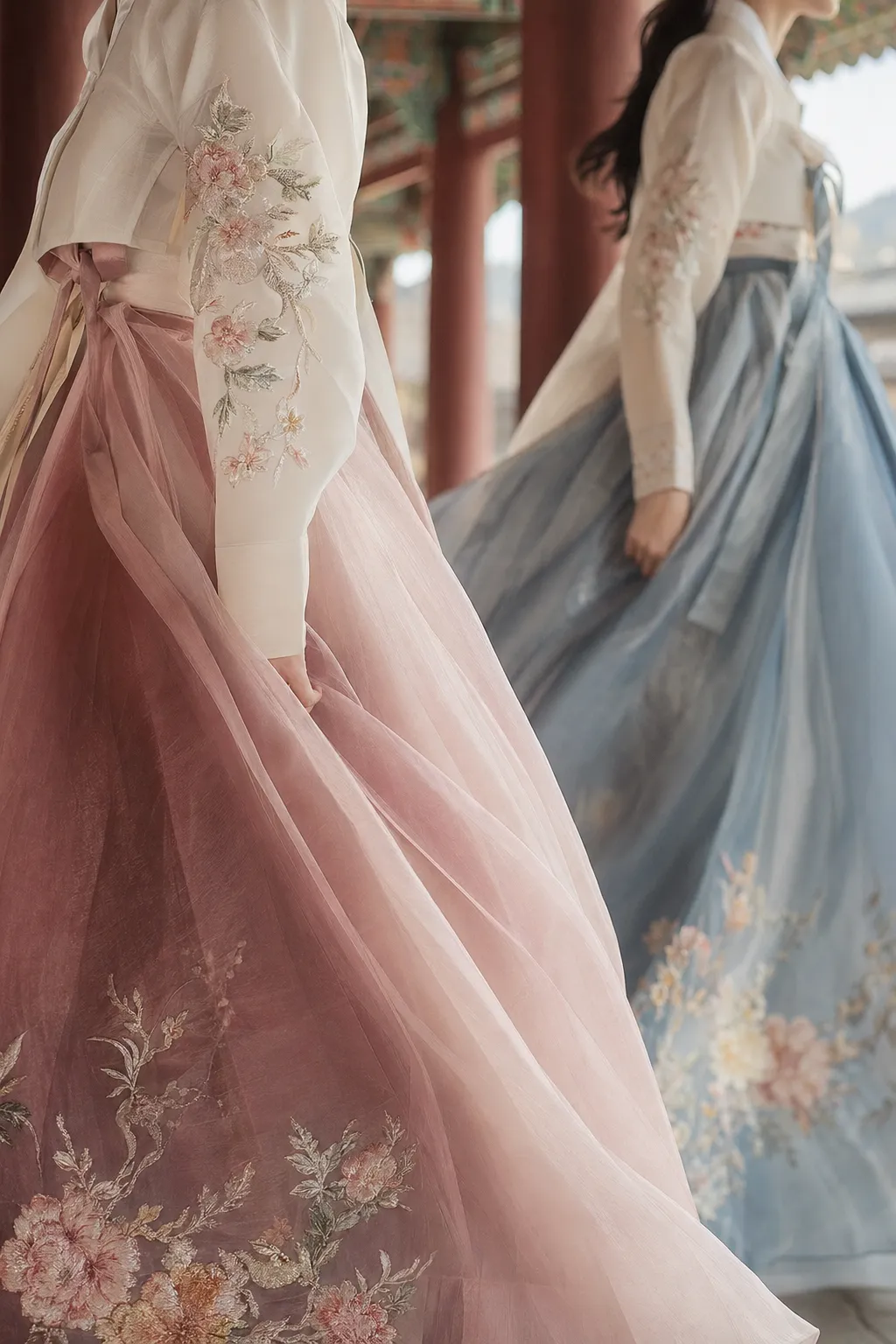
Rapper Woo Won-jae also appeared in a stage that included Ganggangsullae with the National Heritage Promotion Institute Art Troupe. Ganggangsullae, a traditional Korean circle dance, was presented alongside rap, creating a direct meeting between communal folk rhythm and contemporary vocal performance. The opening also included a hanbok fashion show set against EDM, connecting Korean clothing aesthetics with an energetic music style more often associated with clubs and festivals.
The program was also described as including Korean traditional music and a reinterpretation of Bongsan mask dance. These elements gave the ceremony a broader cultural frame, showing that the event was not simply about visual spectacle. It drew from court culture, folk tradition, music, fashion, and performance art while keeping Gyeongbokgung at the center.
A Spring Festival Across Seoul’s Palaces
Although the opening ceremony happened at Gyeongbokgung on April 24, the 2026 Spring Royal Culture Festival itself runs from April 25 to May 3. The festival is held at Gyeongbokgung, Changdeokgung, Deoksugung, Changgyeonggung, Gyeonghuigung, and Jongmyo. That means the Gyeongbokgung program is part of a larger citywide celebration of royal heritage across Seoul’s most important historic sites.
This matters because each palace carries a different atmosphere. The snippets available here do not list every program in detail, but they do make clear that the festival invites visitors to see, feel, and enjoy the palaces in spring. The event is built around direct cultural experience, not only passive viewing.
Last year’s spring and autumn editions together drew about 1.37 million visitors. That figure gives a sense of the festival’s scale and public appeal, though the available information does not provide a separate visitor count for this year’s opening ceremony beyond the announced 800-person capacity for the Gyeongbokgung event.
For visitors, the most interesting part may be how the festival frames the palace as a living cultural stage. Gyeongbokgung is already one of Seoul’s best-known historic landmarks, but the opening ceremony showed it in a different mood: illuminated, musical, experimental, and performative. The setting stayed deeply Korean, but the presentation welcomed modern forms that many audiences already recognize through K-culture.
The Gyeongbokgung Festival opening offered a clear message for spring 2026: Seoul’s royal palaces are not only places to remember the past, but spaces where tradition can meet art, technology, fashion, and music in the present. With “Hyper Palace,” Gyeongbokgung became a stage where heritage felt active, expressive, and alive.
About the Author