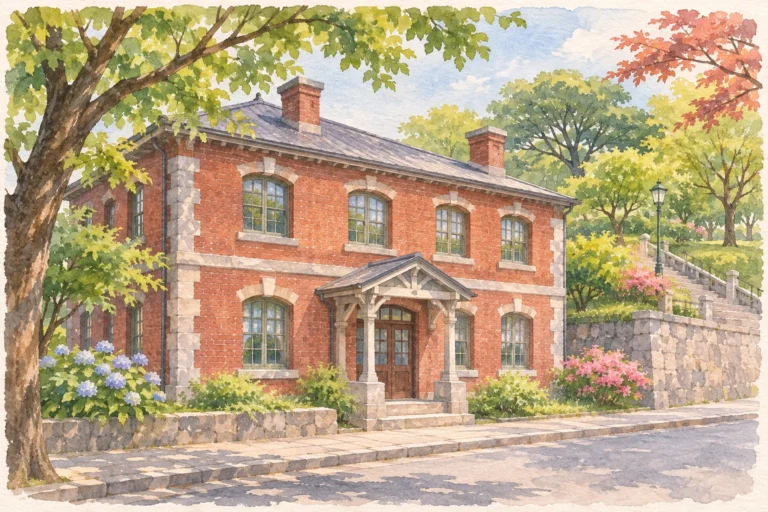
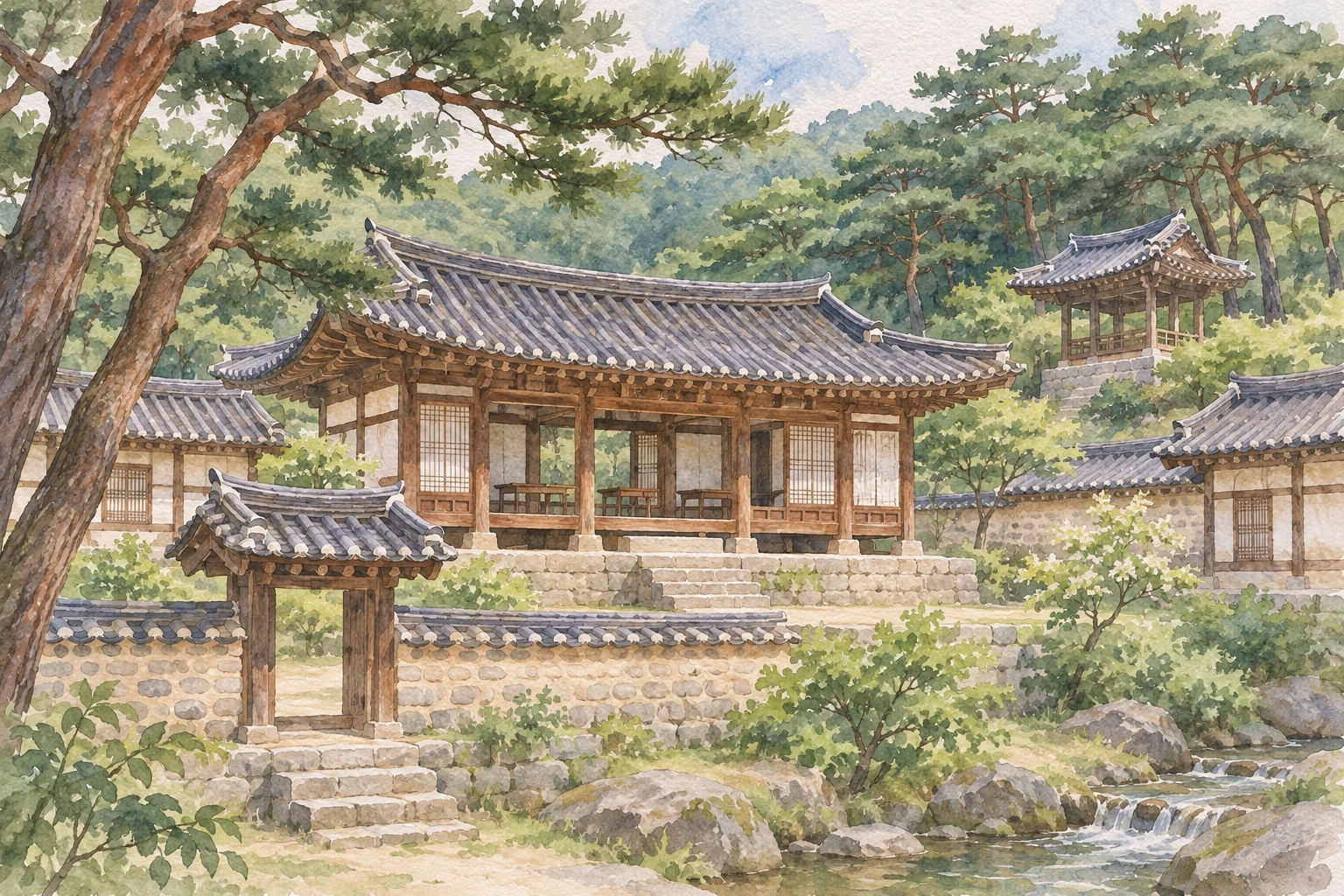
Sosu Seowon (소수서원) sits among dense pine woods in Yeongju, North Gyeongsang Province, with historic buildings that include Ganghakdang and Jangseogak. 1 The Confucian academy is the starting point for a suggested route that also takes in Sosu Museum, the Seonbi Sesang cultural theme park and Buseoksa Temple. 2
The route is called Anbinnakdo, after an outlook associated with scholars who valued learning and self-cultivation over material wealth. 3 Its stops offer different ways to explore that heritage: the academy preserves places of study and remembrance, while the museum introduces objects and documents connected to the scholars’ lives. 4
Inside the academy
Sosu Seowon began as Baegundong Seowon, founded in 1543 by local magistrate Ju Sebung. 2 In 1550, King Myeongjong bestowed the name Sosu Seowon, making it Korea’s first royally chartered Confucian academy. 2 A royally chartered academy received a name and signboard from the king, along with state support such as books and land. 4 Sosu Seowon was inscribed on the UNESCO World Heritage List in 2019 as one of nine academies in the listing for Korean seowon. 2
Look for Ganghakdang, the building used for study, and Munseonggongmyo, a shrine honoring earlier scholars including An Hyang. 4 Jangseogak is another historic building among the pines. 1
Near Gyeongnyeomjeong Pavilion, look toward Jukgye Stream for characters carved into a rock. 4 One inscription, gyeong, conveys the idea of keeping the mind attentive and undistracted, a value associated with the academy’s scholarly outlook. 4 The other reads Baegundong, the name associated with the academy before it received the name Sosu Seowon. 4
There is an older layer of history at the entrance: the stone supports for a Buddhist flagpole are remains of Suksusa, a temple that stood on the site before the academy was established. 4 They offer a connection to the Buddhist heritage at the other end of the suggested route. 4
Documents, clothing and traditional culture
Nearby Sosu Museum (소수박물관) adds detail to the academy visit with old documents, signboards, books and artifacts related to the seowon. 2 Its displays introduce both the academy’s history and the Confucian culture rooted in Yeongju, including the learning and education of Joseon-era scholars. 2 The museum also traces an earlier chapter: in 1542, Ju Sebung established a shrine to An Hyang, a late-Goryeo scholar, before founding Baegundong Seowon the following year. 4
Seonbi Sesang (선비세상) offers a more participatory way to encounter traditional culture. 2 Opened in 2022, the theme park has presented programs around traditional clothing and food, Korean paper, the Korean alphabet and music. 2 Its reported experiences include activities involving wearing, making and tasting, though visitors should check current program availability when planning a trip. 2 The park’s everyday cultural themes offer a different perspective from the academy’s historic study and ceremonial spaces. 4
A mountain temple at Buseoksa
Buseoksa Temple (부석사) brings a different tradition into the journey. 4 The Buddhist temple is said to have been founded by the monk Uisang in 676, and in 2018 it became part of the UNESCO World Heritage listing for Korean mountain monasteries. 4 That listing includes seven temples representing the history and traditions of Korean Buddhist mountain monasteries. 4
Its Muryangsujeon hall is a Goryeo-era wooden building positioned along the mountain slope. 4 Inside is a seated clay Buddha designated a National Treasure; from in front of the hall, the landscape of Yeongju opens out below. 4
The temple also preserves Josadang, its murals and stone artifacts. 4 Together with the flagpole supports at Sosu Seowon, they give visitors two distinct places to encounter the area’s Buddhist history. 4
Sources
- 고즈넉한 고택부터 탁 트인 동해까지…풍성한 한가위 경북 나들이 | 영남일보 | 최미애 기자 | 사회
- 영주문화관광재단, 선비문화 따라 떠나는 가을 여행 ‘안빈낙도 권역’ 소개
- [선비의 고장 영주] 천년의 풍경 속 안빈낙도를 걷다 – 기계설비신문
- 영주, 안빈낙도의 길을 걷다
About the Author