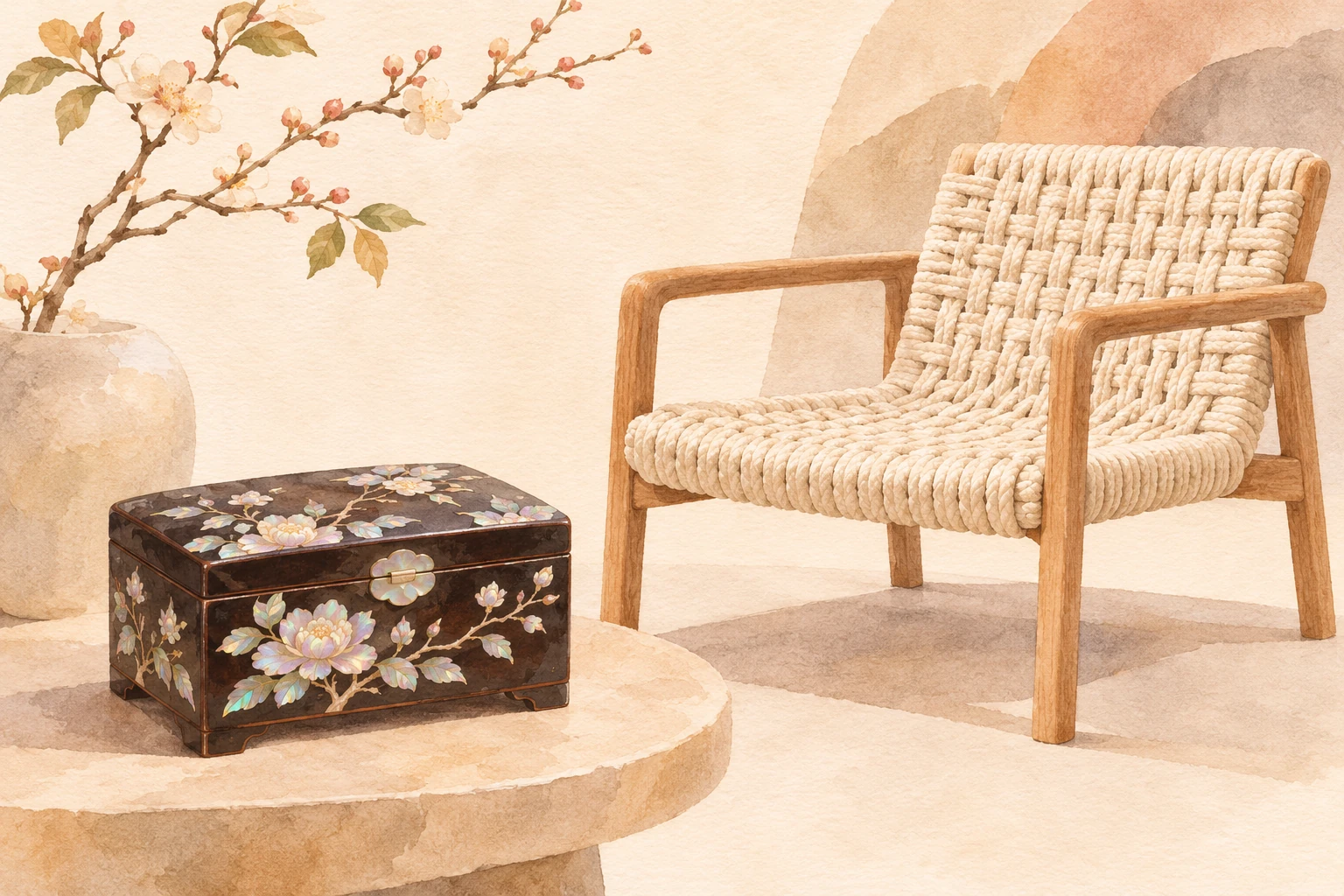
A mother-of-pearl sewing box and a nylon-rope armchair share the pages of Jeong: The Spirit of Korean Craft and Design, Phaidon’s book about Korean craft and design. 1 Written by graphic designer Lee Hyo-jeong, the book brings together 175 works and uses the idea of jeong to consider the relationships among makers, materials and users. 2
For Lee, jeong develops as time accumulates between people and between people and things. 3 She chose it as an answer to a question she had considered while working in design around the world: what makes Korean craft Korean? 2
Craft in everyday life
The book looks at lacquerware, ceramics, furniture, embroidery and clothing through scenes of eating and drinking, housekeeping and storage, resting, dressing, rituals, play and adornment. 2 That organization gives readers a way into craft through the activities surrounding an object, as well as its material or appearance. 2
Among the objects is a mother-of-pearl lacquer sewing box from the Onyang Folk Museum. 1 A ceramic bottle with a peony design comes from the Leeum Museum of Art, while a collection of silver-inlaid tobacco boxes comes from the Victoria and Albert Museum. 1
Lee wanted to write an accessible book for young international readers who were just becoming interested in Korean culture. 3 She felt that many English-language books presented the subject in difficult historical and academic terms. 3 Her own selection spans approximately 3,000 years of Korean craft and design culture, giving those readers a broad historical range through individual works. 4
From historical objects to contemporary design
Phaidon’s book ranges from Joseon-era crafts to works by contemporary makers. 5 Its contemporary selections include Lee Kwang-ho’s nylon-rope armchair, Jeong Da-hye’s horsehair craft and Kim Dong-jun’s white porcelain moon jar. 1
Lee said she wanted to show how the aesthetics and value of traditional craft techniques have been carried forward and expanded in today’s design language. 3 The book also includes essays by Yang Tae-o, Beth McKillop and Hong Jeong-hyeon alongside Lee’s writing. 1
A publication exhibition in Seoul gave the book a physical counterpart from June 11 to 26, 2026. 3 At one of its three spaces, Joseon-era crafts and contemporary works were placed alongside one another. 4 Another space, an old hanok, or traditional Korean house, brought works made from natural materials into a place where people had lived. 4 At Onjium, the third space, the exhibition focused on the physical qualities and forms of materials, as well as the accumulated skills involved in working with them. 4
At the exhibition’s Tongui-dong space, photographs by Min Hyun-woo gradually became clearer as visitors looked at them. 5 The display compared the slow emergence of a photographic image with the gradual accumulation of jeong. 5 Min’s photographs also appeared at the hanok, where three images printed on traditionally made hanji, or Korean paper, were shown with works by craft artists. 5
Finds from old houses
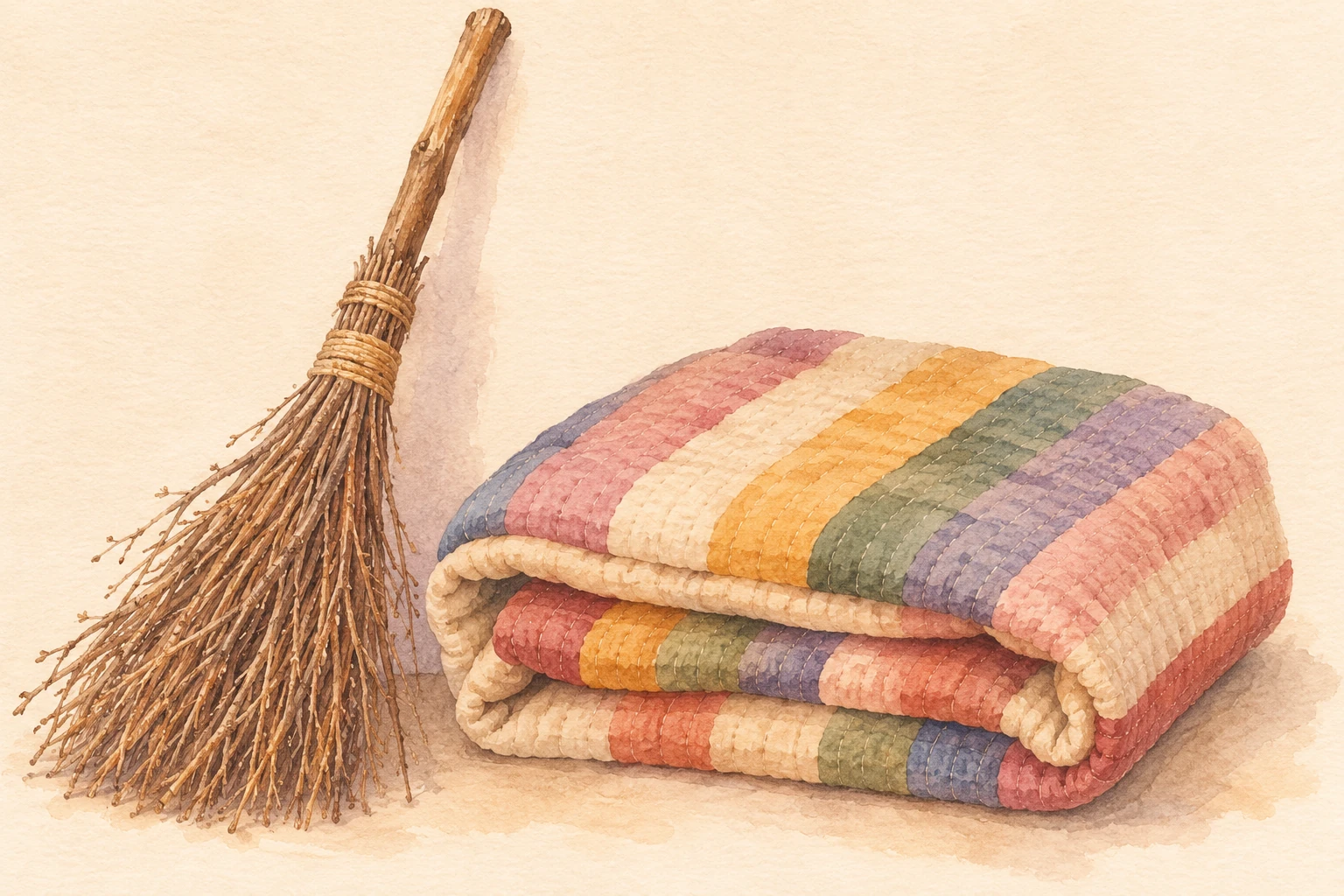
The collection also includes a twig broom, a mother-of-pearl cabinet and a multicolored-striped quilt that Lee and photographer Min Hyun-woo found in old houses during a week traveling through the countryside. 3 Lee said she wanted to illuminate the beauty of everyday items fading from memory, alongside the continuing life of traditional techniques in contemporary design. 3
Sources
- 파이돈이 포착한 한국 공예… ‘정(情)’을 따라 걷는 전시 – 뉴스컬처
- 한국 공예의 정수를 담은 ‘정(情)’ 출간 기념 전시
- 자개장부터 달항아리까지…‘정’으로 풀어낸 한국 공예 | 중앙일보
- ‘한국적인 것’의 또 다른 이름…파이돈이 주목한 ‘정’ – 진일보 | 전남일보
- 영국 예술서적 출판사가 조명한 한국 전통 공예…‘정(情)’ 발간
About the Author