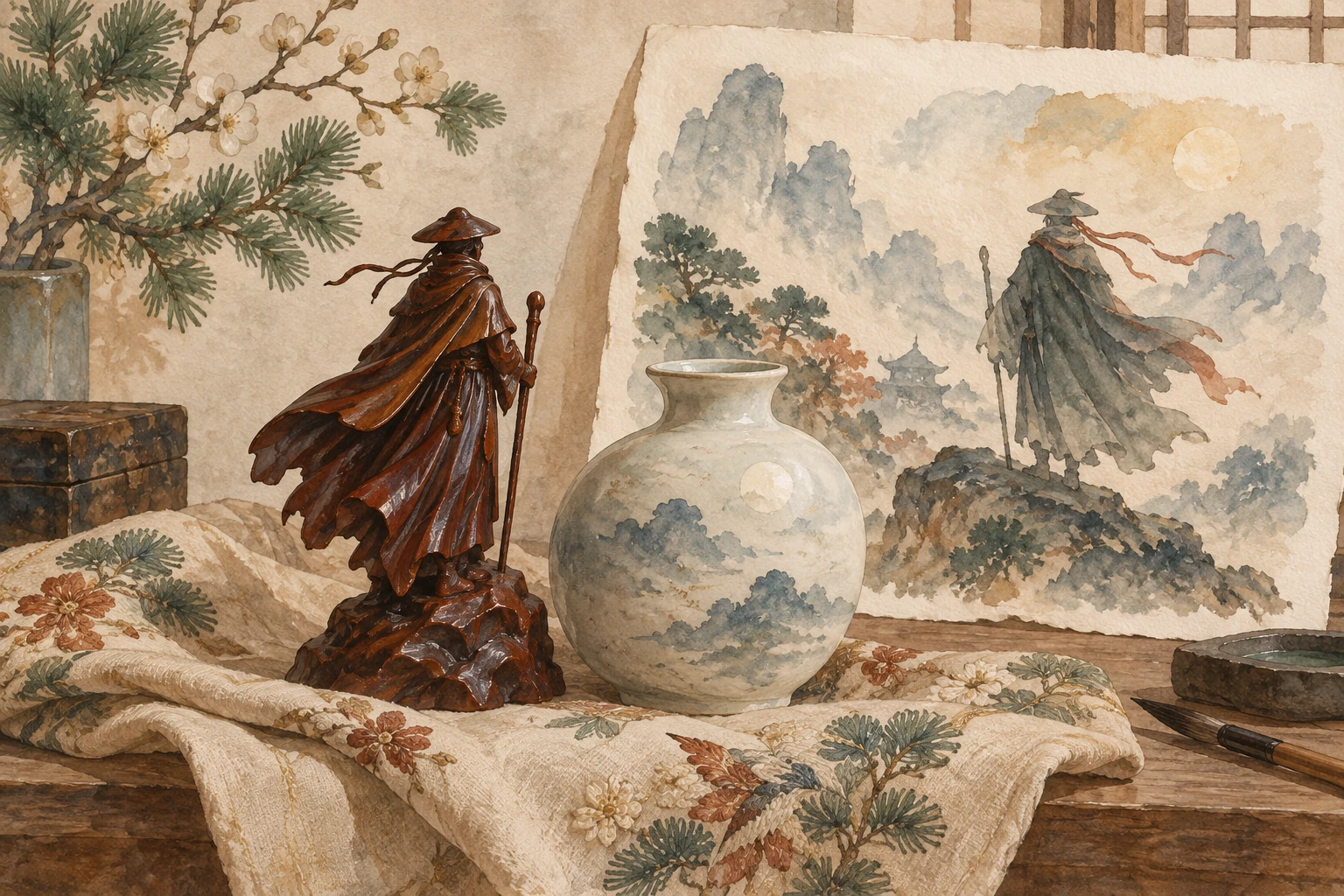
A rogue and a squirrel from The Kingdom of the Winds take sculptural form in dry lacquer, lacquer, and mother-of-pearl in Dojeok, Barameul Tada, one of the works featured in the BORDERLESS exhibition at Gyeongbokgung Palace. 1 2 The exhibition marks the game’s 30th anniversary and runs September 9–21, 2026, at Gyejodang Hall (계조당) in Seoul, according to September 9 reporting. 2 3
For a visit, consider a question that does not require knowing the game’s story: what changes when the same imagined creature becomes a ceramic object or a figure in a painting?
Where the game meets traditional craft
The exhibition presents the results of a project jointly led by Nexon Foundation and the Korea National University of Cultural Heritage, following an emerging-artist support initiative conducted since April. 3 Alongside the game-inspired pieces are works by students in the university’s Department of Traditional Arts and Crafts. 3
That distinction is useful when exploring the display: the collaboration pieces reinterpret game imagery, while the accompanying traditional craft works offer a look at the techniques underlying the new creations. 3 2 Nexon Foundation selected qualified students enrolled in the department to support their production of artwork using the game’s characters and world. 1 It also provided a separate opportunity for students to exhibit their work. 4
A rogue, a squirrel, and two versions of the guardian beasts
In Dojeok, Barameul Tada, the subjects are a rogue character and a squirrel non-player character, represented through dry lacquer, lacquer, and mother-of-pearl. 1 3 The pairing brings a game character and an animal from its world into the same sculptural work. 3
Suhosinsujin Gyesang turns to the Four Guardian Beasts, embodying them in ceramics with the texture of ancient ruins. 1 3 The beasts have a protective role in the game: GameMeca describes them as guardians who watch over beginners, giving some context to the ceramic work’s subject. 5
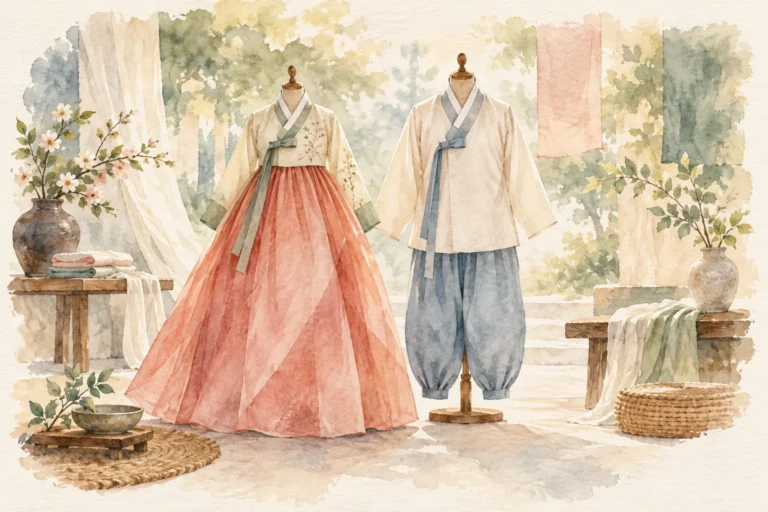
Barameul Dameun Otgit approaches those same beasts through painting, personifying them as figures wearing traditional attire. 1 3 GameMeca also reports that the painting uses colors associated with directions, adding another specific element to its treatment of the traditionally dressed figures. 5 Together, the works connect a shared subject to two different artistic choices: the treatment of a ceramic surface and the transformation of creatures into clothed human figures. 3
The reported QR-code activity
For visitors who want to connect the exhibition back to the game, ZDNet Korea’s September 9 report describes an on-site participation activity involving QR codes inside the exhibition. 2 Visitors access a web catalog, view the works, and answer questions, with The Kingdom of the Winds game items offered through the activity. 2 The reported venue is Gyejodang Hall within Gyeongbokgung Palace, and the exhibition’s stated final date is September 21, 2026. 3 2
A boss monster and embroidered good wishes
Another work, Yongjeonseolmansangdo, reinterprets the game’s boss monster Yongjeonseol using traditional dancheong techniques. 4 Its subject offers a different point of comparison with the animals featured in the textile work: squirrels and rabbits embroidered onto a traditional gwijumeoni pouch. 4 5
In that embroidered piece, the animals carry auspicious meaning—good wishes expressed through the textile work. 5 The squirrel thus appears in two distinct craft settings within the exhibition: beside the rogue in lacquer sculpture, and with rabbits in embroidery on a traditional pouch. 3 5
Sources
- 넥슨재단, '바람의나라' 30주년 전통공예전 개최 | 웹진 인벤
- 한국전통문화대·넥슨, '바람의나라' 30주년 전통공예전 경복궁서 개최
- Nexon Foundation Holds Traditional Craft Exhibition for 'The Kingdom of the Winds' 30th Anniversary
- 넥슨재단, '바람의나라' 30주년 맞아 신진예술가 지원…경복궁서 전통공예 전시
- 30주년 바람의 나라, 전통공예 전시로 '전통문화' 잇는다
About the Author