The BTS Gwanghwamun concert drew unusually strong attention on Japanese SNS because it was read as more than a comeback stage. The BTS Gwanghwamun Reaction centered on how Seoul placed a global K-pop act in a symbolic public square, supported the event with city-level logistics, and turned a music release into a broader national-branding moment.
Japanese SNS Reaction to the BTS Gwanghwamun Concert
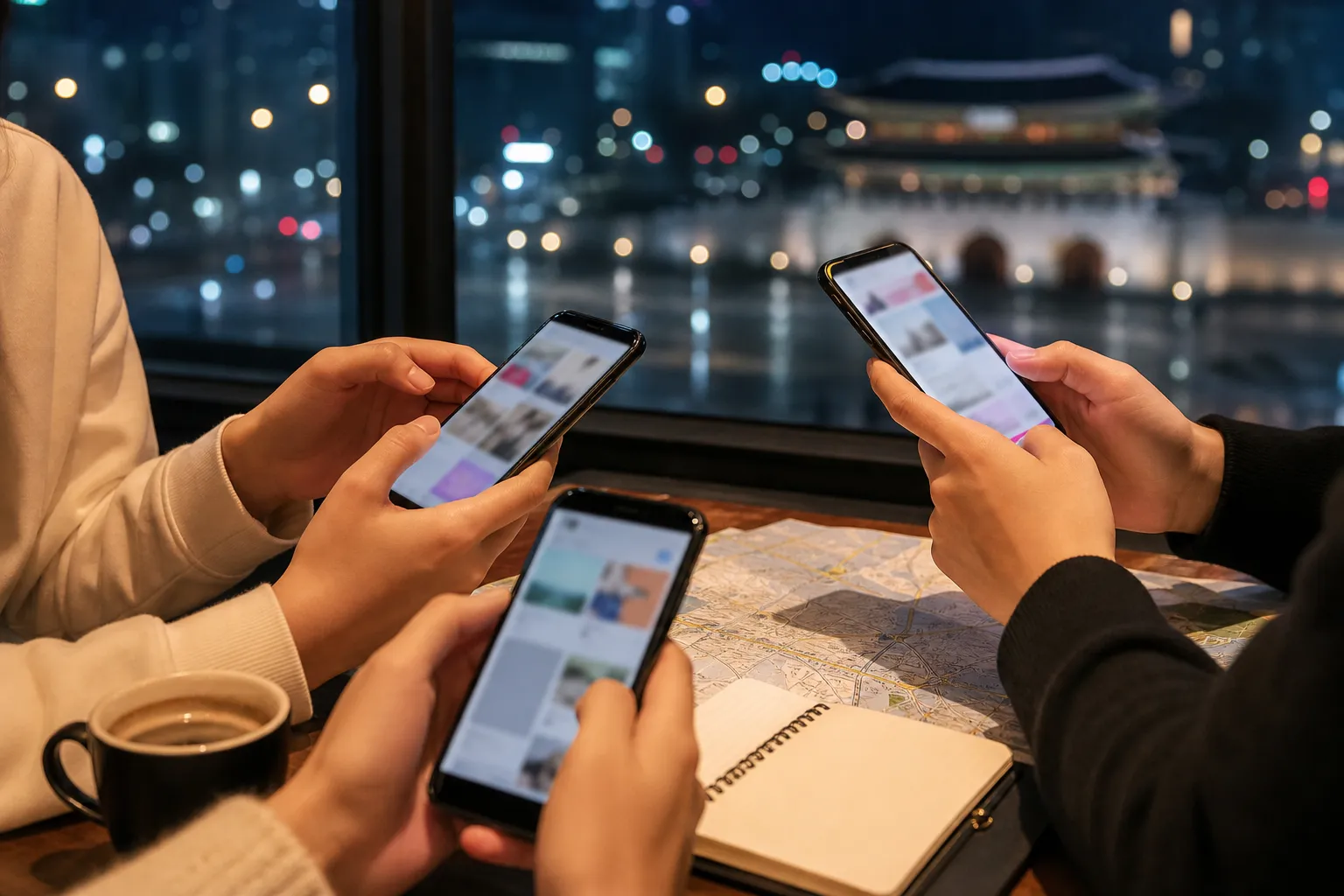
The clearest measure of Japanese interest comes from X. An analysis of 1,527 non-Korean X posts published from March 18 to 24 found that Japanese-language posts numbered 355, second only to English among the nine languages studied.1 A separate Korean report on the same analysis also stated that Japanese posts ranked second after English, and noted that Japanese users focused not only on fandom excitement but also on the use of public resources and the meaning of Gwanghwamun as a venue.2
That distinction matters. The reaction was not simply “BTS is popular in Japan,” although the group’s Japanese fanbase is plainly part of the story. The available reports suggest that Japanese SNS users treated the concert as a case study in how cultural policy, urban space, and entertainment strategy can work together. The event’s location made that interpretation difficult to avoid: Gwanghwamun Square sits in central Seoul, near major heritage and tourism landmarks, and the stage was framed by Japanese media as a way to introduce K-pop to the world from the heart of the city.3
| Fact | Source-backed detail | |
|---|---|---|
| Event | BTS THE COMEBACK LIVE | ARIRANG |
| Date and time | March 21, 2026, 8 p.m. KST4 | |
| Venue | Around Gwanghwamun Square, Seoul4 | |
| Seating | All seats free through Weverse Global application or NOL ticketing4 | |
| X data set | 1,527 non-Korean posts from March 18 to 241 | |
| Japanese posts | 355, second only to English among nine languages studied1 | |
| Streaming | Netflix livestreamed the show to more than 190 countries5 |
Why Public Space Became the Core Issue
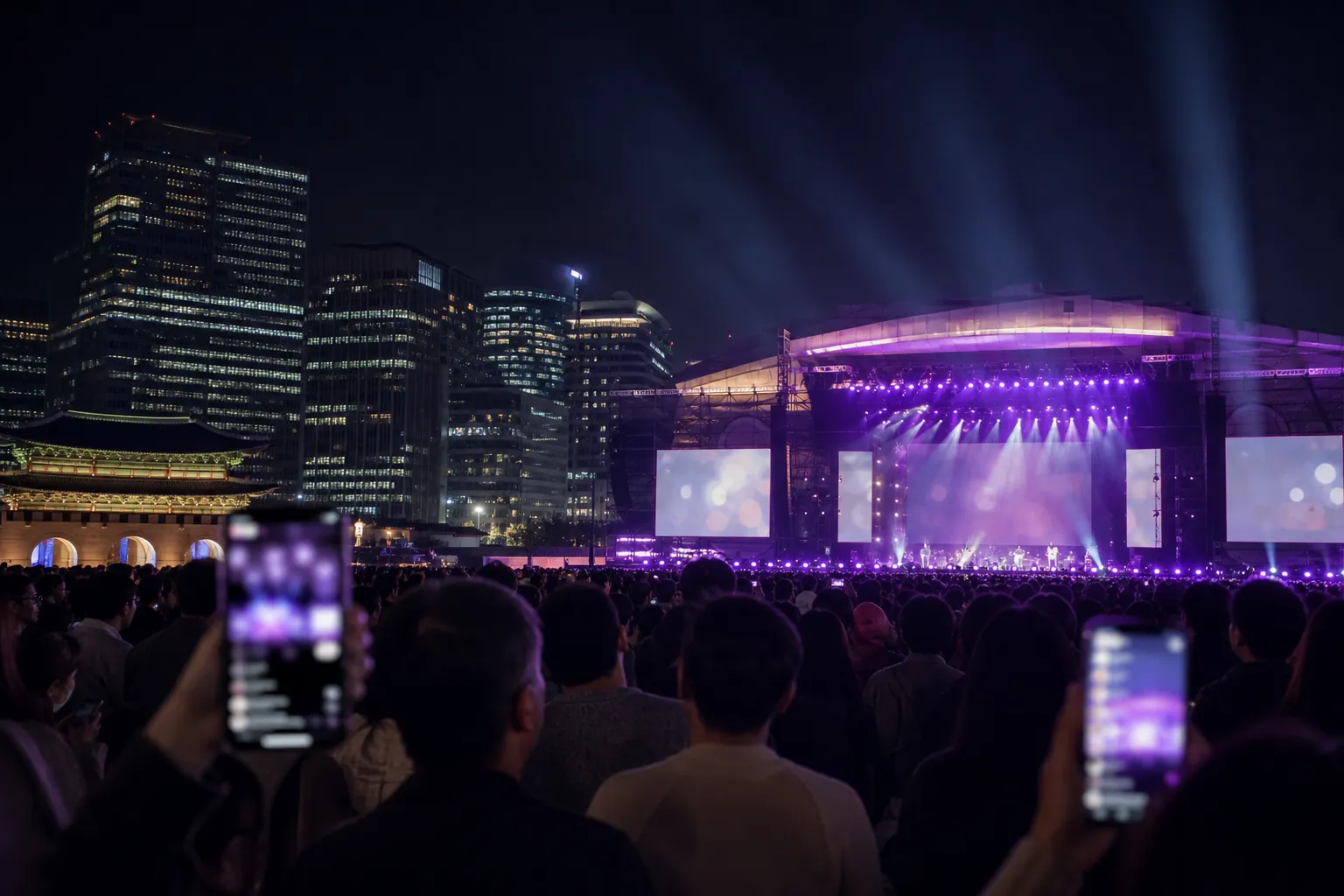
The Japanese SNS response appears to have been sharpened by the question of public-space use. Gwanghwamun is not a neutral concert hall; it is one of Seoul’s most visible civic spaces. Holding a free BTS comeback event there naturally turned the performance into a statement about how South Korea uses public infrastructure to amplify cultural content.
Seoul Metropolitan Government’s preparations reinforced that reading. Ahead of the March 21 concert, the city opened an online transport and safety information page covering subway pass-through plans, temporary bus detours, vehicle control zones, banned items, toilets, and medical stations. The city also provided the information in English, Chinese, and Japanese for overseas visitors.6 This was not just a venue rental story. It involved crowd management, multilingual visitor services, mobility planning, and safety communications.
For Japanese observers, that combination seems to have made the concert stand out as a visible example of state, city, and private entertainment coordination. The Korea Times quoted Lee Chang-min as saying, “In Japan, K-pop is classified not simply as entertainment to consume but as a successful example of content industry policy.”1 That comment helps explain why Japanese-language discussion would move beyond the performance itself. If K-pop is viewed as a policy model, then the Gwanghwamun concert becomes evidence in a larger comparison about how nations invest in cultural export systems.
The language data also supports the idea that the event was interpreted symbolically. Hankook Ilbo cited Arspraksia researcher Hong Min-jung as saying that, among non-Korean posts, the English keyword “historical” appeared repeatedly.2 While that does not prove a single global consensus, it does show that at least part of the international conversation treated the event as historically framed, not merely as a routine comeback promotion.
Tourism, Media Optics, and National Branding
Japanese media coverage added another layer. TV Chosun reported that Nihon Keizai Shimbun noted all BTS members had appeared on stage together for the first time in three years and five months, while Kyodo News introduced the venue as a tourist area where cultural properties such as Gyeongbokgung are gathered.3 That framing connected the concert to place branding: the performance promoted not only an album, but also Seoul as a cultural destination.
The Guardian reported that tens of thousands gathered at Gwanghwamun Square for BTS’s comeback concert after nearly four years as a full group. It also noted that about 22,000 people had free seats in the designated viewing zone, while many more watched nearby screens, and that Netflix streamed the show to more than 190 countries.5 The report included Japanese fans who traveled from Shizuoka to Seoul, a concrete example of the event’s cross-border pull.5
These details point to why the Japanese SNS conversation became so active. The concert combined scarcity, symbolism, and access: BTS returning as a full group after a long interval; a free public-stage format in central Seoul; global streaming through Netflix; and city-managed visitor infrastructure. Each element amplified the others. A comeback stage became a tourism signal, a platform-distribution event, and a public-policy showcase at the same time.
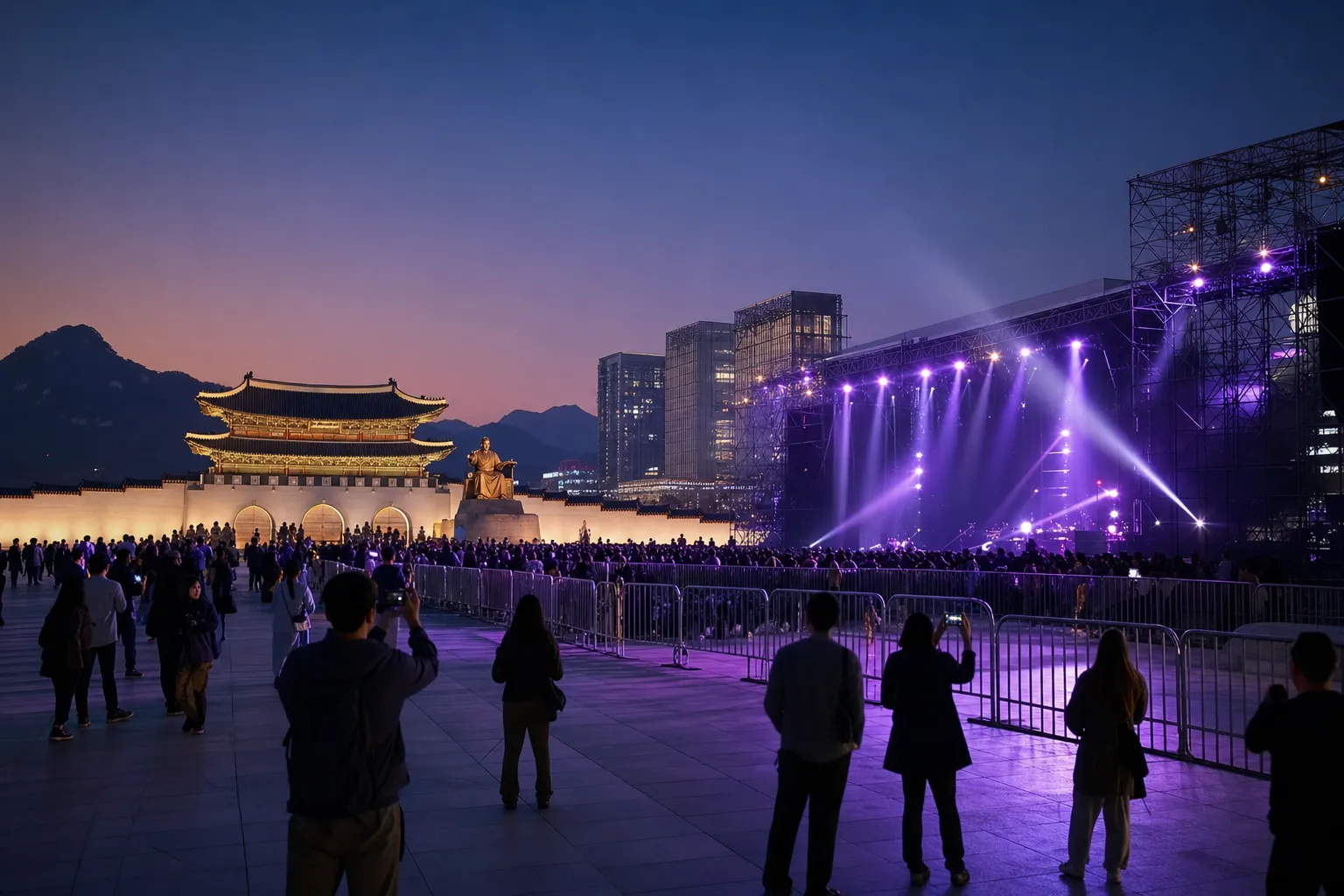
The cautious takeaway is that Japanese SNS users were not reacting only to BTS’s celebrity power. Based on the reported X data and media coverage, the stronger reaction came from seeing how South Korea positioned that celebrity power inside a coordinated public setting. The Gwanghwamun concert showed how K-pop can operate simultaneously as entertainment, urban spectacle, tourism content, and national branding strategy.
References
- Why BTS Gwanghwamun show shocked Japanese social media users (The Korea Times, 2026-07-18)
- "BTS 공연 때 조기퇴근? 신기해" 일본인들이 광화문 무대에 깜짝 놀란 이유 (한국일보, 2026-07-15)
- BTS 공연이 부러웠던 日 언론…"서울 한복판서 K팝 세계에 알려" (TV조선, 2026-03-22)
- [NOTICE] BTS THE COMEBACK LIVE | ARIRANG Event (Weverse / BIGHIT MUSIC)
- ‘So awesome’: BTS fans on K-pop’s biggest comeback (The Guardian, 2026-03-22)
- BTS 컴백 라이브를 안전하게 즐기기 위한 정보, 한눈에 확인하세요 (서울특별시, 2026-03-17)
About the Author