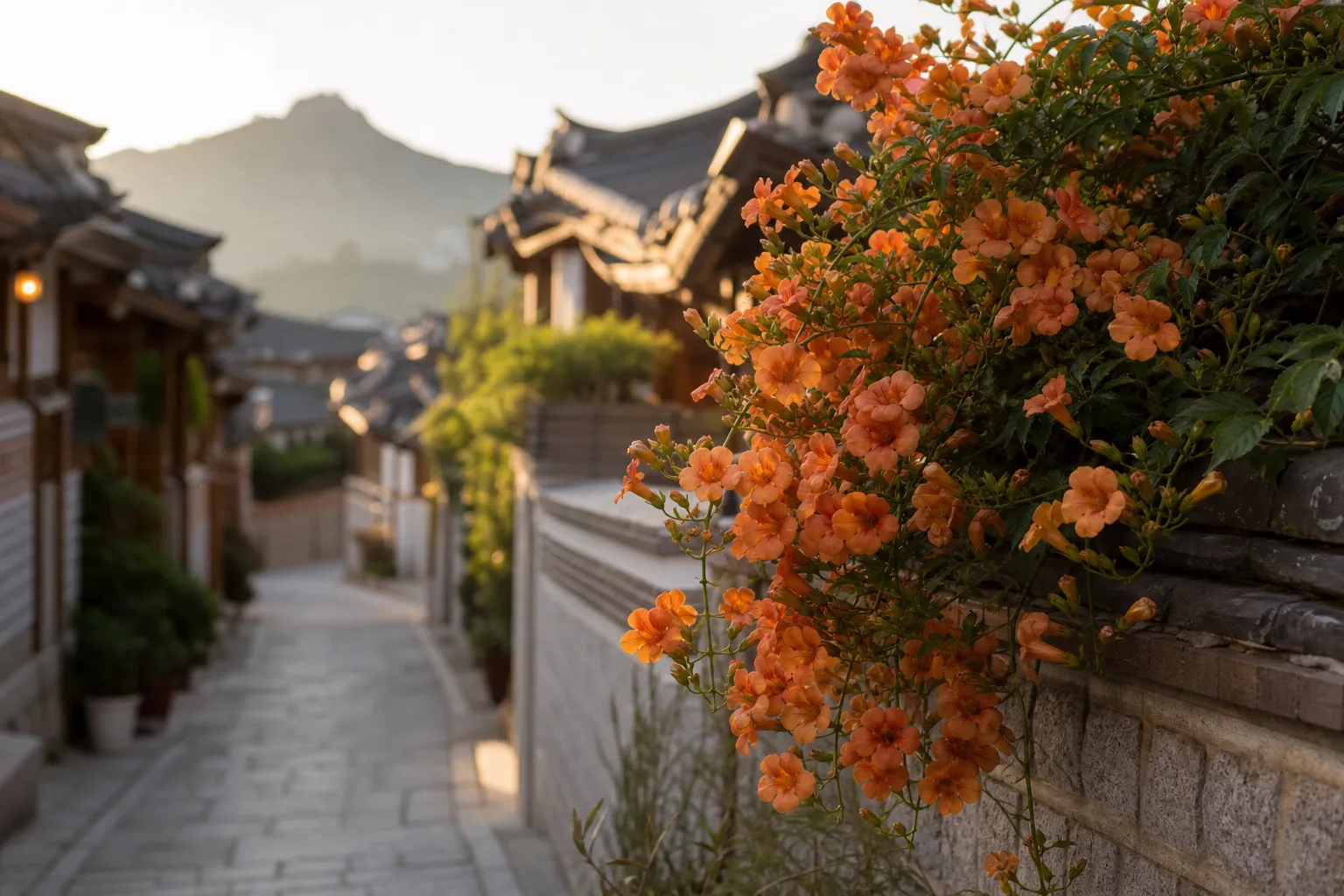
A Seochon orange trumpet vine walk is a gentle way to read the neighborhood through color: orange flowers, old alleys, hanok textures, and the slope of Inwangsan in the background. The most specific route available from the source material is a one-hour Seochon trumpet vine course listing six local stops, with a natural cafe pause near Inwangsan at daechungpark, also known through tourism sources as Inwangsan Daechung Yuwonji.1
Seochon sits between Gyeongbokgung Palace and Inwangsan, which helps explain why a short flower walk here can feel layered rather than simply pretty. Visit Seoul describes the area as a village where traces of art, literature, and history appear deeper inside its alleys, and its official walking course begins at Exit 3 of Gyeongbokgung Station.2 For readers searching for a Seochon Inwangsan Cafe to pair with a seasonal stroll, the appeal is less about rushing from one landmark to another and more about letting the neighborhood’s narrow streets, small shops, and mountain-facing views set the pace.
Following the Seochon Orange Trumpet Vine Walk
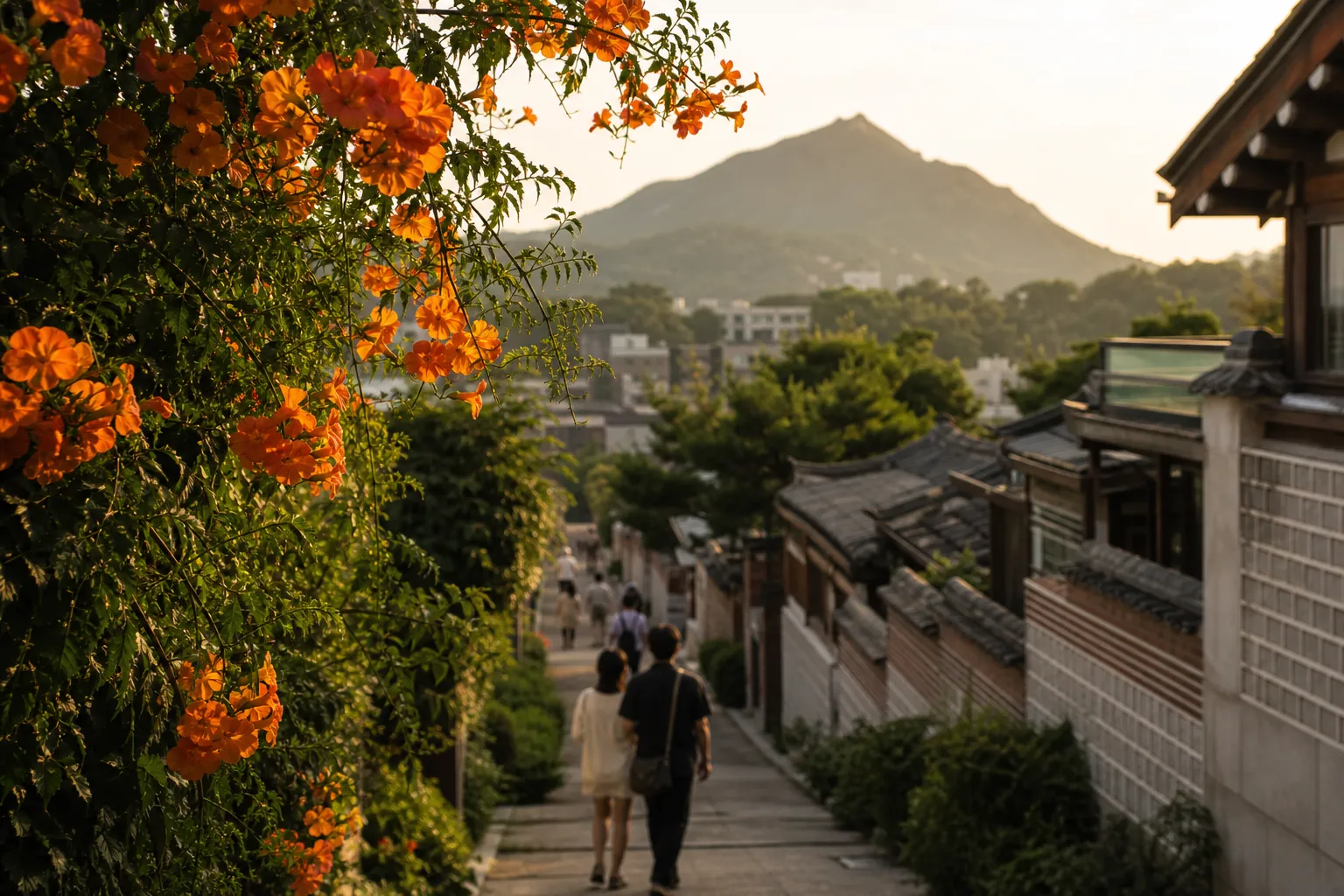
The clearest source-backed trumpet vine route comes from Seoul Jongno Magazine’s Instagram post, which presents six Seochon spots as a one-hour course. The listed stops are Red Mangchi Seochon Branch, the yellow-gate house beside Gungjeong Church, Seochon Sikdang, Hyoja Bakery, Allright, and Satoru The Seochon.1 That is enough to shape a compact neighborhood walk without turning it into a rigid itinerary.
What makes this kind of walk attractive is the scale. A one-hour course suggests something you can fold into a half-day in Seochon rather than a destination that demands elaborate planning. You can begin with the flower points, move slowly through the alleys, and leave room for pauses around bakeries, small restaurants, and cafe streets. The source does not provide exact bloom conditions for each stop, so it is best to treat the list as a practical route framework rather than a guarantee that every wall or doorway will be in full orange bloom on a particular day.
That caution matters because trumpet vine timing can vary by location. A Korea Tourism Organization travel article on Seoul and Gyeonggi trumpet vine spots notes that blooming periods can differ from place to place and recommends checking bloom information before visiting.3 The same article names other well-known Seoul-area or nearby viewing points, including Ttukseom Hangang Park, Bukchon Hanok Village, Suwon Haenggung-dong, Seongnam Hope Grand Park, and Suwon Bongnyeongsa Temple.3 In other words, Seochon can fit into a wider July flower mood around the Seoul area, but the Seochon walk has its own smaller, alley-based character.
Why Seochon Works So Well for a Slow Walk
Seochon’s strength is that its flower stops are not isolated from the rest of the neighborhood. Visit Seoul’s official “old alley walk” for Seochon is introduced as a three-hour walking-tour course starting from Gyeongbokgung Station Exit 3, with stops including the Tongui-dong White Pine Site, Sangchonjae, Suseongdong Valley, the site of Yun Dong-ju’s boarding house, Park No-soo Art Museum, and Yi Sang’s House.2 Even if you are not following that full three-hour course, those names help frame the neighborhood as more than a photo route.
This is useful for a trumpet vine walk because seasonal flowers are often at their best when they appear as part of everyday scenery. The orange blossoms can become a reason to notice painted gates, old walls, small storefronts, and the way Inwangsan anchors the western side of the district. The source material does not claim that the six Instagram-listed spots are official tourist landmarks, so the best reading is modest: they are field-style neighborhood references for a short seasonal walk, not a formal heritage route.
The nearby Bukchon information also gives one helpful reminder for this kind of travel. Korea Tourism Organization’s trumpet vine article lists Bukchon Hanok Village viewing points such as Won Buddhism Seoul Citizens’ Meditation Center, Arumjigi Hanok, and Gallery Hanok, and it also mentions visitor restriction hours around Bukchon-ro 11-gil.3 Seochon and Bukchon are different neighborhoods, but the underlying travel etiquette carries over: flower walks often pass through lived-in streets, so quiet movement and attention to local boundaries matter.
A Cafe Pause Near Inwangsan: daechungpark
For a Seochon Inwangsan Cafe stop, Inwangsan Daechung Yuwonji is the most directly supported option in the provided sources. Korea Tourism Organization introduces it as a cafe in Seoul’s Seochon Village, located on the fourth floor of a gray building, with gravel-finished flooring, exposed-concrete interiors, and hanok elements.4 On good-weather days, its outdoor terrace is described as a place to see Inwangsan and hanok views.4
The Seoul Design Festival page also places Inwangsan Daechung Yuwonji below Inwangsan in Seochon and notes that visitors can drink coffee while looking through a small window toward natural scenery from the fourth floor of a street building where cafes and restaurants gather.5 That page gives the brand styling as “daechungpark,” which is worth preserving if you are searching for the venue by name.5
As a stop in this walk, daechungpark works because it extends the same mood as the route: compact urban space, mountain presence, and a blend of rough modern surfaces with traditional Korean cues. The sources do not provide a menu, opening hours, reservation policy, or price details, so those points should be checked separately before making firm plans. What the available material does support is the setting: a fourth-floor cafe in Seochon, near Inwangsan, with architecture and views that connect well to an orange trumpet vine stroll.
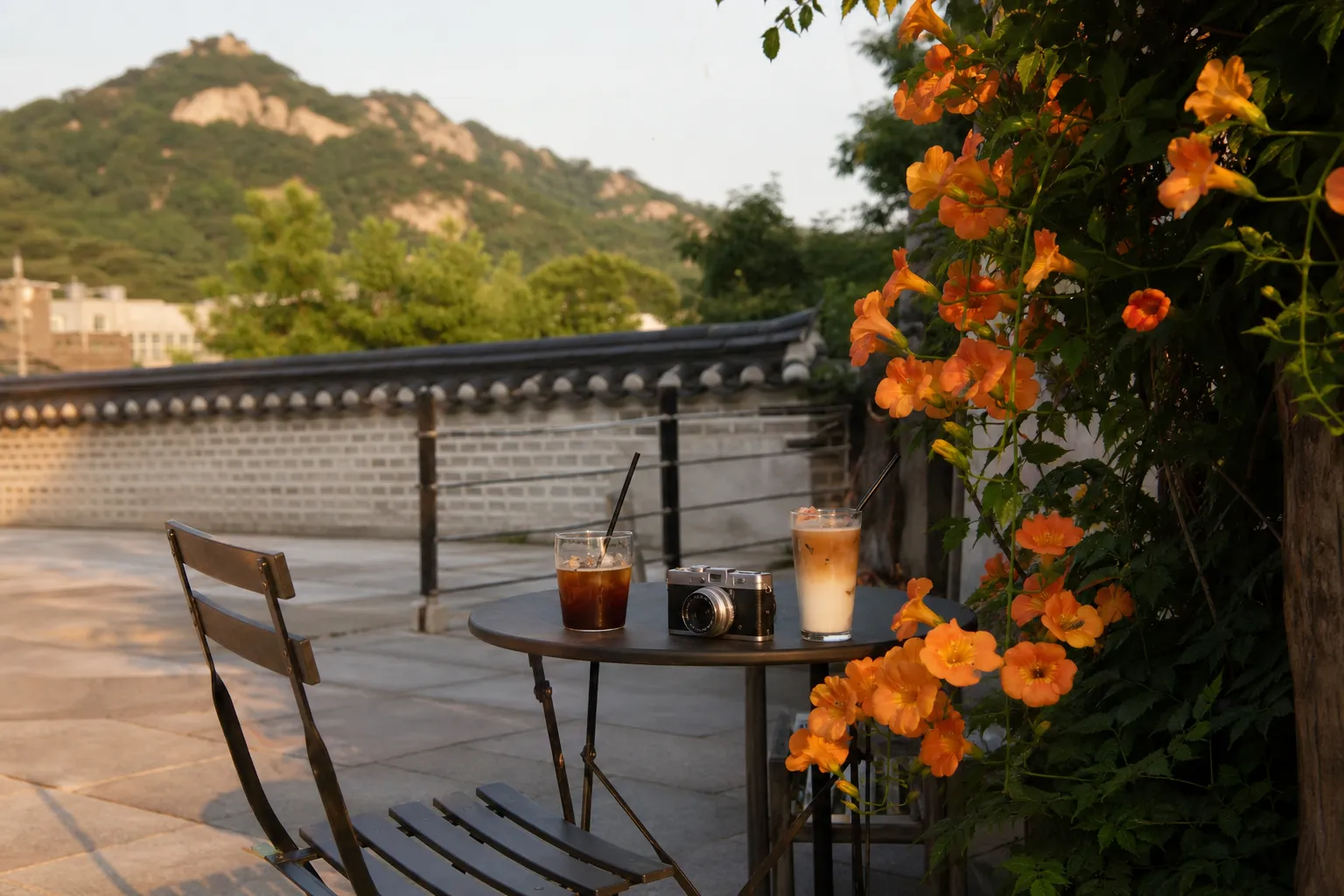
The most satisfying way to approach a Seochon orange trumpet vine walk is to keep it flexible. Use the six listed flower stops as a one-hour neighborhood thread, let Visit Seoul’s broader Seochon context explain why the alleys feel culturally dense, and consider daechungpark as a mountain-facing pause rather than just a keyword-friendly cafe stop. With bloom timing checked before you go, the route becomes a simple, warm-weather way to see Seochon through orange flowers, old streets, and the quiet presence of Inwangsan.
References
- 지금 가야 해! 낭만 가득한 서촌 능소화 스팟 6 (서울 종로 매거진 Instagram)
- 서촌의 오래된 골목산책 (Visit Seoul(서울관광재단), 2024-08-06)
- 7월 서울 경기 능소화 명소 가볼만한곳 :: 뚝섬한강공원, 북촌한옥마을, 행궁동, 희망대공원, 봉녕사 (대한민국 구석구석(한국관광공사))
- 인왕산 대충유원지 (대한민국 구석구석(한국관광공사))
- 인왕산 대충유원지 (서울디자인페스티벌)
About the Author