
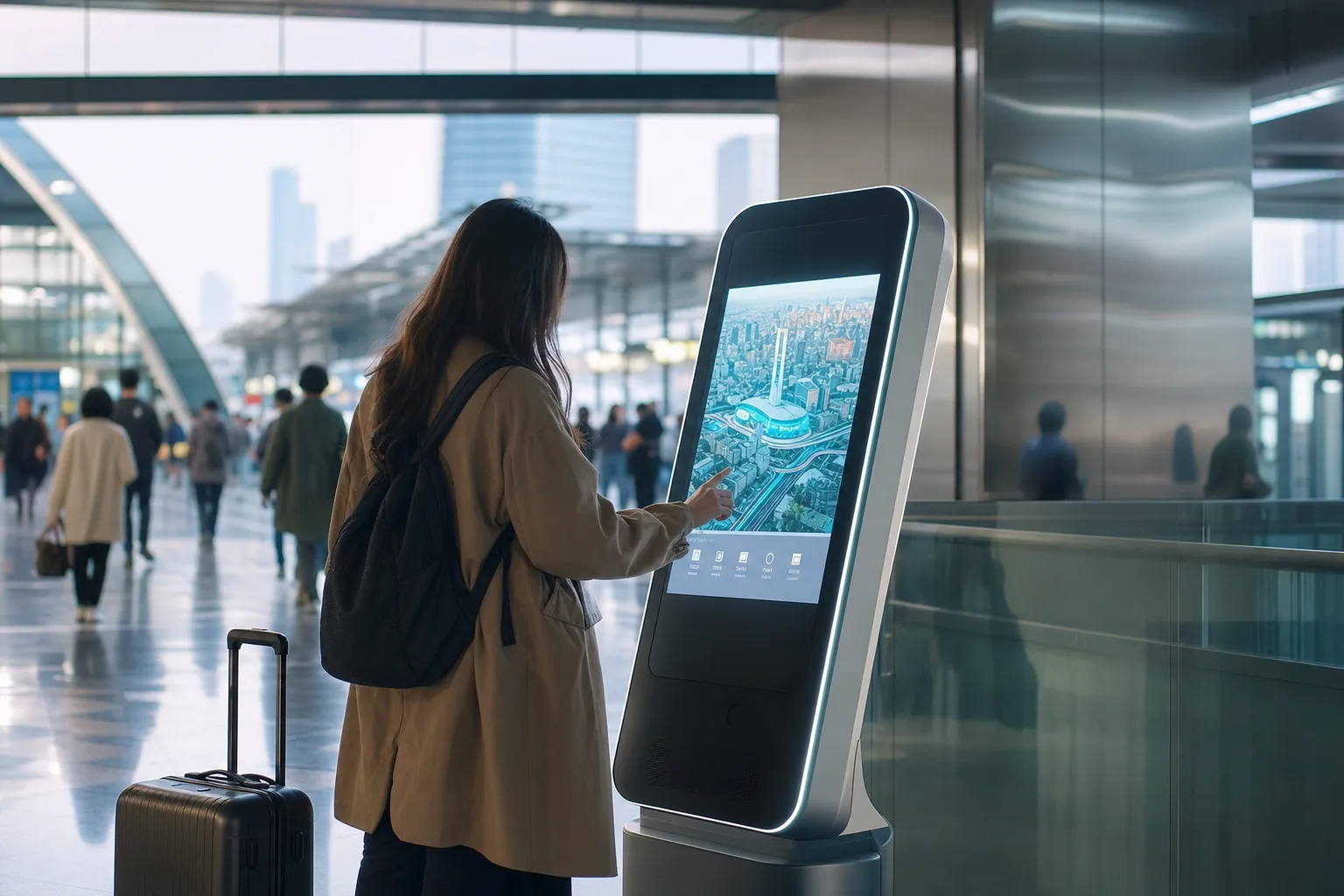
Seoul Station is a natural place for travelers to search for Seoul AI Translation, but the source-backed picture needs a careful distinction. Early rollout plans named Seoul Station as a planned expansion site, while later reports on the 11 operating stations did not include Seoul Station in the confirmed list.12
For anyone trying to use AI interpretation in Seoul’s subway network, the practical takeaway is simple: the service is real, it is operated as the “Foreign Language Simultaneous Conversation System,” and confirmed reports describe it as available at selected high-foreign-passenger stations rather than every major transfer hub.3
서울역 AI 통역: What Is Confirmed and What Is Not
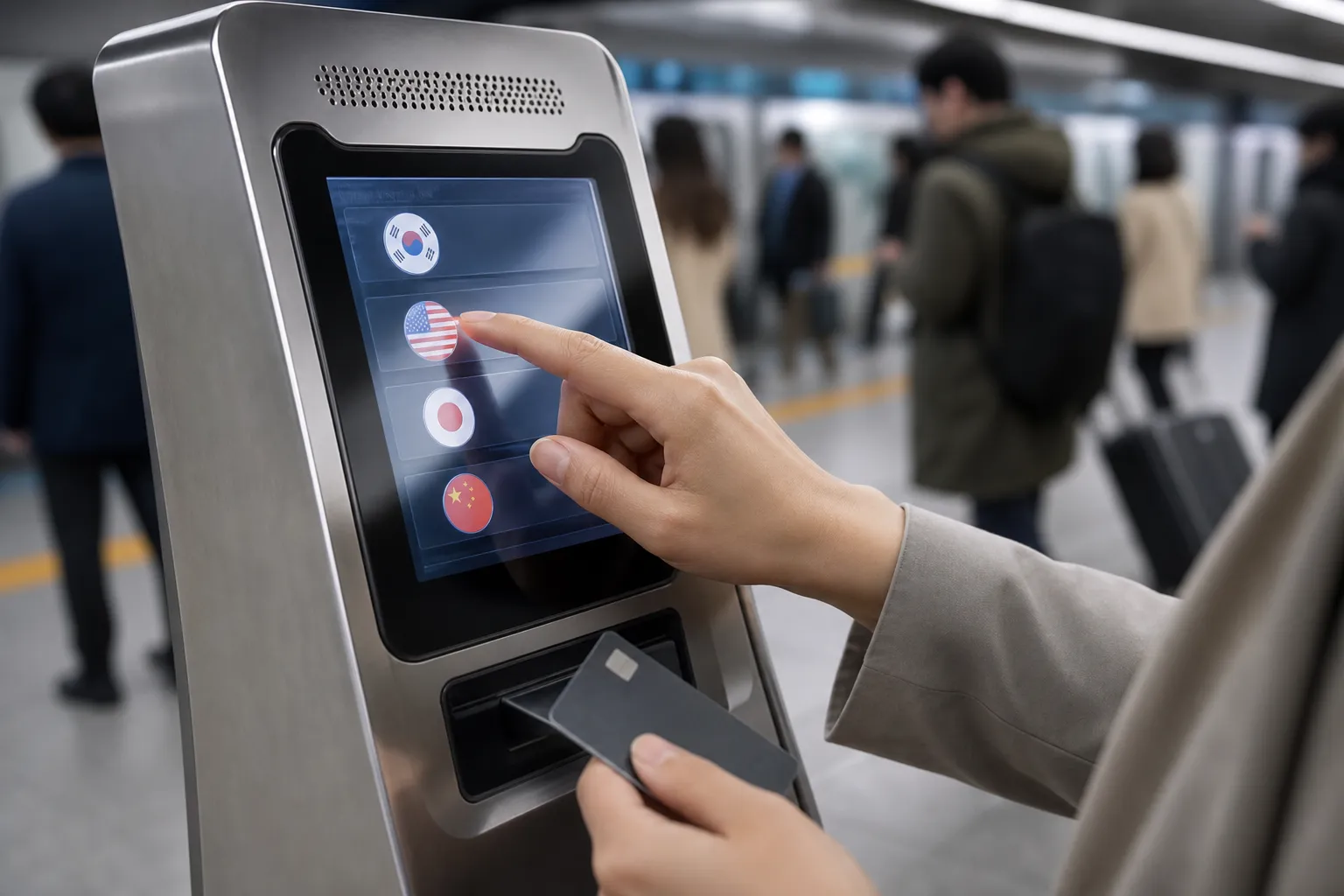
The AI interpretation system began with Myeong-dong Station, where operation was reported from December 4, 2023, at the front of the customer safety office entrance. The process described there was straightforward: a user selects a language on a touchscreen, speaks through a microphone, and the conversation with station staff appears on the screen in both Korean and the selected foreign language.1
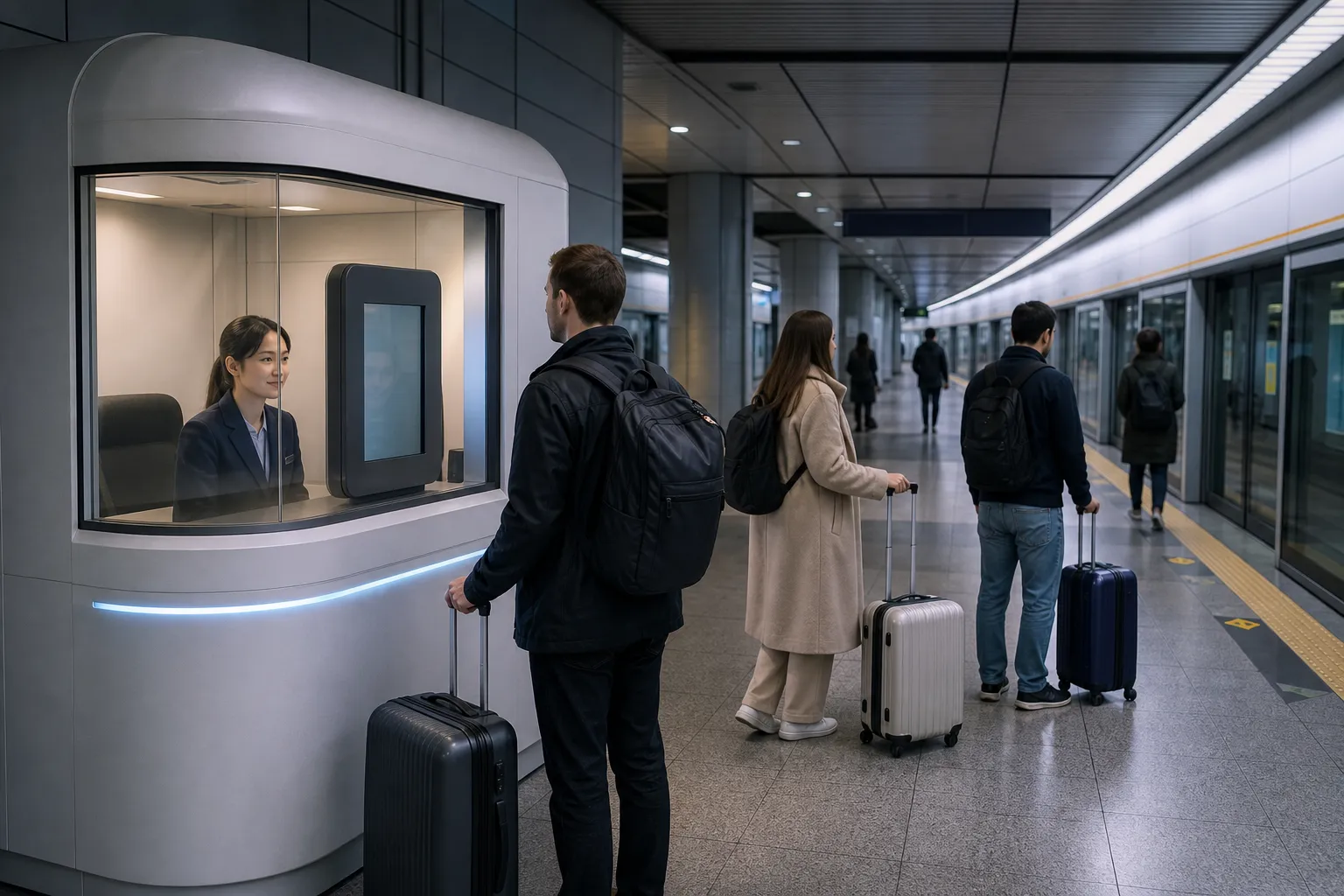
The system was designed around a two-sided transparent OLED display, allowing a foreign passenger and a station employee to face each other while speaking in their own languages. AI automatically interprets the speech and displays the translated text, helping both sides confirm the meaning visually. Reports state that the service supports 13 languages, including Korean.2
Seoul Station appears in earlier coverage as part of the intended expansion after the Myeong-dong pilot, along with Itaewon Station, Gimpo Airport Station, Gwanghwamun Station, and Hongik University Station.4 However, when Seoul Transportation Corporation later announced the expansion to 11 stations in March 2024, Yonhap reported that the list included stations such as Myeong-dong, Hongik University, Gimpo Airport, and Itaewon, but Seoul Station was not included.2
A later report in December 2025 listed 11 available stations as Jongno 5-ga, City Hall, Hongik University, Euljiro 1-ga, Gangnam, Gyeongbokgung, Myeong-dong, Gwanghwamun, Gimpo Airport, Itaewon, and Gongdeok. Seoul Station was again not in that reported list.3 Based only on the available source material, readers should not assume the AI interpretation system is operating at Seoul Station.
How Travelers Can Use the Seoul AI Translation System
The service is built for station-counter questions, not for full trip planning across the city. Its core purpose is to reduce language barriers between foreign passengers and subway staff. One Myeong-dong station employee said the most common questions were about “subway boarding direction and transfer stations,” which shows the kinds of practical problems the system was meant to handle.1
In addition to face-to-face interpretation, reports describe touchscreen functions for route search, transfer and travel time guidance, fare information, and the status of T-Locker and T-Luggage services.5 These features matter because many visitor questions at subway stations are not only about translation; they are about finding the right platform, understanding transfer points, estimating travel time, checking fares, or locating luggage storage.
The system was also refined after the Myeong-dong pilot. TBS reported that Seoul Transportation Corporation applied AI learning for subway station names and railway terms, and added noise canceling after a three-month trial at Myeong-dong Station.5 That detail is important for travelers because subway environments are noisy and station names can be difficult for general-purpose translation tools to process accurately.
The usage numbers suggest that the service became more than a small demonstration. From February 22, 2024, to November 30, 2025, the system was used by 91,788 people, according to the December 2025 report.3 The same report said the system, introduced as the first of its kind in a domestic subway station, was selected as a 2025 active administration best practice by the Board of Audit and Inspection.3
Best Practical Approach If You Are Passing Through Seoul Station
If your trip starts at Seoul Station, treat the AI interpretation system as a nearby-network service rather than a guaranteed Seoul Station facility. The confirmed operating list in the available source material points to stations such as City Hall, Gwanghwamun, Myeong-dong, Hongik University, Gimpo Airport, Itaewon, and Gongdeok, among others.3 That makes the service potentially useful during a broader Seoul subway journey, even if Seoul Station itself is not confirmed in the later reports.
For urgent station help at Seoul Station, the available sources do not provide a dedicated Seoul Station AI counter location, opening hours, or usage procedure. The safest source-backed guidance is to look for station staff assistance first, and use the AI interpretation system at one of the reported operating stations when your route takes you there. If you are planning around luggage, route search, fares, or transfer guidance, the reported touchscreen functions may be especially relevant at stations where the system is installed.5
The service also reflects a broader response to increasing foreign passenger needs. Earlier planning coverage said Seoul Transportation Corporation was responding to growth and diversification among foreign passengers, and cited June 2023 data showing an average daily increase of 12,729 foreign users from the first half of the previous year, an 898% rise.6
Quick FAQ
Is Seoul Station confirmed as an operating station for the AI interpretation system?
No source provided here confirms Seoul Station in the later operating lists. Seoul Station appeared in earlier expansion plans, but later reports on the 11 operating stations did not include it.13
What can the Seoul subway AI translation system help with?
The system supports face-to-face translated conversations with station staff and has been reported to provide route search, transfer and travel time guidance, fare information, and T-Locker and T-Luggage status through a 13-language touchscreen.25 For travelers searching for Seoul AI Translation at Seoul Station, the key point is accuracy: the technology exists in Seoul’s subway network, but the source-backed operating lists point to selected stations and do not confirm Seoul Station as one of them.
References
- 외국어로 말해도 다 통해요~ 명동역에 생긴 '외국어 동시 대화 시스템' (내 손안에 서울, 2023-12-14)
- 직원 마주보며 외국어 대화…서울 지하철 AI통역 11개역 확대 (연합뉴스, 2024-03-14)
- 서울교통공사 '외국어 동시대화' 적극행정 모범사례 선정 (더팩트 via 다음뉴스, 2025-12-23)
- 영어도, 중국어도 OK···명동역에 ‘외국어 동시 대화 시스템’ (경향신문, 2023-12-04)
- 서울 지하철 외국어 동시 대화 시스템 11개역 확대 (TBS, 2024-03-14)
- 서울교통공사, 국내 최초 지하철역 '외국어 동시 대화 AI 시스템' 구축 (더밸류뉴스, 2023-08-07)
About the Author