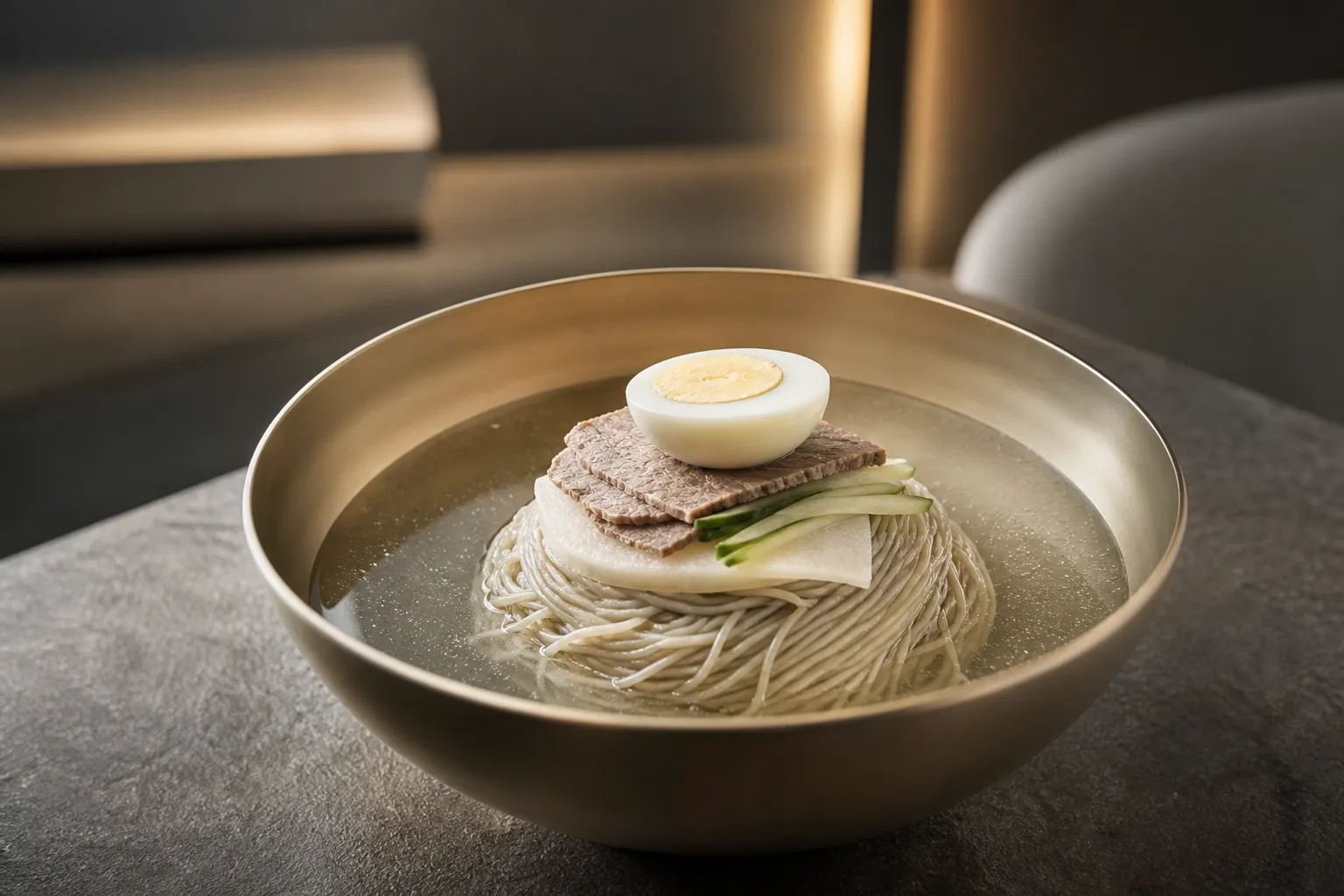
Woo Lae Oak’s naengmyeon price is now a bigger part of the conversation around one of Seoul’s best-known Pyeongyang cold noodle restaurants. In April 2026, Asia Economy reported that Woo Lae Oak raised its Pyeongyang naengmyeon from ₩16,000 to ₩18,000, a 12.5% increase that brings the bowl close to the symbolic ₩20,000 mark many diners notice when judging everyday restaurant prices.1
That number matters because Woo Lae Oak is not just any cold noodle shop. It is a long-running Seoul institution, known in English as Woo Lae Oak, and its prices often become part of the broader discussion about how much traditional Korean comfort foods now cost. The restaurant’s reputation, long history, and Michelin recognition make the latest price point feel less like a small menu update and more like a useful snapshot of where premium Pyeongyang naengmyeon stands in 2026.
Woo Lae Oak Naengmyeon Price in 2026
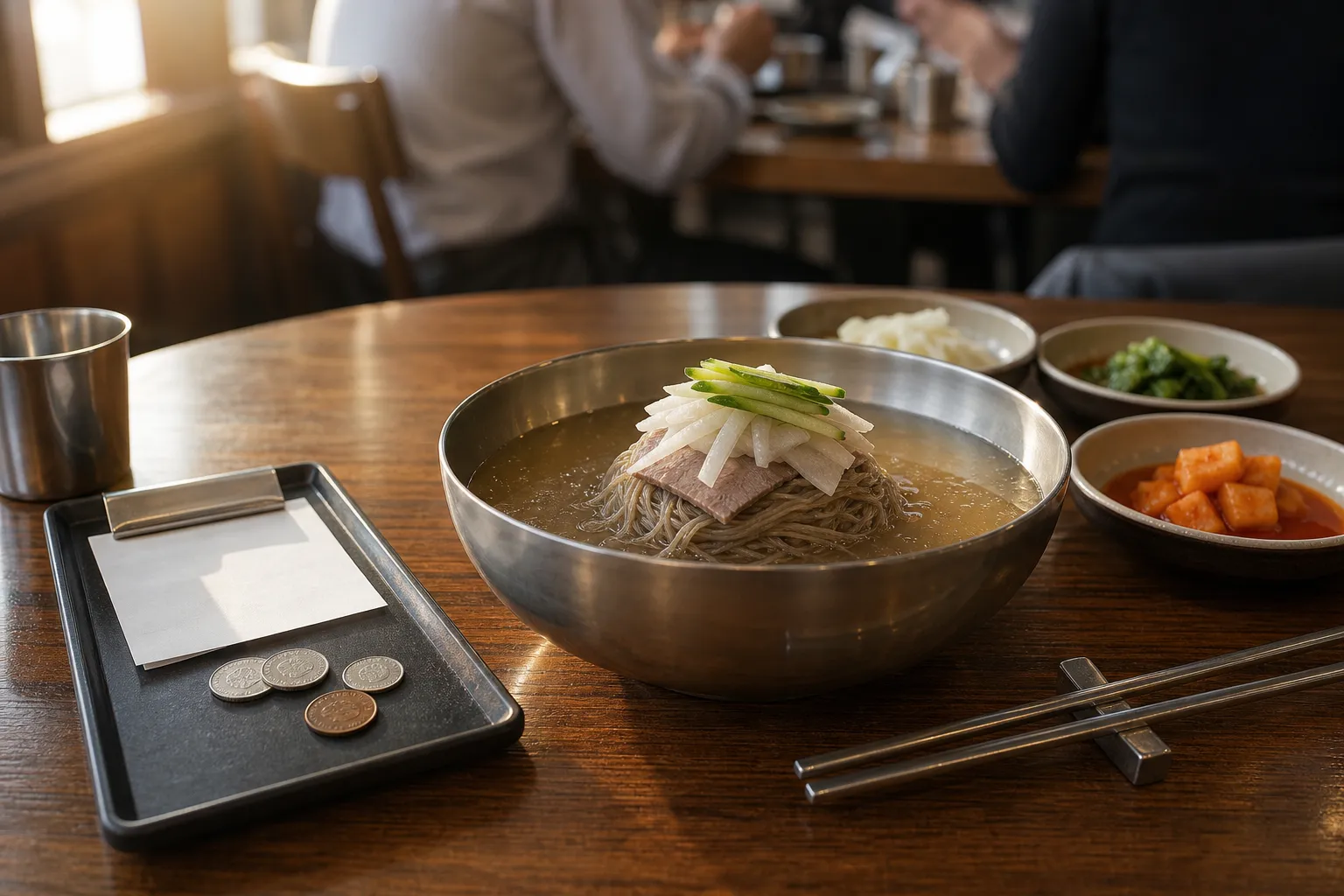
The clearest price change in the available sources is simple: Woo Lae Oak’s Pyeongyang naengmyeon moved from ₩16,000 to ₩18,000. Asia Economy described the increase as part of a wider pattern in which familiar foods are becoming more expensive, especially when ingredient and labor costs rise together.1 Dong-A Ilbo also noted the same movement from ₩16,000 to ₩18,000 while introducing Woo Lae Oak as a historic Pyeongyang naengmyeon restaurant in Seoul’s Jung District.2
For a single diner, ₩18,000 is the headline figure. For a group, the increase becomes more visible. Asia Economy calculated that ordering four bowls of naengmyeon alone would cost ₩72,000. Add two orders of bulgogi, and the meal would go beyond ₩150,000.1 That framing explains why the price has drawn attention: the issue is not only the cost of one bowl, but how quickly a simple meal can become a substantial bill when several people eat together.
The shift is also notable because a 2025 report from Chosun Biz listed Woo Lae Oak’s Pyeongyang naengmyeon at ₩16,000 at the time, while discussing how cold noodle prices in Seoul had climbed even though buckwheat prices had fallen.3 In other words, the ₩18,000 figure is not isolated. It follows a period in which Seoul naengmyeon prices were already being watched closely.
Why the Price Increase Is Getting Attention
Pyeongyang naengmyeon can look minimal at first glance: cold broth, noodles, slices of meat, and a restrained garnish style. But the cost story behind the bowl is more complicated than buckwheat alone. Chosun Biz reported that Seoul’s average naengmyeon price reached ₩12,269 in June 2025, up 36.3% from five years earlier.3 The article also pointed to costs such as Korean beef, pork, labor, and rent as pressure points, even as buckwheat prices had declined.3
One short comment from a Seoul cold noodle restaurant owner captured that tension neatly: “Only buckwheat prices have fallen; Korean beef brisket and shank prices have risen a lot.”3 The quote is not from Woo Lae Oak itself, but it helps explain why diners may see higher prices even when one famous noodle ingredient is not the main cost driver.
Woo Lae Oak’s own restaurant profile adds another layer to that context. The Michelin Guide describes the restaurant’s broth as being made by boiling Korean beef arong-satae, then seasoning it with salt and soy sauce.4 That detail matters because broth is central to Pyeongyang naengmyeon, and beef-based preparation connects the menu price to the broader meat-cost discussion appearing in Korean food-price coverage.
The restaurant’s reputation also affects how people read the price. Dong-A Ilbo’s 2026 Pyeongyang naengmyeon ranking, based on recommendations from 10 experts and devoted Pyeongyang naengmyeon fans, introduced Woo Lae Oak as tied for first place.2 A higher price at a restaurant with that kind of recognition will naturally receive more attention than the same change at a lesser-known shop.
A Historic Bowl With a Modern Price Tag
Woo Lae Oak’s appeal is tied strongly to continuity. Michelin’s official restaurant page identifies Woo Lae Oak at 62-29 Changgyeonggung-ro, Jung-gu, Seoul, classifies it under “₩ · Naengmyeon,” and presents it as a Bib Gourmand restaurant.4 The same page describes the restaurant as carrying on the reputation and tradition of Pyeongyang naengmyeon since opening in 1946.4
That long history is one reason the ₩18,000 price feels culturally interesting rather than purely transactional. For many readers, Woo Lae Oak represents an older Seoul dining tradition: the kind of place where the bowl is discussed not only as lunch, but as a reference point for what Pyeongyang naengmyeon is supposed to be. The current price sits at the meeting point of heritage, craft, and modern restaurant economics.
Michelin Korea’s 2026 Seoul and Busan selection announcement also helps place the restaurant in a wider dining landscape. On March 5, 2026, Michelin Korea announced the full “Michelin Guide Seoul & Busan 2026” selection, covering 233 restaurants in total: 178 in Seoul and 55 in Busan.5 Woo Lae Oak’s separate Michelin restaurant page lists it as Bib Gourmand, a category that often attracts diners looking for recognized restaurants beyond the star system.4
For visitors or first-time diners, the most practical takeaway is straightforward. If you are budgeting for Woo Lae Oak’s signature Pyeongyang naengmyeon, the source-backed figure to keep in mind is ₩18,000 per bowl. If you are planning a shared meal with additional dishes such as bulgogi, the total can rise quickly, especially for a group.1
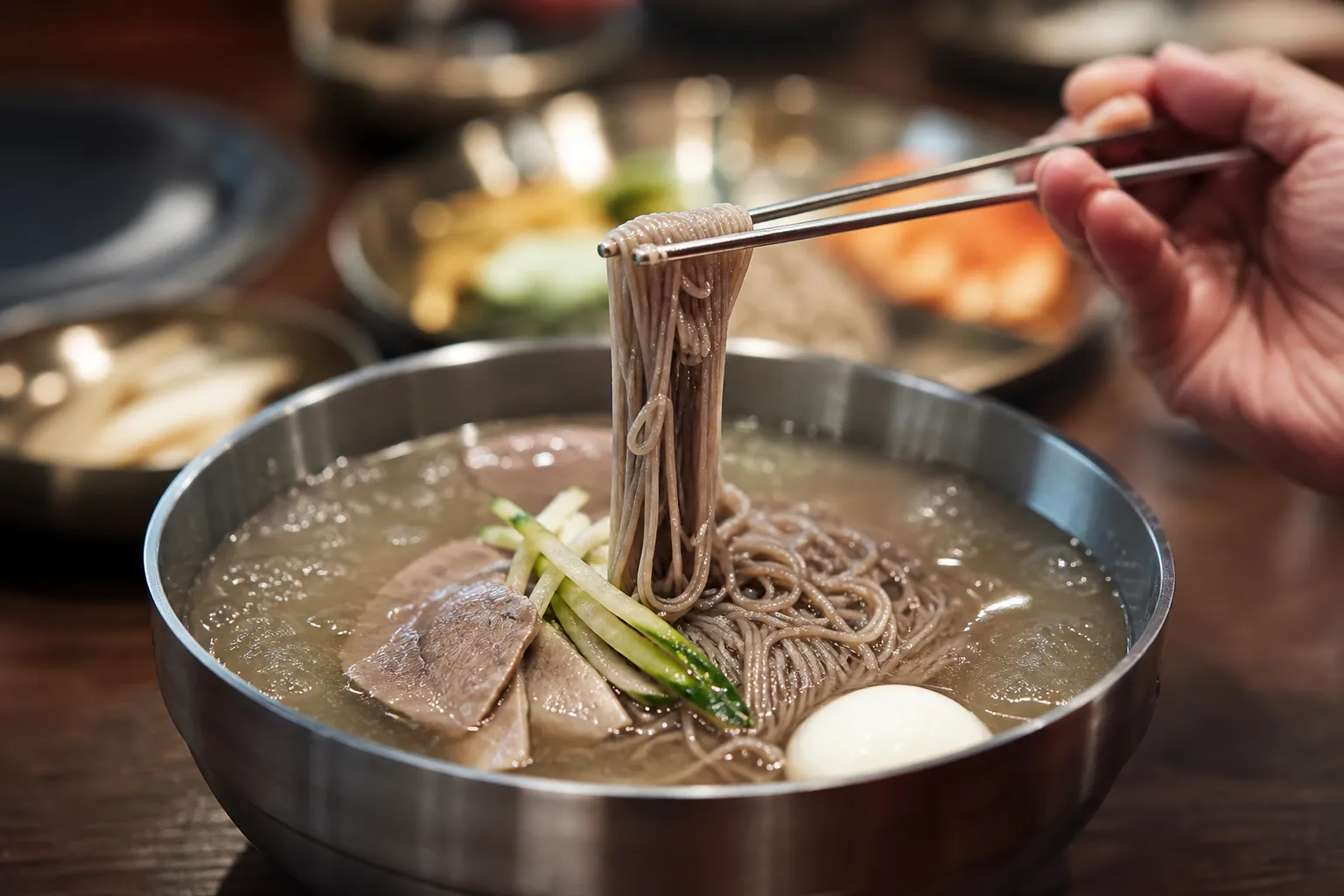
Woo Lae Oak’s naengmyeon price is ultimately about more than one menu line. The move from ₩16,000 to ₩18,000 reflects the pressure facing well-known cold noodle restaurants in Seoul, while also showing how a historic bowl can remain highly sought-after even as its price becomes part of the debate around everyday dining costs in Korea.
References
- 냉면 한 그릇 2만원 눈앞…서민 음식값도 손 떨리네 (아시아경제, 2026-04-17)
- 전문가·마니아 선정 2026 평양냉면 베스트 10 (동아일보, 2026-05-21)
- [Why] 냉면 한 그릇 1만6000원 시대… 메밀값 내렸어도 가격 치솟는 이유는 (조선비즈, 2025-08-12)
- 우래옥 – Seoul – 의 미쉐린 가이드 레스토랑 (미쉐린 가이드)
- 미쉐린 가이드 서울 & 부산 2026, 셀렉션 리스트 발표 (미쉐린코리아, 2026-03-05)
About the Author