BTS Gwanghwamun Comeback Concert Draws Crowd Size Controversy as Official Estimates Vary Widely
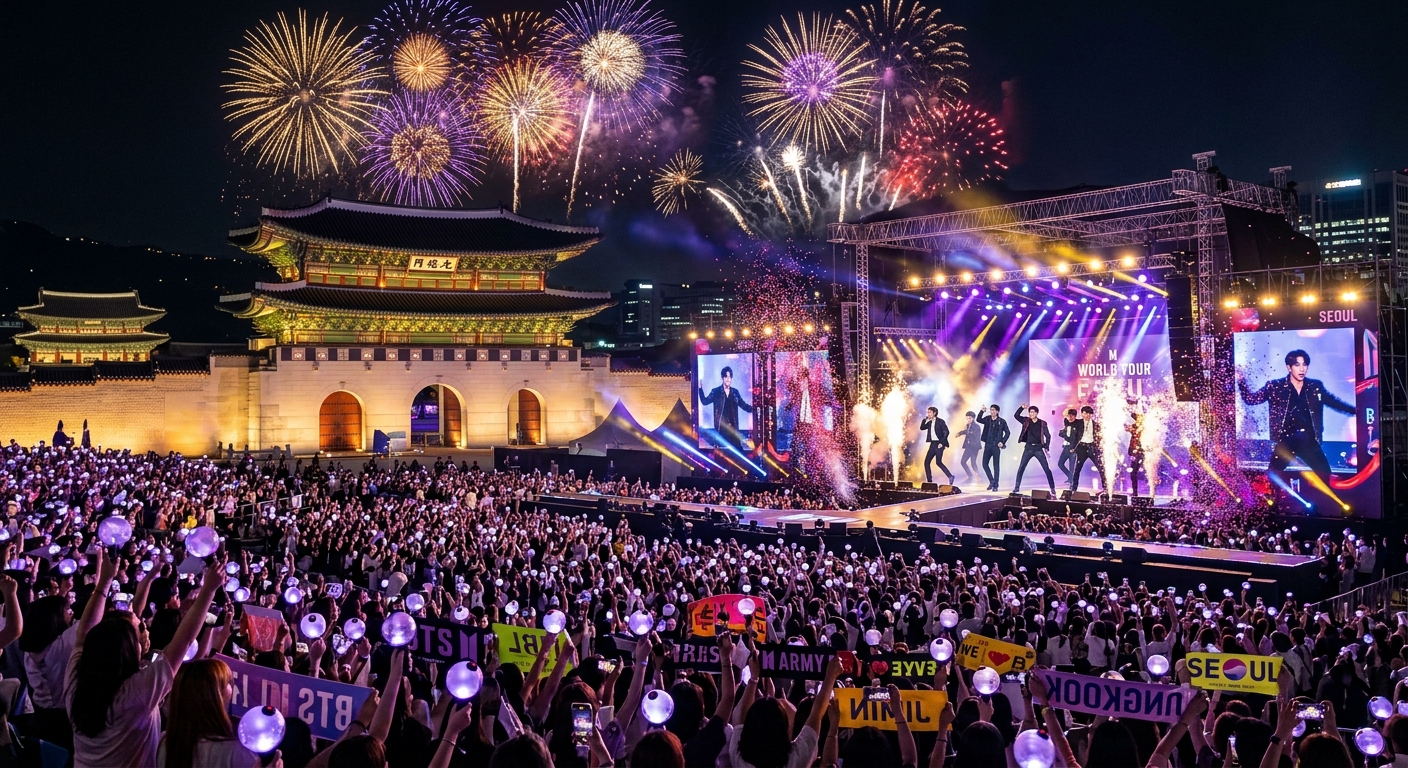
Image content may not be directly related to the article content.
SEOUL, March 22 – BTS’s long-awaited comeback concert at Gwanghwamun Square on March 21, 2026, has ignited a heated debate over attendance figures, with official estimates differing by more than 150,000 people and raising questions about the proportionality of safety measures implemented for the event.
The free concert, titled “BTS Comeback Live: Arirang,” marked the group’s first full-capacity performance in approximately three years and five months, celebrating the release of their fifth full-length album “ARIRANG.” Despite leader RM’s ankle injury limiting his choreography, the event drew enthusiastic crowds and was streamed live to audiences in 190 countries via Netflix.
Image content may not be directly related to the article content.
However, the aftermath has been dominated by conflicting crowd counts. HYBE, BTS’s agency, announced that approximately 104,000 people attended the concert. This figure, the agency explained, included ticket holders, real-time mobile subscribers from Korea’s three major carriers, foreign visitors, and users of budget phone services, aiming to capture cumulative foot traffic over time.
In stark contrast, the Seoul Metropolitan Government reported around 40,000 to 42,000 people present in the Gwanghwamun and Deoksugung area at 8 p.m., with police offering similar unofficial estimates. The Ministry of the Interior and Safety, relying on carrier data, estimated about 62,000 individuals in the vicinity—but acknowledged that this number included roughly 10,000 deployed public officials while excluding foreign visitors and budget phone users.
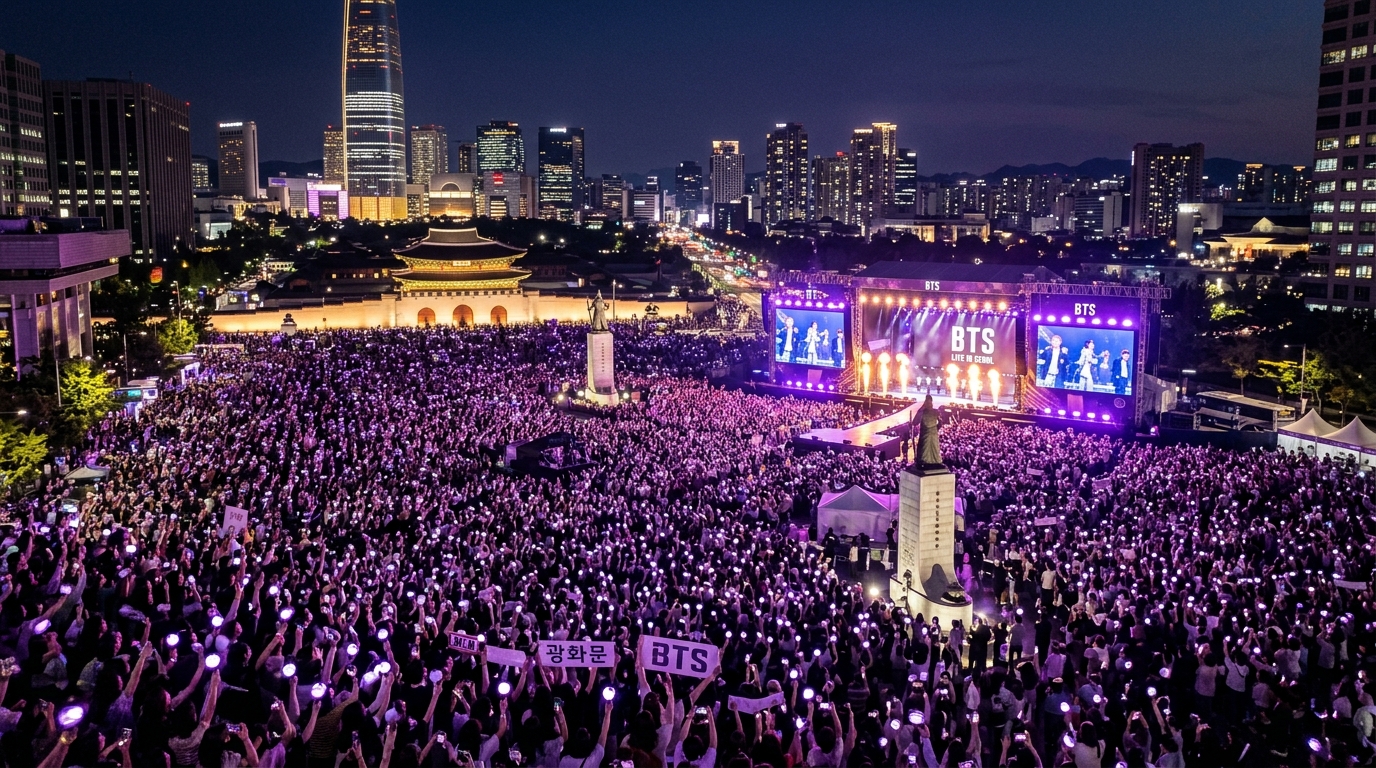
Image content may not be directly related to the article content.
The discrepancy traces back to pre-event preparations. Anticipating a massive turnout, police had predicted up to 260,000 spectators could gather from Gwanghwamun to Sungnyemun Gate. This forecast triggered a large-scale mobilization of 15,500 safety personnel, including 6,700 police officers and over 10,000 public officials from various city agencies, alongside HYBE’s 4,800 private staff. Authorities enforced extensive road closures, suspended subway services at nearby stations, installed metal detectors, and restricted access to numerous public facilities for up to 33 hours.
Critics swiftly denounced the response as excessive. Netizens and civic groups pointed out that the actual attendance fell far short of even the most conservative official estimates, arguing that the deployment of thousands of officials and the resulting inconvenience to citizens—such as detoured wedding guests and disrupted commutes—represented an unnecessary waste of public resources. Estimates suggest overtime costs for mobilized public servants alone exceeded 400 million won.
Supporters of the measures, however, emphasized the heightened focus on crowd safety following the 2022 Itaewon tragedy. They argued that the precautions, while perhaps overly cautious, ensured zero safety incidents during the event. Videos and reports showed fans exiting orderly and even voluntarily picking up litter after the concert.
Despite the controversy, there was broad agreement on one point: BTS’s enduring ability to mobilize massive audiences, whether the true figure lies closer to 40,000 or 100,000, reaffirms their unparalleled global influence. As Seoul balances public safety with civic convenience in the post-Itaewon era, the Gwanghwamun concert serves as a case study in the challenges of managing large-scale cultural events in a densely populated capital.
작성자 소개