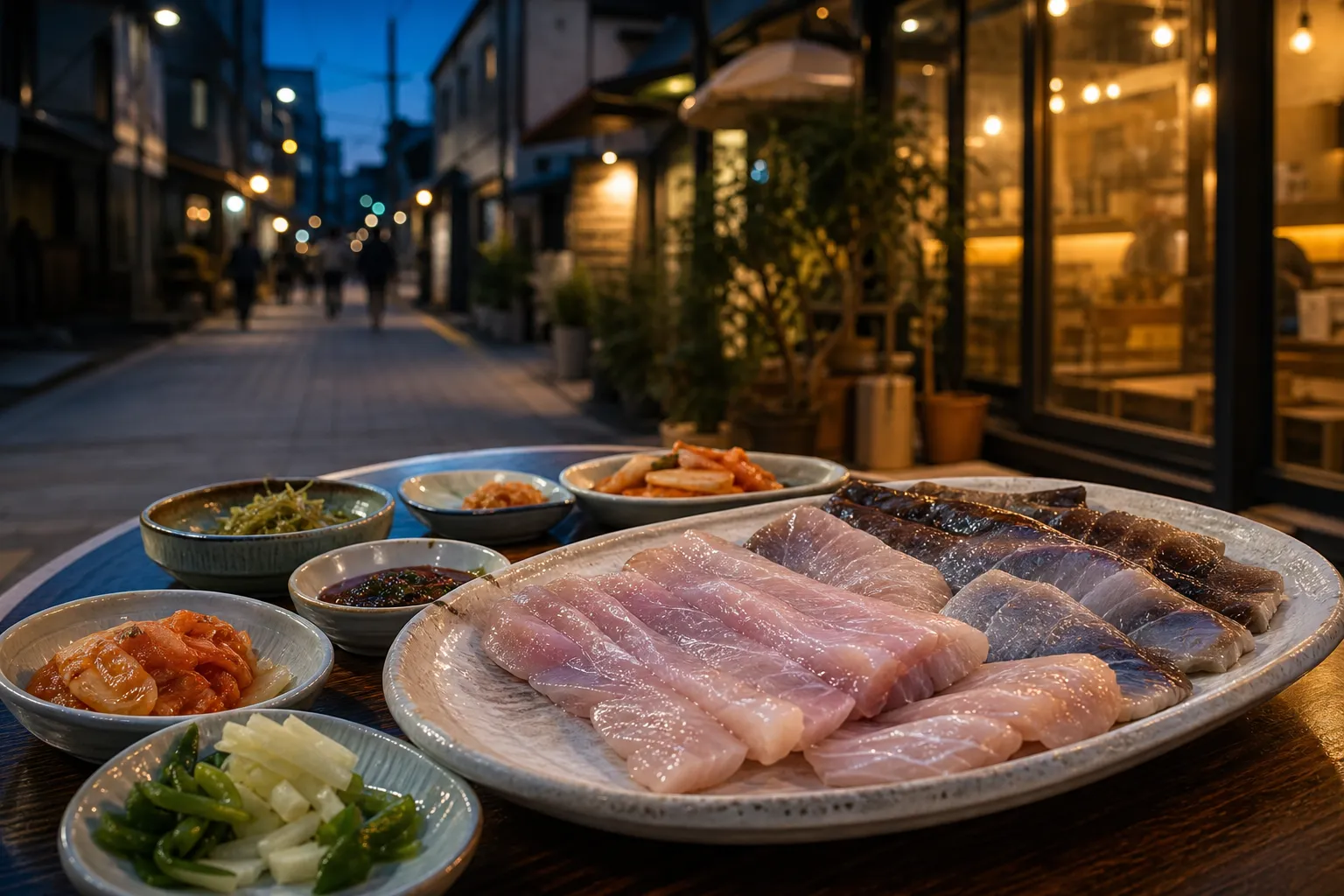
Naju Hongeo Street in Yeongsanpo is one of South Jeolla’s most distinctive food destinations, centered on the bold local culture of aged fermented skate. In 2026, Naju City is working to strengthen the street as a representative gourmet tourism landmark by pairing its long food history with restaurant training, hygiene improvements, and visitor-friendly street upgrades.1
For anyone interested in Hidden Regional Eats, this is a useful example of how one local specialty can shape more than a menu. In Yeongsanpo, hongeo is tied to trade history, neighborhood identity, public investment, and a festival calendar that has already drawn large crowds.
Naju Hongeo Street and Yeongsanpo’s Food Identity
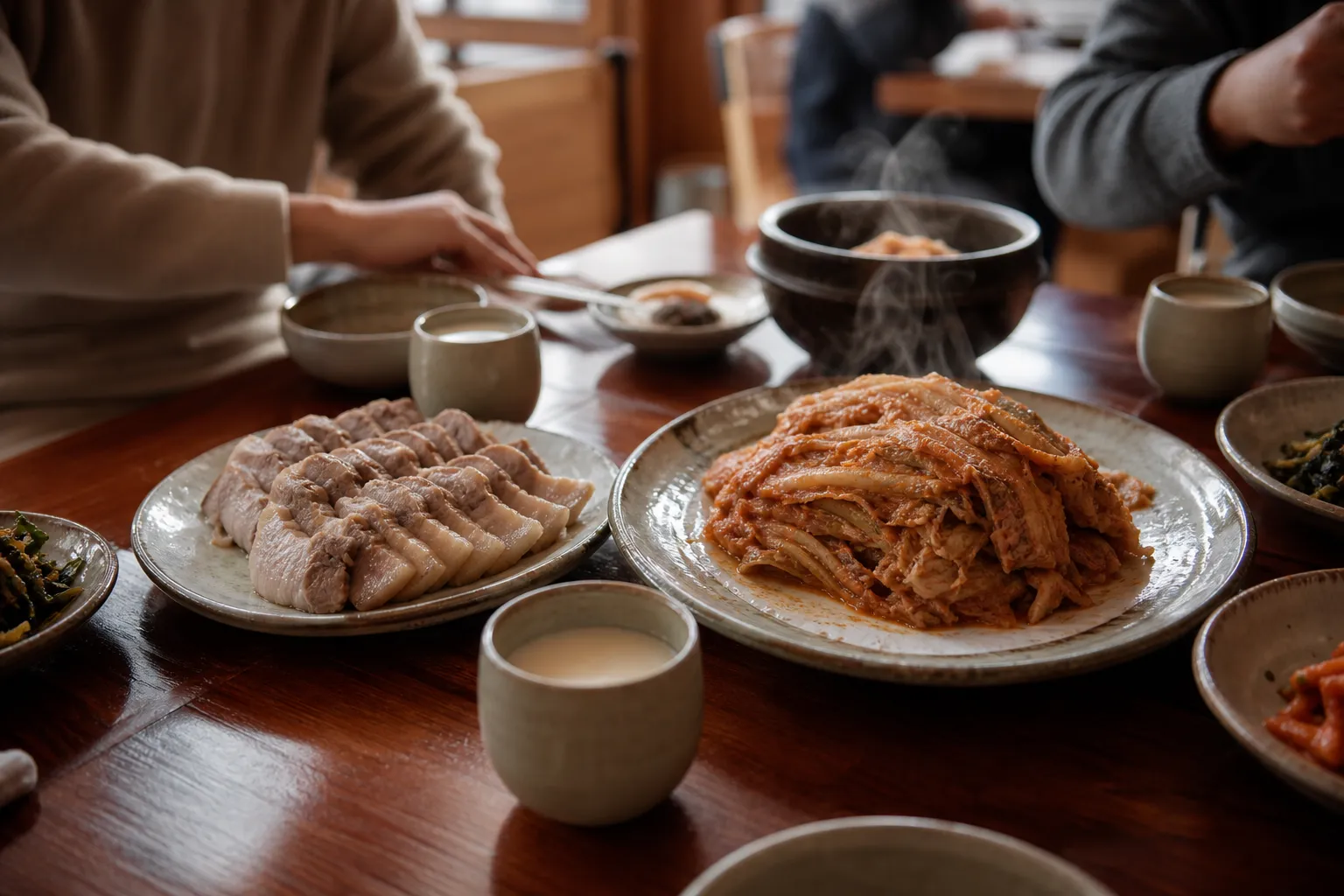
Yeongsanpo Hongeo Street is part of the Namdo Food Street program, a South Jeolla initiative that supports local food alleys as tourism-friendly dining areas. South Jeolla Province said the number of Namdo Food Streets had grown to 21, and Naju Yeongsanpo Hongeo Street, selected as the 19th such street in 2023, had completed its development and begun operating by June 2025.2
The street’s identity rests on hongeo, fermented skate known for its strong aroma and deep regional associations. The available source material describes Yeongsanpo as having served as an inland distribution hub for skate from Heuksando, which gives the area’s food culture a practical commercial background as well as a culinary one. Around the old Yeongsanpo area, roughly 30 hongeo specialty restaurants are currently operating, forming the restaurant cluster that now gives the neighborhood its signature image.3
That concentration matters. A single restaurant can introduce a dish, but a whole street can turn it into a destination. Visitors are not simply encountering a famous local plate; they are entering a district where the specialty is visible through restaurant signs, local promotion, and the city’s broader plan to connect food with history and culture.
Naju City’s current direction is to develop Yeongsanpo Hongeo Street into a tourism site where history, culture, and gastronomy come together. This stage of the project is focused on strengthening restaurant operators’ capabilities and improving the hygiene environment, which are practical but important parts of making a traditional food alley easier for visitors to navigate and trust.4
From Local Food Alley to Gourmet Tourism Site
The 2026 program includes education and expert consulting for restaurant owners. The six-week training period runs from June 23 to July 28, 2026, and covers menu and recipe development, friendly service, hygiene management, and promotion and marketing. Naju City also plans to produce and distribute promotional hygiene supplies in July 2026 to reinforce the street’s clean image.1
Those details may sound operational, but they show how the city is trying to polish the visitor experience without separating the street from its roots. A dish as distinctive as hongeo already has cultural force; the surrounding experience, from service to cleanliness to clear promotion, can determine whether first-time visitors feel comfortable exploring it.
The physical environment has also been part of the work. From 2024 to 2025, Naju invested a total project budget of 1 billion won to install features including information signs, a character photo zone, rest areas, and murals.4 These upgrades point toward a street designed not only for regular local diners, but also for travelers who may want clearer orientation, visual markers, and places to pause between meals or nearby activities.
South Jeolla’s wider Namdo Food Street model helps explain that approach. The program supports environmental improvements such as symbolic installations, convenience facilities, signboards, pedestrian paths, rest areas, and parking lots, with 1 billion won invested per site.2 In that context, Naju Hongeo Street is not an isolated beautification project. It is part of a provincial strategy to make regional food districts more legible, comfortable, and competitive as travel destinations.
Naju Mayor Yoon Byung-tae summed up the official ambition by saying the city would “raise the value of the history, culture, and food of Yeongsanpo Hongeo Street” and foster it as a gourmet tourism landmark representing Naju.1 The quote is short, but it captures the main idea: the street’s future is being built around both taste and place.
Festivals, Foot Traffic, and a Neighborhood Story
The street’s profile is also tied to the Yeongsanpo Hongeo & Hanu Festival. The 22nd edition was held from May 22 to 24, 2026, around the Yeongsan River riverside sports park and poppy flower field area, with programs including invited singer performances, fireworks, direct discount sales of hongeo and hanu, grill zones, tasting areas, a flea market, local food sales, and poppy flower photo zones.5
After the event, Naju City said about 150,000 people visited the festival. The city presented the 160,000-square-meter poppy flower complex and free shuttle buses as factors that helped the festival perform strongly, alongside food-centered attractions such as Yeongsanpo aged hongeo and Naju Deuraechan hanu.6
That festival context is useful because it shows how hongeo is being introduced to broader audiences. A food street can be a year-round anchor, while a festival creates a concentrated moment when visitors, local producers, restaurants, and public programming gather around the same identity.
There is also a civic layer to the story. Naju has begun work to integrate Yeonggang-dong, Yeongsan-dong, and Ichang-dong and restore the former Yeongsanpo-eup name under changes to the Local Autonomy Act. The city plans to promote commercial revitalization by creating a food culture tourism site centered on the hongeo street formed in the old Yeongsanpo area.3
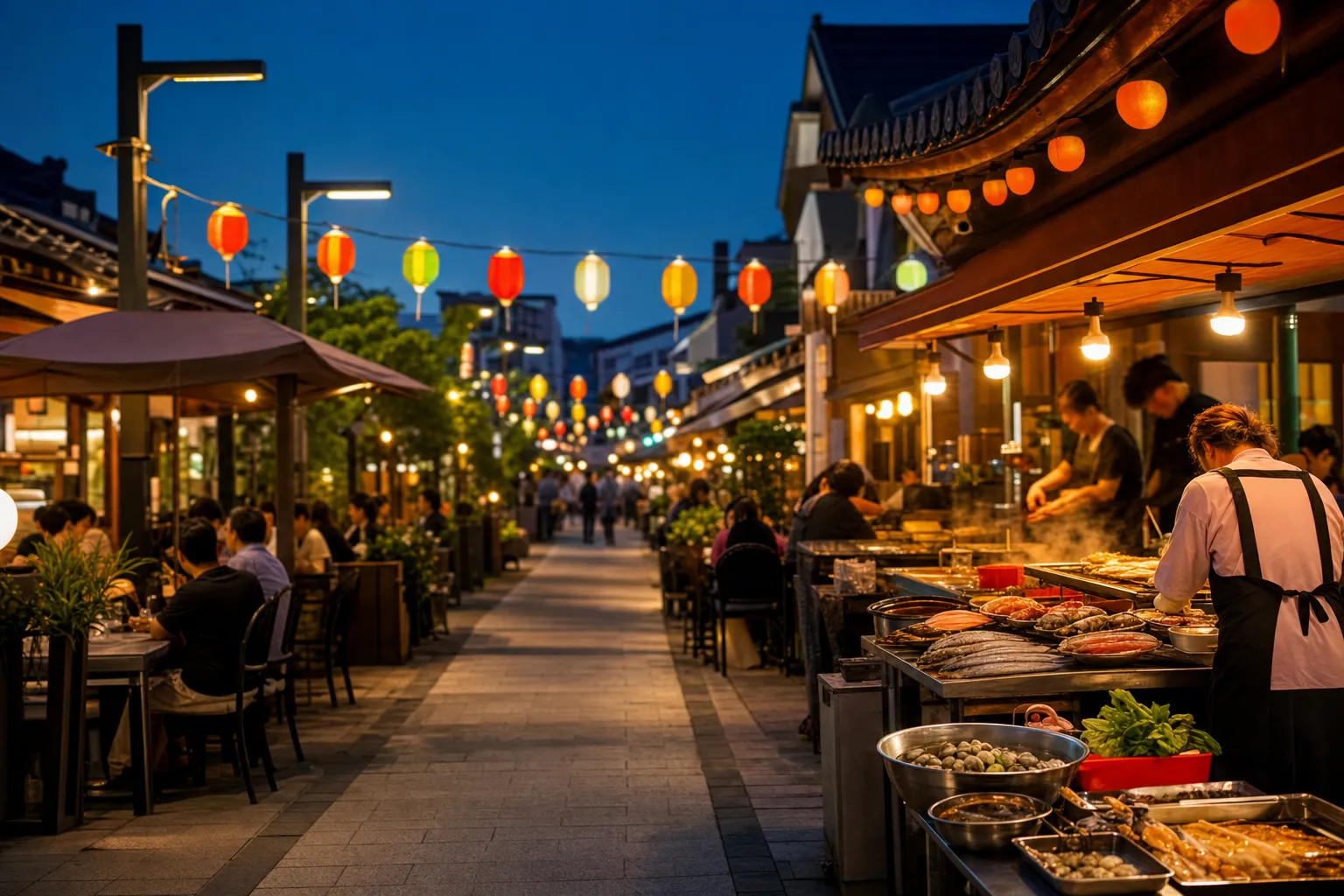
Naju Hongeo Street is compelling because it is not being treated as a novelty stop built around a strong-flavored dish. The sources show a place where fermented skate connects restaurant clusters, infrastructure investment, festival programming, and the effort to renew Yeongsanpo’s local identity. For travelers who like regional food with a real backstory, this is exactly the kind of destination where the flavor and the neighborhood explain each other.
References
- 600년 홍어의 변신…나주시, 영산포 홍어거리 '미식관광 명소' 육성 (아시아경제, 2026-06-27)
- 전남도, 남도음식거리 20곳 넘어섰다…나주 영산포 홍어거리 준공 축하 (브릿지경제, 2025-06-05)
- 홍어 덕분에…나주 영산포, 45년 만에 읍으로 부활한다 (중앙일보, 2026-05-19)
- 나주 영산포 홍어거리 지역 대표 미식관광 명소로 거듭난다 (파이낸셜뉴스, 2026-06-26)
- 제22회 영산포홍어&한우축제 (나주문화재단, 2026-05-21)
- 영산포 홍어·한우축제 15만 명 방문…나주 5월 축제 흥행 '절정' (프레시안, 2026-05-26)
About the Author