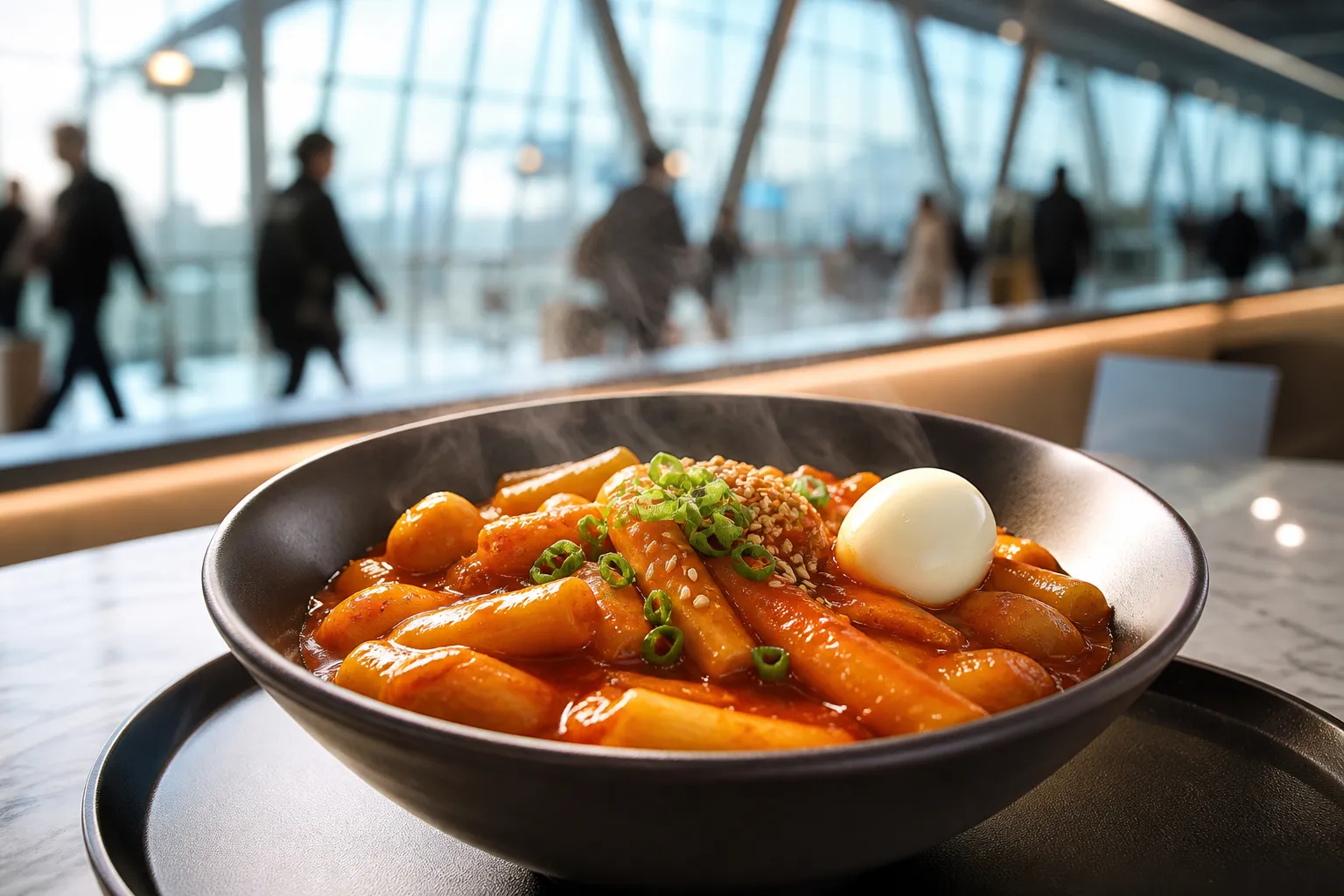
Halal tteokbokki is no longer just a niche idea inside the broader world of Korean snacks. In 2026, it has appeared in airport food courts, overseas tasting events, and export fairs, showing how one of Korea’s best-known street foods is being adapted for Muslim consumers while keeping its familiar identity as chewy rice cake in a spicy sauce.
For readers discovering Halal Korean Street Food for the first time, tteokbokki is a useful place to start. It is already one of Korea’s most recognizable casual dishes, and the source material shows that companies and public food agencies are treating halal-certified versions as part of a wider push to make K-food easier to access in Muslim-majority and Muslim-friendly markets.
Halal Tteokbokki Moves Into Travel Spaces
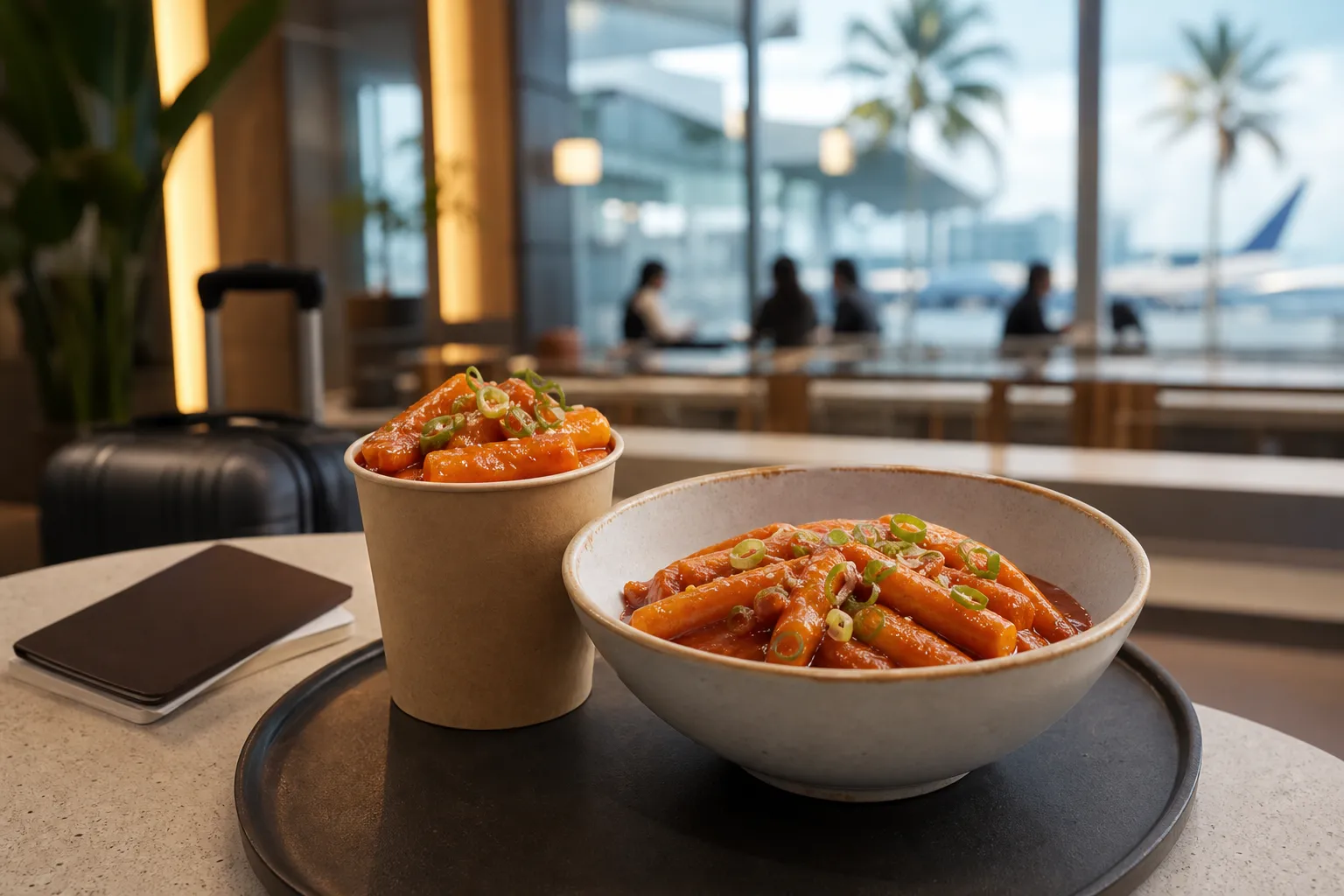
One of the clearest signs of halal tteokbokki’s growing visibility came through Adal, a Korean bunsik franchise. In April 2026, Adal announced that it would open a halal-certified bunsik store in the food court at Incheon International Airport Terminal 2, aiming at travelers from the Middle East and Islamic regions as well as Korean consumers looking for Korean snack food before departure.1
The airport location matters because it places halal tteokbokki in a practical travel setting, not only in a specialty shop or export catalogue. Adal said it prepared an environment where Muslim consumers could encounter Korean tteokbokki by using halal-certified tteokbokki sauce and bite-sized garaetteok, the cylinder-shaped rice cake commonly associated with the dish.1
The menu plan also points to a wider approach than simply replacing one ingredient. Adal representative Lee Hyun-kyung said the store planned to offer not only halal tteokbokki but also foods widely loved in Islamic regions, including falafel, hummus, tabbouleh, and pita bread sandwiches.1 That detail is important because it frames halal tteokbokki as part of a more familiar dining environment for Muslim travelers, rather than as a single isolated Korean dish.
From Ramadan Gatherings to Halal Food Fairs
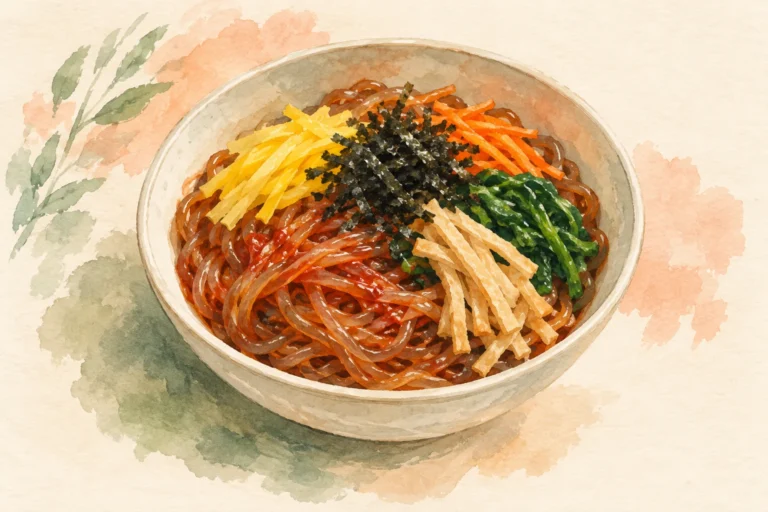
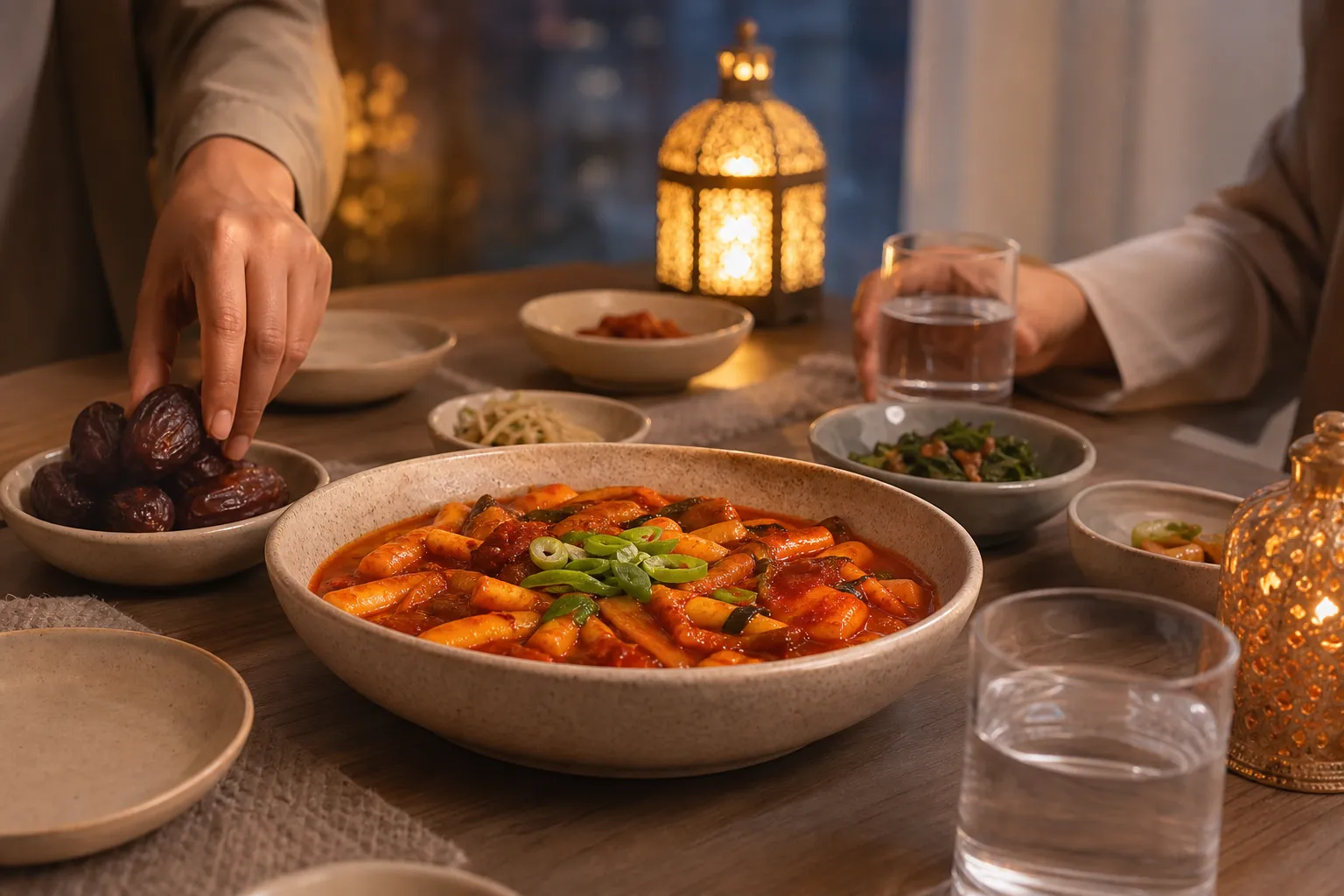
Halal tteokbokki has also been introduced through official overseas promotion events. On March 12 and March 19, 2026, South Korea’s Ministry of Agriculture, Food and Rural Affairs and the Korea Agro-Fisheries & Food Trade Corporation, known as aT, worked with the Korea Tourism Organization to hold Ramadan harmony night events in Kuala Lumpur. The meals introduced popular K-foods such as chicken, tteokbokki, and japchae, all prepared as halal-certified products.2
The Kuala Lumpur events were small compared with large trade fairs, but they were targeted. A total of 160 participants recruited through social media joined the Ramadan gatherings, and the Korea Tourism Organization introduced food menus by Korean travel destination along with halal-certified restaurants.2 In that context, halal tteokbokki was not just a product sample. It was presented alongside tourism, dining, and everyday food choices that Muslim visitors might consider when thinking about Korea.
A larger business-facing example followed in May 2026. From May 18 to 24, aT and the Ministry of Agriculture, Food and Rural Affairs held the 2026 ASEAN K-Halal Food Fair in Kuala Lumpur. The B2B export consultation event brought together 40 Korean food companies with halal certification and 79 buyers from markets including Malaysia and Indonesia, generating 589 consultations.3
The fair also produced 33 memorandums of understanding and on-site contracts worth a total of $4 million, while the B2C event drew about 100,000 visitors.3 The source does not list tteokbokki as the sole star of that fair, but it shows the commercial environment around halal-certified K-food. For a dish like tteokbokki, which already travels well as a packaged or quick-service food, that kind of halal trade infrastructure can make a real difference.
Why Certification Is Central to the Story
The word “halal” is not just a marketing label in these examples. Certification is treated as a production and export requirement. In December 2025, Chilgab Nongsan said it had obtained Korea Muslim Federation, or KMF, halal certification for six products, including buckwheat noodles, wheat tteokbokki, rice tteokbokki, cold noodles, and tteokguk. The report explained that KMF certification requires standards to be met across ingredient selection, production, packaging, and storage.4
That helps explain why halal tteokbokki appears repeatedly in official and business settings. It is not enough for the final dish to resemble Korean street food; the ingredients and handling process also need to meet certification expectations. For consumers who follow halal dietary rules, that distinction is the whole point.
Indonesia is another key market in the source material. From June 5 to 7, 2026, aT and the Embassy of the Republic of Korea in Indonesia held a Korean agri-food consumer experience event at Paskal Mall in Bandung, West Java. Six local importers of Korean agri-food products participated, introducing halal-certified tteokbokki, ramen, beverages, and new products.5
The Bandung event also connects halal tteokbokki with changing market rules. aT said it would continue checking the readiness of Korean exporters ahead of Indonesia’s halal certification mandate in October 2026. Jeon Ki-chan, aT’s director for export food, said the agency would keep reviewing industry preparedness and expand the sales base for Korean agri-food into regional cities.5
The same pattern had appeared earlier in the Middle East. On November 19, 2025, the Ministry of Agriculture, Food and Rural Affairs held a halal K-food promotional event at the Korean Cultural Center in Abu Dhabi, inviting 30 people including Middle Eastern influencers and UAE university graduates. The event introduced halal-certified Hanwoo, ramen, tteokbokki, snacks, and fruit beverages as K-street food.6
Taken together, these examples show halal tteokbokki moving through several channels at once: airport dining, Ramadan cultural events, export fairs, Southeast Asian consumer promotions, and Middle Eastern food showcases. The source material does not claim that halal tteokbokki has become mainstream everywhere, and it does not provide consumer sales rankings. What it does show is a consistent, source-backed effort to make this familiar Korean snack accessible in settings where halal certification matters.
For anyone watching the next stage of Korean food abroad, halal tteokbokki is a small dish with a surprisingly wide footprint. Its appeal depends on the same things that made tteokbokki famous in the first place, but its growth now also depends on certification, careful sourcing, and the ability to meet Muslim consumers where they already travel, shop, and eat.
References
- 아딸, 인천공항 T2에 매장 오픈…'할랄 인증'으로 떡볶이 세계화 나서 (머니투데이, 2026-04-01)
- aT, 라마단 금식기간 후 첫끼 ‘할랄 K-푸드’ 소개 (KATI 농식품수출정보, 2026-03-24)
- 농식품부·aT, 말레이서 K-할랄푸드 페어…400만불 계약 (푸드투데이, 2026-05-27)
- 칠갑농산, 메밀·떡볶이·냉면 6종 KMF 할랄 인증 (머니투데이 via 다음뉴스, 2025-12-03)
- K-푸드, 인도네시아 제2시장 반둥 공략…수출 확대 기대 (뉴시스, 2026-06-08)
- 농식품부, UAE에서 인플루언서 초청 할랄 케이(K)-푸드 체험행사 성료 (농림축산식품부 보도 참고자료, 2025-11-20)
About the Author