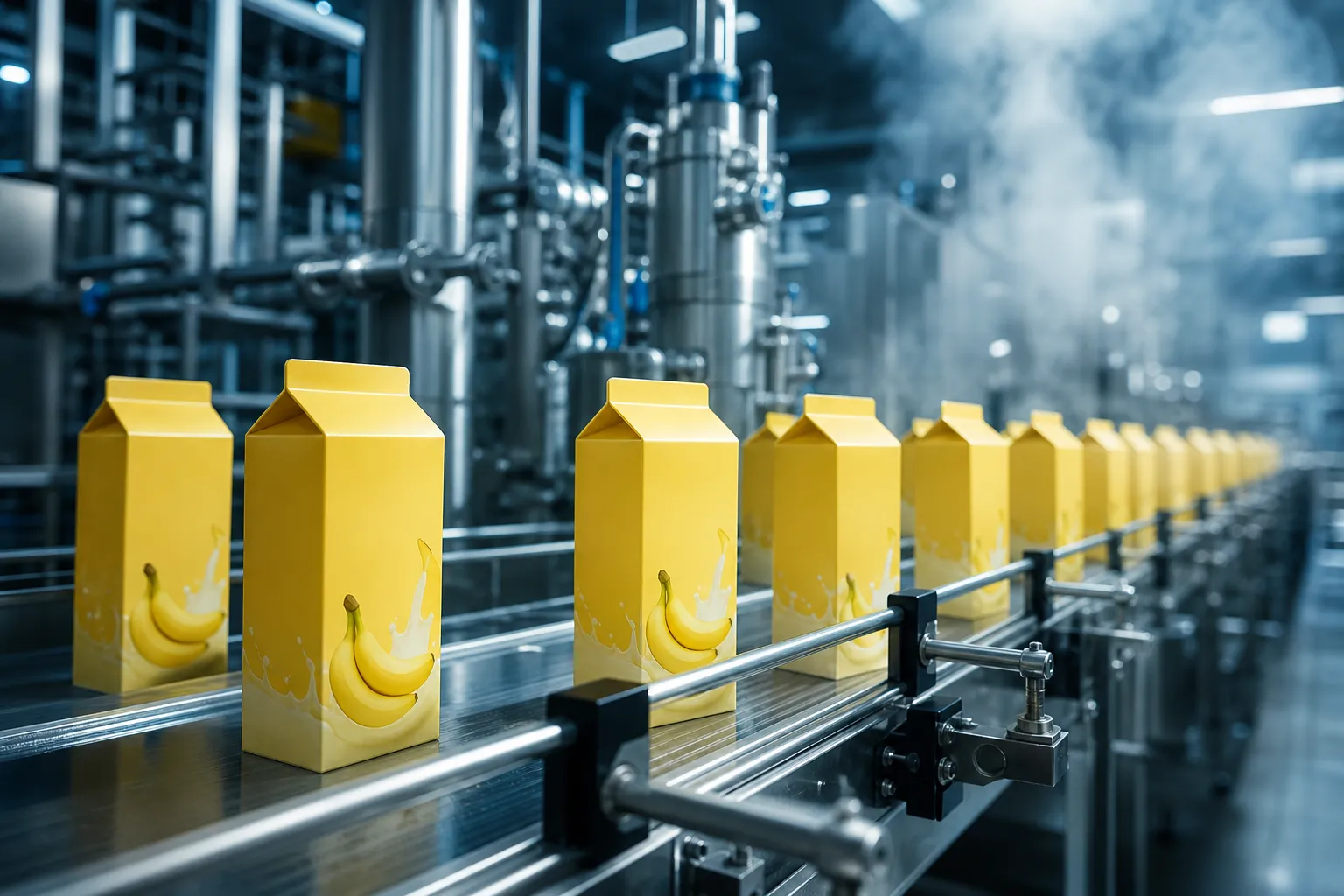
Binggrae Banana Flavored Milk overseas sales are entering a more strategic phase: the product is already a powerful domestic brand and a visible purchase among foreign visitors, but export growth depends on solving shelf-life and distribution constraints. The wider Banana Milk Craze matters commercially because Binggrae is trying to convert inbound tourism demand, airport sales momentum, and overseas retail placement into a more durable export business.
Overseas Sales Show Both Momentum and Friction
The confirmed numbers point in two directions at once. Binggrae’s full-year 2025 consolidated revenue reached 1.4896 trillion won, with operating profit of 88.4 billion won and net income of 55.6 billion won, and the company said it planned to expand overseas business sales centered on key markets including the United States.1 In the first quarter of 2026, consolidated revenue rose 1.3% year over year to 312.4 billion won, while operating profit increased 2.3% to 13.8 billion won; export growth in markets including the United States, China, and Vietnam was cited as improving profitability.2
That broader overseas improvement does not mean Banana Flavored Milk has an easy export path. Bizwatch reported that the brand began with the United States in 2004 and expanded to more than 30 countries, including China, Taiwan, Hong Kong, and Vietnam, but refrigerated distribution and short shelf life have limited long-distance exports.3 This is the central tension in Binggrae’s overseas sales story: strong product recognition does not automatically translate into scalable cold-chain economics.
| Indicator | Reported figure or fact | Why it matters |
|---|---|---|
| 2025 consolidated revenue | 1.4896 trillion won | Shows the scale supporting overseas expansion plans1 |
| Q1 2026 consolidated revenue | 312.4 billion won, up 1.3% YoY | Indicates modest top-line growth with overseas contribution2 |
| Q1 2026 operating profit | 13.8 billion won, up 2.3% YoY | Suggests profit impact from exports and efficiency efforts2 |
| Q3 2025 refrigerated overseas sales | 52.4 billion won, down 2.4% YoY | Highlights pressure on cold-chain products3 |
| Q3 2025 frozen exports | 81.7 billion won, up 22% YoY | Shows stronger export momentum in frozen categories3 |
| Export mix of Banana Flavored Milk | About 90% sterilized products | Points to shelf-stable formats as the practical export route4 |
The contrast between refrigerated and frozen overseas sales is especially useful for analysis. In the third quarter of 2025, Binggrae’s refrigerated overseas sales were 52.4 billion won, down 2.4% year over year, while frozen exports were 81.7 billion won, up 22%.3 Banana Flavored Milk sits closer to the refrigerated challenge than the frozen-growth story, which explains why product format is becoming as important as brand demand.
Why Sterilized Banana Milk Matters
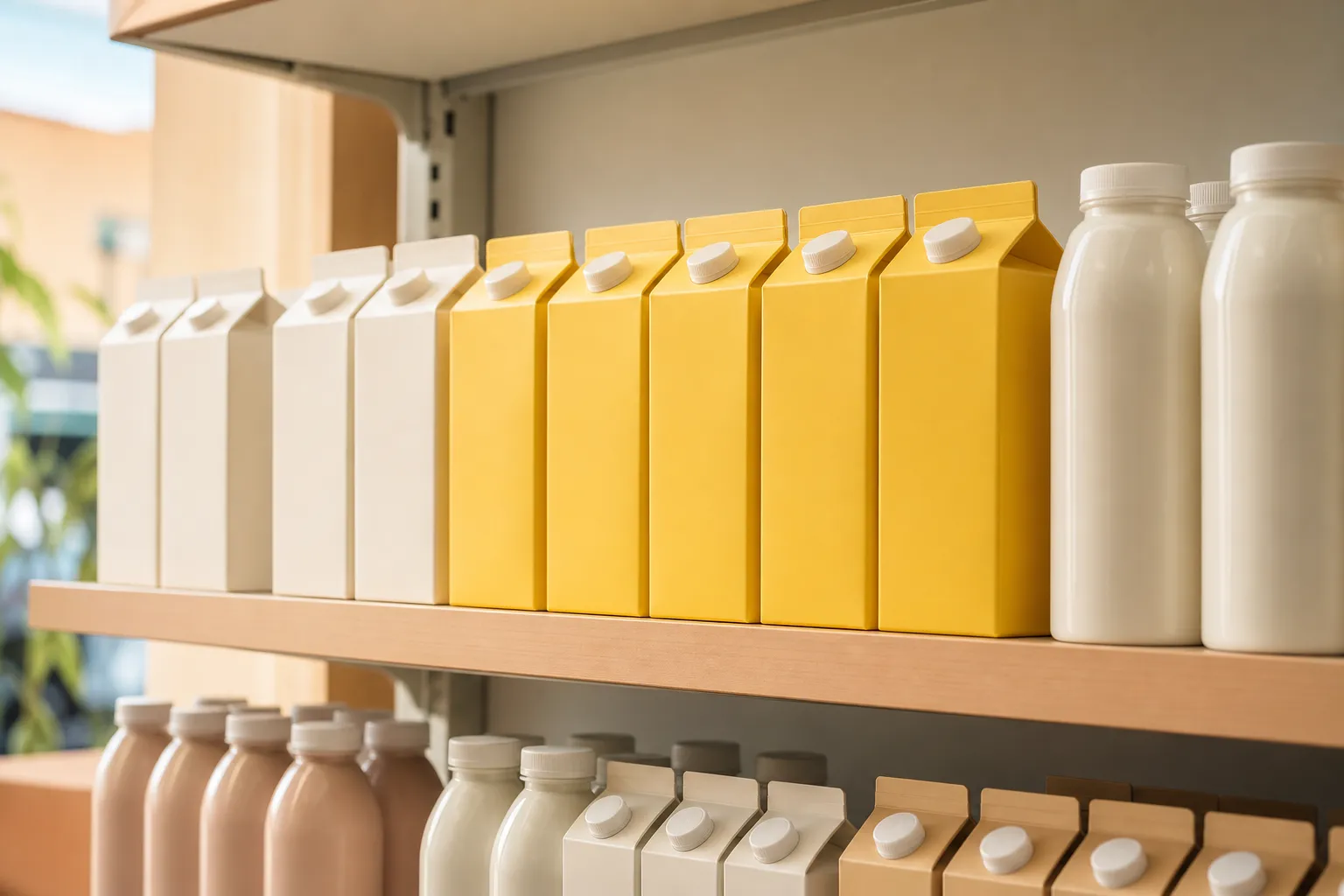
The clearest operational answer is sterilized Banana Flavored Milk. Chosun Biz reported that Binggrae produces a 200ml sterilized product for export and ships Banana Flavored Milk to more than 30 countries, including the United States, China, Taiwan, the Philippines, and Canada. About 90% of Banana Flavored Milk export volume is sterilized product.4
That figure is not a minor packaging detail. It suggests that the export model is already being reshaped around shelf stability rather than simply trying to send the familiar domestic refrigerated product farther. The cautious interpretation is that Binggrae’s overseas sales potential will likely depend less on whether consumers know the brand and more on whether the company can keep taste, availability, pricing, and retail placement consistent through sterilized formats.
Domestic demand still strengthens the brand story. Today Economy described Banana Flavored Milk as holding about 80% of Korea’s banana milk market, selling more than 1 million units a day on average, and accounting for about 20% of Binggrae’s overall sales.5 These numbers explain why the product is central to Binggrae’s portfolio, but they also raise the standard for overseas performance: a product this important cannot be treated only as a novelty item for tourists.
Tourism is still a useful demand signal. In the January to September 2025 period, Banana Flavored Milk sales at CU airport stores rose 72.9% year over year, and GS25 airport stores sold more than 1,200 units a day on average.4 Those airport figures do not prove long-term export stickiness by themselves, but they do show that foreign travelers are encountering the product at points of departure, where a domestic purchase can become a memory, a repeat search, or a demand cue in overseas markets.
Binggrae’s own comments also connect tourism and retail marketing. A company representative said that as overseas tourists’ interest in Banana Flavored Milk increased, the company was conducting marketing and promotions for foreign tourists at convenience stores in major tourist districts such as Myeongdong.5 In analysis terms, this is a bridge strategy: domestic tourist exposure helps support overseas brand recognition before the product reaches a shopper’s local supermarket.
Mexico Is a Test Case for Regional Expansion
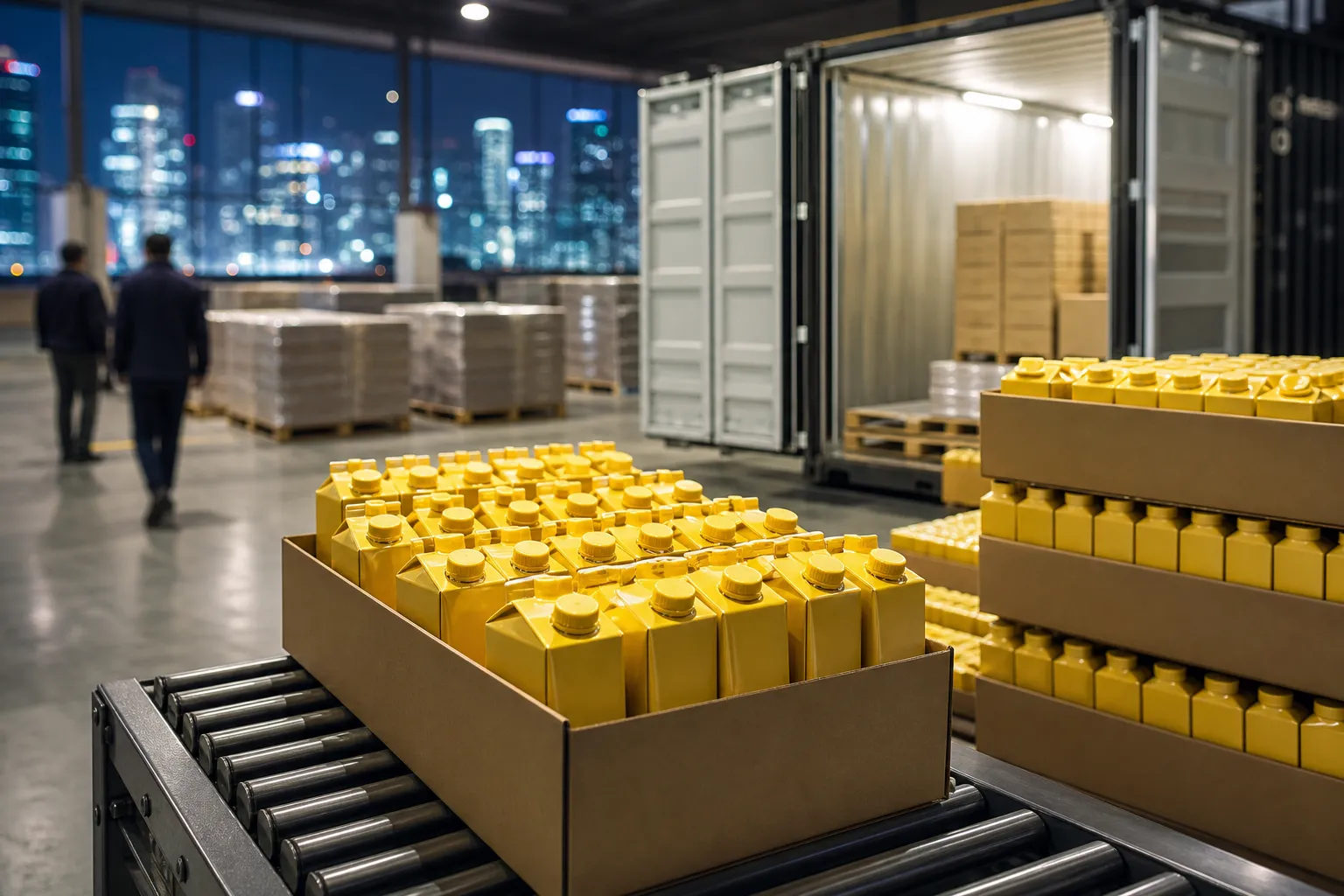
Binggrae’s 2026 move in Mexico shows how the company is trying to turn product awareness into distribution. The company said it would participate in Expo Antad 2026 in Guadalajara, Mexico, from May 19 to 21, introducing major brands including Banana Flavored Milk and Melona.6 It was already supplying Banana Flavored Milk to local Mexican distributors and retailers including Soriana and HEB, and described Mexico as a strategic base for entry into Latin America.6
The company’s stated ambition was broader than Mexico alone. A Binggrae representative said the company planned to use the opportunity to expand beyond Mexico into Latin American markets including Guatemala.6 This matches a gradual export logic also reflected in another company comment that it intended to expand step by step from existing export countries into nearby markets.3
The key analytical point is that Binggrae’s overseas Banana Flavored Milk sales are not just a story of viral popularity. The stronger reading from the available facts is a three-part strategy: use Korea’s tourist traffic to reinforce product recognition, use sterilized products to overcome cold-chain limits, and use anchor markets such as Mexico to test regional expansion. The opportunity is real, but the export model depends on whether the Banana Milk Craze can be converted from travel-driven demand into repeat overseas retail sales.
References
- 빙그레, 결산 배당 주당 3300원 유지…밸류업 기조 속 주주환원 강화 (빙그레, 2026-03-04)
- 빙그레, 1분기 영업익 138억원…"해외 이익이 단기 비용 상쇄" (연합뉴스, 2026-05-15)
- '절대 강자' 바나나맛 우유, 해외서 고전하는 이유 (비즈워치, 2025-12-03)
- 외국인 관광객 ‘핫템’ 바나나맛 우유… 빙그레, 유통기한 긴 무균 제품으로 수출길 넓힌다 (조선비즈, 2025-10-27)
- [기획] 빙그레 매출 20% 비중 '바나나맛우유', 외국인 관광객 잡은 비결 (오늘경제, 2026-05-08)
- 빙그레, 멕시코 식품박람회 참가…"중남미 수출 확대 추진" (연합뉴스, 2026-05-18)
About the Author