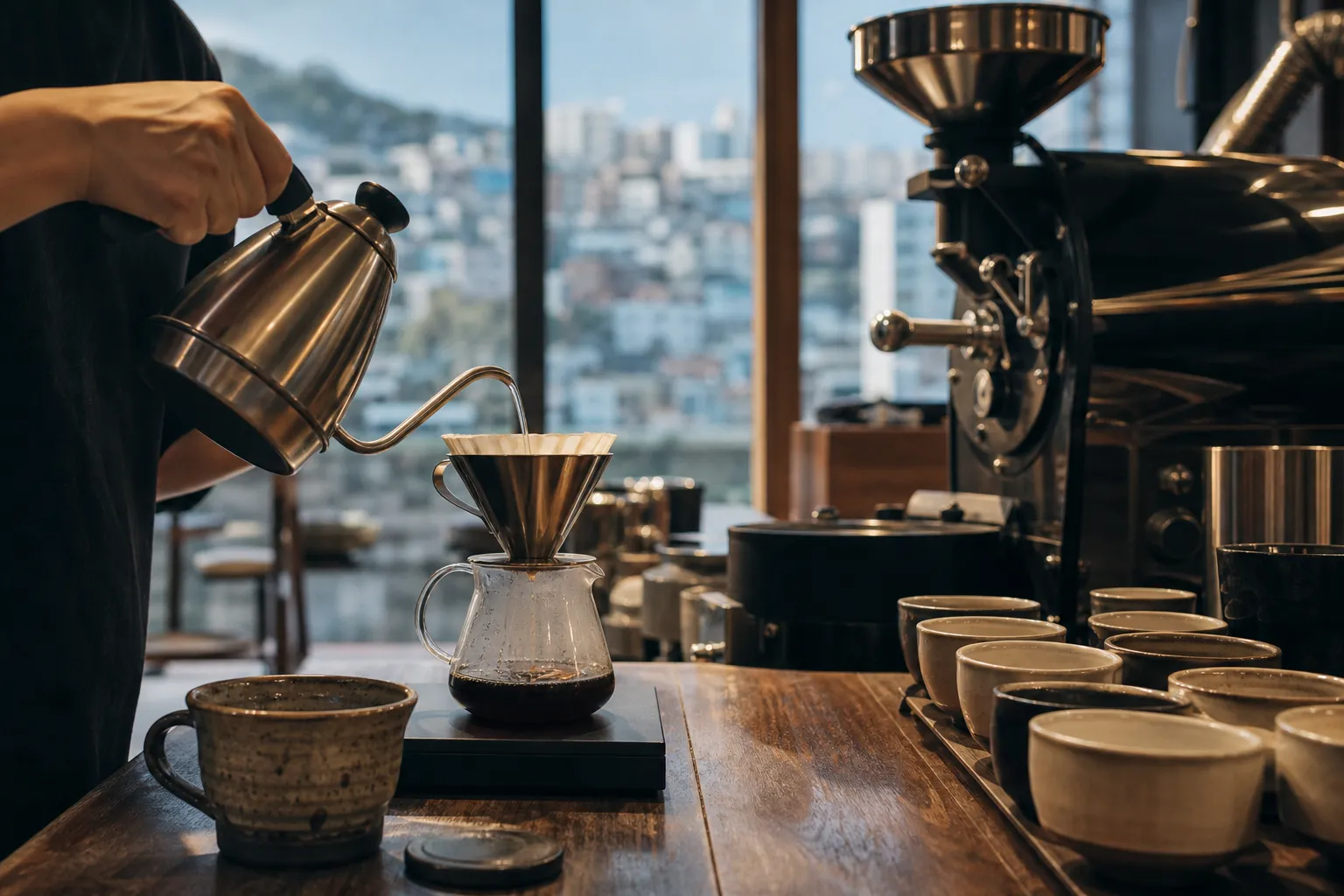
Jeonpo roastery cafes sit at the heart of one of Busan’s most talked-about coffee neighborhoods. Around Jeonpo Cafe Street and nearby side streets, the story is no longer just about pretty cafe interiors; it is also about roasting, branding, barista culture, and how a local coffee district keeps its identity as the area changes.
The most useful way to understand Jeonpo now is to see it as both a destination and an ecosystem. There are cafes serving everyday visitors, roasteries building wholesale networks, coffee festivals bringing in regional and overseas baristas, and local officials trying to protect the cafe-street brand while the commercial mix shifts.
Jeonpo Roastery Cafes and a Changing Cafe Street
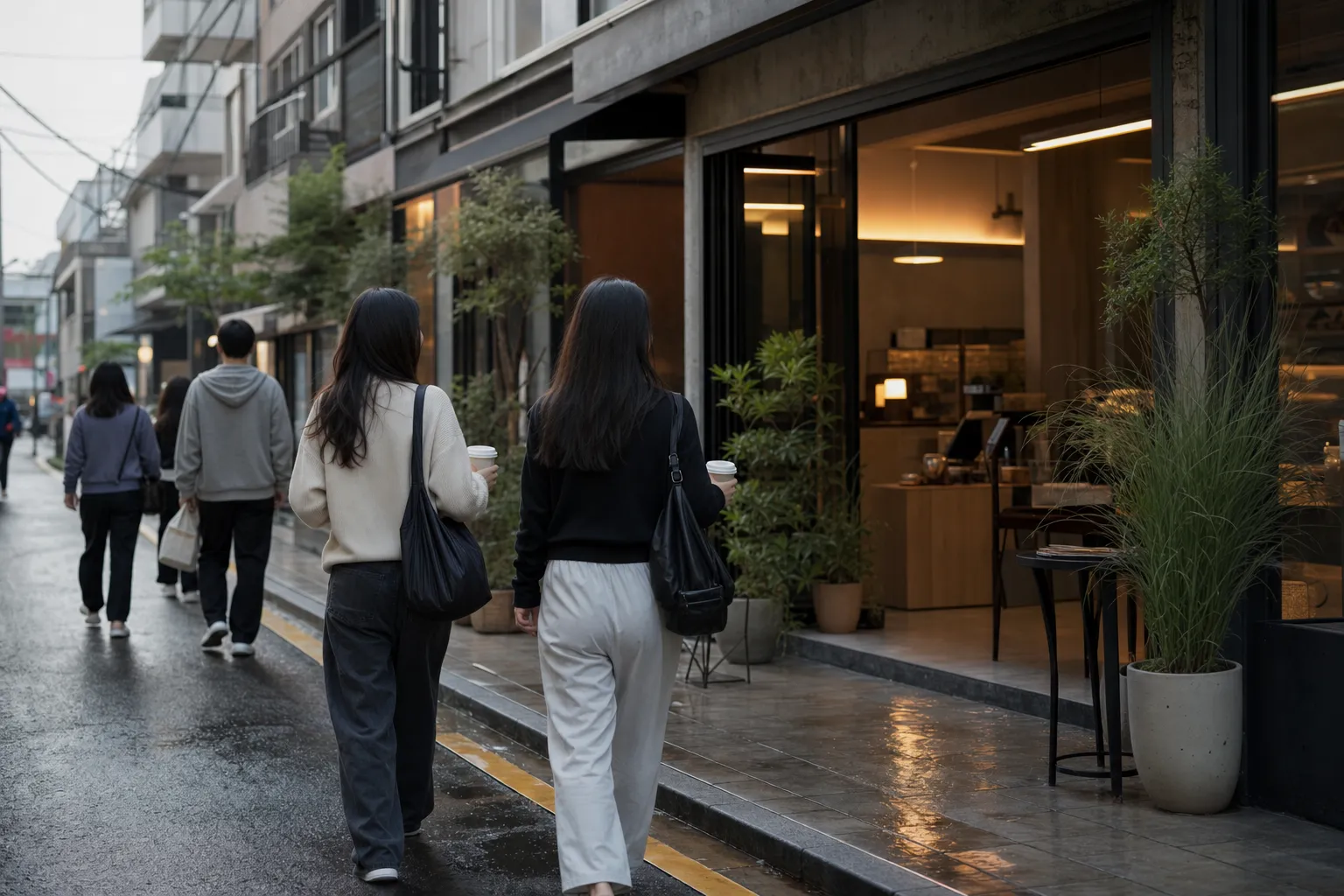
Jeonpo Cafe Street became known through coffee, but the neighborhood has not stood still. Busan Ilbo reported on September 1, 2025, citing Busanjin District Office data, that the number of cafes inside Jeonpo Cafe Street had slipped from 63 two years earlier to 60. The same report described rising rents and a broader mix of businesses, including more restaurants and bars, as part of the change in the district.1
That does not mean the Jeonpo coffee scene is simply fading. The nearby Jeonpo Sait-gil area moved in the opposite direction, with its cafe count rising from 117 in 2023 to 162 in 2025.1 For coffee-minded visitors, that matters because the area’s energy is spreading rather than staying fixed on one single street.
The mood is captured by a cafe owner who had operated on Jeonpo Cafe Street for 15 years and told Busan Ilbo, “Jeonpo Cafe Street’s renaissance was in 2019.”1 It is a short line, but it points to a real shift: Jeonpo is no longer only the place that first drew crowds for independent cafes. It is now a district negotiating what comes after that first wave of popularity.
Busanjin District has also signaled that it sees the coffee identity as worth maintaining. A district official said the office would consider promotional projects and coffee festivals to continue growing the existing cafe-street brand.1 For readers looking for Jeonpo Roastery Cafes, that public attention helps explain why coffee remains central to the neighborhood’s image even as other businesses move in.
Local Roasters With Wider Recognition
One name that gives Jeonpo’s coffee scene broader visibility is Strut Coffee. Money Today reported on February 28, 2025, that Strut Coffee, headquartered in Jeonpo-dong, Busanjin-gu, Busan, placed 38th on the 2025 list of ‘The World’s 100 Best Coffee Shops.’ It was described as the only Korean cafe included in that ranking.2
The same report introduced Strut Coffee as a Busan coffee specialist that opened in 2016 and noted that it had also been selected for Blue Ribbon coffee shop recognition.2 For a neighborhood already known among domestic cafe fans, a ranking like that gives Jeonpo another kind of signal: its coffee culture can travel beyond local buzz.
HYTTE Roastery offers a different but equally important angle on the roastery story. In a KNN interview published November 14, 2024, HYTTE Roastery CEO Jung Hyo-jae explained that HYTTE began in 2018 as a small neighborhood cafe in Namcheon-dong, Busan. At the time of the interview, the brand was operating three branches, including locations in Jeonpo-dong, Gwangalli, and Gangseo-gu.3
Jung also described the roasting side of the business in concrete terms: “We send beans roasted by us to about 80 large and small cafes nationwide.”3 That detail is important because it shows how a roastery cafe can function as more than a place to sit with a cup. It can also become a supplier, a training reference point, and a quiet part of many other cafes’ menus.
HYTTE’s official website adds more context to that growth. Its history records the opening of HYTTE Jeonpo in 2021, the opening of HYTTE Gangseo and relocation of the roastery in 2023, participation in World of Coffee Busan in 2024, and 2025 activities including a MEG painting artist pop-up at the Gwangalli branch, a Stereo coffee pop-up in Fukuoka, and participation in Busan Cafe Show.4 The brand also states that it evaluates coffee by clean cup, balance, and sweetness.4
Festivals, Training, and the Next Coffee Layer
Jeonpo’s roastery culture is also supported by events and education, not only by individual shop reputations. Korea Tourism Organization’s Visit Korea listing states that the 9th Jeonpo Coffee Festival was held from October 17 to 19, 2025, around Jeonpo-daero 209beon-gil in Jeonpo-dong, Busanjin-gu.5
The festival program included booths from coffee and dessert businesses in Jeonpo and the broader Busan area, invited barista booths from Japan and Taiwan, coffee seminars, and hands-on experience programs.5 That mix is exactly the kind of programming that helps a cafe district feel connected to a larger coffee conversation rather than just to foot traffic.
There is also a small but telling education story behind the district. Busan Ilbo reported on August 3, 2023, that Busanjin District operated the ‘2023 Busanjin-gu Local Cafe Pre-Startup Course.’ At the time, about 900 cafes were operating in areas including Jeonpo-dong and Seomyeon, and the course included practical training in cafe startup, branding, and marketing, plus a field visit to founders of roastery cafes in Jeonpo-dong.6
That course ran for 10 sessions from September 2 to October 12, 2023.6 Even without overstating its impact, the program shows that Jeonpo’s roastery cafes have been treated as local examples for people learning how to enter the cafe business. In other words, they are not only places to consume coffee; they are also part of how Busan talks about cafe entrepreneurship.
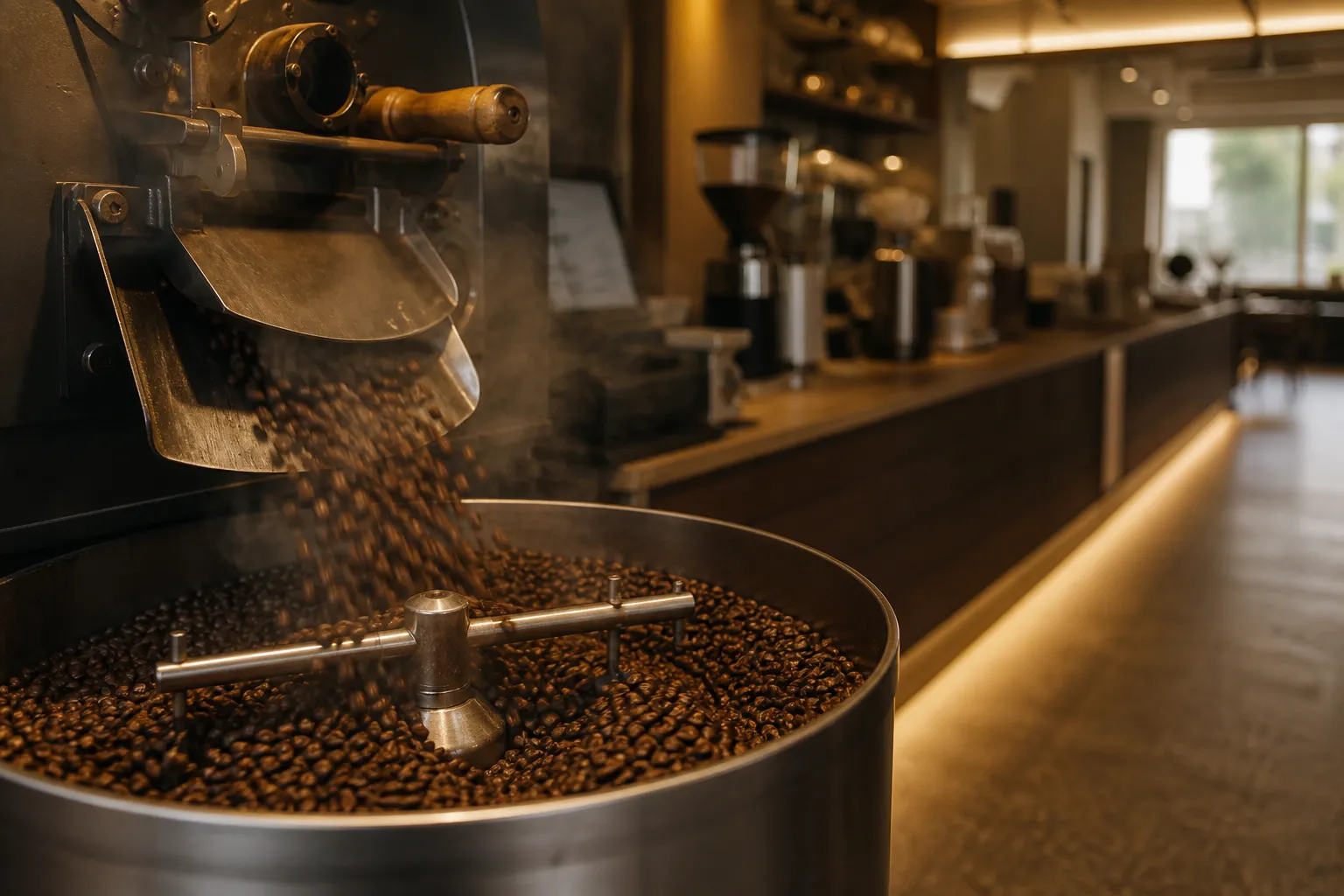
For visitors, the takeaway is simple: Jeonpo’s coffee appeal is still there, but it is more layered than a single famous street. The cafe count on the original street has softened, nearby cafe zones have grown, and roastery-led names such as Strut Coffee and HYTTE Roastery show how local coffee brands can build recognition through rankings, roasting, wholesale supply, events, and pop-ups.
Jeonpo roastery cafes are best understood as part of a living Busan coffee district: changing in shape, still rooted in coffee, and increasingly defined by the people and brands that roast, teach, serve, and keep the aroma moving through the neighborhood.
References
- 카페로 흥한 전포카페거리, ‘커피향’이 흐려진다 (부산일보, 2025-09-01)
- 커피 맛집 소문나더니…한국서 '세계 100대 카페' 유일하게 오른 이곳 (머니투데이, 2025-02-28)
- [인물포커스] 정효재 히떼로스터리 대표 (KNN, 2024-11-14)
- HYTTE (히떼로스터리 공식 홈페이지)
- 전포커피축제 (대한민국 구석구석 / 한국관광공사, 2025-10-16)
- 부산진구, 지역맞춤형 창업지원 사업 ‘로컬카페 예비창업 과정’ 운영 (부산일보, 2023-08-03)
About the Author