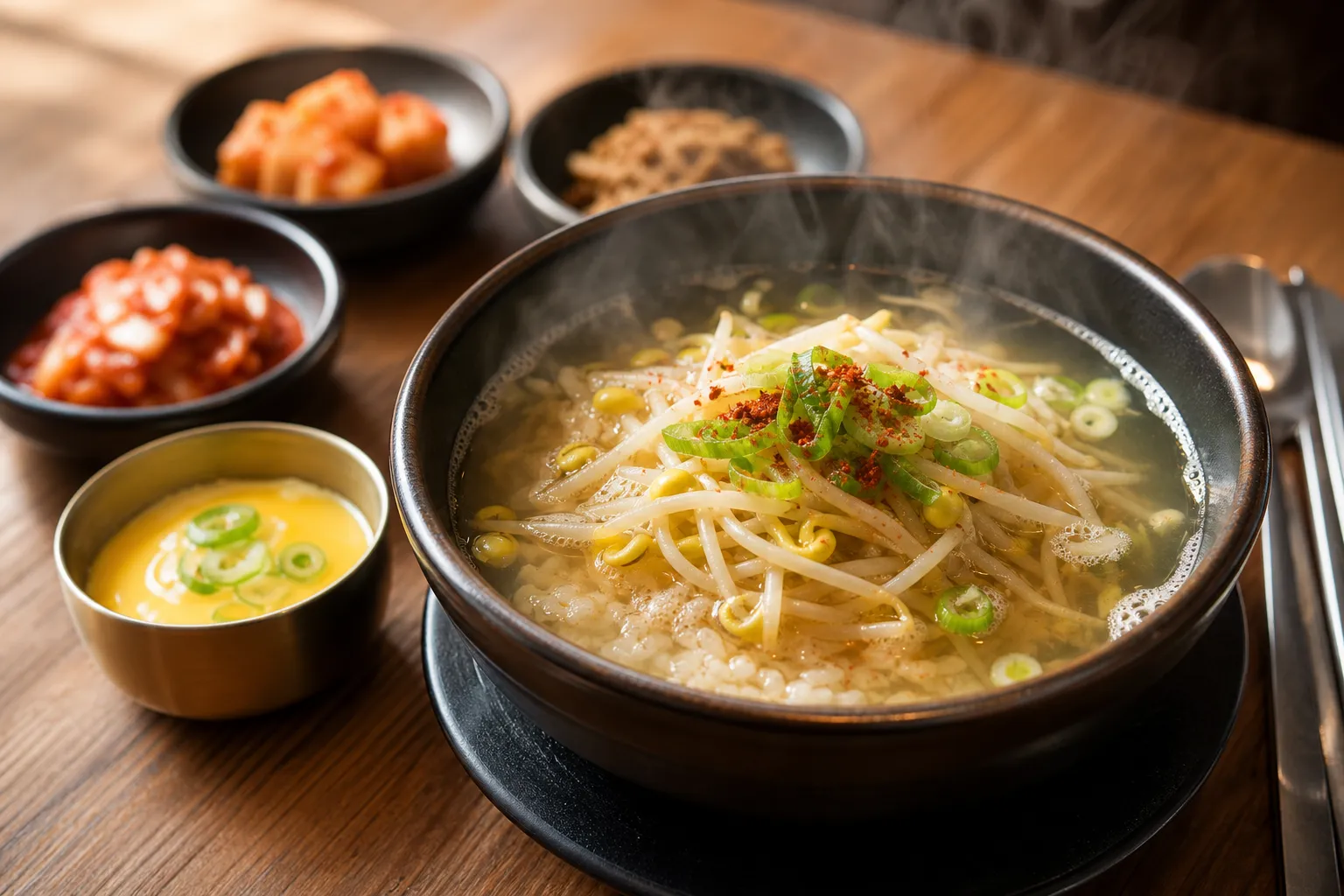
Jeonju locals’ bean sprout gukbap is more than a simple hangover soup; it is one of the city’s most recognizable everyday bowls. If you are trying to understand Jeonju Gukbap through a local lens, the key is not one single restaurant, but a food culture built around clear broth, crisp bean sprouts, suran, and the markets that helped the dish become famous.
Jeonju Locals’ Bean Sprout Gukbap Starts With the Bowl
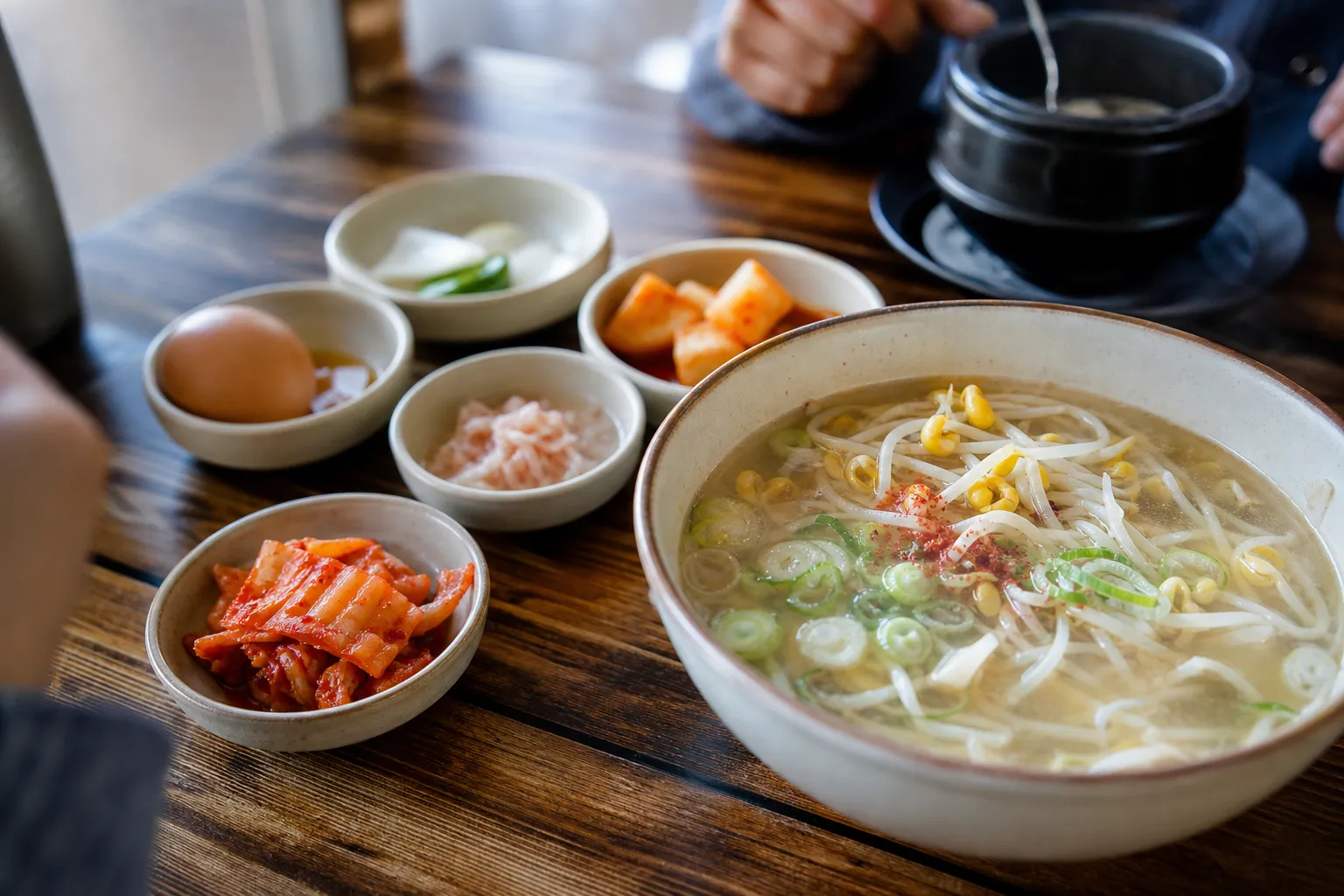
At its most familiar, Jeonju bean sprout gukbap is a warm rice soup centered on bean sprouts and a clean, savory broth. Jeonju’s municipal magazine Jeonju Daum describes the shared foundation of the dish as clear anchovy broth and bean sprouts grown with Jeonju water, creating a deep but refreshing umami base.1 That balance explains why the dish is often introduced as a local “sokpuri,” or recovery food, rather than a heavy stew.
One of the most distinctive parts of the Jeonju style is what comes alongside it. Jeonju Daum presents bean sprout gukbap with suran, a soft egg served separately, and moju, a mild traditional drink associated with the city’s food culture.1 Another Jeonju Daum article also frames suran and moju as part of the regional way of eating the dish, not just optional extras.2
There is not only one way to prepare it. Local descriptions divide Jeonju bean sprout gukbap into styles such as the boiling method and the “mara meokneun” style, where hot broth is poured over rice and ingredients.2 Jeonju Daum also notes variations including pollack bean sprout gukbap and kimchi bean sprout gukbap, showing how the city’s familiar bowl can shift in flavor while keeping the same core identity.1
That flexibility matters for readers looking for “local” Jeonju gukbap. A local bowl may be clear and light, sharper with kimchi, or supported by dried pollack, but it still sits within a recognizable Jeonju pattern: bean sprouts, rice, broth, and a practical comfort-food rhythm.
Why Nambu Market and Gyodong Matter
The reputation of Jeonju bean sprout gukbap is closely tied to place. Jeonju Daum explains that the dish’s fame grew from the bean sprout cultivation and consumption environment around Gyodong and Nambu Market.2 In other words, the dish did not become symbolic only because it tasted good. It grew from a neighborhood food system where ingredients, markets, and daily eating habits met.
That market association still shapes how the dish is presented to wider audiences. EBS announced its Korea Travel episode “Paldo Haejang Yeoljeon,” broadcast from December 30, 2024 to January 3, 2025, with the first episode comparing Jeonju bean sprout gukbap and Busan pork gukbap. In that program information, Jeonju’s bowl was introduced through market scenery and a clear, refreshing broth.3 The comparison is useful: Busan pork gukbap tends to suggest richness and meatiness, while Jeonju bean sprout gukbap is often framed around clarity, brightness, and recovery.
Jeonju’s official materials also place the dish among the city’s representative soup foods. In a June 7, 2022 press release, Jeonju City said Netflix food documentary K-Food Show “A Nation of Broth” introduced Hyundaiok and Yetnal Pisundae in Jeonju Nambu Market, presenting bean sprout gukbap and blood-sausage gukbap as representative broth dishes of Jeonju, a UNESCO Creative City of Gastronomy.4 A city official was quoted as saying the exposure was “raising Jeonju’s status,” a short line that captures how deeply the dish connects local identity with broader food tourism.4
For visitors, this means Jeonju bean sprout gukbap is not just a menu item to check off. It is a way into the city’s food map: Nambu Market, nearby old neighborhoods, broth-focused eating, and the everyday logic of a meal that is filling without feeling heavy.
A Local Classic With Changing Prices
The practical side of eating out also belongs in the story. JTV Jeonju Broadcasting reported on November 28, 2025 that some restaurants serving Jeonju’s representative bean sprout gukbap had raised the price of a bowl from 8,000 won to 9,000 won.5 The report connected the increase with broader restaurant price inflation in the Jeonbuk region, along with pressure from ingredient costs, labor costs, and rent.5
That price context does not change the dish’s cultural meaning, but it does help set realistic expectations. Bean sprout gukbap has long been loved as an accessible, everyday food, so even a 1,000 won increase can feel meaningful to regular diners. For travelers, it is a reminder that “local food” is not frozen in nostalgia. It exists inside real kitchens, real markets, and real cost pressures.
There are also official tourism examples beyond the market image. Jeonju’s tourism website introduced Sinbaengi, near Hanok Village, as a bean sprout gukbap spot operating in a traditional hanok space. The post says it is run by kimchi master Ahn Myung-ja and serves two gukbap options, including white-kimchi bean sprout gukbap.6 That example shows how the dish can appear both in market-centered settings and in spaces connected to Jeonju’s hanok atmosphere.
Quick FAQ
What makes Jeonju bean sprout gukbap different from a regular bean sprout soup?
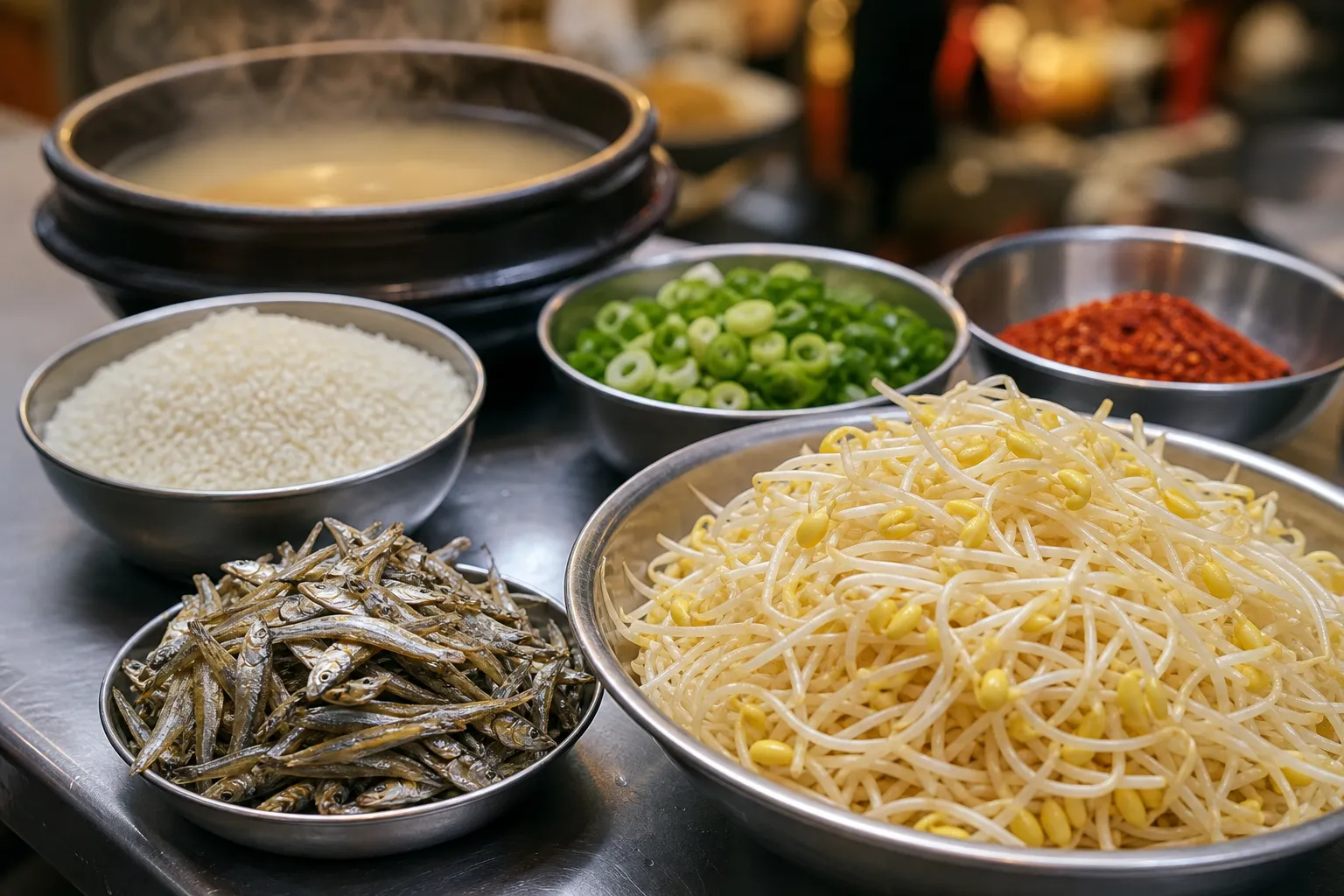
The Jeonju version is strongly associated with clear anchovy broth, bean sprouts grown with Jeonju water, rice, and local pairings such as suran and moju.1 It is also rooted in the food culture around Gyodong and Nambu Market.2
Is Jeonju bean sprout gukbap only one fixed recipe?
No. Source descriptions mention boiling and broth-pouring styles, along with variations such as pollack and kimchi bean sprout gukbap.1 The shared identity comes from the bean sprout-and-broth base, not from one single rigid recipe. Jeonju locals’ bean sprout gukbap is best understood as a living comfort food: clear enough to feel refreshing, hearty enough to be a meal, and rooted deeply enough in local markets and customs to carry the city’s flavor in one bowl.
References
- 전주식 속풀이의 진수 콩나물국밥과 수란 (전주다움)
- 삶의 애환을 녹이는 한 그릇 전주 콩나물국밥 (전주다움)
- [한국기행] 팔도 해장 열전 (EBS, 2024-12-30)
- 전주 콩나물국밥‧피순대국밥, 전 세계에 소개 (전주시청, 2022-06-07)
- 콩나물국밥 9천 원…"사 먹기 무서워" (JTV 전주방송, 2025-11-28)
- 전통 한옥에서 먹는 콩나물국밥, 신뱅이 (전주시 관광, 2024-10-16)
About the Author