
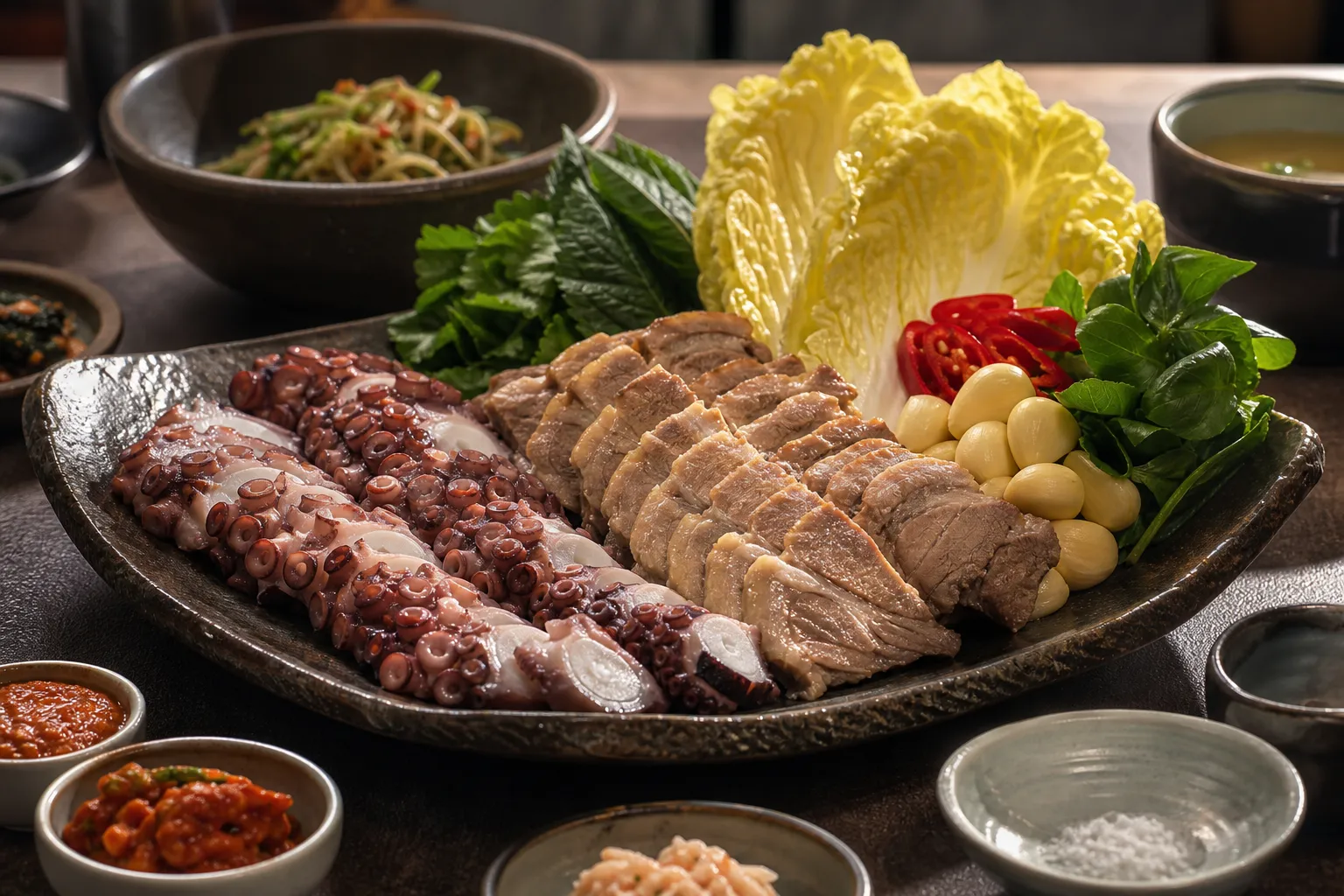
Dolmun-eo bossam, often rendered in English as Octopus Bossam, is a Korean dish that pairs bossam with dolmun-eo, a smaller octopus also known as chammun-eo. The dish received lifestyle-media attention after a February 7, 2026 episode of MBC’s “The Manager” showed actor Lee Sang-yoon eating dolmun-eo bossam with fellow actors after a theater performance, as reported by Health Chosun on February 11, 2026.1
The available sources do not provide one official recipe or a fixed set of side dishes. What they do make clear is the central appeal: dolmun-eo is described as smaller than daemun-eo, or giant Pacific octopus, while having firm and chewy flesh.1 That texture is the main reason the dish is worth understanding on its own terms.
Dolmun-eo Bossam and Its Chewy Octopus Focus
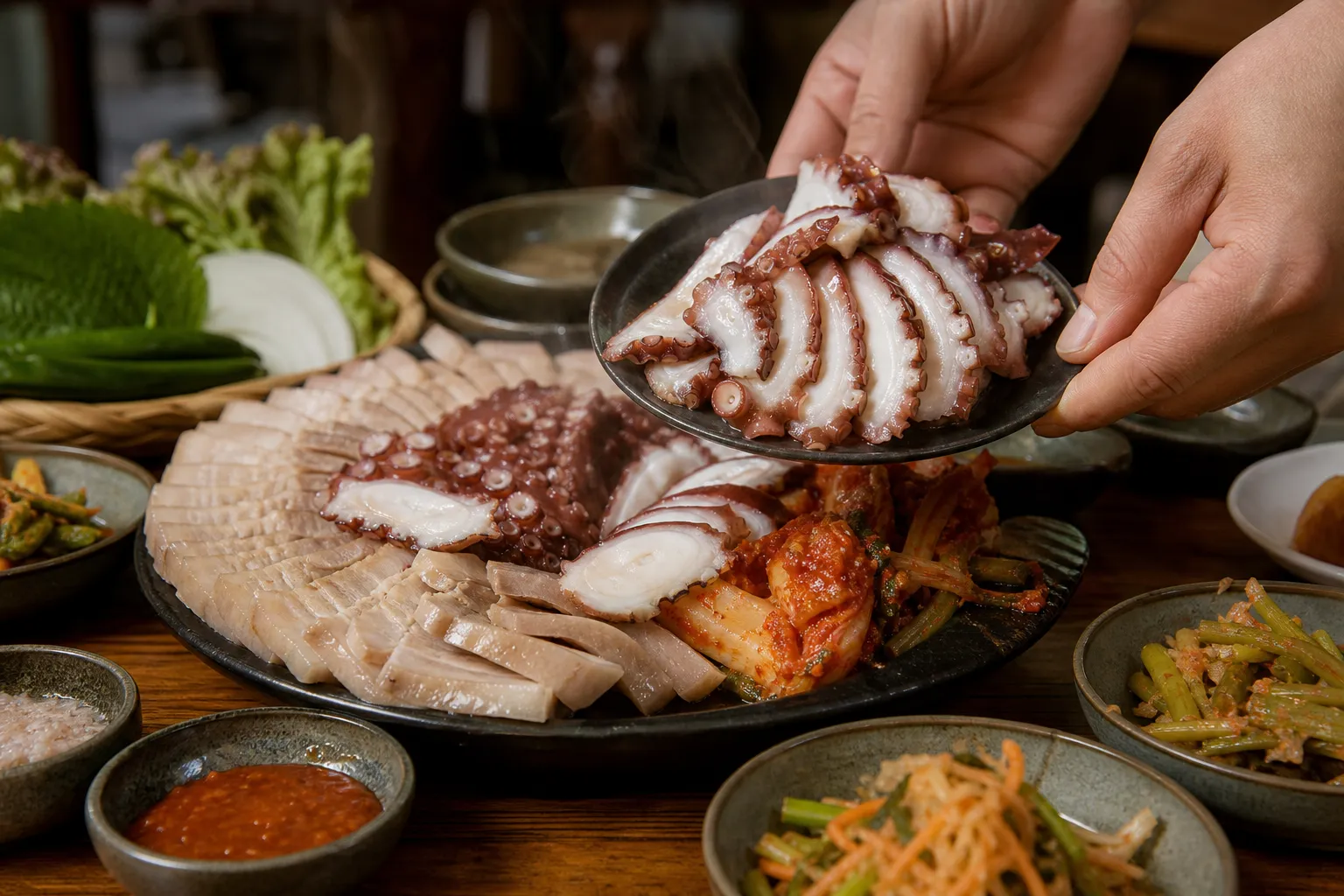
Bossam is commonly understood as a shared Korean dish built around wrapped bites, and dolmun-eo bossam adds octopus to that format. Based on the source material, the important point is not a complicated cooking formula but the contrast between bossam and the firm chew of dolmun-eo.
Health Chosun’s description gives the clearest food-specific detail: dolmun-eo is smaller than daemun-eo, but its flesh is firm and chewy.1 For readers encountering Octopus Bossam in English, that helps explain why the octopus is not just a garnish or side item. It gives the dish a distinct seafood texture beside the meat-centered idea of bossam.
A useful comparison comes from coverage of daemun-eo in Gangwon’s Goseong area. A Chosun Ilbo report carried by Daum on June 12, 2026 discussed large daemun-eo from Jeodo fishing grounds and included eating-style context for the bigger octopus.2 Kim Hyun-seok, head of Daejin fishing village, said that daemun-eo “becomes sweeter the more you chew and is soft,” explaining why many people enjoy it as sukhoe, or parboiled slices.2
That comparison should not be stretched too far. The source does not say dolmun-eo bossam is prepared in exactly the same way as daemun-eo sukhoe, and it does not provide a detailed restaurant recipe. Still, the contrast helps frame the dish: dolmun-eo bossam is centered on smaller, firmer, chewier octopus served in a bossam context.
Health Context: Protein, Fat, and Preparation
Dolmun-eo bossam also appears in health-oriented coverage because of the octopus component. Health Chosun described dolmun-eo as a high-protein, low-fat food, which is why the article connected it with diet-conscious eating.1 That is a useful detail, especially if you are trying to understand why the dish might be discussed beyond restaurant menus or entertainment clips.
There is an important caution, though. The same Health Chosun article noted that octopus has a higher cholesterol content than white fish or chicken breast and recommended boiling or blanching as a cooking method.1 In other words, the source supports saying that dolmun-eo has favorable protein and fat characteristics, but it does not support presenting a full serving of dolmun-eo bossam as automatically light or suitable for every diet.
The practical takeaway is balanced: the octopus itself is described as high in protein and low in fat, while cholesterol and preparation method still matter. Because bossam also involves other components, including pork, it is better to think of dolmun-eo bossam as a satisfying shared dish with a lean seafood element rather than as a simple “diet food.”
Restaurant and Supply Context
Restaurant listings show that dolmun-eo bossam is not only a broadcast talking point. Siksin lists Tongyeong Dolmun-eo Bossam Main Branch as a Korean table d’hote-style restaurant located at 101, 26 Gwonseon-ro 741beon-gil, Paldal-gu, Suwon, Gyeonggi Province.3 The listed menu includes items such as octopus and bossam, octopus sukhoe, octopus soup with sukhoe and seasoned raw-style salad, octopus seafood jjim, bossam, and octopus yeonpo-tang.3
That listing is also a reminder to check practical details before making plans. Siksin displays guidance telling readers to confirm whether the business is operating before visiting.3 The available source material does not provide current opening hours, reservation rules, or pricing.
There is also a wider seafood-management backdrop. On May 20, 2026, Korea’s Ministry of Oceans and Fisheries posted policy material on closed seasons and prohibited body-size standards for fishery resources, including attached criteria under the Enforcement Decree of the Fisheries Resources Management Act and separately designated closed-season information by city and province.4 The summary identifies this as relevant official material for checking supply and fishing-availability context for chammun-eo, also called dolmun-eo.4
A separate MBC News report from June 30, 2025 said recreational fishing accounted for 11% of octopus catch and reported that the Ministry of Oceans and Fisheries was reviewing ideas such as fishing-only vessels, catch quotas, and fishing licenses.5 A ministry official said the matter was “at the review stage” and that no specific timing for introduction had been decided.5 This does not change what dolmun-eo bossam is on the plate, but it does show why octopus sourcing can sit within broader fisheries discussions.
Quick FAQ
What is dolmun-eo bossam?
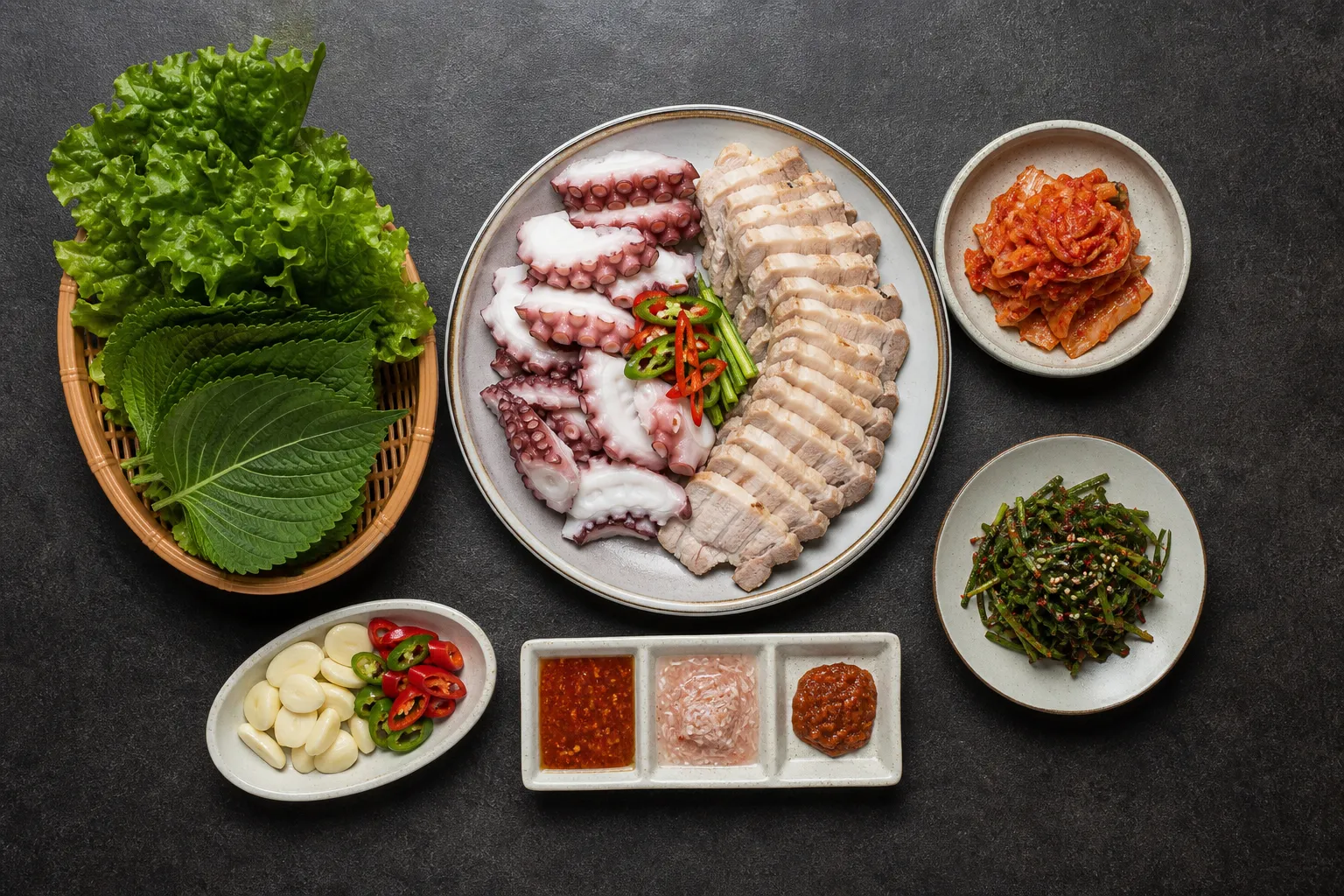
Dolmun-eo bossam is a Korean bossam dish featuring dolmun-eo, also known as chammun-eo. The source-backed defining trait is the octopus itself: it is described as smaller than daemun-eo and firm and chewy in texture.1
Is Octopus Bossam considered diet-friendly?
Health Chosun described dolmun-eo as high in protein and low in fat, but also noted that octopus has more cholesterol than white fish or chicken breast and recommended boiling or blanching.1 So it is best understood as a protein-forward dish with nutrition details that depend on preparation and the full meal. Dolmun-eo bossam is easiest to appreciate as a texture-led Korean shared dish: firm, chewy octopus placed alongside the familiar appeal of bossam. The available sources support a clear, modest picture of the dish, from its television mention and nutrition notes to restaurant listings and fisheries context.
References
- 이상윤, 연극 후 ‘이 음식’으로 기력 보충… “다이어트 식단으로도 좋아” (헬스조선, 2026-02-11)
- 돌문어의 10배, 고성 50㎏ 대문어를 아시나요 (조선일보 / 다음, 2026-06-12)
- 통영돌문어보쌈 본점 (식신)
- 수산자원의 금어기·금지체장 기준 알림 (해양수산부, 2026-05-20)
- 낚시로 잡는 문어 11%‥어획 할당제 가능? (MBC 뉴스, 2025-06-30)
About the Author