New cafes and cafe-centered spaces are giving Dalmaji Road a fresh reason to linger. For anyone watching the Haeundae Dalmaji Cafes scene, the most source-backed new angle is not just one drink menu or one photogenic corner, but a small shift: cafe visits are increasingly tied to architecture, baked goods, lifestyle shops, walking routes, and planned night scenery.
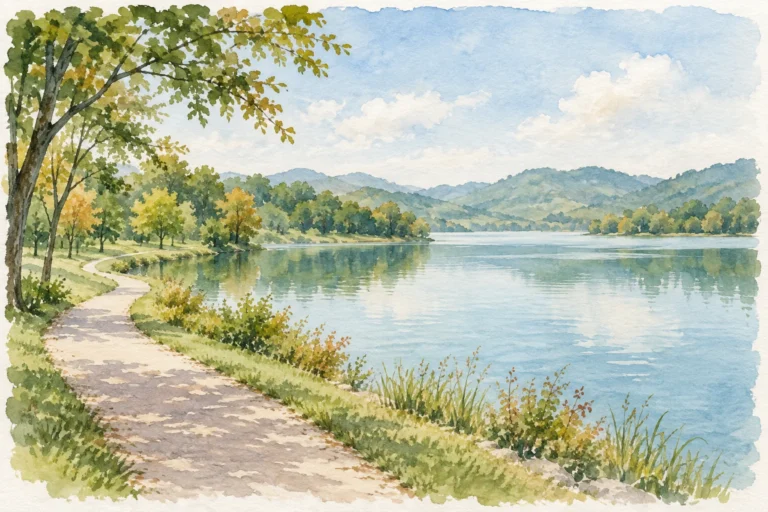
Dalmaji Road has long been connected with scenic walks, food stops, and ocean-facing leisure. Visit Busan, the city’s official tourism portal, introduces Dalmaji Road as the starting point of Haeundae’s Sampo-gil route and as a walking destination linked with Moontan Road, while noting that nearby cafes, restaurants, and eateries form part of the travel flow around the area.1 That makes the newer cafe activity especially easy to understand: people are not simply looking for caffeine, but for places that fit naturally into a slow Haeundae route.
New Dalmaji Cafes Are Becoming Multi-Stop Destinations
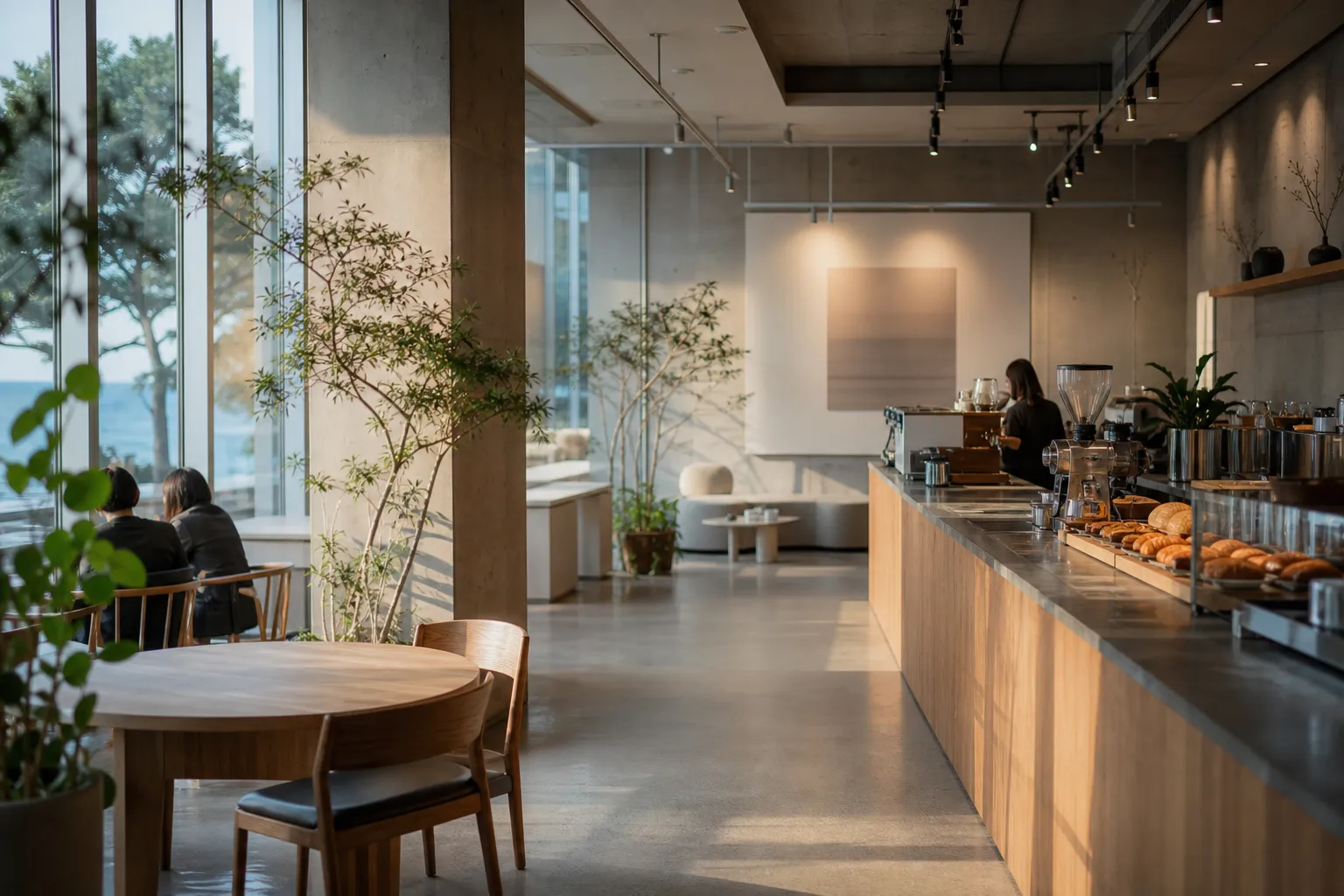
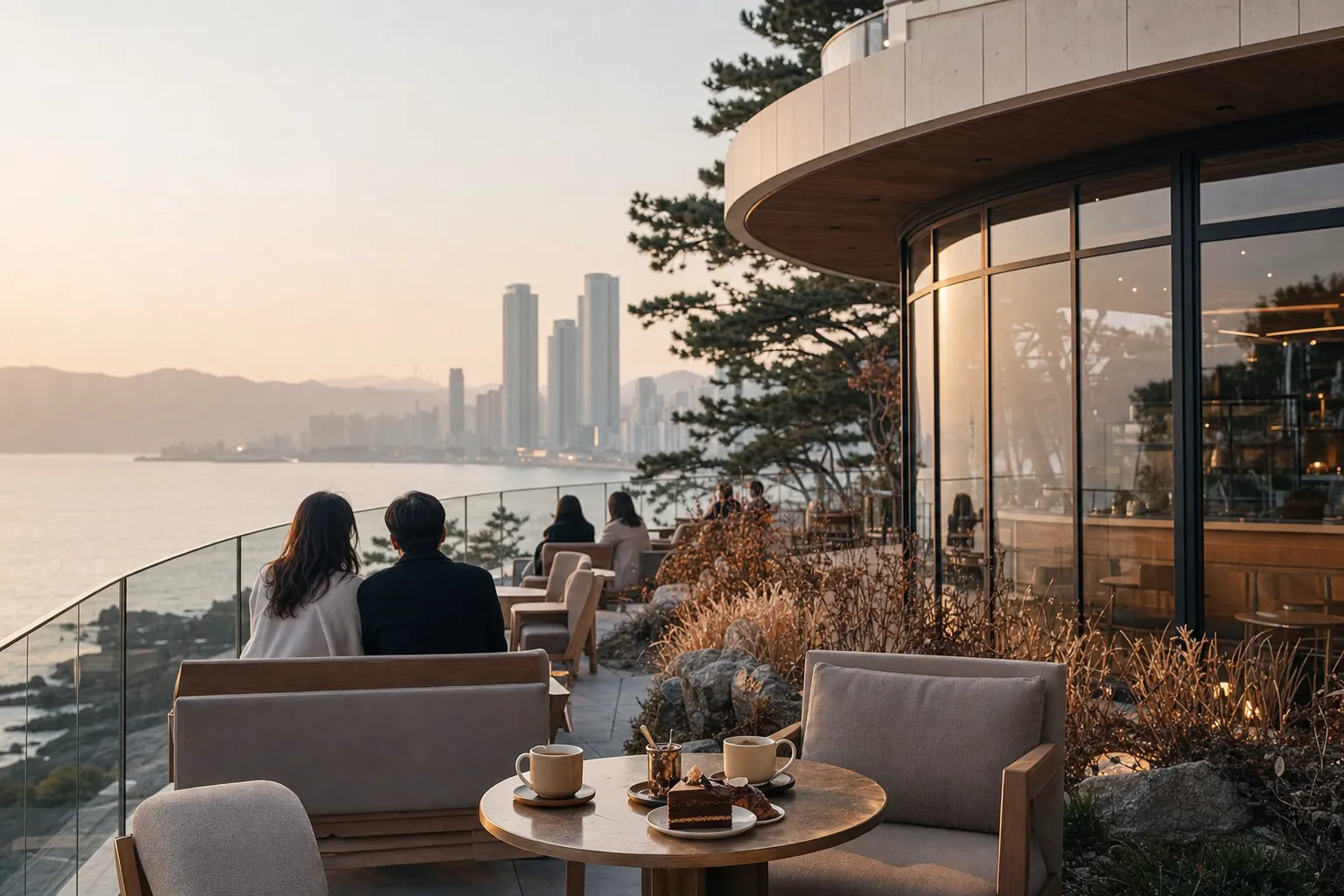
The clearest example is Eke, a commercial and cultural complex on Dalmaji Road. Busan Ilbo reported that Eke is located at 219, Dalmaji-gil 117beon-gil, Haeundae-gu, and opened in October 2024.2 It later gained wider attention after winning the Gold Prize at the “2025 Busan-like Architecture Award” announced by Busan City.2 For readers looking for a “new cafe” in the simple sense, Eke is useful because it shows how the category is expanding: the complex includes a brunch cafe, bake shop, living select shop, exhibition and pop-up space, stay rooms, and other brands.2
That variety matters. A Dalmaji cafe stop can now become part of a broader afternoon plan: coffee or brunch, baked goods, a look through curated lifestyle items, and maybe a pop-up or exhibition if one is operating. Busan Ilbo described Eke as housing 11 brands, while HeyPop earlier reported that 9 brands were inside the complex.23 Rather than treating those numbers as competing travel advice, it is best to read them by publication date: the space has been covered at different moments, and the reported brand count varies by source and timing.
Eke’s own stated concept also points in that direction. In an interview cited by Busan Ilbo, Eke representative Lee Hyo-jin said she wanted to make it “a place where you can eat, sleep, see, shop, and feel,” satisfying all five senses.2 That short quote captures why Eke stands out among newer Dalmaji destinations. It is not presented only as a cafe; it is a layered place where cafe culture overlaps with design, lodging, shopping, and small cultural experiences.
Eke’s Bake Shop Adds a More Specific Cafe Hook
For many cafe-goers, the most practical question is still simple: what can you actually eat there? The sources point to Saie Bake as the key bakery-style reason to pay attention to Eke. HeyPop reported that the first-floor Saie Bake sells small breads and baked sweets, and described it as the first solo bake shop by a representative with experience operating Moru Gwajajeom, a known Haeundae sweets shop.3
Design+ adds more menu-level detail. Its feature on Eke and its resident brands says Saie Bake was opened by someone who had handled recipe development and store operations at Moru Gwajajeom, and it names pound cake and lemon cake among the representative items.4 Those are modest details, but they are exactly the kind that help a reader decide whether this newer Dalmaji spot fits their route. If you are planning around baked goods rather than just a view, Saie Bake gives Eke a concrete cafe identity inside the larger complex.
The building itself also gives the visit a different shape. HeyPop described Eke as a structure with one basement level and five above-ground floors, combining pop-up space, dining, a living shop, stay functions, and more.3 That scale helps explain why Eke keeps appearing as more than a single storefront. It is a vertical cluster of tastes and functions, placed on the Dalmaji hillside, where a cafe stop can easily become a browse-and-rest stop.
Cafe Arbre and Night Scenery Point to What Comes Next
Eke is not the only new cafe-related name in the available records. Haeundae-gu public administrative data for food hygiene business registrations from August 1 to August 31, 2025 includes “Cafe Arbre” as a newly registered resting restaurant-type business at 165, Dalmaji-gil 117beon-da-gil, 1st floor, Haeundae-gu, Busan.5 The source does not provide menu details, interior information, or opening-day travel impressions, so it would be too much to describe Cafe Arbre beyond the registration facts. Still, the record supports one important point: new cafe business activity has continued around the Dalmaji Road area after Eke’s 2024 opening.
The public-sector plans around Dalmaji Road may also affect how cafe visits feel, especially later in the day. In May 2025, Haeundae-gu said it would move forward with the “Dalmaji Moonlight Spot Creation Project,” selected through a Ministry of Culture, Sports and Tourism tourism-special-zone revitalization contest. The district planned to invest a total of 200 million won, made up of 100 million won in national funding and 100 million won in district funding, to install ground lighting, tree lighting, landscape structures, and photo zones around Haewoljeong.6
That same report said a separate 400 million won media-art tourism attraction project would also be promoted.6 Haeundae-gu mayor Kim Sung-soo said the district wanted to cultivate Dalmaji Road into a distinctive moonlight destination loved by tourists and bring new vitality to the local commercial district.6 For cafe visitors, this matters because Dalmaji is already framed as a walking-and-viewing area, not only a daytime cafe strip. Better night scenery and photo zones could make evening cafe routes around the hillside more appealing, though the source describes them as planned projects rather than completed facilities.
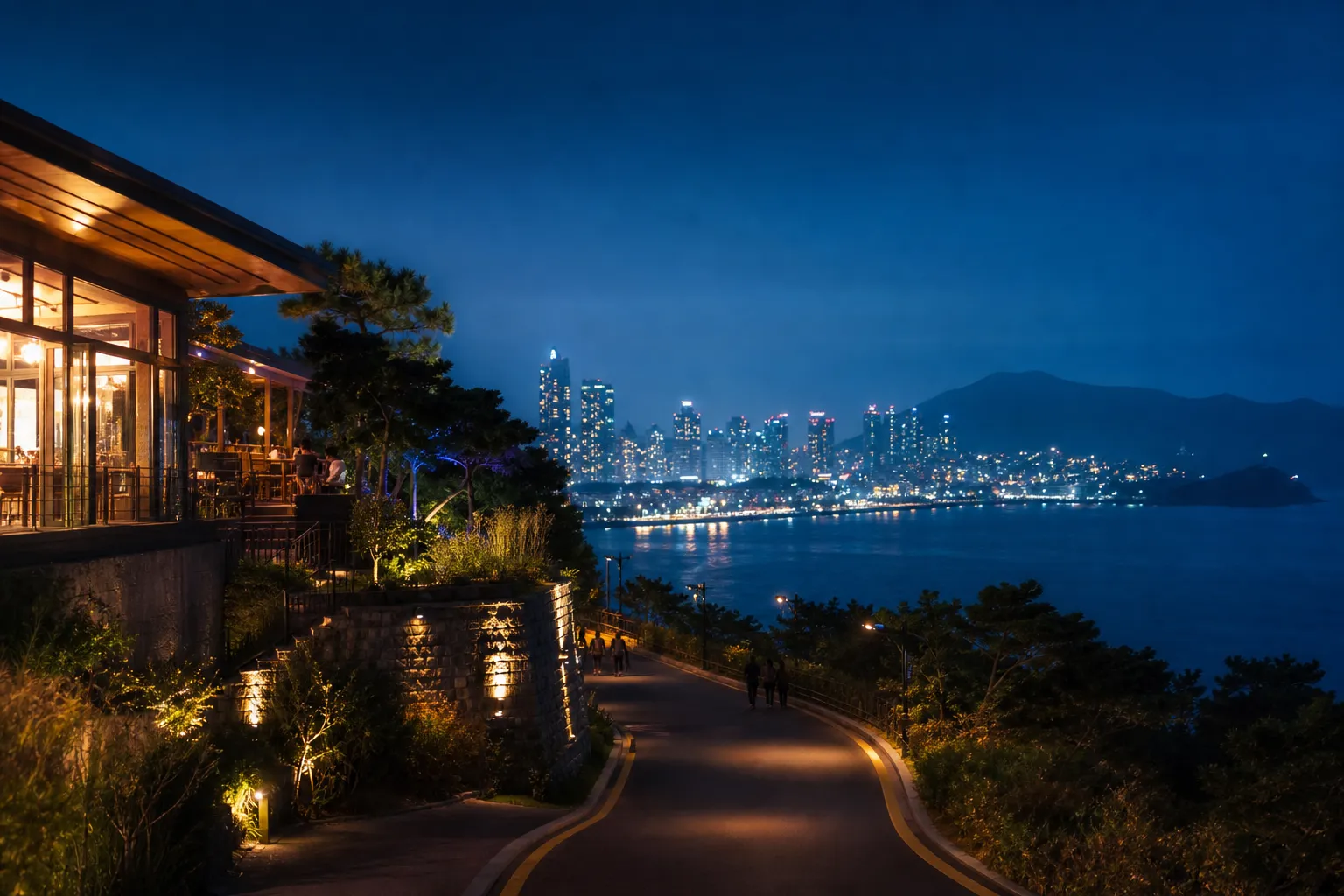
The practical takeaway is that the newer Dalmaji cafe story is broader than one trendy counter. Eke offers the strongest documented example of a new cafe-adjacent cultural space, Saie Bake gives it a clear bakery draw, Cafe Arbre appears in public records as a newly registered local cafe business, and planned night-view upgrades show why the area’s cafe culture may keep stretching from daytime walks into evening visits.
References
- 일출과 월출 모두를 품은 달맞이길 & 문탠로드 (Visit Busan)
- 간판 대신 결을 세운 곳, 달맞이길 숨은 보석 '에케' [문화 핫플] (부산일보, 2026-02-24)
- 부산에 떠오르는 새로운 스폿, 복합문화공간 '에케' (헤이팝, 2024-12-18)
- 10개의 브랜드와 취향이 연결된 부산의 특별한 모퉁이, 에케 (Design+)
- 식품위생업 신규·변경등록 목록(2025.8.1.~2025.8.31.) (해운대구청)
- 해운대구, 달맞이길 '야간경관·포토존' 만든다…2억 투입 (뉴시스, 2025-05-14)
About the Author