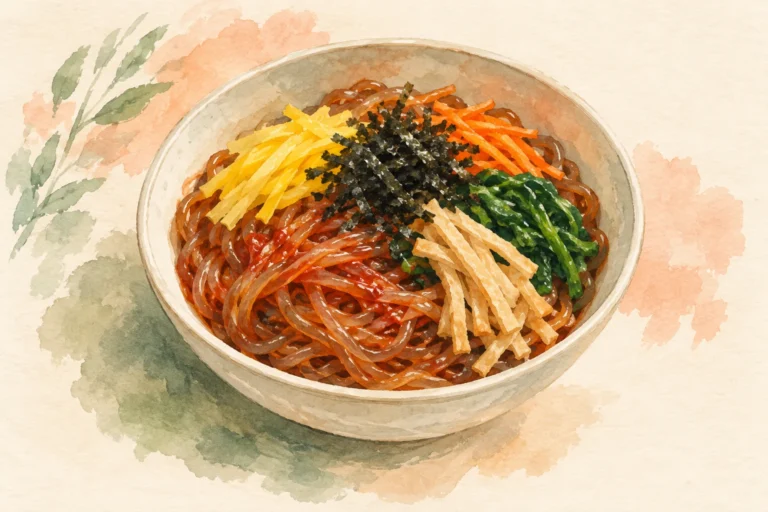
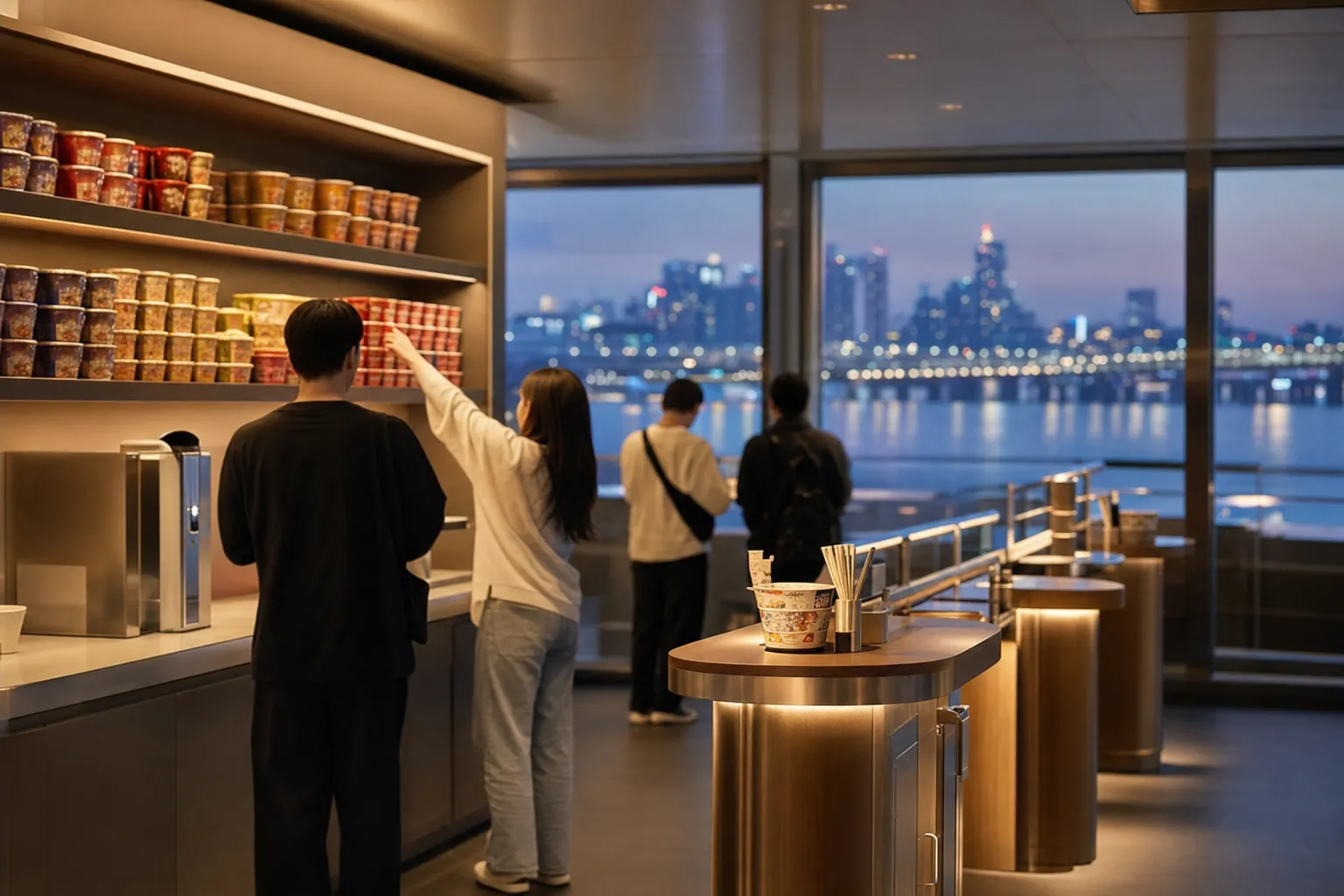
The Han River Ramen brand zones are built around CU’s ramen-focused convenience store concept, Ramen Library, at Han River Bus piers in Seoul. For visitors looking for a practical Han River Ramen stop, the key point is simple: CU opened ramen-specialized stores across the seven piers used by the Han River Bus, with brand-themed ramen areas connected to selected pier locations.1
The concept began before regular Han River Bus service started. CU first opened at the Yeouido and Jamsil piers on May 31, 2025, while the remaining five pier stores were reported as scheduled to open during June 2025.1 Later reporting described the pier food and beverage areas as still active even while Han River Bus operations faced disruption and safety controversy, with customers buying ramen at CU’s Ramen Library and cooking it themselves in the second-floor brand zone.2
How the Han River Ramen Brand Zones Work
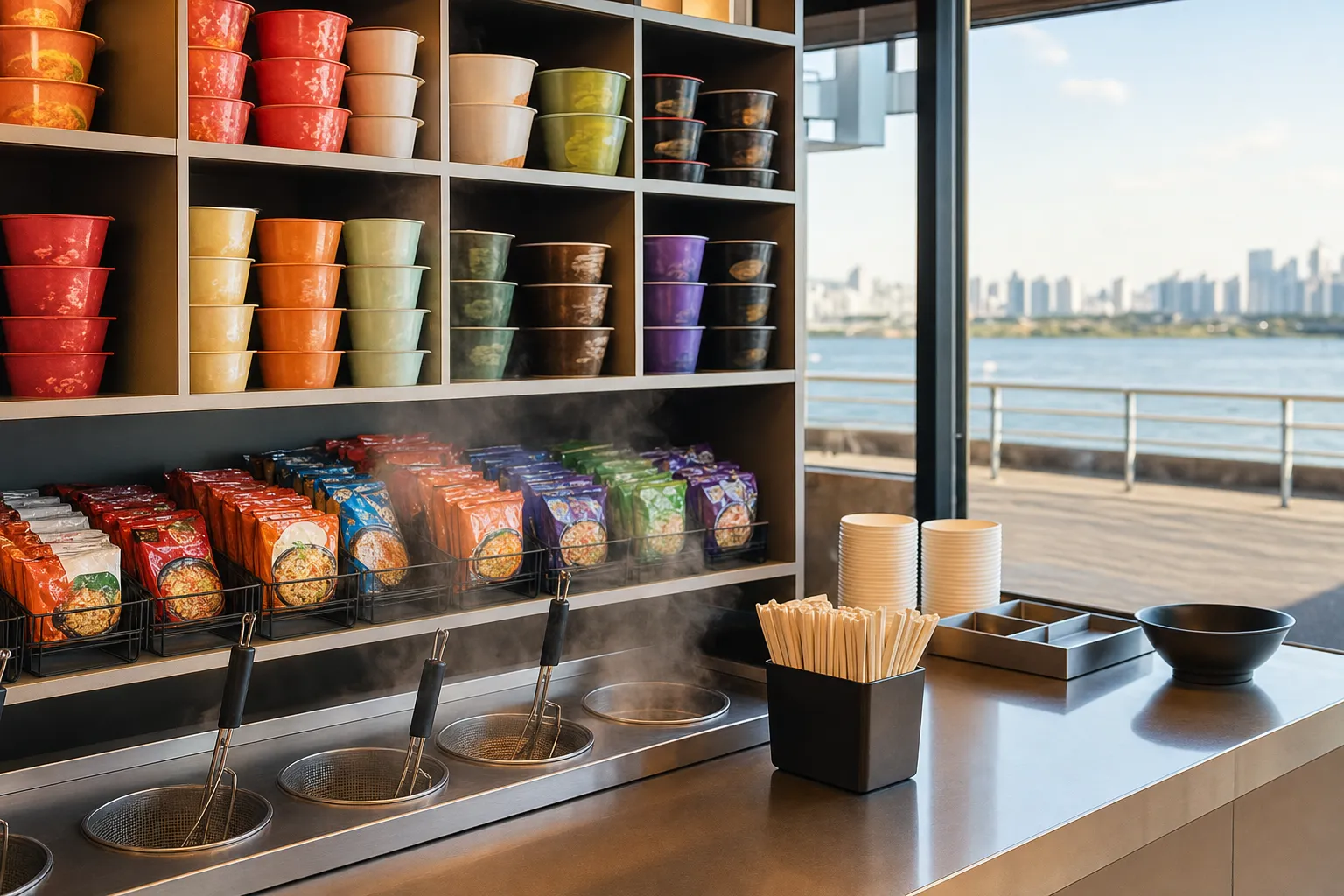
The basic visit pattern is centered on convenience-store ramen plus a place to cook and eat it. CU’s Ramen Library stores were designed with displays of popular domestic and overseas ramen, cup-noodle model tasting counters, and instant ramen cooking machines.1 At the Yeouido and Jamsil piers, compact Ramen Library spaces were placed on the first floor so visitors could enjoy instant ramen at the pier.3
The brand-zone element sits inside the second-floor BBQ spaces at the piers. Those areas were organized around products from major ramen makers, including Nongshim, Ottogi, and Samyang.3 In practical terms, the brand zones turn the pier into more than a place to buy a quick meal: visitors can choose ramen, use cooking equipment, and experience a maker-themed zone tied to the specific location.
The confirmed brand-zone mapping is location-specific. Yeouido and Jamsil use a Nongshim concept, Ttukseom and Apgujeong use an Ottogi concept, and Mangwon uses a Samyang concept.3 Later coverage also summarized the brands this way: Nongshim at Yeouido and Jamsil, Ottogi at Apgujeong and Ttukseom, and Samyang Foods at Mangwon.2
There are also named branded spaces attached to some of these concepts. Nongshim was described as operating “Neoguri Ramen Shop” at Yeouido and Jamsil, while Ottogi was described as operating “Happy Nyamnyam Ramen Shop” at Apgujeong and Ttukseom.4 Samyang Foods was separately reported as promoting its brands through experience booths at six Han River swimming pools and water play areas, including products such as Maepdaeng and Tangle.4
A short company comment helps explain the intent behind the format. Hwang Bo-min, processed foods MD at BGF Retail, said CU’s Ramen Library had become able to provide “a differentiated experience” for Han River Bus users.1 Another BGF Retail comment said the company would continue developing content suited to each space and strengthen its role as a platform offering new experiences and fun.3
Which Han River Bus Piers Matter for Ramen Visitors
The Han River Bus route covers seven piers: Magok, Mangwon, Yeouido, Oksu, Apgujeong, Ttukseom, and Jamsil. Seoul Metropolitan Government announced that regular Han River Bus service would begin at 11 a.m. on September 18, 2025, after three months of citizen trial operations.5 The route spans 28.9 km, and the initial operation plan used eight vessels, running 14 times per day from 11 a.m. to 9:37 p.m., with an increase planned from October 10, 2025.5
For ramen-focused visitors, the most clearly documented brand-zone piers are Yeouido, Jamsil, Apgujeong, Ttukseom, and Mangwon. Yeouido and Jamsil are the best documented starting points because they opened first on May 31, 2025, and were also tied to both the first-floor compact Ramen Library setup and the Nongshim concept on the second floor.13
Apgujeong and Ttukseom are useful for visitors specifically interested in the Ottogi concept. Reporting identifies these two piers with Ottogi’s brand area, including the “Happy Nyamnyam Ramen Shop” name in later food-industry coverage.4 Mangwon is the confirmed Samyang-related pier brand zone, while Magok and Oksu are part of the seven-pier Han River Bus route and CU Ramen Library rollout, but the provided source material does not specify separate ramen maker concepts for those two locations.
The wider reason these spaces drew brand attention is that the Han River had become an offline marketing base for food companies as traffic increased around Han River Bus pier trial operations and the opening of Han River swimming pools and water play areas.4 One industry source described the Han River as “a symbolic space” where diverse customer groups gather regardless of nationality.4
Practical Tips Before You Go
Use the pier names, not just the general phrase “Han River ramen,” when planning. The sources identify specific pier-based concepts, so a visitor seeking the Nongshim version should look to Yeouido or Jamsil, while someone looking for the Ottogi concept should check Apgujeong or Ttukseom. For the Samyang concept, the documented pier is Mangwon.2
Expect the experience to be convenience-store led rather than a conventional restaurant booking. The reported flow is that visitors buy ramen through CU’s Ramen Library and then cook it themselves in the second-floor brand zone.2 The available source material does not provide a reservation system, ticket price, menu price list, or full operating hours for each individual ramen zone.
The Han River Bus schedule is relevant if the ramen stop is part of a river-transport itinerary, but the ramen zones can also be understood as pier food and beverage spaces. Later coverage noted that, despite disruption around Han River Bus operations, pier and nearby food and beverage sales had not shown a clear change based on field responses.2 That means the brand zones were being discussed as active food destinations, not only as add-ons to a boat ride.
Quick FAQ
Which Han River pier should I choose for Nongshim, Ottogi, or Samyang ramen zones?
For the Nongshim concept, the documented piers are Yeouido and Jamsil. For Ottogi, use Apgujeong or Ttukseom; for Samyang, the documented pier is Mangwon.2
Can visitors cook the ramen themselves at the brand zones?
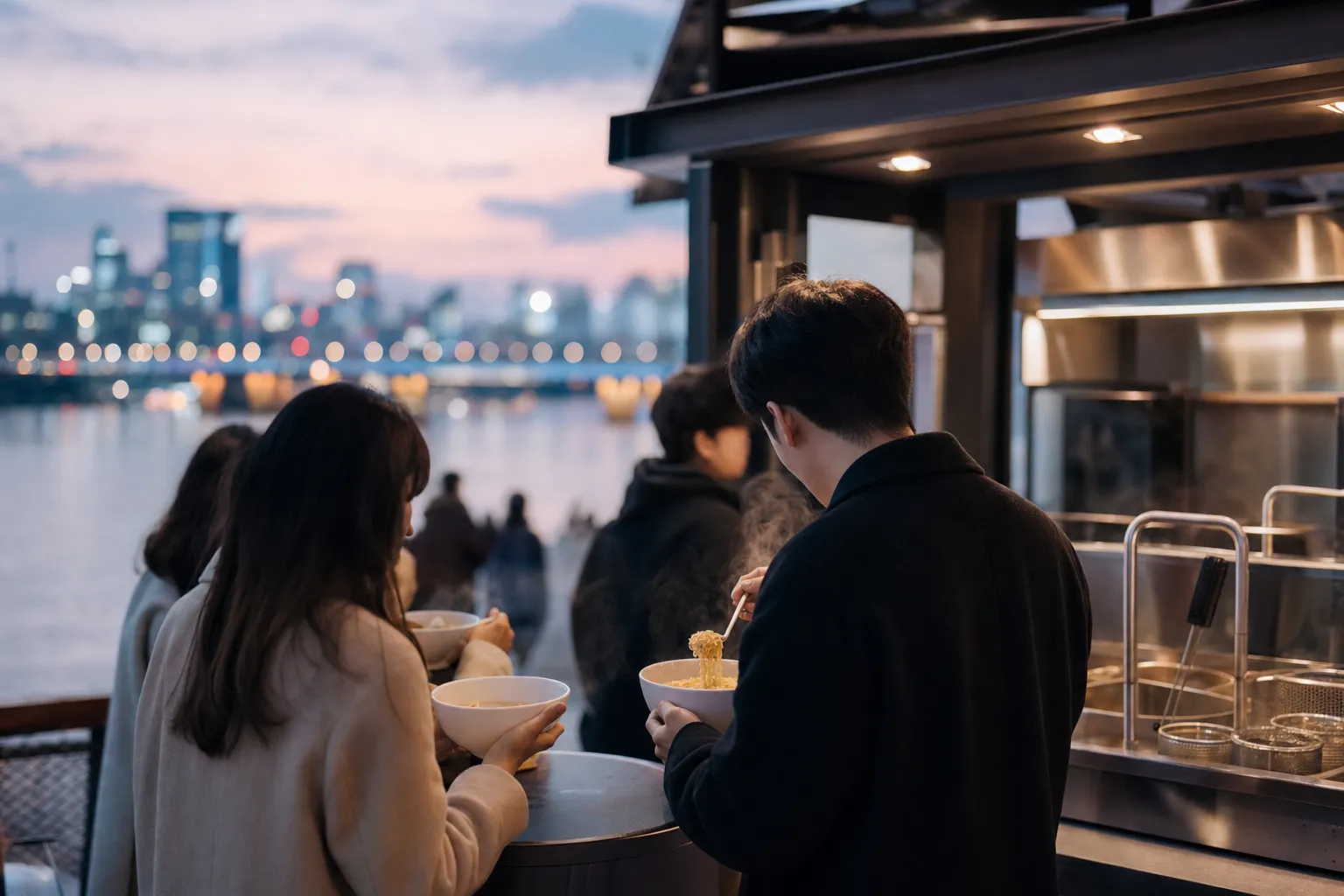
Yes. Reporting states that CU Ramen Library users can buy ramen and then cook it directly in the second-floor brand zone to enjoy Han River-style ramen.2 The Han River Ramen brand zones are most useful when planned by pier and ramen maker: Yeouido and Jamsil for Nongshim, Apgujeong and Ttukseom for Ottogi, and Mangwon for Samyang. For visitors, the clearest source-backed approach is to treat CU’s Ramen Library as the purchase point and the second-floor brand zone as the place to cook and eat, while checking local pier conditions before making a dedicated trip.
References
- CU, 한강버스 선착장 7곳에 '라면 특화 편의점' 운영 (연합뉴스, 2025-06-02)
- 멈춘 건 한강버스뿐…한강 F&B 매장은 '여전히 성황' (컨슈머타임스, 2025-11-24)
- 한강버스 선착장에 뜬 'CU 라면 라이브러리' (신아일보, 2025-06-02)
- 식품업계, 앞다퉈 '한강행'…새 '핫플' 공략에 사활 (컨슈머타임스, 2025-08-08)
- 친환경 수상 대중교통 `한강버스` 순항 준비 완료… 한강의 새역사 쓴다 (서울특별시, 2025-09-17)
About the Author