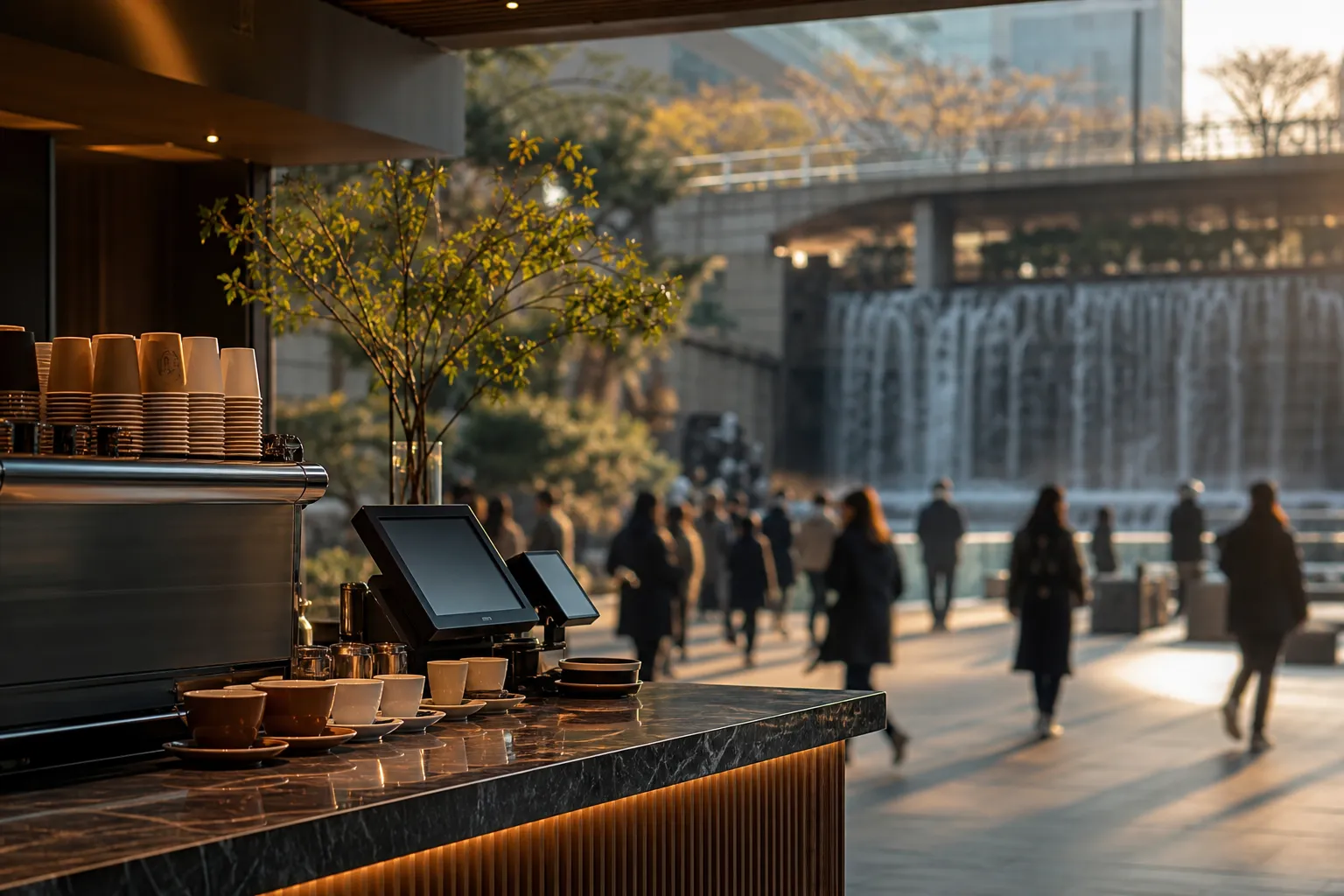
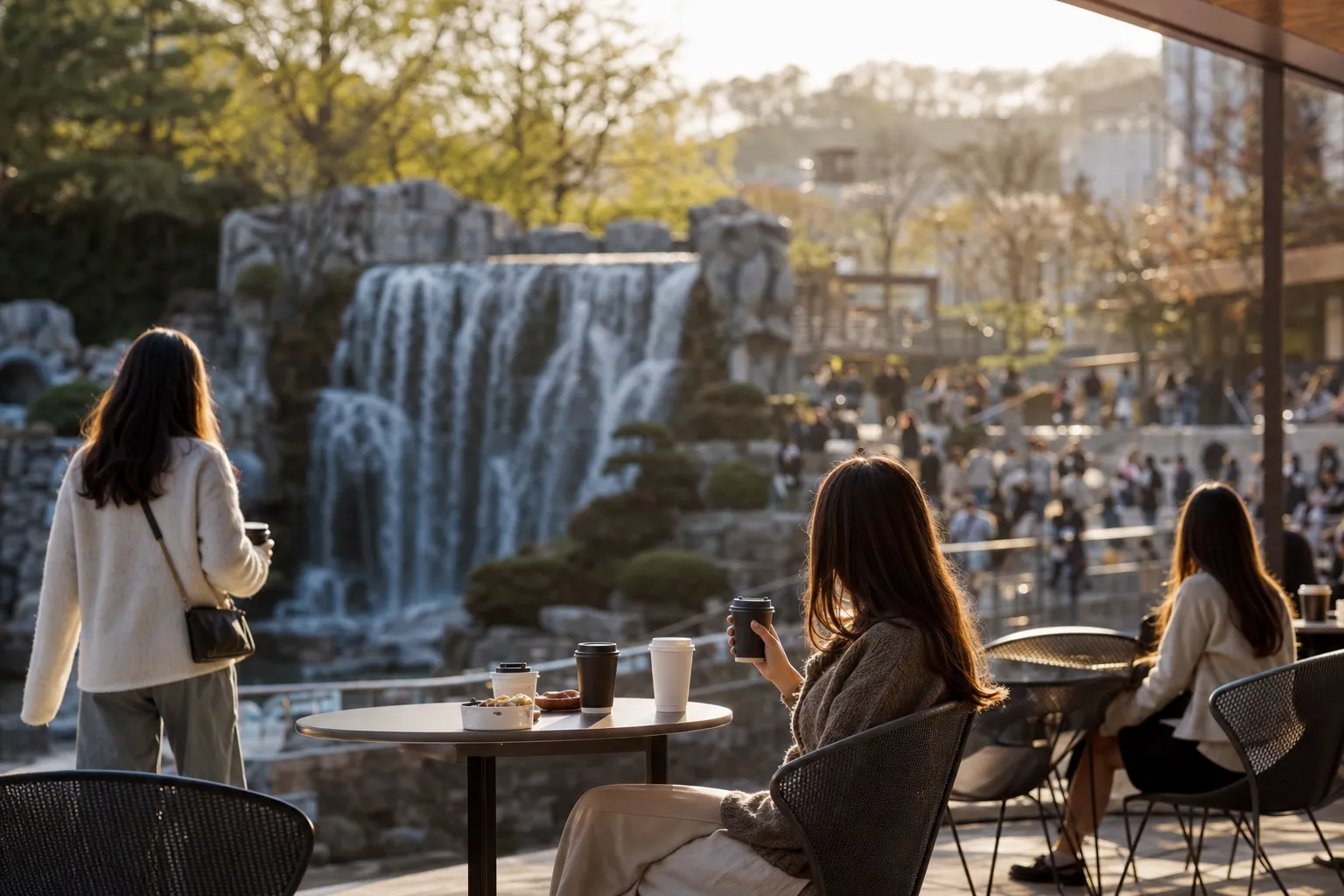
Cafe Waterfall has become much more than a scenic coffee stop in Seodaemun: its cumulative revenue has surpassed 5 billion won, while total visitors have passed 4 million. Opened in April 2023, the public cafe reached those milestones in about three years, turning a waterfall-view venue into one of the district’s most closely watched local economy stories.1
For readers who know the place mainly as a photo-friendly cafe by Hongje Waterfall, the sales figures add another layer to the story. The numbers show how a neighborhood attraction can grow into a public cafe model linked to tourism, local commerce, scholarships, and questions about financial transparency.
Cafe Waterfall Revenue Reaches a 5 Billion Won Milestone
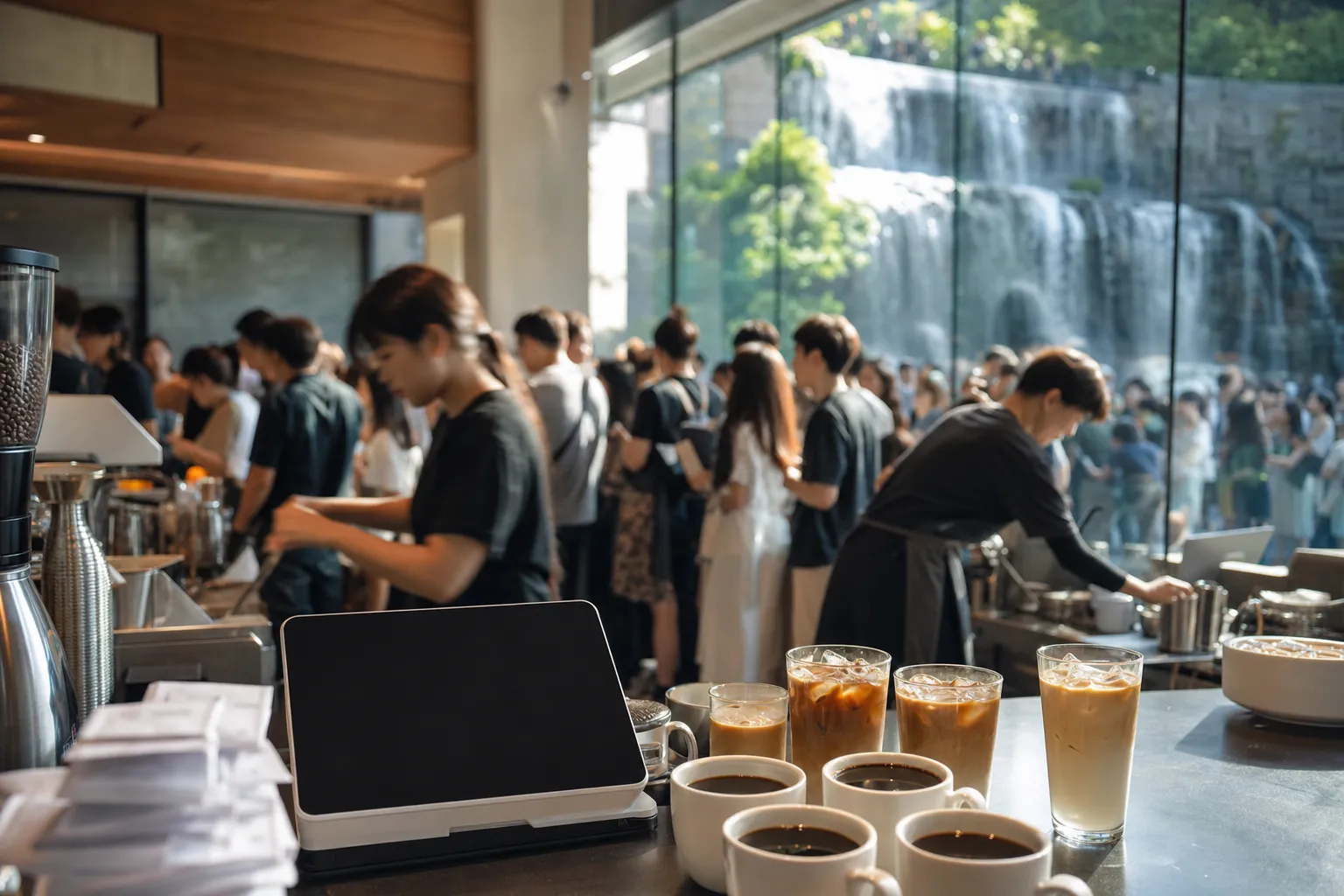
The clearest headline is the jump from modest early sales to a 5 billion won cumulative total. Sankyung Ilbo reported that Cafe Waterfall recorded 579 million won in sales in its opening year and reached 5 billion won in cumulative sales within three years.2 Earlier figures show the path of that climb: sales stood at 580 million won at the end of 2023, 2.39 billion won at the end of 2024, and 4.48 billion won at the end of 2025. By March 8, 2026, cumulative sales had reached 4.7 billion won, with visitors at 3.75 million.3
That timeline matters because it shows the April 2026 milestone was not a sudden one-off spike. It followed steady growth across 2024 and 2025, then crossed the 5 billion won mark soon after the March 2026 figure of 4.7 billion won. Visitor growth moved in the same direction, passing 4 million by the time the 5 billion won sales figure was reported.1
Seodaemun District has framed the cafe as a public-facing local success story. In a quoted remark from district materials, Seodaemun Mayor Lee Seong-heon called it “a miracle made together by residents and visitors.”3 The phrase is promotional in tone, but it reflects why the cafe has attracted attention: the project is not simply being discussed as a cafe, but as a district-run space whose sales, visitors, and public benefit are being measured.
Why Foreign Visitors Became Part of the Sales Story
Foreign visitor demand is one of the strongest themes in the available figures. In Seodaemun District’s 2026 first-quarter user satisfaction survey, foreign respondents totaled 543, which was 2.7 times higher than the previous quarter. Foreign visitor satisfaction was measured at 96.8%.1 Sankyung Ilbo also reported that the district surveyed 1,010 Korean and foreign users from January through March 2026, giving the satisfaction figures a defined survey period.2
Social media appears to be a major discovery route. Among foreign visitors, TikTok accounted for 36.2% of the main awareness paths, while Instagram accounted for 33.1%.1 That detail helps explain why Cafe Waterfall’s appeal travels well beyond the local neighborhood: a cafe beside an artificial waterfall is easy to understand visually, and short-form platforms can turn that kind of setting into a travel prompt quickly.
Payment data also points to growing international use. Foreign card spending inside Cafe Waterfall rose from 1 million won in the second quarter of 2023 to 145 million won in the second quarter of 2025.4 Another report said foreign card sales at the cafe increased 684.2% in 2024 compared with 2023.5 In response to demand from Chinese tourists, Seodaemun District planned to introduce Alipay and WeChat Pay at Cafe Waterfall and the Hongje Waterfall Complex Cultural Center from March 2026.5
Those payment changes are small operational details, but they connect directly to revenue. If a venue is already drawing foreign visitors, easier mobile payment can reduce friction at the point of purchase. The district linked the move to a December 2025 survey in which Chinese visitors requested mobile simple payment options.5
The Wider Economic Effect, and the Accounting Caveat
The sales story is not limited to the cafe counter. Munhwa Ilbo, citing KB Kookmin Card data analyzed by Seodaemun District, reported that sales in the commercial area around Cafe Waterfall reached 4.907 billion won in the third quarter of 2025, the highest level recorded for that surrounding district.4 The same report said Cafe Waterfall’s cumulative sales stood at 4.5 billion won as of December 2025, and that 610 million won in net profit had been paid as scholarships to 328 local students.4
That scholarship link is one reason the cafe’s revenue has drawn public interest. A cafe that generates sales is one thing; a public cafe whose profit is tied to local students is a broader civic project. Seodaemun’s description of the venue as a model where “city, nature, commerce, and culture” come together captures that ambition, even if readers should treat it as an official framing rather than an independent assessment.4
At the same time, the financial picture includes a caution worth noting. The Seodaemun-gu Council’s 2024 settlement inspection opinion listed 1.61613 billion won in cafe-related revenue under fund accounting and 1.29613 billion won in cafe-related costs. The opinion also said that, after considering general account spending, Cafe Waterfall’s 2024 profit could be viewed as overstated by 153.658 million won, and it recommended improvements to scholarship funding, fund operation, and cost calculation standards.6
That does not erase the sales milestone, but it does add useful context. Revenue, profit, scholarship funding, and public accounting are related but not identical. The cafe can be a popular venue with impressive cumulative sales while still needing clearer standards for how costs and profits are calculated.
Cafe Waterfall’s 5 billion won revenue milestone is therefore best understood as both a tourism success and a public finance story. The cafe has drawn millions of visitors, gained strong satisfaction scores among foreign users, helped stimulate nearby commercial sales, and funded scholarships, while also facing reasonable scrutiny over how its public-benefit model is accounted for. Its next chapter will likely be judged not only by how many cups it sells, but by how clearly those sales are turned into durable value for Seodaemun.
References
- ‘카페폭포’ 매출 50억·방문객 400만 명 돌파, 외국인 만족도 96.8% 기록 (뉴스로, 2026-04-24)
- 서대문구 ‘카페폭포’의 또 한 번의 경이로운 기록… 매출 50억·방문객 400만 명 돌파 쾌거 (산경일보, 2026-04-26)
- 서대문 ‘카페폭포’ 누적 매출 47억·방문객 375만 돌파 (전국매일신문, 2026-03-10)
- “인공폭포 보며 커피 한잔”… ‘카페폭포’에 외국인 관광객 몰렸다 (문화일보/다음뉴스, 2026-01-15)
- 서대문구, 카페폭포 '알리페이'로 중국인 관광객 마음을 사로 잡는다 (국제뉴스/미민트, 2026-02-27)
- 2024회계연도 서울특별시 서대문구 결산검사 의견서 (서대문구의회 결산검사 의견서)
About the Author