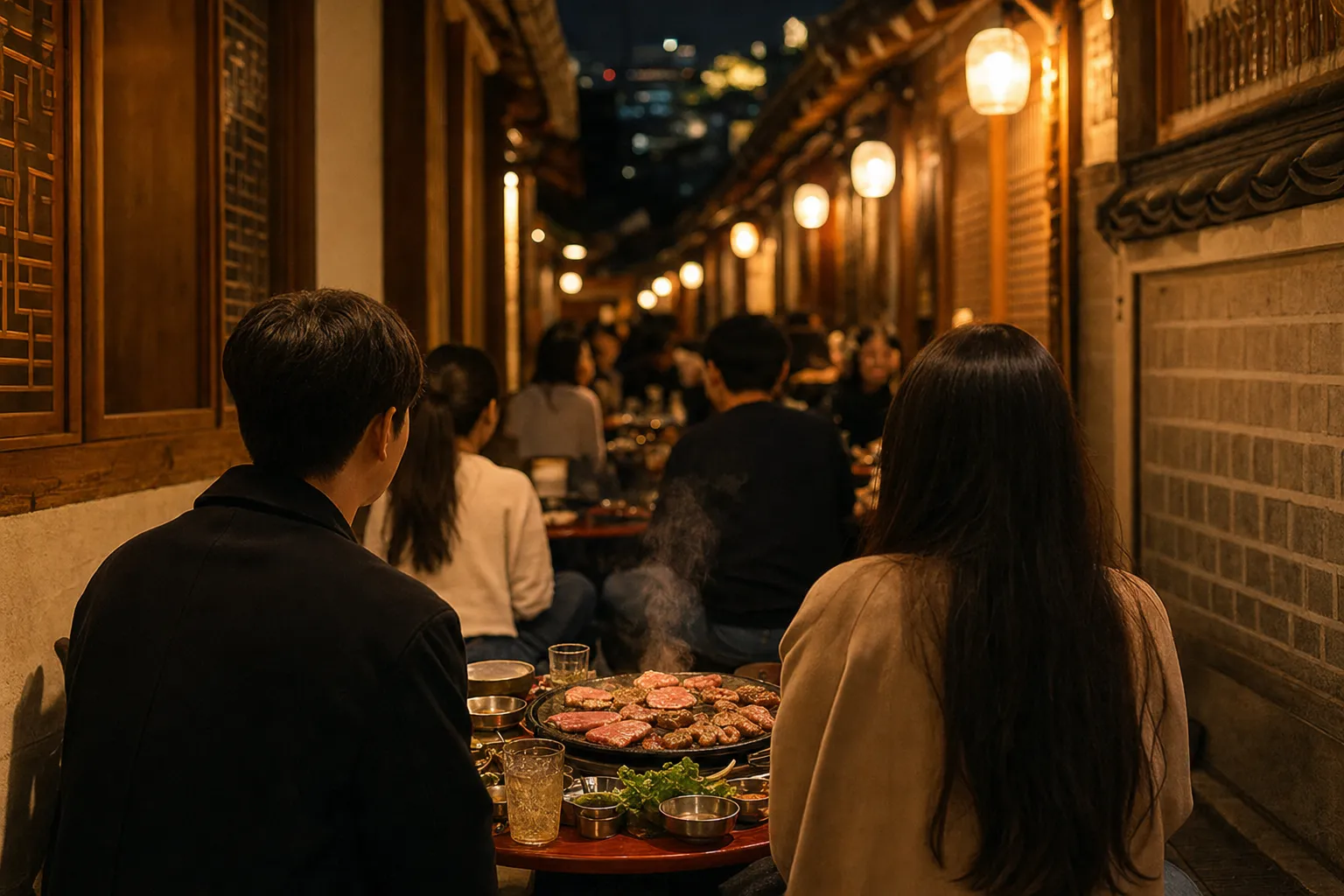
Ikseon-dong yajang has become one of the clearest examples of K-Yajang: Seoul’s casual outdoor dining culture built around narrow streets, open-air tables, and grilled food shared after dark. The area drew wider attention after President Lee Jae-myung visited Ikseon-dong Hanok Street and the nearby galmaegisal alley on May 21, 2026, following a visit to the Donui-dong jjokbangchon area.1
For readers trying to understand what the place is, where it fits into Jongno, and what makes the outdoor dining scene notable, the key point is simple: Ikseon-dong is not only a cafe-and-shopping district. Its appeal is also tied to the older food alleys around Jongno 3-ga Station, especially the galmaegisal street where outdoor tables and grilled pork are part of the evening rhythm.2
What Ikseon-dong Yajang Means in Practice
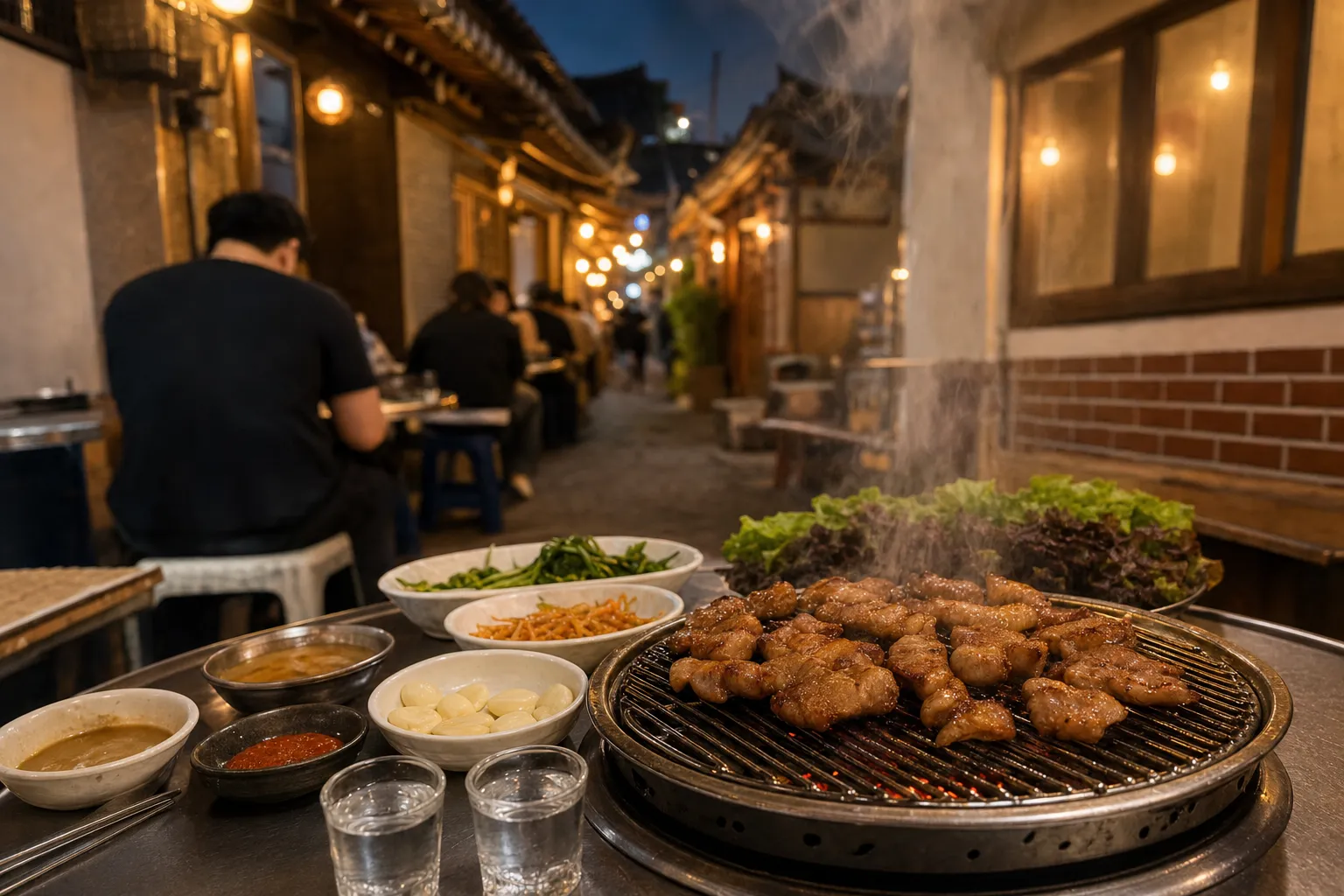
In Korean usage, “yajang” refers to eating and drinking at outdoor tables, usually in front of restaurants or along a street. In Ikseon-dong, that culture is closely connected with the area between Ikseon-dong Hanok Street and the galmaegisal alley near Jongno 3-ga Station. Reports on the May 21 visit describe President Lee greeting citizens, foreign tourists, and youths from a group home, then eating galmaegisal and other dishes at a meat restaurant with outdoor seating.1
The setting matters. Ikseon-dong is described as a tourist district that grew from hanok alleys formed in the 1920s, later becoming dense with cafes, restaurants, and small goods shops.2 That mix gives the area two visitor modes: daytime browsing through hanok-lined streets, and evening dining around open tables and grilled meat.
The presidential stop also highlighted the local-economy framing around the visit. During the walk, Lee was quoted as saying, “Well done. Money should circulate in the neighborhood,” a short remark that fit the street-level character of the outing.1 At a cafe stop, he also made the widely reported comment, “Not that coffee, right?”1 The remark became part of the public attention around his route, but the more useful takeaway for visitors is that the route connected local alleys, small businesses, and outdoor dining in one compact district.
How to Navigate the Ikseon-dong and Jongno 3-ga Area
Start with the geography. Asia Economy’s walking-course coverage groups Jongno 3-ga Station with nearby stops including Tapgol Park, Nakwon-dong agujjim street, galmaegisal alley, the jewelry district, Jongmyo, and Ikseon-dong.3 That makes the area practical for a short urban walk rather than a single-destination meal.
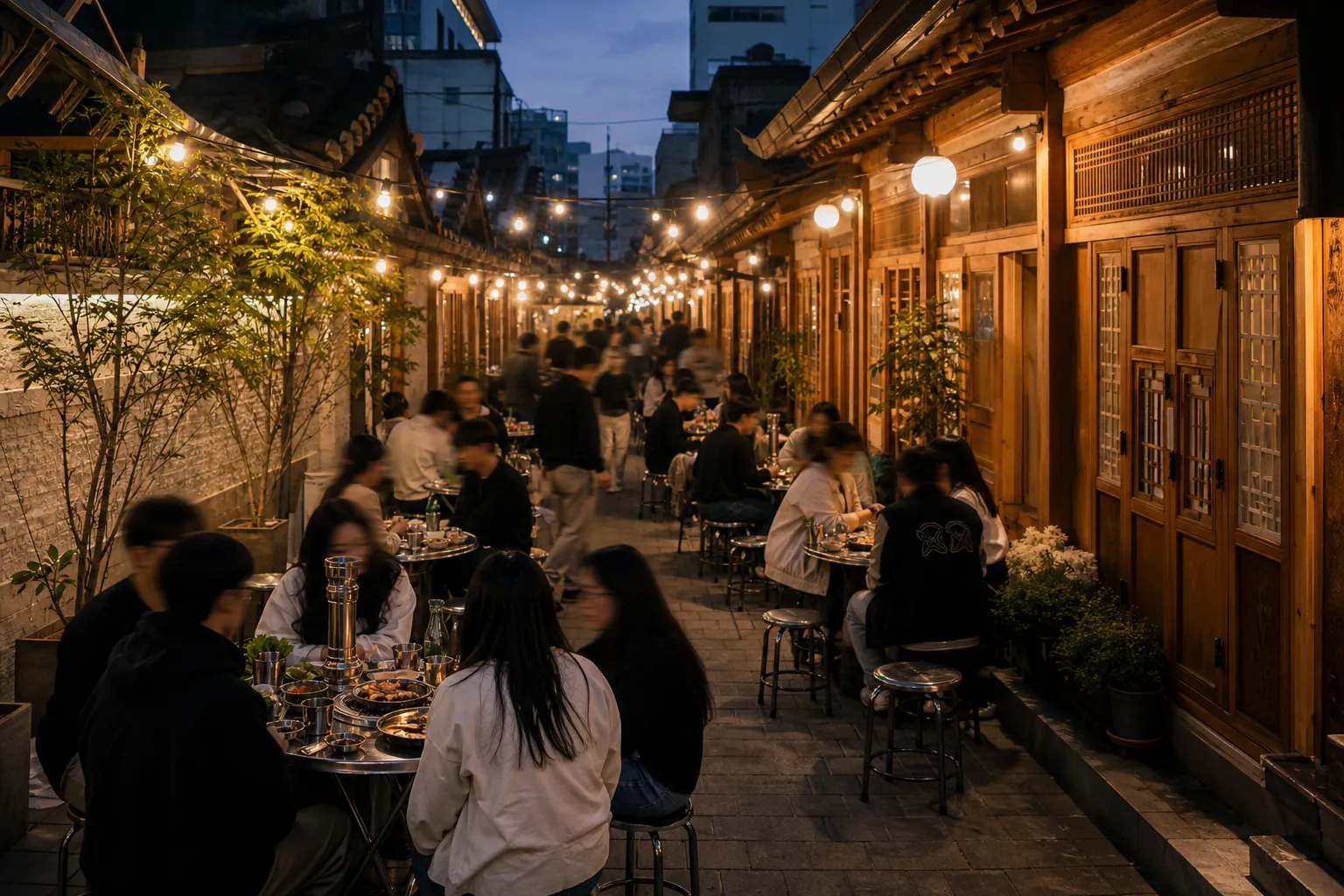
If the focus is yajang, the galmaegisal alley is the most relevant food stop. Segye Ilbo describes the alley running from near Jongno 3-ga Station toward Ikseon-dong as a place where, in the evening, people grill meat at outdoor tables in front of shops; it is popular with younger visitors and office workers.2 Earlier coverage from Maeil Business Newspaper reported that the Donui-dong galmaegisal alley formed in the early 1990s and had 11 operating shops at the time of its 2018 report. It also listed galmaegisal, samgyeopsal, and hangjeongsal among the main menu items.4
For a practical visit, treat the area as a sequence rather than a checklist. Ikseon-dong Hanok Street works well for cafes, small shops, and walking. The galmaegisal alley is better suited to dinner, especially if the goal is to see the outdoor-table atmosphere that has made K-Yajang a recognizable shorthand for casual Korean street dining. Asia Economy noted that the galmaegisal street is busy in the evenings and on weekends, while Ikseon-dong is also described as a hot place for younger visitors.3
The May 21, 2026 presidential route is useful as a reference point because it linked Donui-dong, Ikseon-dong Hanok Street, and galmaegisal alley in one movement. Seoul Shinmun reported that Cheong Wa Dae described the stop as the first street meal by a sitting president.1 SBS Biz also reported that Chief of Staff Kang Hoon-sik, Senior Presidential Spokesperson Kang Yu-jung, and Protocol Secretary Kwon Hyuk-ki accompanied Lee, and that he took photos with citizens before ordering galmaegisal and other dishes at an outdoor-table meat restaurant.5
What to Know Before You Go
The source-backed guidance is limited but still useful. The strongest pattern across reports is that the area is most associated with evening outdoor dining rather than a formal reservation-based experience. Visitors interested in yajang should expect a street-and-alley environment, outdoor tables where available, and meat-focused menus around the galmaegisal alley.
Because the available sources do not provide official opening hours, booking rules, prices, or individual restaurant names for a recommended itinerary, those details should be checked directly with specific businesses before visiting. What is clear is the district’s character: a compact Jongno area where hanok tourism, small shops, cafes, and long-running grilled-meat alleys overlap.
Quick FAQ
Where is the best place to understand Ikseon-dong yajang?
The most source-supported reference point is the galmaegisal alley near Jongno 3-ga Station, leading toward Ikseon-dong. Reports describe outdoor tables in front of restaurants there, especially in the evening.2
What food is most associated with the area?
Galmaegisal is the signature item mentioned across the coverage, with samgyeopsal and hangjeongsal also listed in earlier reporting on the Donui-dong galmaegisal alley.4 Ikseon-dong yajang is best understood as a practical street-dining experience tied to Jongno’s older food alleys and newer hanok-street tourism. For visitors, the most reliable plan is to pair an Ikseon-dong walk with an evening meal around the galmaegisal alley, where the outdoor-table atmosphere gives K-Yajang its clearest local form.
References
- 李대통령 “‘거기’ 커피는 아니죠?”…익선동 야장서 스벅 겨냥 (서울신문, 2026-05-22)
- “거기 커피는 아니지요?” 익선동 야장 찾은 이재명 대통령…화제의 ‘핫플 동선’ 따라가보니 (세계일보, 2026-05-22)
- [하루만보]송해길 걷고 아구찜·갈매깃살·보석까지…종로 3가역 (아시아경제, 2023-04-21)
- 종로 3가 갈매기살 골목을 아시나요 (매일경제, 2018-03-21)
- "거기 커피는 아니죠?"…李대통령, 익선동 야장 깜짝 방문 (SBS Biz, 2026-05-22)
About the Author