Haeundae jjimjilbangs are drawing attention from foreign visitors who want a Korean spa experience in Busan and, in some cases, a flexible place to rest near major coastal districts. The clearest source-backed picture is practical rather than flashy: Haeundae, Dalmaji, Gwangalli, and Centum are becoming useful areas to understand when planning K-Sauna Tourism in Busan.
Why Haeundae Jjimjilbangs Matter for Foreign Visitors
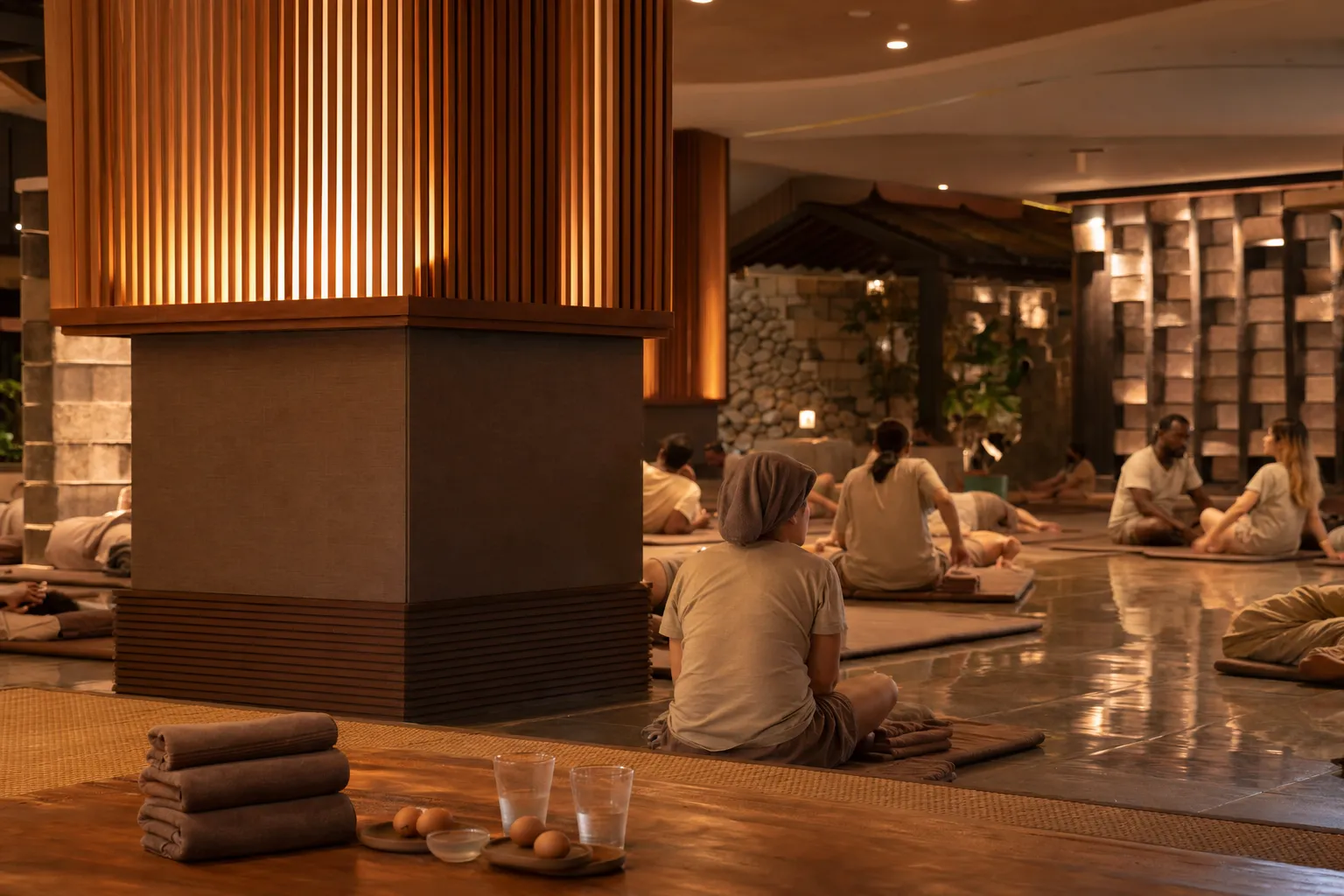
Busan’s foreign tourism base has grown sharply. In 2025, the city recorded 3,643,439 foreign visitors, up 24.4% from the previous year, setting a new record above its 2016 level. The largest visitor groups came from Taiwan, China, Japan, and the United States, and Busan has set a 2028 target of 5 million foreign tourists and 1.5 trillion won in spending.1
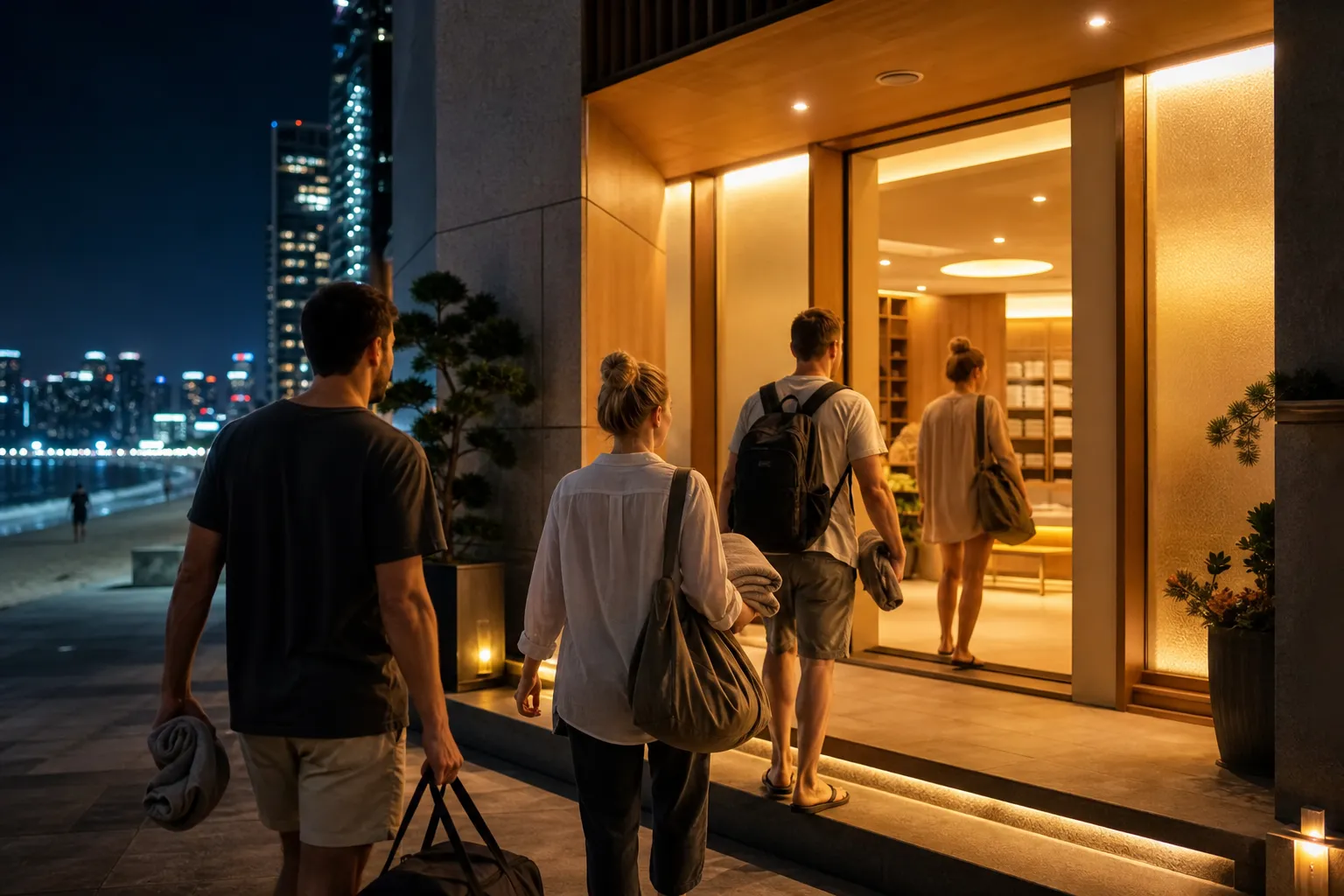
That larger visitor flow helps explain why Korean spa facilities are being discussed as part of the city’s travel experience. Wikitree reported that 24-hour jjimjilbangs around Haeundae’s Dalmaji area and Gwangalli are known for sea views and have a high share of foreign tourist use. The same report said these facilities were receiving attention as alternative places to rest or stay amid accommodation price increases and reservation cancellation cases before the BTS concerts scheduled in Busan for June 12-13, 2026.2
For a traveler, the main lesson is to treat popular jjimjilbangs in coastal Busan as high-demand venues, not as guaranteed last-minute backups. If your visit overlaps with a major event, concert, holiday, or summer travel period, check operating conditions directly with the facility before assuming a 24-hour spa can solve a lodging or late-night rest problem.
There is also a safety point to keep in view. Wikitree raised the issue that some jjimjilbangs can be used in a way similar to lodging facilities but may sit outside certain fire-safety inspection targets.2 The available source material does not provide a visitor checklist for individual venues, so the practical approach is to confirm basic conditions yourself: operating hours, entry rules, sleeping or resting areas, locker availability, and whether staff can explain emergency exits or facility rules in a language you understand.
How to Plan a Haeundae or Centum Spa Stop
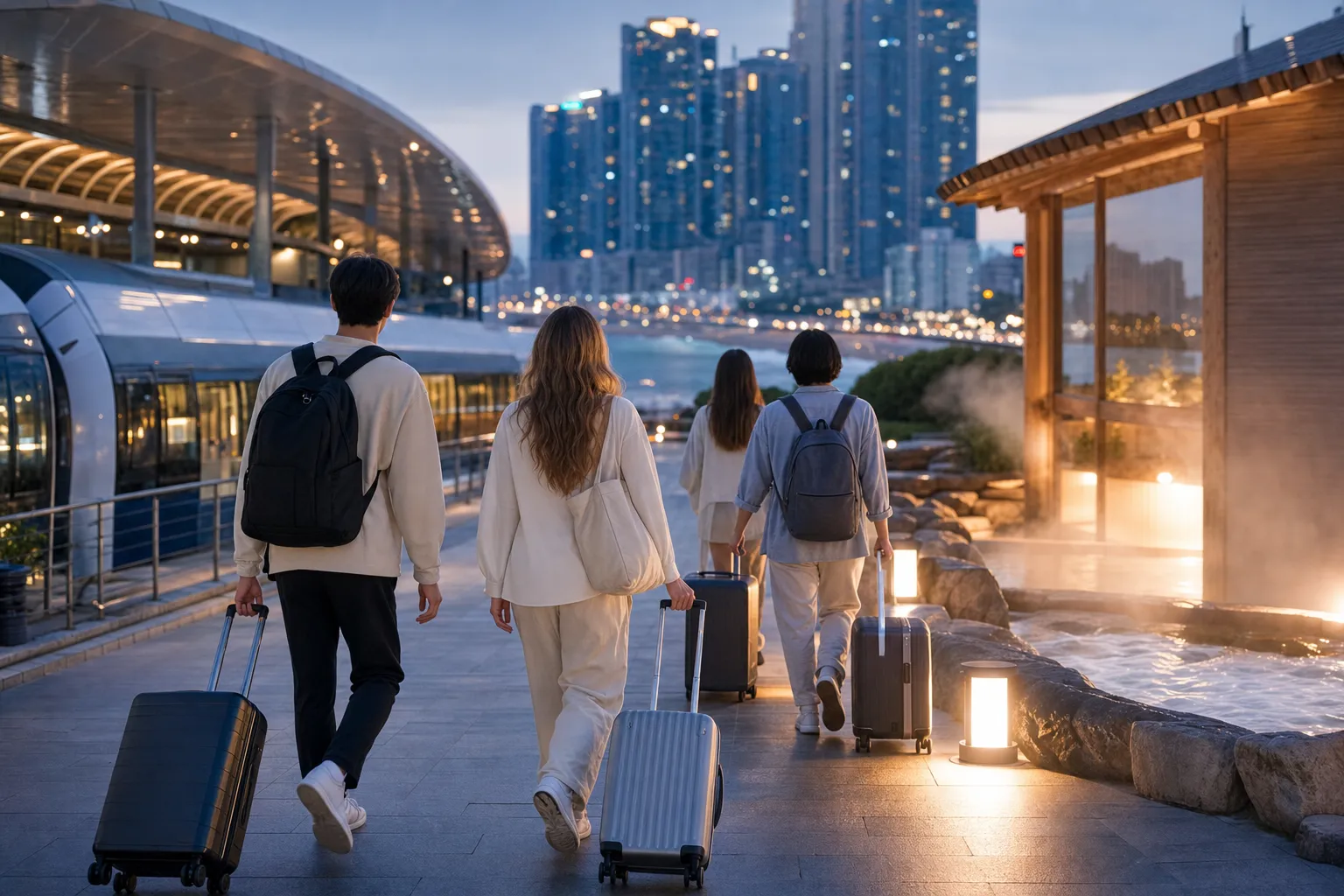
Haeundae District has been connecting rail travel with local attractions. After KTX-Eum service began stopping at Sin Haeundae Station and Centum Station, the district announced tourism measures that included a tourism information center at Sin Haeundae Station with foreign-language interpretation available. It also planned discounts at major visitor facilities when travelers present a KTX or other train ticket.3
The listed discount targets include spa facilities such as ClubD Oasis and Shinsegae Spa Land, along with Busan Aquarium, a river cruise, and the Haeundae Beach Train.3 For foreign visitors, that makes the train ticket worth keeping after arrival. The source material confirms the plan and the types of participating attractions, but it does not provide every counter-level rule, so check the latest terms at the station information desk or directly with the facility before paying.
A Haeundae District official said the district would continue presenting attractive tourism products connected with KTX-Eum.3 In practical terms, travelers using Sin Haeundae Station or Centum Station should look for rail-linked tourism information first, then build the day around confirmed discounts, spa hours, and nearby attractions.
Centum also deserves attention because it connects spa tourism with other visitor experiences. Bizwatch reported that Ottogi introduced “Ottogi Ramen Land” inside Busan’s Centum Spa Land as a ramen experience space. The same report said about 50% of Spa Land visitors were foreigners, and described the space as part of a plan to offer K-food and K-lifestyle experiences to both Korean and overseas visitors.4
This gives visitors two useful planning categories. Haeundae, Dalmaji, and Gwangalli are relevant for coastal jjimjilbang interest, sea-view settings, and 24-hour rest options reported around tourist-heavy areas. Centum is more useful for a structured itinerary that can combine a spa stop with rail access, shopping-area movement, and a packaged food or lifestyle experience.
What to Check Before You Go
Before choosing a jjimjilbang or spa facility, confirm the basics: whether the venue accepts walk-ins, whether late-night or 24-hour use is available, whether luggage storage is possible, and whether the facility is suitable for rest rather than only bathing. The source material supports the popularity of jjimjilbang and spa experiences among foreign visitors, but it does not provide universal rules that apply to every venue.
Travel-platform data also shows that bathhouse and jjimjilbang experiences are part of a broader shift toward hands-on Korean cultural activities. During July 1-August 30, 2025, Klook’s inbound product bookings rose 40% year over year, while Creatrip’s foreign-user transaction value rose 31%; Creatrip listed body-scrub and jjimjilbang experiences, norigae classes, and hanbok experiences among popular products.5
Another Creatrip-linked report said public bathhouse body-scrub transaction value rose 84% from June 20 to July 19, 2025, after the release of the Netflix animation “KPop Demon Hunters.” The report framed Korean body-scrub and jjimjilbang experiences as emerging experiential tourism products for foreign visitors.6
Those numbers do not mean every Haeundae jjimjilbang is crowded every day. They do suggest that visitors should plan spa experiences as real itinerary items. Booking, ticket rules, transport timing, and facility etiquette may matter more than travelers expect, especially when a visit is tied to a concert, rail arrival, or short Busan stay.
Quick FAQ
Are Haeundae jjimjilbangs mainly for overnight stays?
The available sources describe 24-hour jjimjilbangs as receiving attention as alternative places to rest or stay during accommodation pressure, but they do not define them as hotels. Visitors should confirm each facility’s rules before relying on one for overnight rest.2
Can foreign visitors get spa discounts with a train ticket in Haeundae?
Haeundae District announced plans for discounts at facilities including ClubD Oasis and Shinsegae Spa Land when travelers present a KTX or other train ticket. The source confirms the plan, but visitors should check current terms at the station or facility counter.3 For foreign visitors, Haeundae jjimjilbangs are best understood as one practical part of Busan’s changing travel map: a Korean spa experience, a possible rest option in busy coastal districts, and a growing piece of K-Sauna Tourism that should be planned with the same care as transport, lodging, and event schedules.
References
- 작년 부산 외국인 관광객 364만명…1조 531억원 소비 (연합뉴스, 2026-02-11)
- [단독] BTS 공연 앞 부산 숙박대란…외국인 몰리는 찜질방, 소방점검 사각지대 (위키트리, 2026-03-19)
- 부산 해운대구 "KTX 표 보여주면 스파·아쿠아리움 할인" (파이낸셜뉴스 / 뉴스1, 2026-01-30)
- 'K찜질방'과 'K라면'의 만남…센텀스파랜드에 문 연 '오뚜기 라면랜드' (비즈워치, 2025-11-26)
- 플랫폼 타고 휴가 온 외국인 관광객 두 자릿수 증가…체험형 K콘텐츠가 견인 (전자신문, 2025-09-21)
- “때 밀러 한국 왔어요”…'케데헌' 열풍에 '이 곳'마저 인기 관광 코스됐다 (서울경제, 2025-07-31)
About the Author