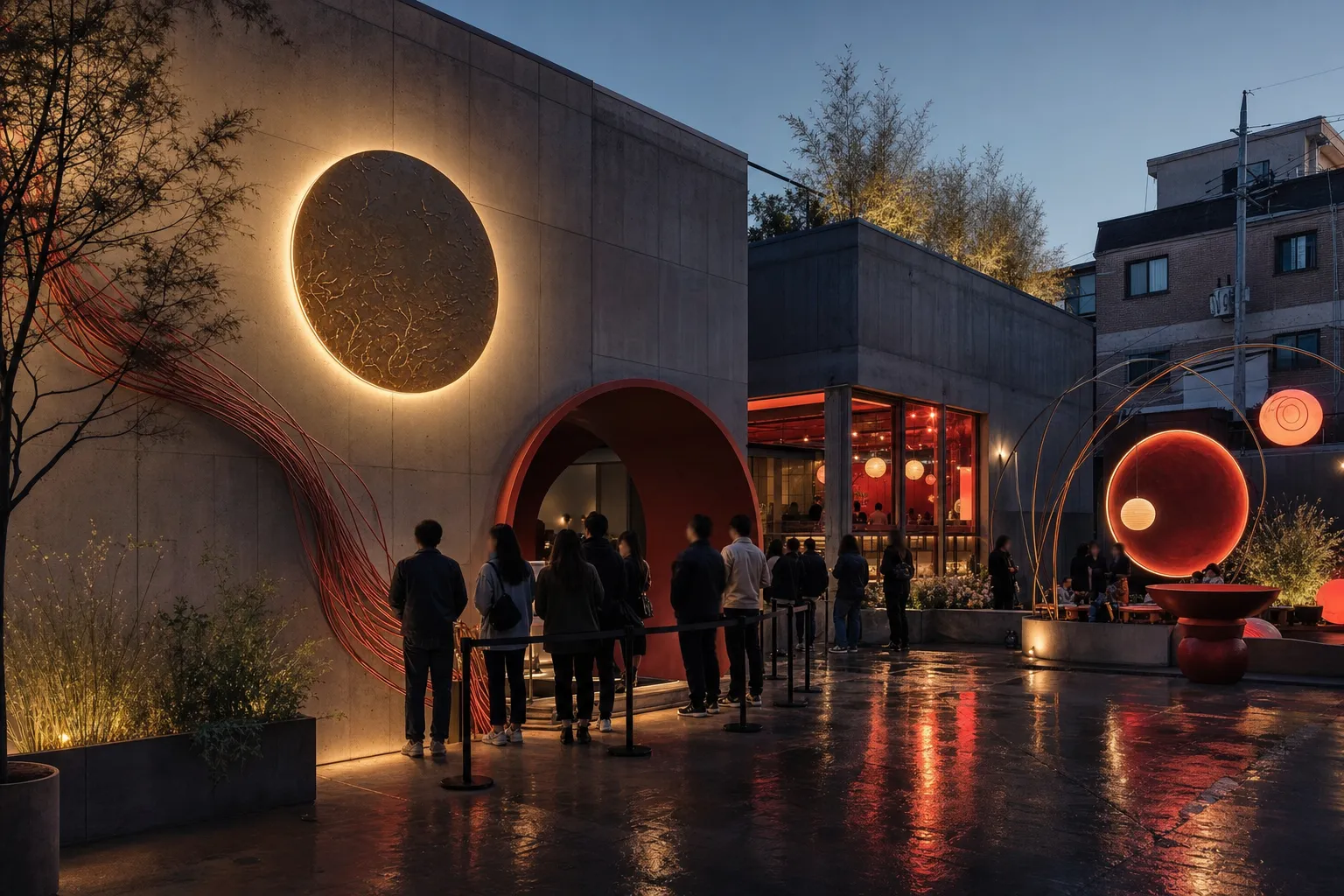
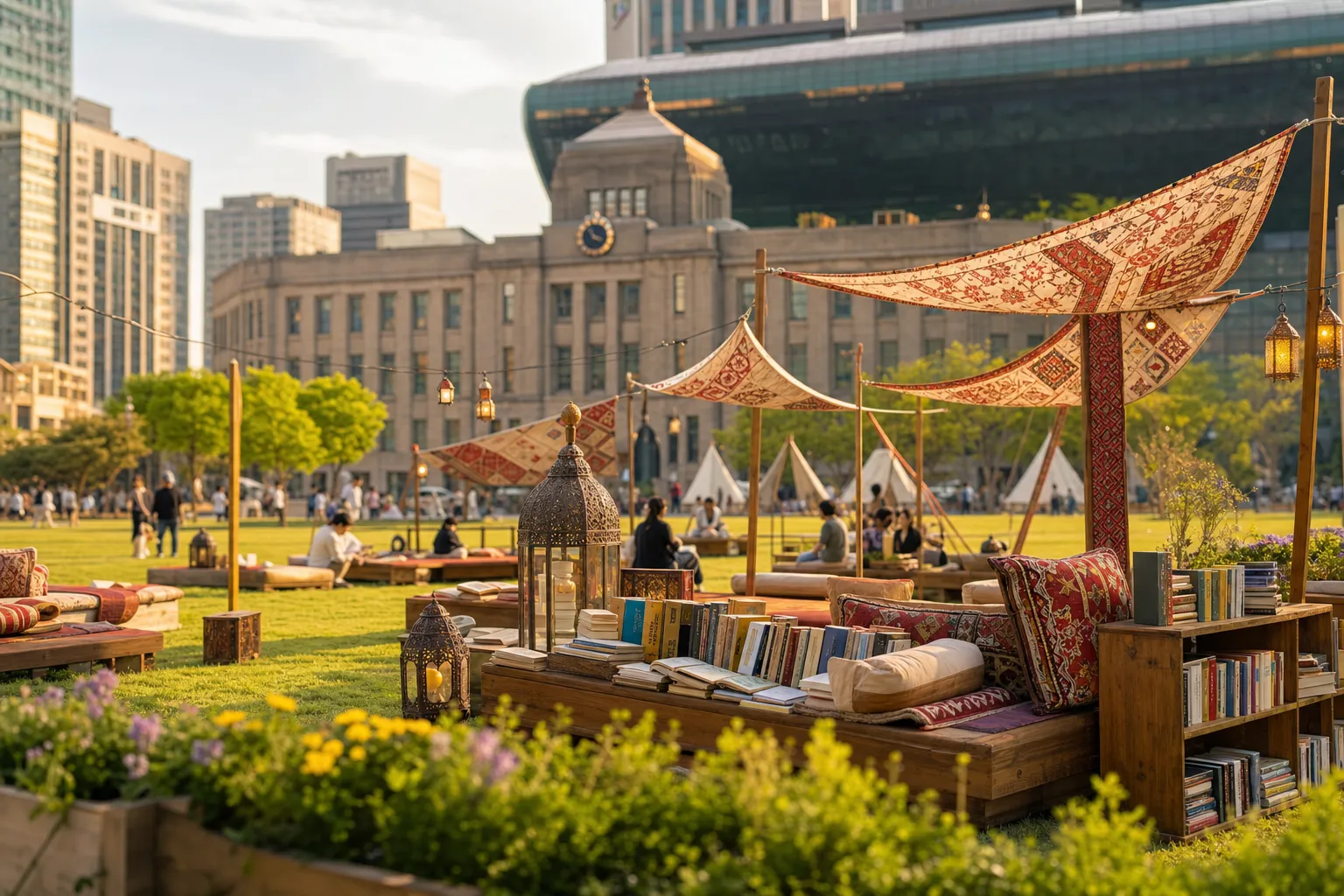
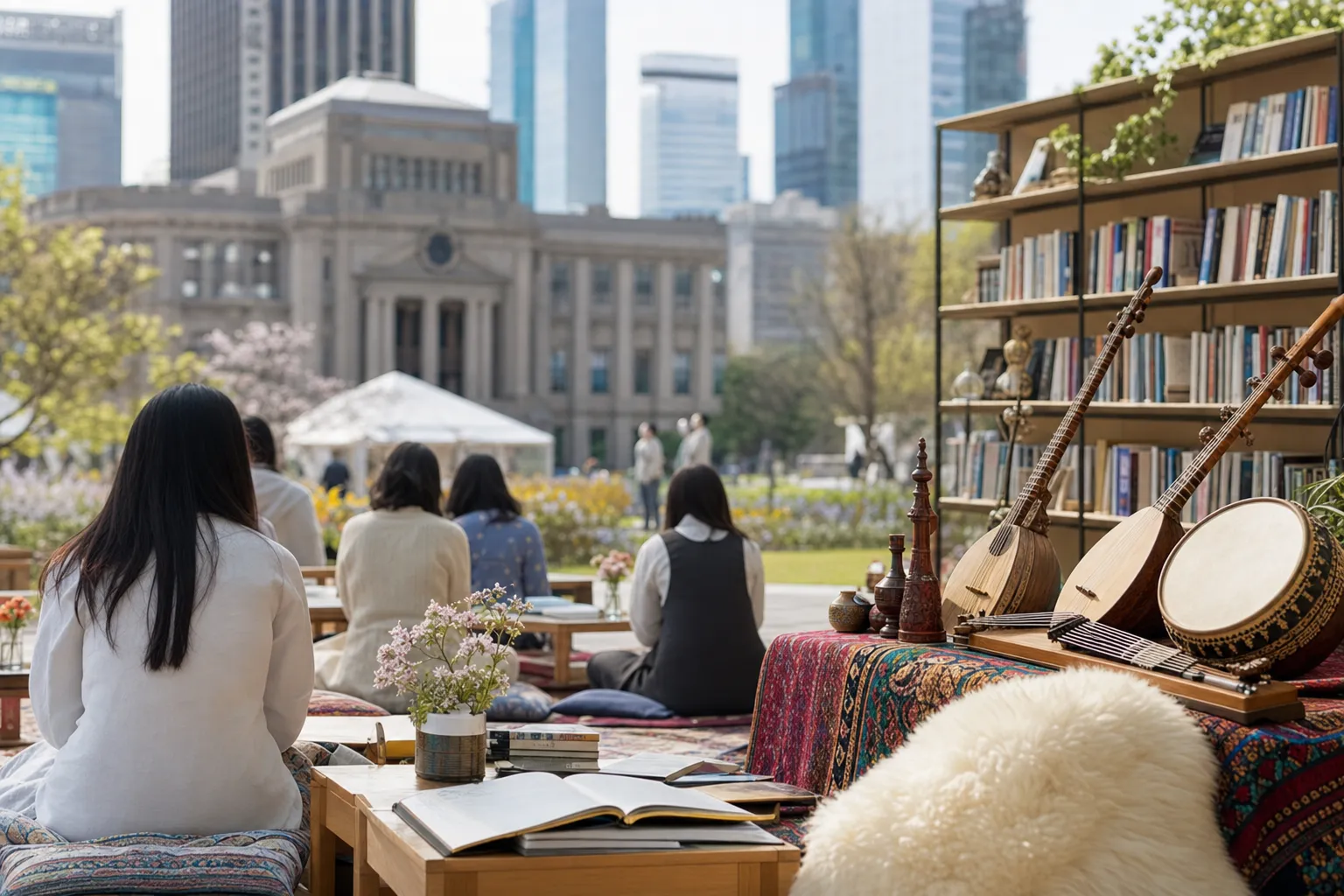
The 2026 Central Asia Spring Festival turned Seoul Plaza into a practical cultural stop for visitors interested in Central Asian traditions, performances, food, and hands-on activities. Held alongside the Seoul Outdoor Library setting, the event connected reading in the open air with cultural booths and programs from five Central Asian countries.1
The festival has already taken place: it ran from May 16 to May 17, 2026, at Seoul Plaza. It was introduced as a free local festival, making it accessible to families, tourists, and anyone passing through the central civic square.2
Seoul Plaza Central Asian Culture: What Happened
The central focus of the event was the culture of five Central Asian countries: Kazakhstan, Kyrgyzstan, Tajikistan, Turkmenistan, and Uzbekistan. Yonhap reported that the Korea Foundation, or KF, organized the festival at Seoul Plaza to present the cultures of these five countries through traditional performances, film screenings, experience booths, and food booths.3
The festival also carried a diplomatic and cultural-exchange purpose. KF announced the Seoul Plaza program ahead of the first Korea-Central Asia summit, describing it as a way to introduce the arts and cultures of the five Central Asian countries.4 A KF official said the foundation hoped Korean citizens would encounter the cultures of the five countries “more familiarly” and that the event would broaden mutual understanding and friendship between Korea and Central Asia.3
For visitors, the practical appeal was simple: the event gathered several kinds of cultural experiences in one walkable public space. Korea Tourism Organization’s Visit Korea listing described yurt experiences, more than 20 cultural experience booths, traditional food tasting, craft-making, and folk costume experiences.2 These elements made the event less like a single performance and more like a short cultural route across Seoul Plaza.
The May 16 on-site report from Yonhap described five national promotion booths and participation by family visitors and foreign tourists. It also noted citizen-friendly activities such as trying traditional hats, making bookmarks, and watching Central Asian films.5 Those details matter for future visitors to similar events because they show the program was built around browsing, participation, and short activities rather than only seated viewing.
How It Connected With Seoul Outdoor Library
The event’s relevance to Seoul Outdoor Library came from its location and timing. Seoul’s citizen reporter coverage described the Central Asia Spring Festival taking place near the Seoul Plaza outdoor library operating area, creating a combined scene of reading and cultural experience.1
That pairing shaped the atmosphere of the plaza. The outdoor library already gives Seoul Plaza a public reading function, while the festival added cross-cultural programming nearby. The result was not just a festival beside a library, but a civic space where visitors could move between books, performances, craft booths, food experiences, and country booths without leaving the plaza.
The Seoul coverage described the program as creating synergy with Seoul Outdoor Library through cooperation involving the five Central Asian countries: Kazakhstan, Uzbekistan, Kyrgyzstan, Turkmenistan, and Tajikistan.1 For readers planning future visits to Seoul Plaza, the takeaway is useful: Seoul Outdoor Library can become more than a quiet reading area when adjacent civic and cultural events are scheduled around it.
This also explains why the event worked well as a public-space program. A visitor did not need to commit to a full-day itinerary. Based on the reported activities, someone could stop for a short cultural booth visit, watch part of a performance or film program, try a hands-on activity, and then spend time in the outdoor library area.
What Visitors Could See and Do
The most practical way to understand the 2026 Central Asia Spring Festival is by activity type. The program included traditional performances, film screenings, experience booths, and food booths, all centered on the cultures of the five participating countries.3
Hands-on experiences were a major part of the event. Visit Korea’s listing highlighted yurt experiences, about 20 cultural booths, traditional food tasting, craft-making, and folk costume experiences.2 Yonhap’s field report added specific visitor activities, including traditional hat experiences, bookmark-making, and Central Asian film viewing.5
Turkmenistan’s participation was also documented in detail by the Korea-Central Asia Cooperation Forum Secretariat. The Embassy of Turkmenistan in Korea operated a national pavilion during the May 16-17 festival, displaying traditional handicrafts, textiles, jewelry, paintings, and folk instruments.6 This gives a clearer picture of how the national booths functioned: they were not only information stands, but also exhibition spaces for material culture.
For families, the program’s structure appears especially approachable. The available source material points to short, flexible activities rather than complicated reservations or paid sessions. Since the event was listed as free, the main planning requirement was simply knowing the dates and Seoul Plaza location.2
For international visitors, the festival offered a compact introduction to Central Asian cultures in central Seoul. The reported presence of foreign tourists suggests the event was visible and accessible to people beyond local residents.5
Quick FAQ
Was the 2026 Central Asia Spring Festival free?
Yes. Korea Tourism Organization’s Visit Korea listing described the Central Asia Spring Festival as a free local festival held at Seoul Plaza from May 16 to May 17, 2026.2
Which countries were represented at the Seoul Plaza event?
The festival introduced the cultures of five Central Asian countries: Kazakhstan, Kyrgyzstan, Tajikistan, Turkmenistan, and Uzbekistan.3 !2026 Central Asia Spring Festival Seoul Plaza Outdoor Library venue concept The 2026 Central Asia Spring Festival showed how Seoul Plaza can combine Seoul Outdoor Library with a broader civic cultural program. For anyone tracking future Seoul Plaza events, its clearest lesson is practical: when cultural festivals are scheduled around the outdoor library space, a visit can include both relaxed reading and accessible international culture in one central location.
References
- 서울야외도서관과 중앙아시아 봄맞이 축제가 만든 글로벌 문화 광장 (서울시 내 손안에 서울, 2026-05-20)
- 중앙아시아 봄맞이축제 (대한민국 구석구석, 2026-05-06)
- "중앙아 5개국 문화 한자리에"…KF, 서울광장서 '봄맞이 축제' (연합뉴스, 2026-05-12)
- KF, 서울광장에서 ‘2026 중앙아시아 봄맞이축제’ 개최 (한국국제교류재단, 2026-05-12)
- "유르트·칼팍·나우루즈…서울광장이 중앙아시아로" (연합뉴스, 2026-05-16)
- 투르크메니스탄, 서울 '2026 중앙아시아 봄맞이축제'서 자국 문화 선보여 (한-중앙아협력포럼사무국, 2026-05-19)
About the Author