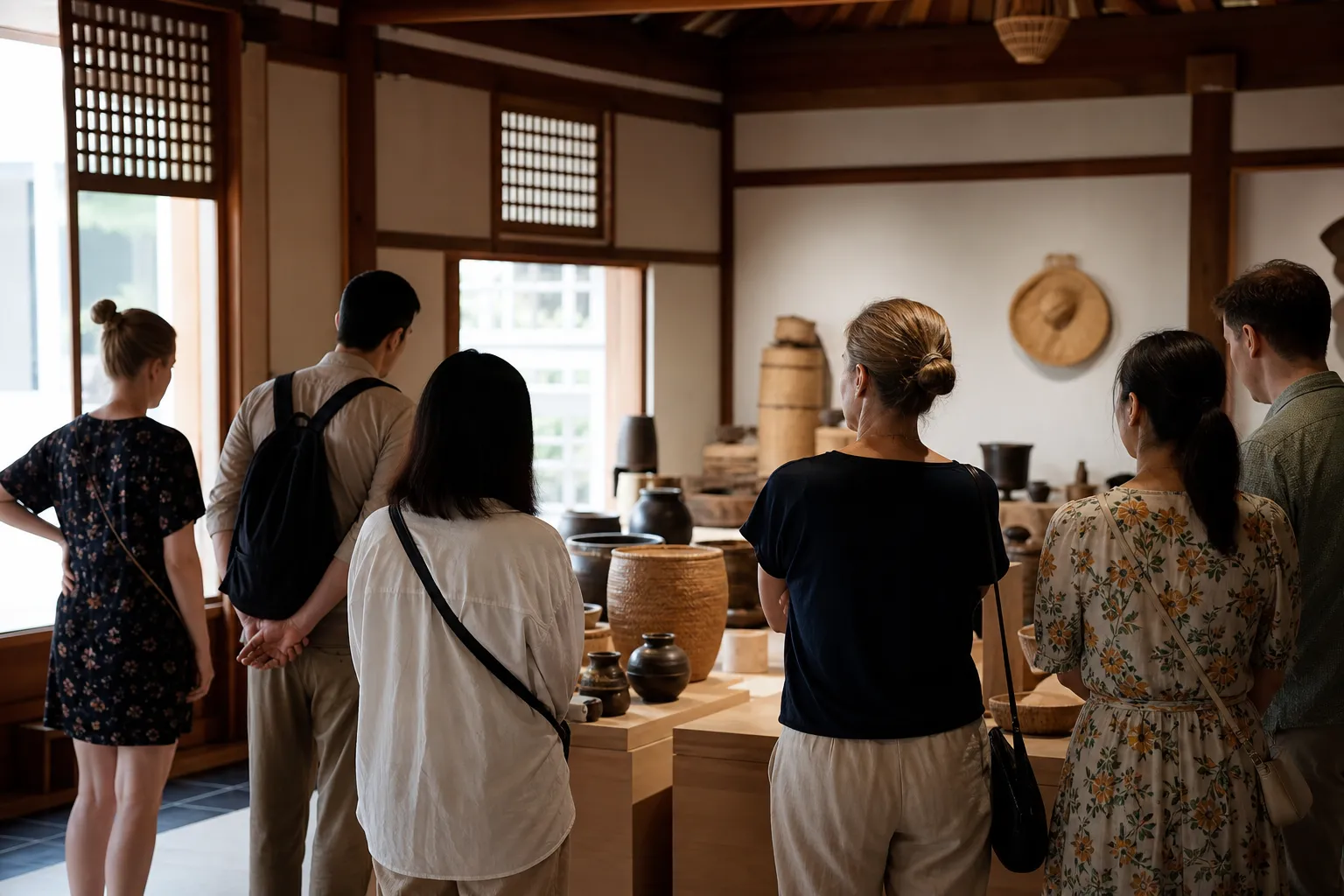
The National Folk Museum of Korea’s 2026 foreigner education program, “Real Daily Life of Koreans,” is designed for foreign groups who want to understand Korean culture through ordinary daily routines rather than only major holidays or heritage symbols. Running from May 11 to November 30, 2026, the two-hour program presents Everyday K-Culture through hands-on themes such as public bath culture, coffeehouse culture, ondol floor heating, seated living, school life, and play culture.1
For visitors, schools, cultural groups, and organizations planning a Korea-focused activity, the main point is straightforward: this is a group-based education program, not a casual drop-in exhibit. The available source information identifies the target audience as foreign groups of around 20 people, with sessions held at the Traditional Culture Learning Center and the outdoor exhibition area of the National Folk Museum of Korea.1
What the National Folk Museum Foreigner Program Covers
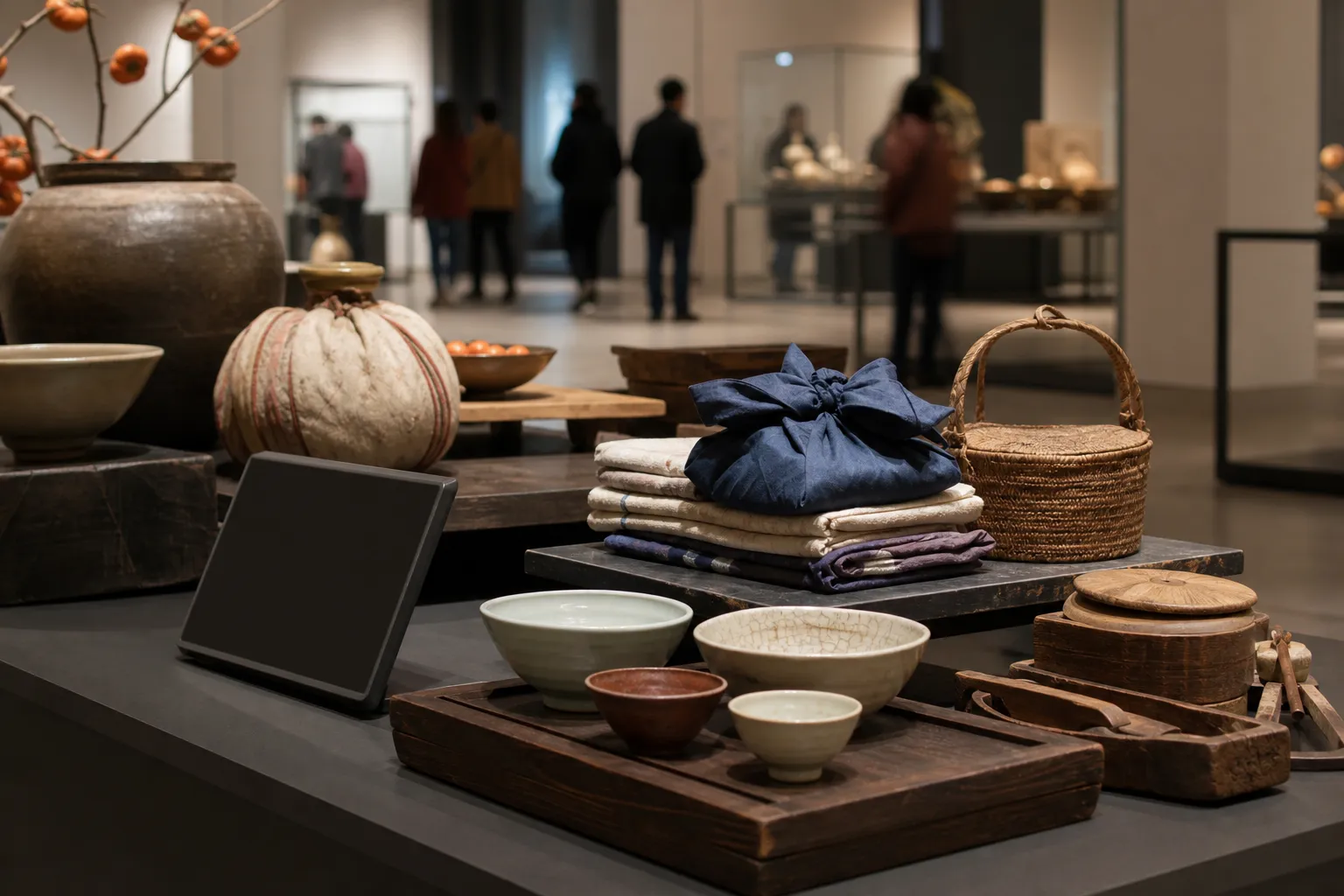
“Real Daily Life of Koreans” is built around four everyday themes. The first is bathhouse and scrubbing culture, a subject that can help foreign participants understand how shared bathing spaces and body-care customs have functioned in Korean everyday life. The second is dabang and coffee culture, connecting older Korean coffeehouse customs with the broader story of social gathering and urban life.1
The third theme is ondol and seated culture. Ondol, Korea’s floor-heating system, is not presented here as an isolated architectural detail but as part of how people sit, gather, eat, rest, and organize indoor space. The fourth theme is school and play culture, which gives the program a familiar entry point for participants who may recognize childhood, education, and games as universal experiences while noticing how the Korean examples differ.1
The practical value of the program is that it frames Korean culture through ordinary habits. Many visitors encounter Korea through pop culture, food, palaces, or major tourist districts. This museum program instead focuses on small, repeated actions: bathing, drinking coffee, sitting on warm floors, attending school, and playing games. That makes it especially useful for groups looking for a grounded introduction to Korean daily life.
Who Should Consider Joining and How to Plan
The program is most suitable for organized foreign groups because the source information gives an expected group size of around 20 people.1 That may include international student groups, exchange programs, cultural training groups, visiting organizations, or foreign residents studying Korean society. Individual travelers may still find the museum relevant, but the stated education program itself is group-oriented.
Because the session lasts two hours, planners should treat it as a focused half-day activity rather than a quick stop. The listed venues, the Traditional Culture Learning Center and the outdoor exhibition area, also suggest that the experience may involve moving between learning and exhibition spaces rather than sitting through a single classroom-style talk.1 Groups should allow time before and after the program for arrival, orientation, and general museum viewing if their schedule permits.
The program also fits into a broader direction at the National Folk Museum of Korea. In 2025, the museum counted 2,286,215 annual visitors, including 1,354,066 foreign visitors, meaning foreign visitors accounted for 59.2 percent of the total. Yonhap News reported on January 5, 2026, that the museum said its foreign visitor count had increased 103 percent from 2024.2 In that context, a dedicated foreigner education program is not an isolated offering; it reflects a larger visitor base and a stronger focus on international audiences.
The museum’s emphasis on foreign visitors was also stated directly by National Folk Museum of Korea Director Jang Sang-hoon, who said the museum would continue efforts to “expand hands-on events for foreigners” and improve the quality of visits.2 For group planners, that statement matters because it shows that foreigner-facing programs are part of the museum’s 2026 service direction, especially as the institution marks its 80th anniversary year.2
Why This Program Fits Everyday K-Culture
The phrase Everyday K-Culture is useful here because the program is not centered on celebrity culture, performance, or spectacle. It looks at the textures of daily Korean life: where people bathed, how coffee spaces developed, why heated floors shaped indoor living, and how school and play formed shared memories. Those topics help participants connect cultural knowledge with practical observation.
The National Folk Museum of Korea has also been active in related education and cultural-exchange programming. On January 19, 2026, it ran a Korean culture training course for 50 youth volunteers preparing for overseas service, in cooperation with KOICA and Global Civic Sharing. That training included lectures on Korean daily culture, food life, traditional games, guided viewing of permanent exhibitions, and hands-on practice.3 While that was a separate program, it shows a similar method: teaching Korean culture through daily life, explanation, exhibitions, and participation.
Another separate 2026 example is the museum’s multicultural education work. From March 2026, the museum planned cultural diversity programs using “multicultural kits” through four regional hub institutions. Newsis reported that the kits had reached a cumulative 1.25 million participants since education began in 2010, and that the 2026 project broadened its focus toward mutual cultural understanding and global citizenship education.4 This background reinforces the museum’s broader education role, but visitors should not confuse it with “Real Daily Life of Koreans,” which is the foreign-group program running from May 11 to November 30, 2026.
Quick FAQ
When does “Real Daily Life of Koreans” run in 2026?
The National Folk Museum of Korea lists the program period as May 11 to November 30, 2026. The available source material does not provide a detailed daily timetable or booking deadline.1
Is the program for individual visitors or groups?
The listed target is foreign groups, with an approximate group size of 20 people. The available source information does not state whether individual visitors can join a scheduled group session.1 For foreign groups seeking a practical museum-based introduction to Korea, “Real Daily Life of Koreans” offers a focused way to learn culture through everyday spaces, objects, and habits rather than broad slogans or surface-level sightseeing.
References
- 2026년 외국인 교육〈한국인의 진짜 일상〉 (국립민속박물관)
- 국립민속박물관 작년 관람객 59%는 외국인…"국내 박물관 1위" (연합뉴스, 2026-01-05)
- 국립민속박물관, 해외 파견 청년봉사단 문화 연수 진행 (아시아경제, 2026-01-20)
- 125만명 체험한 '다문화꾸러미', 이젠 세계시민 세트로 업그레이드 (뉴시스, 2026-02-17)
About the Author