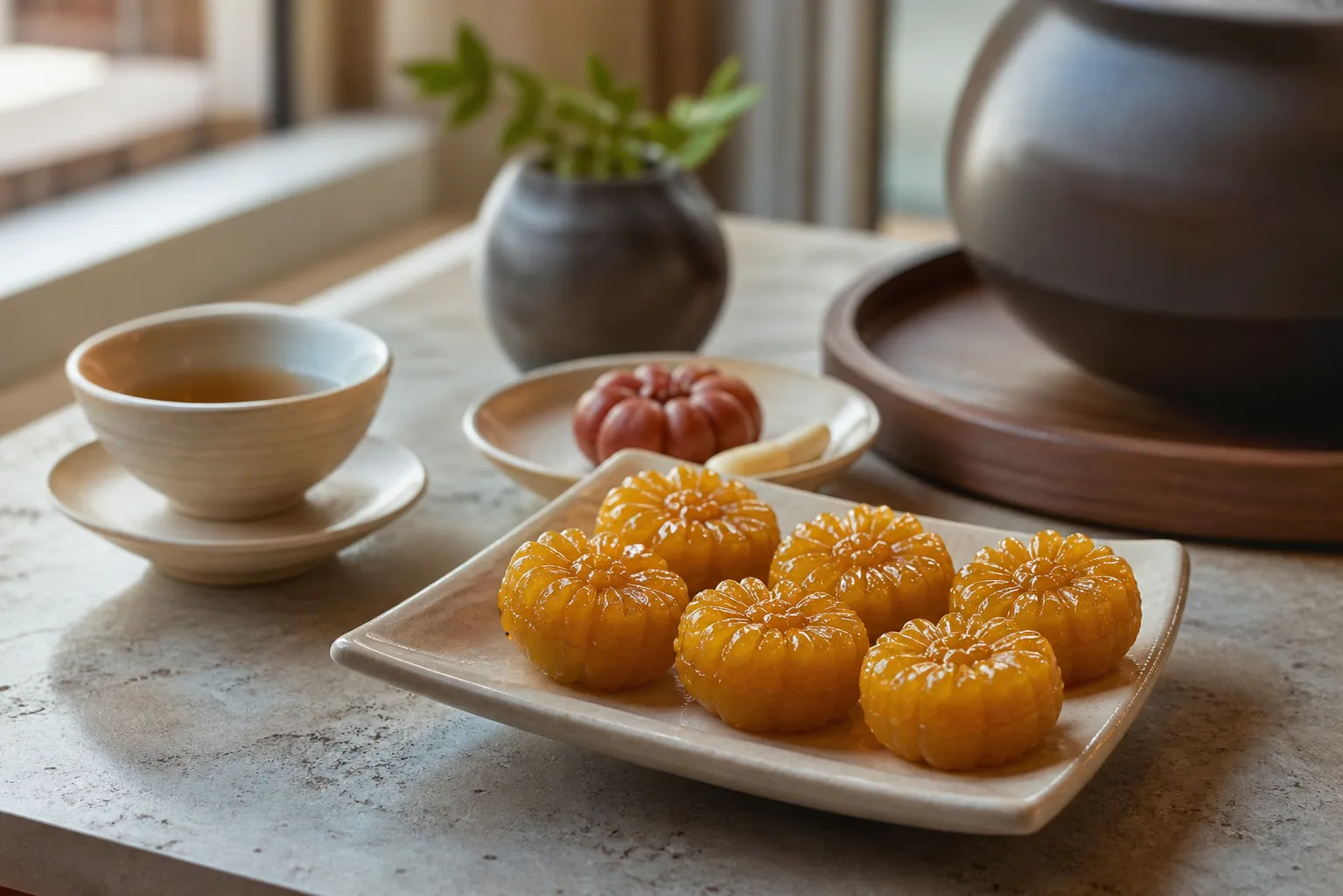
Seorae Village Kimssibuin is a Korean dessert cafe in Seocho-gu, Seoul, known for presenting traditional sweets with a polished, modern sensibility. If you are curious about Gaeseong Juak beyond its social-media popularity, Kimssibuin offers a helpful window into how this old-style dessert fits into a wider culture of tea, seasonal sweets, and formal Korean gifting.
Seorae Village Kimssibuin and Its Traditional Dessert Style
Kimssibuin is introduced by Seoul’s official English travel guide as a K-dessert spot in Seorae Village, with an address listed at 26-6, Sapyeong-daero 26-gil, Seocho-gu, Seoul. The guide also lists its hours as 13:00 to 19:00 and notes that it is closed on Sundays.1 Those details matter because Kimssibuin is not described as a generic cafe; it is framed as a destination for people looking for a more specific kind of Korean dessert experience.
The cafe’s identity centers on Korean traditional sweets served with care. Esquire Korea described Kimssibuin as recreating traditional Korean court confectionery and foods associated with aristocratic households, naming Gaeseong Juak, jindallae hwajeon, and omija jeonggwa among its menu items.2 Cosmopolitan Korea also connected the brand’s modern tea sweets to inspiration from the table culture of yangban, or upper-class families, during the Joseon Dynasty.3
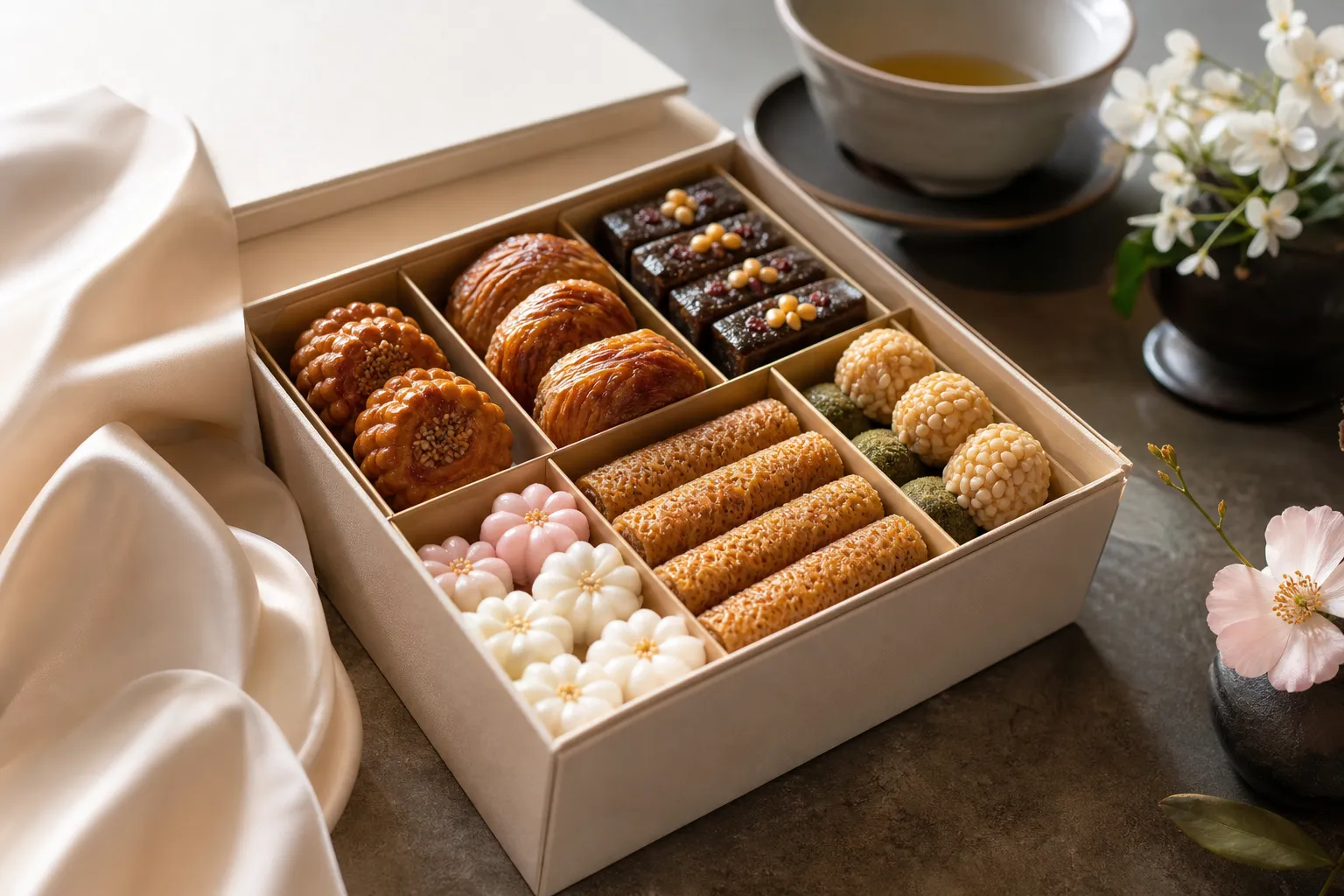
That background helps explain why Kimssibuin is often discussed in the language of refinement. The appeal is not only sweetness or novelty. It is also the way traditional desserts are arranged, wrapped, paired with tea, and made suitable for formal occasions. Esquire Korea highlighted bojagi wrapping and neat visuals as features that fit ceremonial gatherings or gifts for foreign recipients.2 In other words, Kimssibuin sits at the meeting point of cafe culture, heritage food, and elegant gift-giving.
Why Gaeseong Juak Stands Out Here
Gaeseong Juak is the dessert most closely tied to Kimssibuin across the available sources. Seoul’s official travel guide calls it a representative dessert available in all four seasons at the cafe.1 Cosmopolitan Korea described Gaeseong Juak as Kimssibuin’s signature menu item, while Seocho District’s October 2023 newsletter introduced the place as a Seorae Village cafe where visitors can encounter Gaeseong Juak together with traditional tea.34
The repeated mentions are useful because they show that Gaeseong Juak is not just one item among many in Kimssibuin’s lineup. It functions as a marker of the cafe’s personality: traditional, giftable, and visually composed. For readers who know Korean desserts mainly through rice cakes or yakgwa, Gaeseong Juak can feel like a more specialized entry point into the broader world of Korean confectionery.
Kimssibuin’s menu is also described as wider than one dessert. Seocho District’s newsletter listed Gaeseong Juak, omija jeonggwa, yuja mari, Gaeseong-style yakgwa, omija tea, and ujeon gamro among items available at the Korean dessert cafe.4 Esquire Korea’s coverage similarly placed Gaeseong Juak alongside jindallae hwajeon and omija jeonggwa.2 That combination suggests a menu built around color, seasonality, tea pairing, and the textures of traditional sweets rather than a single trend item.
The Seoul travel guide adds another charming detail: Kimssibuin is known for a one-person menu served on a traditional soban, a small Korean dining table.1 For anyone trying to understand the cafe’s tone, that image is important. It points to a slower, more composed style of dessert service, where the serving format is part of the experience.
From Cafe Dessert to Korean Gift Culture
Kimssibuin has also appeared in coverage about holiday gift sets, which shows how its desserts travel beyond the cafe table. In 2024, Lotte Department Store introduced an exclusive Beautiful Korean Refreshment Set from Seorae Village Kimssibuin, composed of Gaeseong Juak, mae jak gwa, hongok jeonggwa, and ginseng slices.5 Metro Seoul reported the same set as part of Lotte Department Store’s expanded K-dessert holiday selection.6
This gift-set context says a lot about how traditional Korean desserts are being repositioned. Asia Economy reported that Lotte Department Store expanded its K-dessert items by more than three times compared with the previous year and increased volume by about 30 percent for the Chuseok gift-set season.5 Metro Seoul added that, among Lunar New Year gift sets at Lotte’s main branch, sales in K-dessert categories such as hangwa and yanggaeng rose by about 50 percent year over year, with customers in their 20s and 30s accounting for about 40 percent.6
Those numbers should not be stretched beyond what they say, but they do help explain why a place like Kimssibuin gets attention. Traditional sweets are no longer framed only as nostalgic holiday foods. They are also being packaged as contemporary gifts, especially for younger shoppers looking for something more distinctive than a standard boxed dessert.
Lotte Department Store’s bakery and dessert team leader, Yoon Hyang-nae, described the selection as featuring “famous hot-place desserts and regional representative bakeries” that are not easy to encounter in everyday life.5 That short phrase captures Kimssibuin’s position neatly: familiar in its cultural roots, but special enough to be treated as a curated gift.
Kimssibuin’s appeal comes from how specific it is. The cafe is tied to Seorae Village, known for Gaeseong Juak, connected with traditional tea, and recognized in both travel and lifestyle coverage for a refined approach to Korean desserts. For readers exploring K-desserts, it offers a focused example of how heritage sweets can feel graceful, contemporary, and gift-worthy without losing their traditional character.
References
- Special K-Desserts Places with Good Vibes (The Official Travel Guide to Seoul)
- 어른들을 위한 정갈한 전통 디저트부터 떡, 초콜릿, 과자 디저트 4 (Esquire Korea, 2026-04-30)
- MZ들은 ‘설 선물’도 남달라! 명절 먹거리 선물 3 (Cosmopolitan Korea, 2024-02-07)
- 서초구 2023년 10월 소식지 전통음식·떡집 소개 (서초구 소식지)
- '오픈런' 전국 디저트 맛집, 롯데百 추석 선물세트로 만나요 (아시아경제, 2024-09-01)
- 2030세대 중심 명절선물 세트 핫플 K-디저트 인기…롯데백화점 한데 모았다 (메트로신문, 2024-09-01)
About the Author