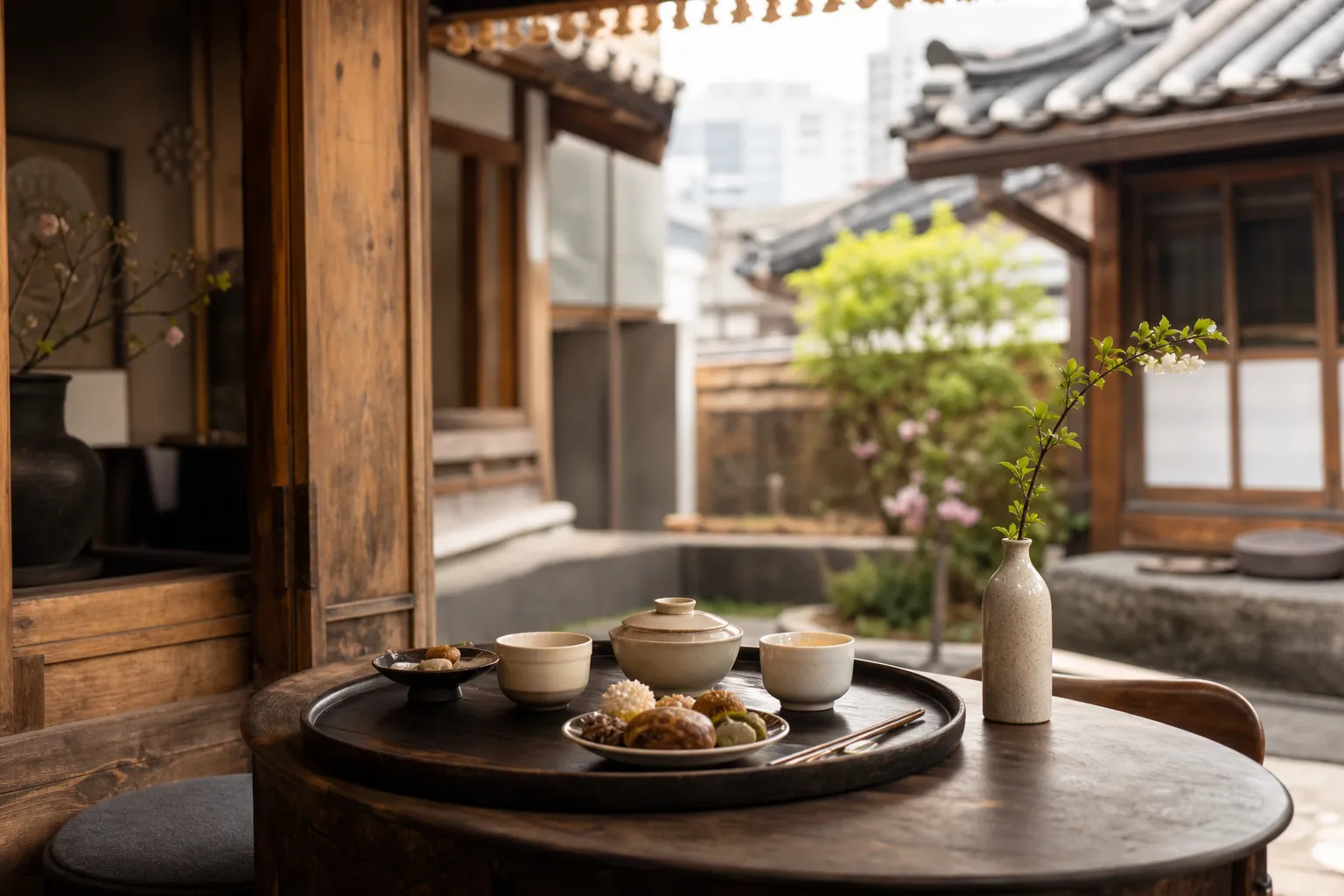
Seochon Dagwabang is a hanok cafe in Seoul’s Jongno-gu, located at 6 Pirundae-ro in Pilun-dong, near the Gyeongbokgung Station area. For readers searching for Seochon Hanok Tea, this small cafe stands out because available listings connect it with a renovated hanok setting, Korean tea snacks, traditional drinks, and a neighborhood atmosphere shaped by Seochon’s older streets.1
The available source material does not give a full brand history or an official menu page, so the most reliable way to understand Seochon Dagwabang is through overlapping store listings and design references. Together, they describe a cafe that uses the structure of a traditional Korean house while serving Korean-style sweets and drinks in a calm, local setting.2
Seochon Dagwabang Hanok Cafe Setting
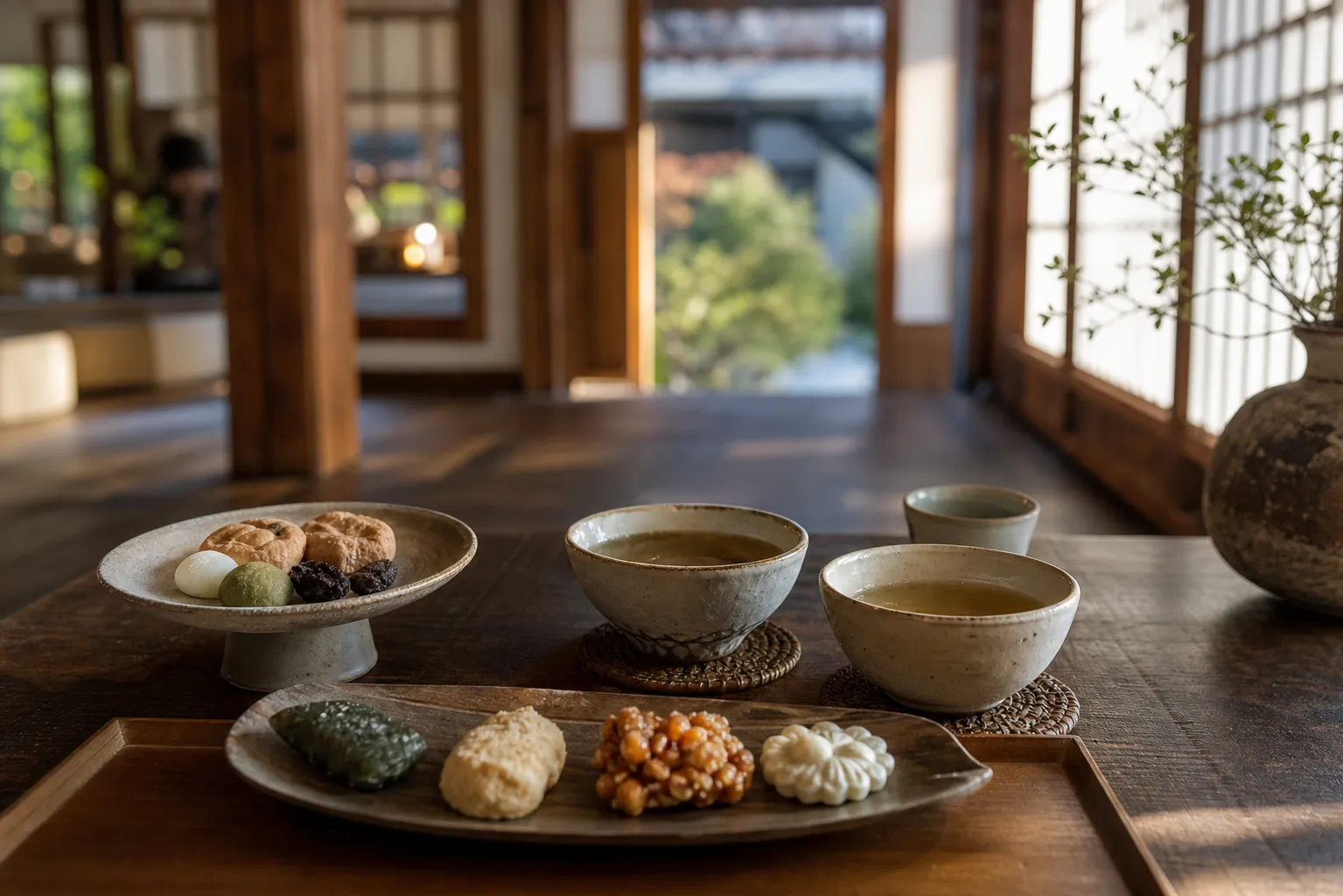
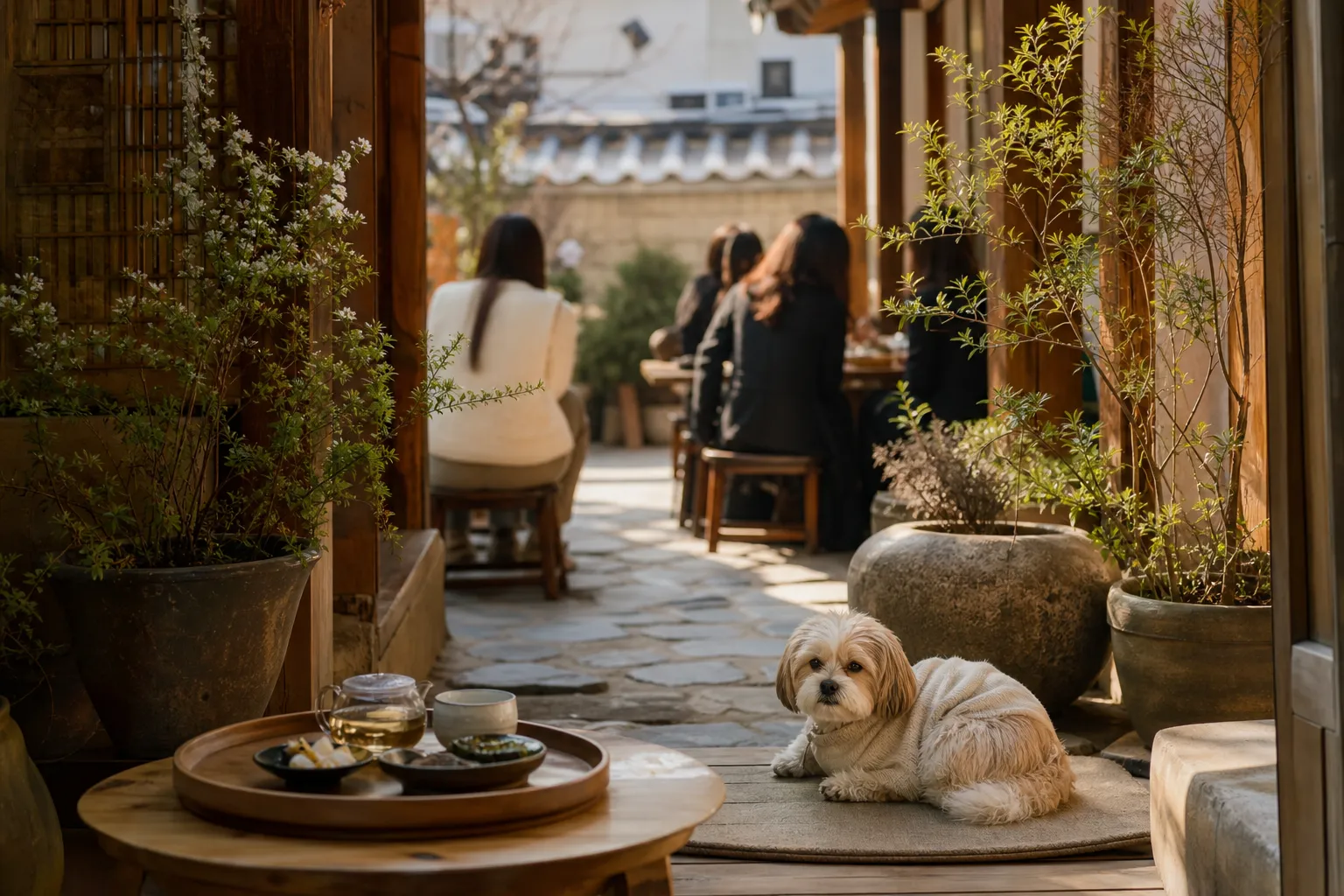
The clearest design detail is that Seochon Dagwabang is presented as a hanok cafe built around an existing traditional structure. Qplace lists the project as a 21-pyeong hanok cafe interior in Pilun-dong, Jongno-gu, with the case title emphasizing that the traditional hanok structure was preserved and used as the basis of the cafe design.2 That matters because “hanok cafe” can sometimes be used loosely, but this source specifically supports the idea that the space’s identity is tied to hanok architecture rather than just decorative styling.
Siksin also describes the cafe as a converted hanok space and notes a sunlit inner courtyard as part of its atmosphere.1 That gives the place a more specific image: not simply a coffee shop with traditional desserts, but a cafe where the building layout itself contributes to the experience. The courtyard detail is especially useful for visitors who are drawn to hanok cafes because of the spatial rhythm of old Korean homes, where rooms and open areas work together rather than forming one large modern dining room.
DiningCode registers Seochon Dagwabang as both a cafe and a hanok cafe near Gyeongbokgung Station, with a displayed rating of 5.0 based on two evaluations.3 Because the number of evaluations is small, that score should be read carefully rather than treated as a broad public consensus. Still, the listing reinforces the same core identity found elsewhere: this is a cafe in the Gyeongbokgung and Seochon area, and its hanok character is central enough to be used as a category label.
Korean Tea Snacks and Traditional Drinks
The food and drink information available through listings points toward traditional Korean sweets rather than a generic cafe menu. Siksin’s AI Q&A summary mentions yakgwa, chick-shaped rice crackers, candied kumquat, dried persimmon danja, fruit flower jeonggwa, and kiwi jeonggwa, with items available as part of a dagwa soban or individually.1 In plain English, that suggests the cafe’s appeal is built around Korean tea-table sweets: small, detailed items meant to accompany a drink rather than oversized desserts.
DiningCode’s gathered visit notes mention tea snack sets, yakgwa, sujeonggwa, and grapefruit-yuja tea.3 Sujeonggwa, a traditional Korean cinnamon punch, fits naturally with the hanok cafe framing, while grapefruit-yuja tea points to a more familiar fruit-tea option. The source material does not provide complete prices, seasonal details, or a verified full menu, so it is better to treat these as documented examples of items associated with the cafe, not as a guaranteed current menu.
This is also where the name “Dagwabang” feels meaningful. In Korean, “dagwa” refers to tea refreshments or sweets, and “bang” can mean a room or place. While the sources do not provide an official explanation of the name, the listed menu items line up with the idea of a cafe centered on small Korean refreshments. For a visitor, the practical takeaway is simple: expect the sources to support a tea-and-sweets identity more strongly than a specialty coffee identity, even though it is listed within cafe and coffee-shop categories.1
Location, Hours, and Pet-Friendly Notes
Seochon Dagwabang’s address is consistently listed as 6 Pirundae-ro, Jongno-gu, Seoul, with Ban-Life also giving the lot-number address as Pilun-dong 144-1.4 The same Ban-Life listing presents the cafe as a pet-accompanying place in Jongno-gu and marks categories including all dog breeds, dog-friendly, cats, wireless internet, and takeout.4 That makes the listing useful for readers who are specifically looking for a pet-friendly stop in the Seochon area, though visitors should still confirm details directly before going because store policies can change.
Hours are also mostly consistent across available listing sources. Ban-Life gives operating hours as 11:00 to 20:00 daily, with Tuesday marked as closed.4 DiningCode also lists the hours as 11:00 to 20:00.3 A JobKorea recruitment notice published on July 18, 2025 listed the workplace as Seochon Dagwabang at 6 Pirundae-ro and described a five-day workweek from Wednesday to Sunday, 11:00 to 20:00, for a full-time barista opening that closed on August 17, 2025.5 Since that hiring notice is from 2025 and was tied to recruitment, the public store listings are more directly useful for visitor planning.
Seochon Dagwabang also fits into a wider Seoul interest in hanok-based spaces. Seoul’s March 5, 2026 press release about developing Gyeongdong Hanok Village in Jegi-dong included plans for hanok cafes, hanok pop-ups, hanok stays, and pedestrian environment improvements.6 The same release quoted Seoul housing official Choi Jin-seok describing Jegi-dong as “a gem-like place” where the energy of traditional markets and the lyricism of hanok coexist.6 That quote is about Jegi-dong, not Seochon, but it helps explain why hanok cafes have become part of a broader urban-cultural conversation in Seoul.
In the end, Seochon Dagwabang is best understood as a Seochon hanok cafe with a documented address in Pilun-dong, operating-hour listings centered on 11:00 to 20:00, and source-backed associations with Korean sweets, traditional drinks, a converted hanok setting, and pet-friendly convenience. For anyone mapping out a gentle Gyeongbokgung-area cafe stop, it offers a clear source-backed profile: traditional structure, tea-table desserts, and a Seochon location rooted in the texture of old Seoul.
References
- 서촌다과방 – 서울, 종로구, 필운동 | 맛집검색 식신 (식신)
- 전통 한옥 구조를 살린 21평 한옥 카페 인테리어 (종로구 필운동) (큐플레이스)
- 서촌다과방 – 경복궁역 카페, 한옥카페 맛집 (다이닝코드)
- 서촌다과방, 서울 종로구 반려동물/애견 동반장소 (카페) (반려생활)
- [경복궁역/서촌] 신규매장에서 함께하실 바리스타를 찾습니다. (잡코리아, 2025-07-18)
- 제기동 한옥마을 ‘제2의 익선동’ 된다… 전통시장 품은 감성 한옥마을로 (서울한옥포털 / 서울시, 2026-03-05)
About the Author