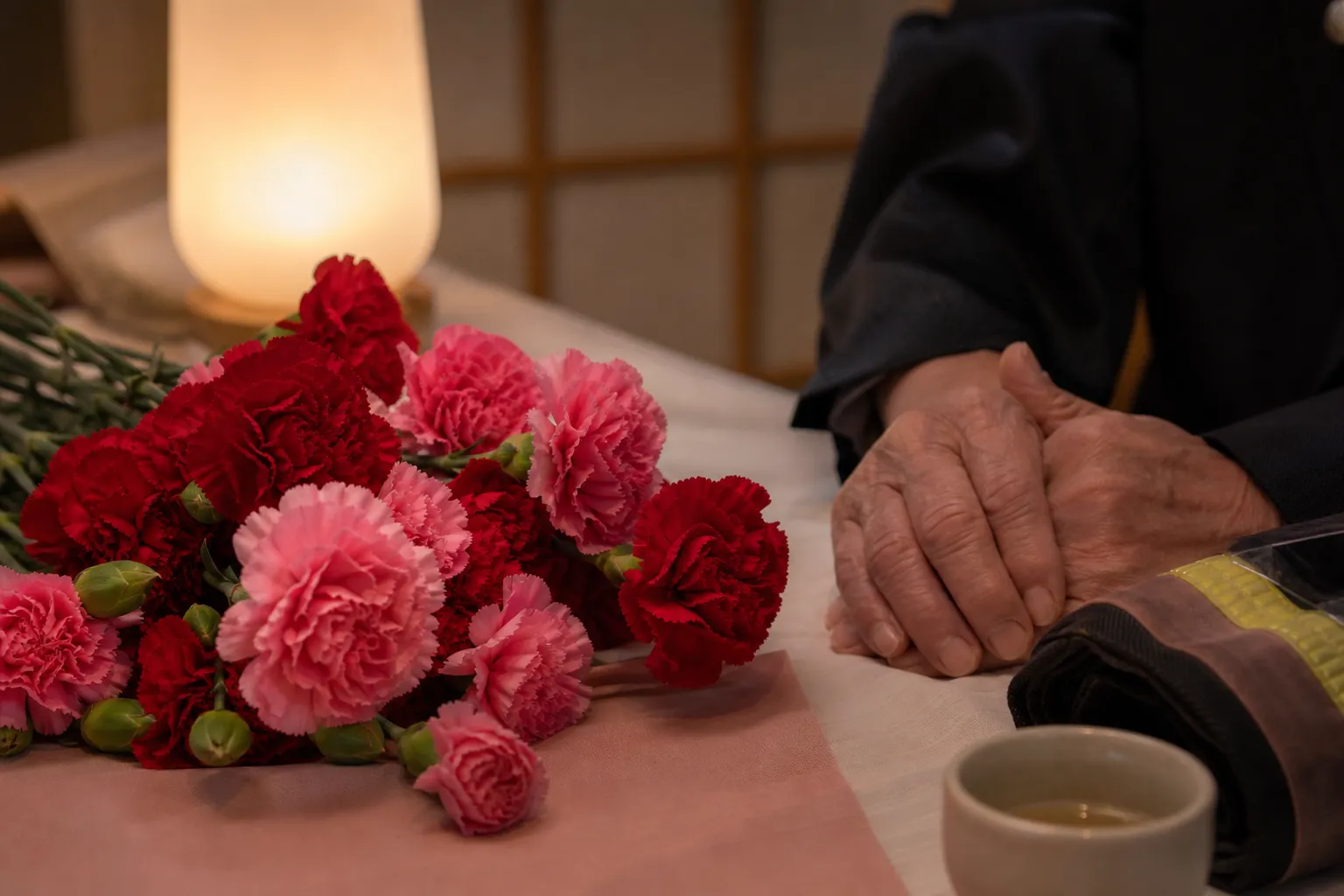
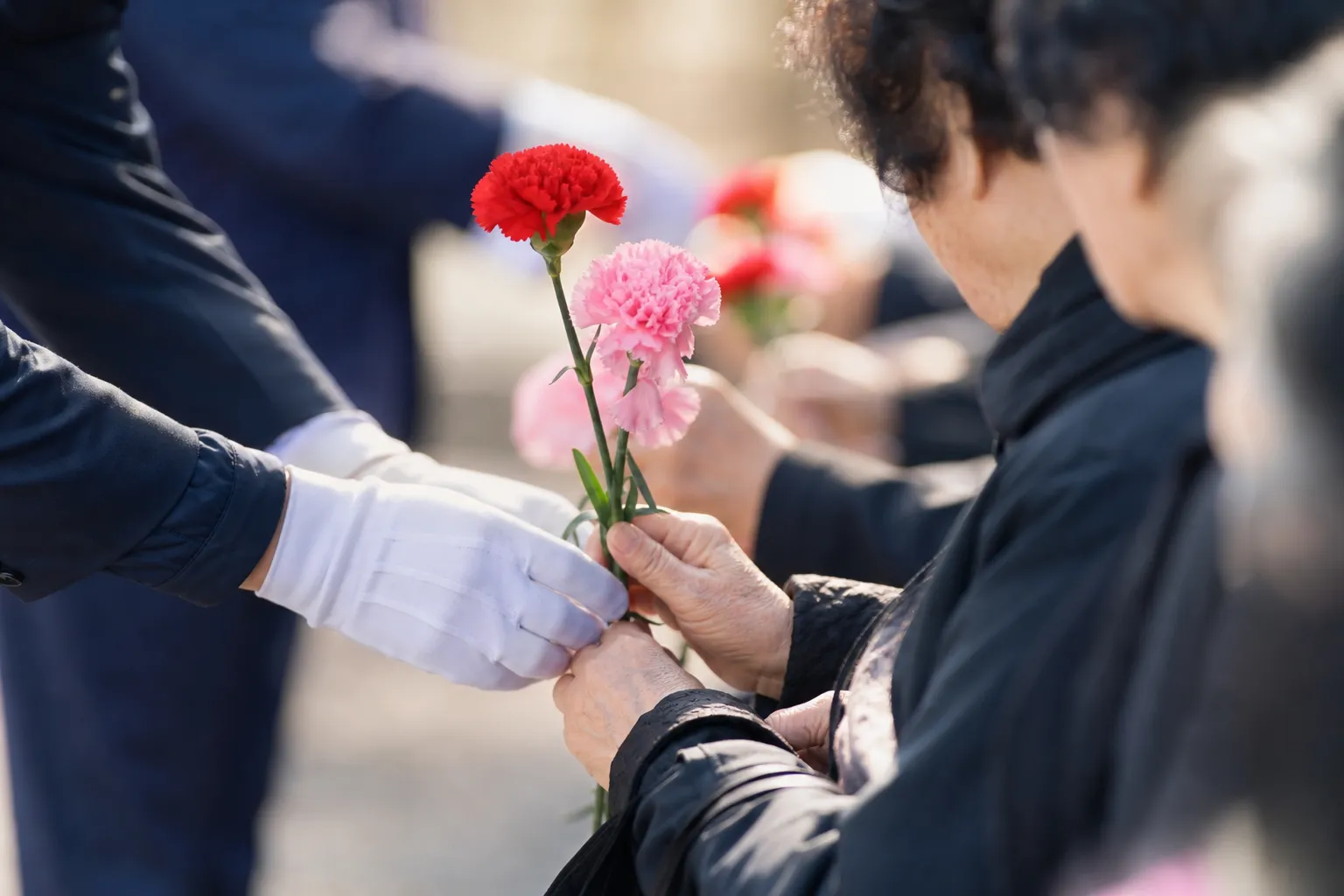
At South Korea’s 54th Parents’ Day ceremony on May 8, 2026, carnations were personally placed on the chests of parents whose children died in public service. The gesture, made by President Lee Jae-myung and First Lady Kim Hye-kyung, gave the familiar Carnation Meaning of gratitude a more solemn public role: comfort, respect, and a promise that the state would not forget bereaved families.1
What Happened at the Parents’ Day Ceremony
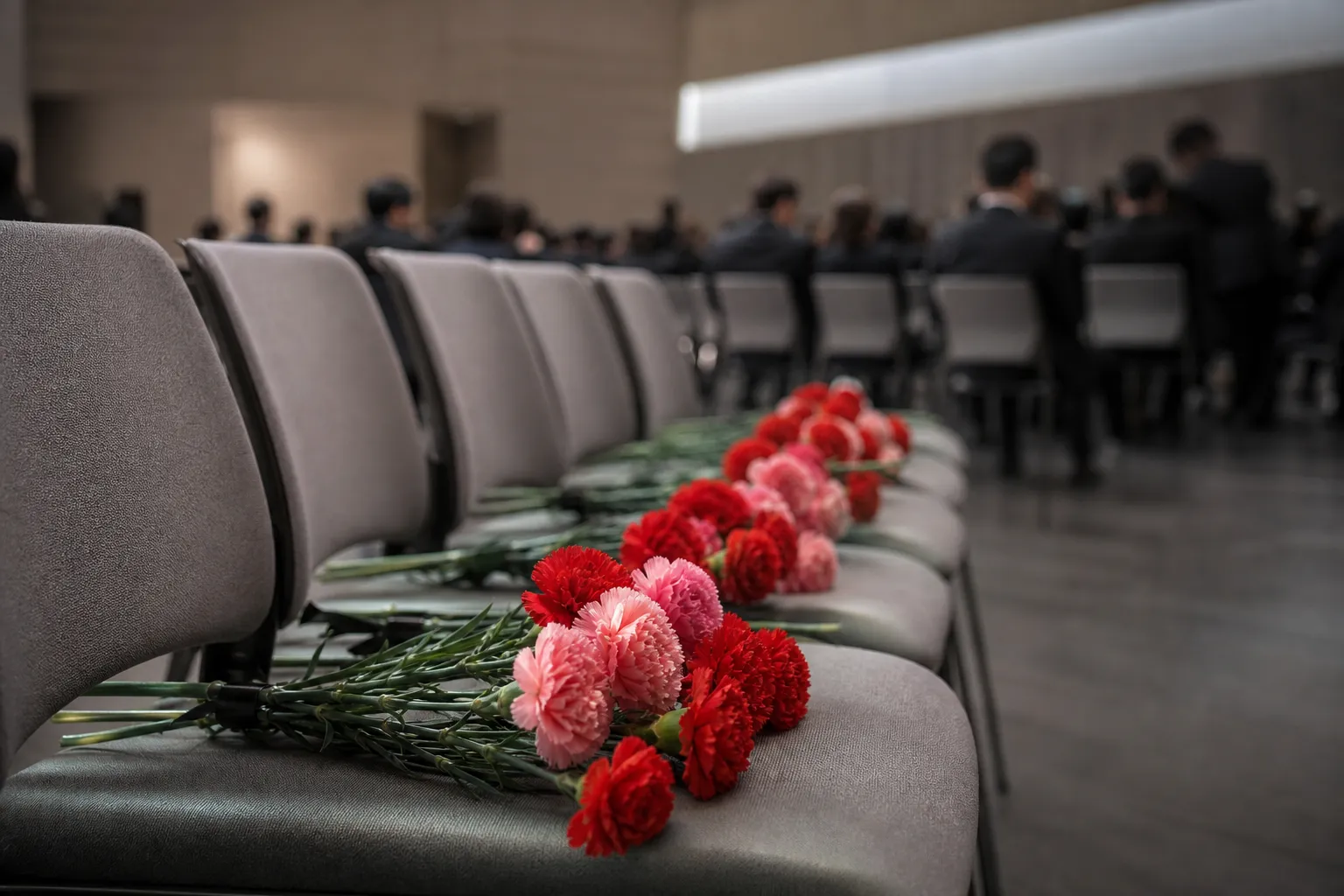
The ceremony was held at the International Conference Hall of the Korea Chamber of Commerce and Industry in Seoul. News reports identified it as the 54th Parents’ Day ceremony, attended by about 230 people, including people recognized for filial conduct, parents of fallen police and fire officials, and older adults living alone.2
The event was hosted by the Ministry of Health and Welfare and organized by the Korean Senior Citizens Association. Among those present were President Lee and First Lady Kim, Health and Welfare Minister Jung Eun-kyeong, Korean Senior Citizens Association Chairman Lee Joong-keun, honorees for filial service, parents of fallen public servants, and older adults living alone. Government awards were also presented to 22 people recognized for practicing filial devotion.3
Several reports emphasized that the ceremony marked the first time a sitting president and first lady attended the Parents’ Day ceremony together.14 That detail matters because it framed the carnation presentation not as a routine stage moment, but as an official act of recognition before bereaved families and the wider public.
The parents who received carnations included parents of police and fire officials who died in the line of duty. SBS reported that parents of officials who died during response and rescue work connected to fires in Mungyeong, North Gyeongsang Province, and Gimje, North Jeolla Province, were among those present.1 KBS reported that 11 parents of fallen police and fire officials attended the ceremony.5
Carnation Meaning in This Specific Moment
In South Korea’s Parents’ Day context, a carnation is widely used as a visible sign of gratitude and honor toward parents. At this ceremony, the meaning narrowed and deepened. The carnations were placed directly on the parents of fallen public servants, with reports describing the gesture as carrying comfort, thanks, and respect.1
That makes the meaning practical rather than abstract. The flower did three things at once. First, it acknowledged the parents as parents on Parents’ Day, not only as members of bereaved families. Second, it recognized that their children’s deaths occurred in public service, including police and firefighting duties. Third, it placed the state’s responsibility in public view, because the gesture came from the president and first lady at an official ceremony.
KBS reported that President Lee and First Lady Kim placed carnations on the parents, held their hands, and embraced them in comfort.5 Newsis also reported a scene from the ceremony showing President Lee placing a carnation on a parent of a fallen public servant at the Korea Chamber of Commerce and Industry in central Seoul.4
The direct remarks reported from the ceremony reinforced the symbolic meaning. President Lee said, “I know well that no words can fully comfort the grief of having had to send off a beloved child first.”6 In another reported remark, he said, “The state will fulfill its duty and responsibility as a child and stay by your side until the end.”2
Those words explain why the carnation mattered beyond ceremony etiquette. It was not presented simply as a seasonal flower. It functioned as a public sign that the loss of fallen police and fire officials also left an enduring duty toward their parents.
What Readers Should Take Away
For readers trying to understand this event, the key point is that the carnations were not just decorative. They were used to express three linked messages: gratitude for parents, respect for families of fallen public servants, and official comfort from the state.
The setting also shaped the message. Parents’ Day is already about honoring parental care and sacrifice. By giving carnations to parents who had lost children in public service, the ceremony connected private grief with public responsibility. The flower became a simple, visible way to say that these parents’ loss is part of the country’s shared memory.
KTV’s report also placed the ceremony within a broader policy message about older adults, including references to 1.15 million senior jobs, dementia-related safe property management services, community integrated care, and pension system improvements.6 Those details show that the event was not only a memorial moment; it was also used to discuss practical support for the older generation.
Still, the most specific and widely reported image from the ceremony was the carnation presentation to bereaved parents. President Lee also reportedly said, “As I was giving the carnations, I suddenly found myself tearing up.”5 That short comment captured how the ceremonial act carried emotional weight for the participants and observers.
Quick FAQ
Who received carnations at the ceremony?
Parents of fallen police and fire officials were among the recipients. Reports said the president and first lady personally attached carnations to them, offering comfort, gratitude, and respect.1
Where and when did the event take place?
The 54th Parents’ Day ceremony took place on May 8, 2026, at the Korea Chamber of Commerce and Industry in Seoul, with about 230 attendees reported.2 !parents of fallen police and fire officials carnations Parents’ Day Seoul concept The carnations given to parents of fallen public servants at the 54th Parents’ Day ceremony carried a clear public meaning: honor for parents, remembrance of public sacrifice, and a stated responsibility to remain beside bereaved families.
References
- 이 대통령 부부, 순직 소방·경찰 부모에 카네이션…눈시울 붉히기도 (SBS, 2026-05-08)
- 李대통령 부부, 어버이날 기념식 참석…순직 공무원 부모에 직접 카네이션 전달 (뉴스핌, 2026-05-08)
- 이중근 대한노인회장 “어버이날은 세대 잇는 모두의 날” (이투데이, 2026-05-08)
- 카네이션 달아주는 이재명 대통령 (뉴시스, 2026-05-08)
- 이 대통령 부부, 어버이날 기념식 첫 참석…순직 공무원 부모에 ‘눈물’ (KBS(다음뉴스), 2026-05-08)
- 54번째 어버이날···"걱정없는 노후 '실질 지원' 확대" (KTV 국민방송, 2026-05-08)
About the Author