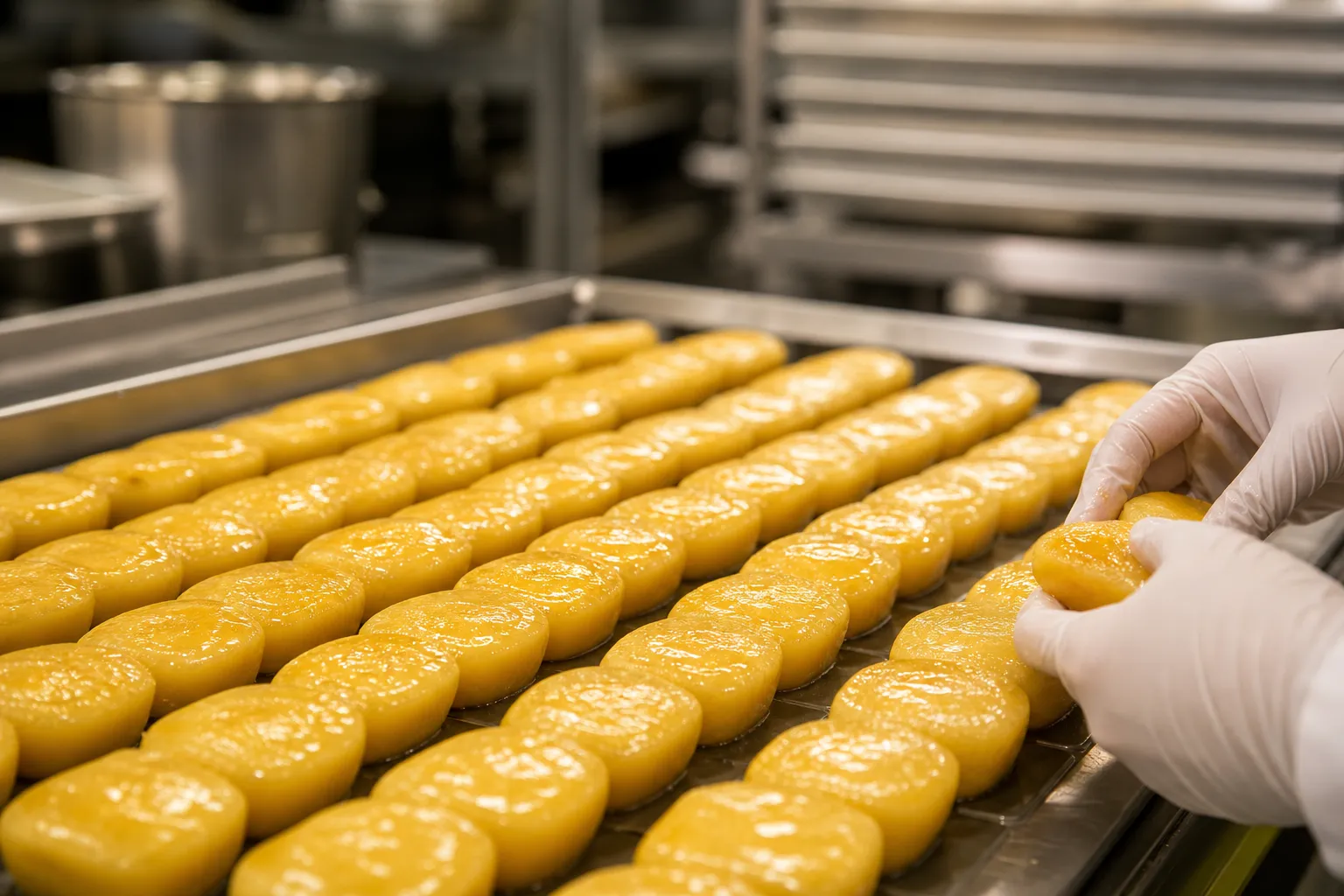
Ieutjip Tongtongi’s Butter Tteok production is one of the clearest numbers behind Korea’s spring 2026 dessert craze: the brand was reported to be making an average of 20,000 pieces a day. That figure matters because Butter Tteok moved quickly from a niche, Shanghai-inspired dessert idea into a product that bakeries, cafes, convenience stores, and online retailers all tried to put in front of curious snack fans.1
For readers trying to understand why this dessert became so visible, production volume is a helpful place to start. A trend can look big on social media, but a daily output of 20,000 pieces suggests a more organized operation behind the buzz, especially for a dessert built around texture, freshness, and repeat demand.
Ieutjip Tongtongi Butter Tteok Production: The 20,000-a-Day Figure
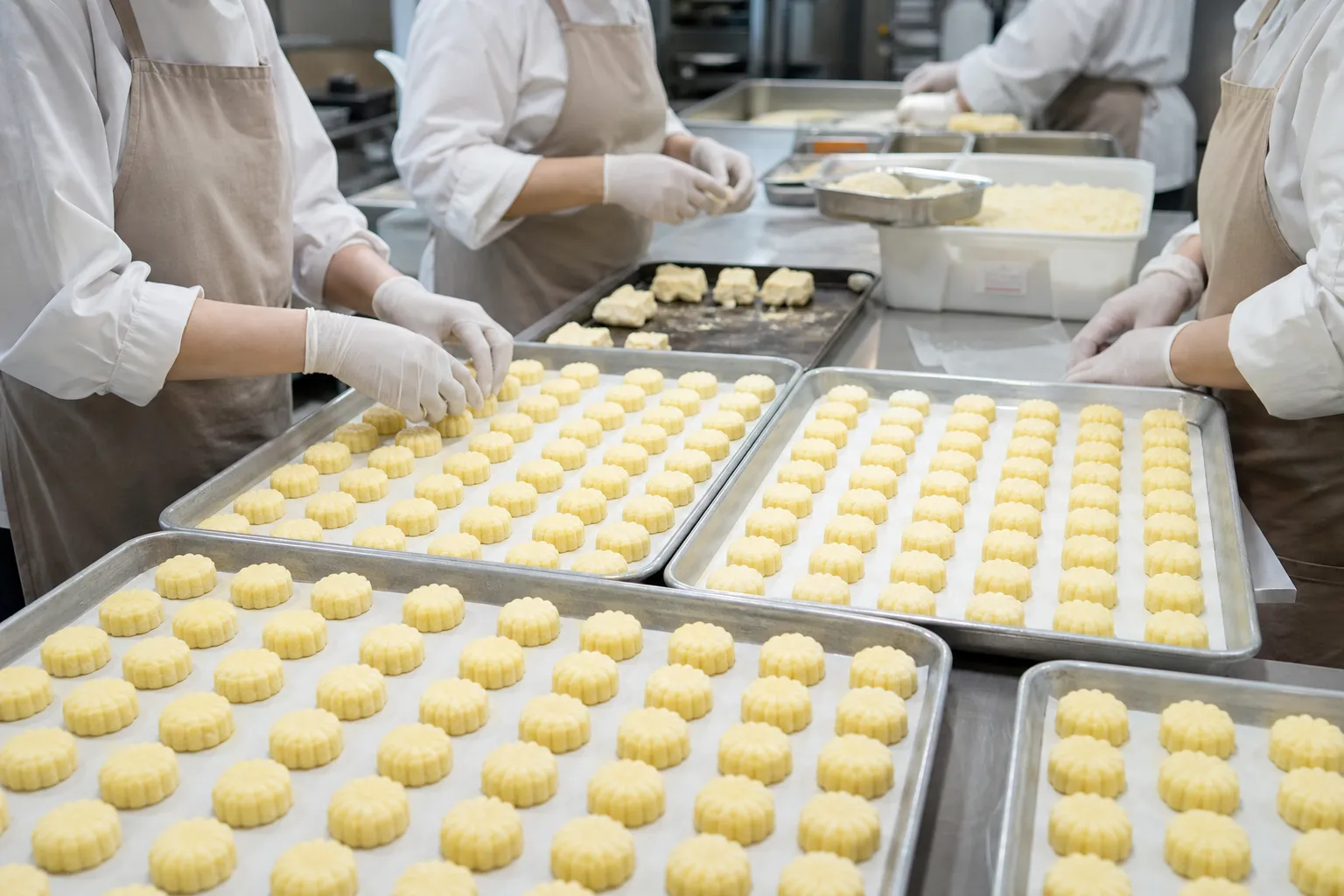
The key production detail comes from a March 18, 2026 Herald Economy interview, which reported that Ieutjip Tongtongi had strengthened its own production and direct sales after previously focusing more on OEM work. The same report said the company operates an approximately 200-pyeong HACCP-certified factory in Mapo-gu, Seoul, and that its currently popular Butter Tteok averages 20,000 pieces in daily production.1
That is the strongest source-backed production number available in the provided material. It does not break down how many pieces go to each location or sales channel, and it does not provide a month-by-month production chart. What it does show is that the brand’s Butter Tteok was not being handled as a tiny cafe-only batch item by mid-March 2026. It had already reached a scale large enough to be discussed in terms of daily manufacturing.
The product itself also had a story that made scaling easier to understand. Ieutjip Tongtongi explained that it reinterpreted Shanghai-style Butter Tteok in a Korean way and introduced it domestically. Park Hyun-jung, head of Ieutjip Tongtongi, said she ate Butter Tteok in Shanghai and became convinced that Korean consumers would like its texture.1 That texture point is important, because the dessert’s appeal was not described only as buttery or sweet. The chewy quality was central.
Park also described chewiness as more than a passing fad, saying that given Koreans’ eating habits around tteok, the chewy element was a sustainable factor rather than a temporary trend.1 In other words, the production story is tied to a product thesis: Butter Tteok could travel because it connected a Shanghai-style dessert format with a familiar Korean love of springy, chewy rice-cake textures.
Why Demand Outran Small-Batch Cafe Supply
By April 11, 2026, Dong-A Ilbo reported that the Butter Tteok craze had spread in Korea from March 2026, with major bakeries, individual dessert cafes, and convenience stores joining in. The same report said many dessert cafes limited purchases to one box per person, while batches of 20 to 30 boxes often sold out around 2 to 3 p.m.2
That small-batch context makes Ieutjip Tongtongi’s reported 20,000-piece daily production stand out. In many cafes, the experience around Butter Tteok seemed to be defined by limits, waiting, and early sellouts. Dong-A Ilbo also reported that at Ieutjip Tongtongi in Sinsa-dong, Gangnam-gu, Seoul, long lines formed around the time products came out.2
When a dessert works this way, scarcity becomes part of how people notice it. A cafe may prepare only dozens of boxes, set a one-box limit, and still sell out in the early afternoon. A larger production system can support wider availability, but it does not automatically remove the feeling of limited access, especially when demand is moving faster than normal retail planning.
The convenience-store side showed a similar pattern. CU launched Salt Butter Tteok on March 16, 2026, selling a limited quantity of 10,000 units per day through Pocket CU reservation purchase. Pickup for reserved products began sequentially from March 20, and nationwide offline store release was scheduled for March 25.3 Kookmin Ilbo later reported that CU’s 10,000-unit reservation quantity and GS25’s 5,000-unit pre-order quantity for Jjondeuk Butter Tteok Bread each sold out in one day.4
Those numbers help frame the market around Ieutjip Tongtongi. The brand’s reported 20,000-piece daily production sat in a dessert environment where even national convenience-store reservation volumes could disappear quickly. The product category had become big enough for chains to chase, but unpredictable enough that sellouts and paused sales still appeared.
From Trend Dessert to Retail Product
The wider Butter Tteok rush did not stay inside specialty cafes. Maeil Business Newspaper reported that, as of March 17, 2026, individual cafes were selling Butter Tteok, and that Sadelle House and Ieutjip Tongtongi had recently introduced Butter Tteok menus. The report also noted that a similar product from Ediya Coffee became a social media topic, with sales rising more than 300% compared with the initial launch period before temporary suspension on March 13 due to supply shortages.5
Ingredient demand also reflected the same movement. E-Mart data cited by Maeil Business Newspaper showed that from the beginning of the Butter Tteok craze in early March through March 10, glutinous rice flour sales rose 108.6% year over year, while tapioca starch sales increased 37.5%.5 Those figures are not Ieutjip Tongtongi production data, but they show how the trend affected the surrounding dessert and home-baking market.
By April 1, 2026, Kookmin Ilbo reported that Naver DataLab search volume for “Butter Tteok” had surged from early March, peaked on March 13, and fallen to about 27% of the peak level by March 30. At the same time, retail product launches continued, with E-Mart24, Knotted, Starbucks, Dunkin, and Ediya Coffee either introducing related products or preparing launches.4
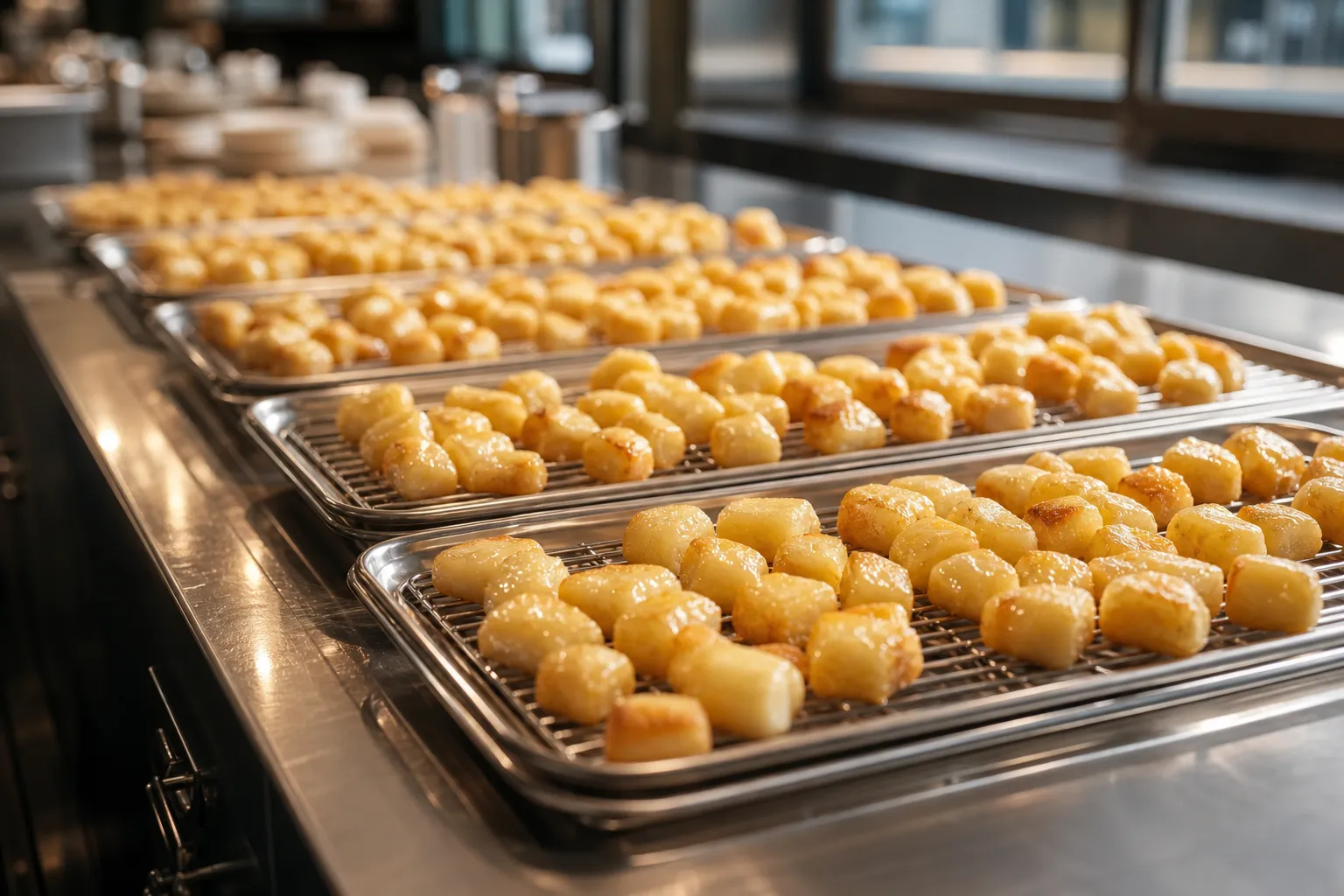
For home shoppers, Market Kurly listed Ieutjip Tongtongi Butter Tteok as a frozen product with six 25g pieces, totaling 150g. The product page described a crispy exterior with buttery aroma and a chewy center made with added tapioca starch, with storage at minus 18 degrees Celsius or below and reheating for 3 to 5 minutes in an oven or air fryer preheated to 180 degrees.6
That retail format shows another side of the production question. A dessert that begins with cafe lines and social buzz can become a frozen product with fixed weight, storage instructions, and reheating guidance. In that setting, production scale is not just about making more pieces. It is also about standardizing the eating experience so the crispy outside and chewy inside remain recognizable after distribution.
In the end, the most concrete number available is simple but telling: Ieutjip Tongtongi’s Butter Tteok was reported at an average daily production volume of 20,000 pieces. Around that number sits the bigger story of a chewy, butter-scented dessert that moved from Shanghai inspiration to Korean reinterpretation, from cafe sellouts to convenience-store reservations, and from trend chatter to frozen retail shelves.
References
- “中 상하이서 대박 힌트…‘버터떡 밈’ 만들었죠” [인터뷰] (헤럴드경제 / 미주헤럴드경제, 2026-03-18)
- “주식보다 짭짤한 디저트 코인…나만 빼고 다 아는 ‘00떡’ 정체”[이설의 한입 스토리] (동아일보, 2026-04-11)
- ‘두쫀쿠’ 다음은 ‘버터떡’…CU, 업계 최초 한정 판매 시작 (뉴시스 / 파이낸셜뉴스, 2026-03-16)
- “버터떡 열풍 벌써 시들었는데”… 뒤늦게 올라탄 유통업계 (국민일보, 2026-04-01)
- “탕후루 집은 세 달, 두쫀쿠 카페는 한 달”…이번엔 ‘버터떡’이 뜨네요 (매일경제, 2026-03-18)
- [이웃집통통이] 버터떡 (25g X 6개입) (마켓컬리)
About the Author