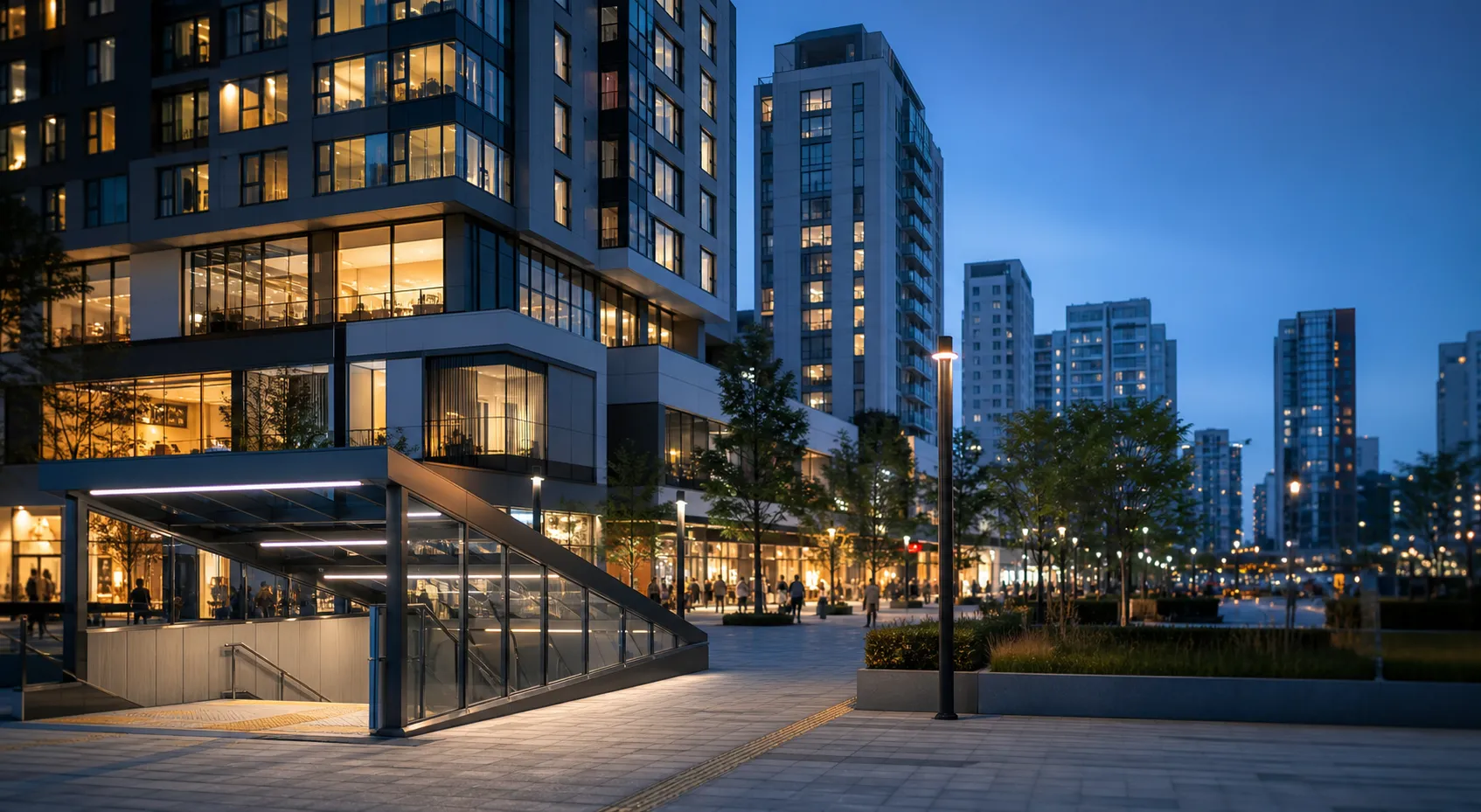
The Namyeongdong 4-2 redevelopment has moved into clearer view after Seoul’s 19th Urban Planning Committee conditionally approved the designation of the redevelopment zone and its maintenance plan on December 17, 2025. The project centers on the Namyeongdong 4-2 district in Yongsan, near Sookmyung Women’s University Station, and lays out a mixed-use plan with 284 apartment units, business and retail space, and pedestrian improvements tied to the subway station.1
For readers who know the area through everyday landmarks like Namyeongdong Seongsujeong, the plan matters because it is not just about a single apartment complex. It is part of a broader reshaping of a transit-adjacent district between Seoul Station and Yongsan Station, with housing, commercial space, public amenities, and walking routes all being discussed together.
What the Namyeongdong 4-2 Redevelopment Includes
The core of the plan is straightforward: the district is expected to receive 284 apartment units along with business and retail facilities. News reports citing Seoul City describe the site as a low-density station-area district where the share of aging buildings is close to 90%, which helps explain why redevelopment has become a major planning issue for this part of Namyeongdong.2
The scale is notable. The plan reported by Yongsan District includes up to 31 floors, four buildings, a total floor area of 92,776.79 square meters, and 284 residential units.3 Another report says the business and retail component is planned at about 20,000 square meters, giving the project a stronger mixed-use character than a simple residential rebuild.2
The site is described as part of the Namyeongdong business district special planning zone within Yongsan’s metropolitan center. The zoning change is also significant: the use district is to be raised from Type 2 general residential area to general commercial area.4 In plain English, that means the planning direction is moving toward a denser, more urban mix of homes, workplaces, shops, and public-facing spaces.
Height and density are being handled with some variation by location. Reports say the floor area ratio may be eased up to 665% through public contributions, with height differentiated between 100 meters along Hangang-daero and 70 meters on the Yongsan Park side.2 That kind of split matters because the site sits between major city infrastructure and neighborhoods where views, walking conditions, and street-level comfort all affect daily life.
Why the Station-Area Plan Matters
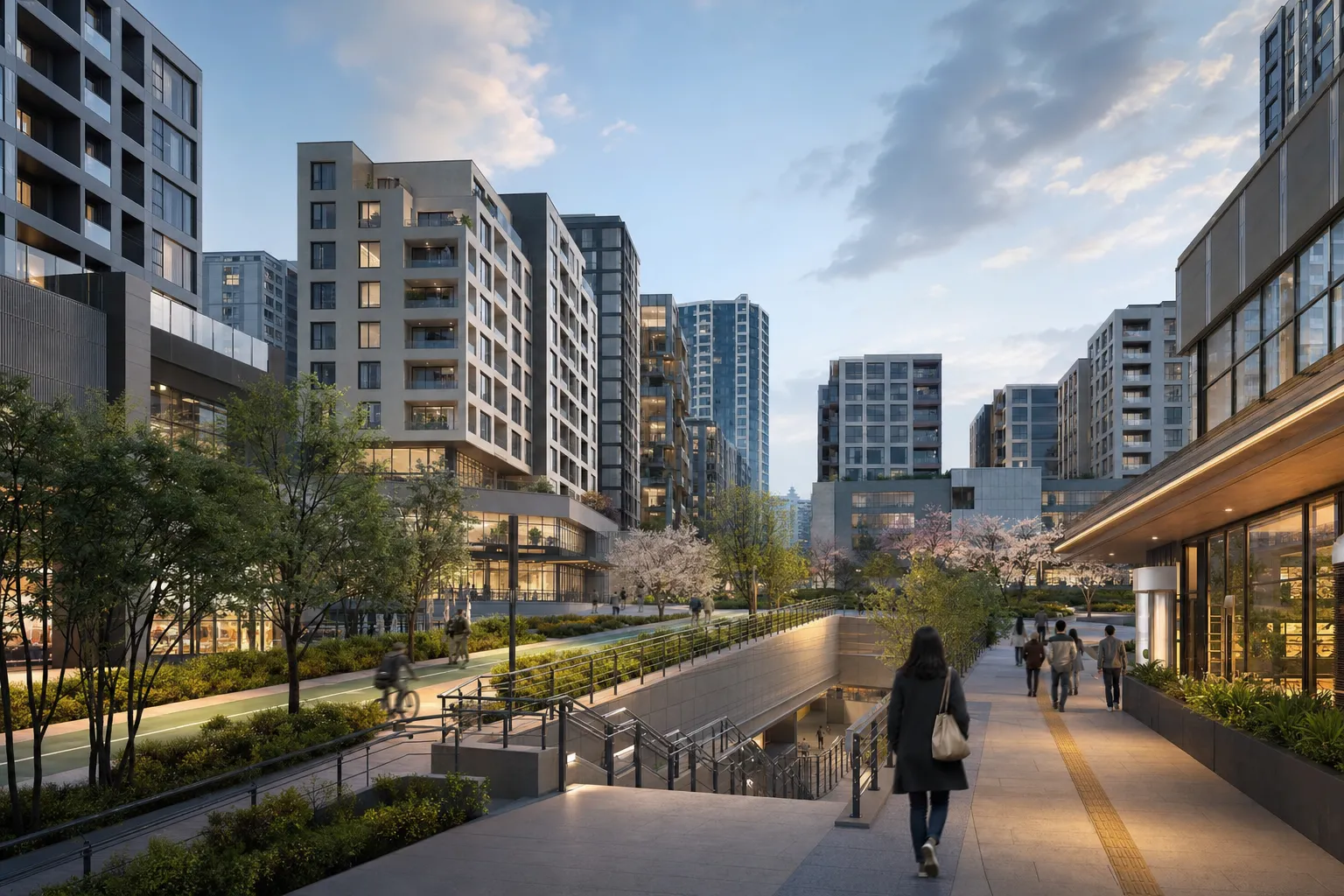
One of the most reader-friendly parts of the plan is the attention to movement around Sookmyung Women’s University Station. The redevelopment includes improving the pedestrian environment by relocating exits 5 and 6 of the station into the project site.1 If carried through as planned, that would make the station entrance feel less like a leftover edge condition and more like part of the new development’s daily circulation.
The pedestrian plan is broader than the station exits alone. The redevelopment plan includes public pedestrian passages, open public space, and links to subway entrances, with the aim of creating a walkable daily-life area.4 That phrase can sound technical, but the idea is familiar: streets, entrances, plazas, and buildings should connect in a way that makes ordinary trips easier.
Public facilities are also included. Reports on the Seoul planning committee results say the plan includes a public postpartum care center, leisure and cultural facilities for older adults, and the relocation of Sookmyung Women’s University Station entrances.5 These details are important because they show how the public contribution side of the project is being framed. The plan is not only measuring value through private floor space, but also through facilities and public access.
Seoul City’s public-facing message connects the project to a larger urban role for Namyeongdong. A Seoul City official said the city expects the redevelopment zone designation to help reshape Namyeongdong into “a central gateway connecting Seoul Station and Yongsan Station” and “a new mixed-use central space.”1 The wording is ambitious, but it matches the location: Namyeongdong sits along one of Seoul’s important north-south urban corridors, with transit, offices, homes, and institutions packed closely together.
How the Plan Reached This Stage
The December 2025 committee decision did not appear out of nowhere. Yongsan District’s announcement, reported by Money Today, says the area was selected as a zone eligible for redevelopment under the 2030 Seoul Urban Environment Maintenance Basic Plan. The formal planning process then began with a resident proposal in January 2024, followed by a resident inspection notice in June 2025 and a resident briefing in September 2025.3
There is also an earlier administrative trail. Seoul’s Information Communication Plaza shows a partially disclosed official document dated July 4, 2025, concerning consultation feedback on the Namyeongdong business district 4-2 urban redevelopment zone designation and maintenance plan. The listed agency was the Road Management Division under Seoul’s Disaster and Safety Office road planning organization.6 That record helps place the December decision within a longer review process involving related city departments.
Yongsan District framed the project as a turning point for the local business district. Park Hee-young, head of Yongsan District, said the project would become “a signal flare” for development on the east side of Hangang-daero in the Namyeongdong business district and would create an important turning point for local development.3
That does not mean every detail is final in the everyday sense. What the available sources support is that the maintenance zone designation and plan were conditionally approved, with the reported housing count, building scale, commercial functions, zoning direction, pedestrian improvements, and public facilities forming the current source-backed outline.
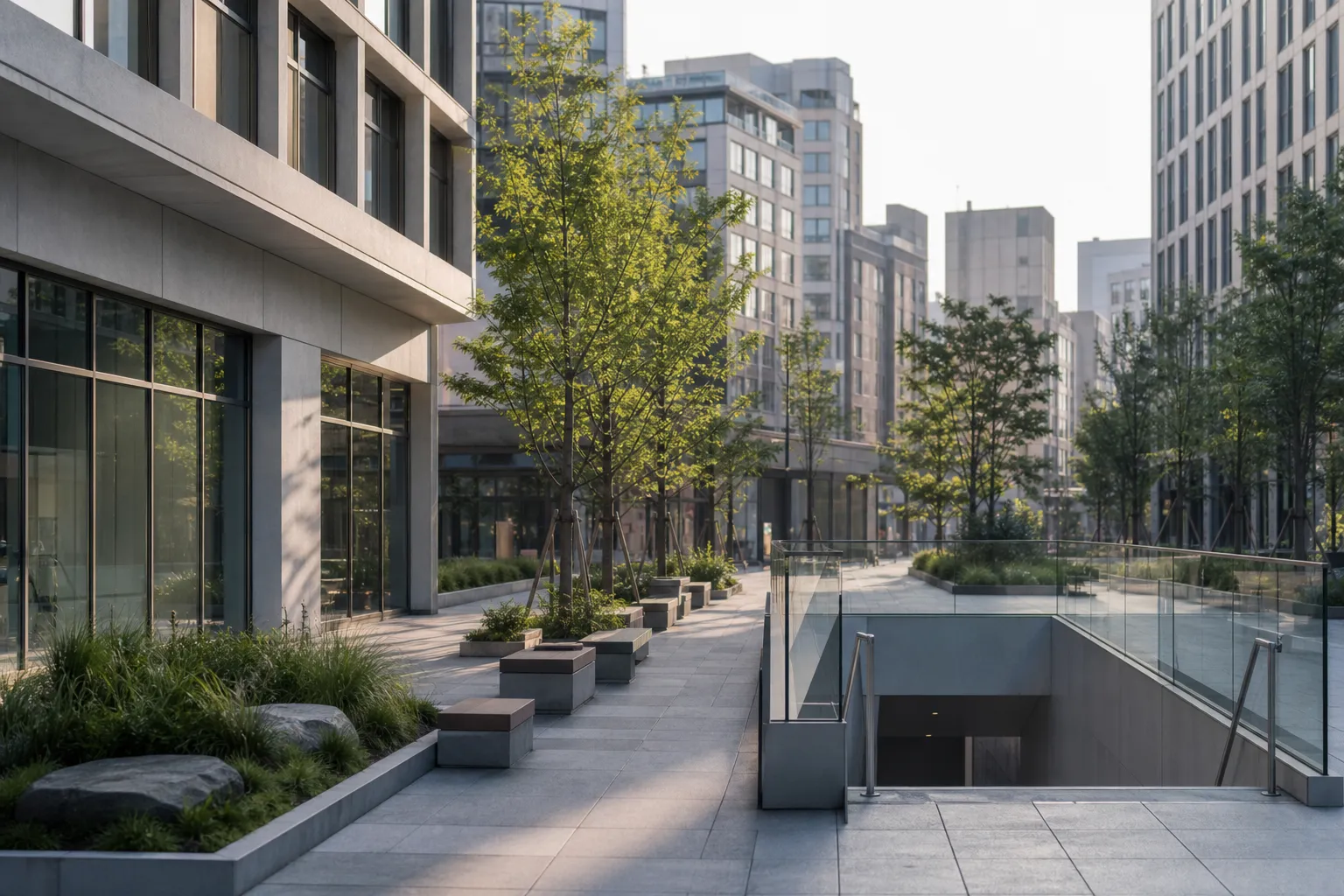
For anyone watching Namyeongdong’s next chapter, the 4-2 redevelopment is a useful project to understand because it combines several pressures at once: aging buildings, station-area density, Yongsan’s growth, and the need for better public movement at street level. The available facts point to a district planned around 284 homes, office and retail space, public amenities, and improved links to Sookmyung Women’s University Station, making it one of the clearest redevelopment markers for this part of Namyeongdong.
References
- '숙대 인근' 남영동 4-2구역에 284가구 아파트 조성…정비구역 지정 (뉴스1/Nate, 2025-12-18)
- 숙대입구역 주변 남영동 30층 높이 주상복합 재개발 시동 (뉴스핌, 2025-12-18)
- 용산구, 남영동 4-2구역 도시정비형 재개발 수정 가결 (머니투데이, 2025-12-19)
- 용산구, 남영동 4-2구역 도시정비형 재개발사업 수정가결 (아이뉴스24, 2025-12-19)
- 신당9구역, 20년 만에 514가구 역세권 단지로…남영동4-2구역 등 도심 재개발 본궤도 (이투데이, 2025-12-18)
- 남영동 업무지구 제4-2구역 도시정비형 재개발사업 정비구역 지정 및 정비계획 결정(안) 협의 회신 (서울시 정보소통광장, 2025-07-04)
About the Author