

A K-pop ticket scalping ring accused of using macro programs to secure concert tickets in bulk and resell them at large markups is drawing renewed attention through both police reporting and scheduled broadcast coverage. The case centers on alleged criminal proceeds of 7.1 billion won, more than 30,300 tickets sold, and about 1,090 performances reviewed by police.1
MBC every1’s “Hidden Eye” is scheduled to examine the distribution structure of a K-pop concert ticket scalping organization in its May 4, 2026 broadcast. The program’s production team said it captured trading scenes involving tickets for artists with major fandoms, including G-Dragon, Seventeen, and BLACKPINK, in a case described as involving about 7.1 billion won in unfair gains.2
K-pop Ticket Scalping Case Centers on Macros and Organized Roles
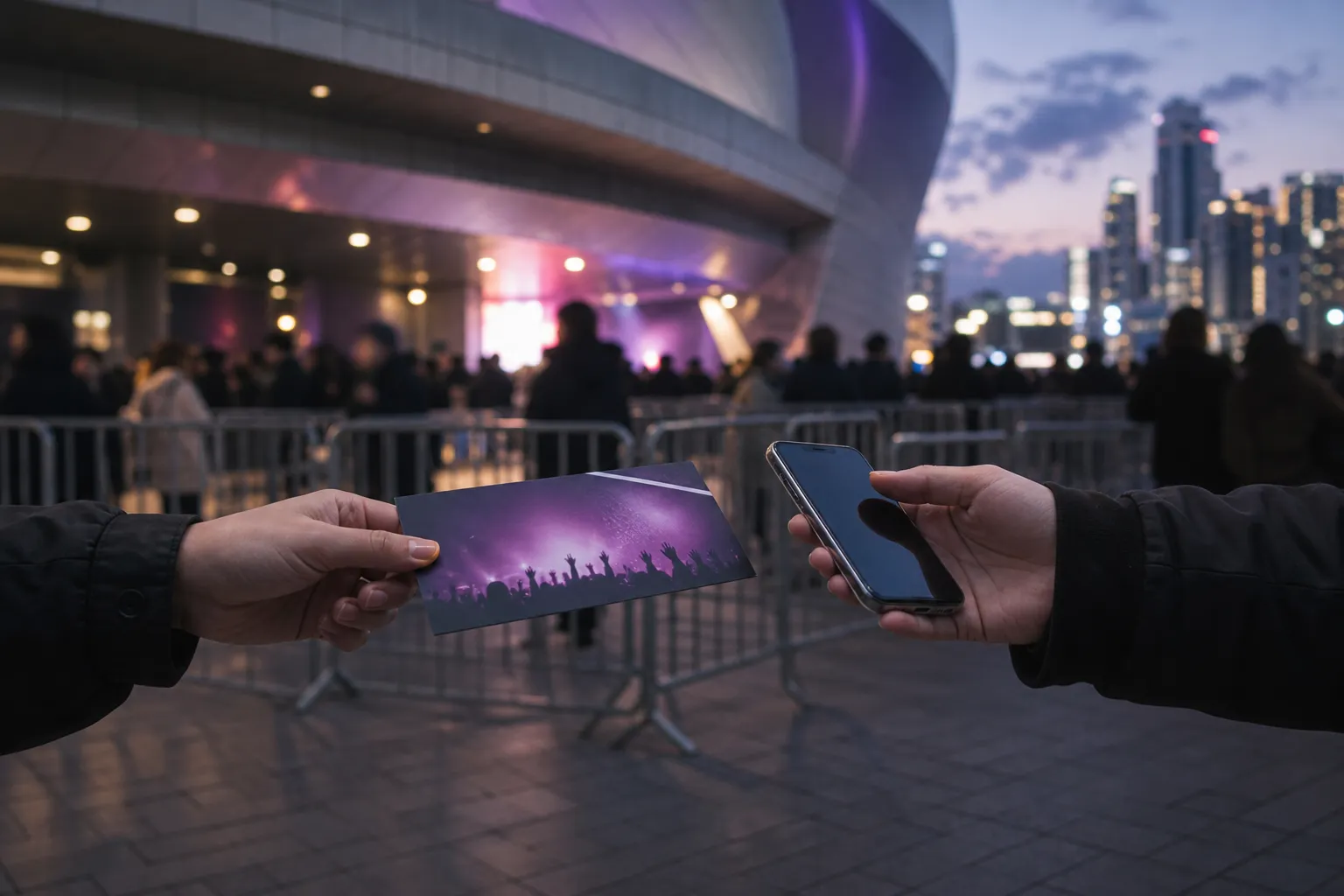
The Gyeonggi Northern Provincial Police Agency’s cyber investigation unit reported that 16 ticket scalpers were apprehended on charges including obstruction of business and violations of the Performance Act. Three people described as senior figures, including a sales chief, were detained and sent to prosecutors.3
Police findings cited in Korean reports indicate that the alleged operation went beyond individual resale activity. The group is accused of using macro programs to reserve large numbers of idol concert tickets from October 2022 through January 2026, then reselling those tickets at prices far above face value.4
The price gap reported in the case was substantial. Tickets originally priced around 200,000 won were allegedly resold for as much as 5 million won each. Police confirmed about 1,090 performances and more than 30,300 tickets linked to the investigation, with criminal proceeds calculated at 7.1 billion won.1
Investigators also found signs of divided roles within the alleged group. Reports said suspects handled separate tasks such as macro development and ticket sales, while one person was found to have secured as many as 126 tickets.5
A police official was quoted as saying that investigators had confirmed that “ticket scalpers are widespread around us,” framing the case as part of a broader enforcement concern rather than a single isolated resale incident.3
| Item | Reported detail |
|---|---|
| Alleged criminal proceeds | 7.1 billion won |
| Tickets sold | More than 30,300 |
| Performances checked | About 1,090 |
| People apprehended | 16 |
| Senior figures detained and sent to prosecutors | 3 |
| Highest reported resale price | Up to 5 million won per ticket |
| Investigation period cited | October 2022 to January 2026 |
How the Alleged Network Operated
Reports described the alleged operation as combining automated reservation tools with human coordination. The suspects are accused of relying on macro programs to secure large quantities of tickets during sales windows, a practice that can leave ordinary buyers competing against automated purchasing activity. Police described the conduct as a criminal act that deprives fans of fair opportunity.4
The case also involved an online coordination channel. Kyunghyang Shinmun reported that suspects shared macro programs, ticket scalping information, and police enforcement updates in an SNS group chat with 1,309 members. The same channel was also allegedly used to recruit accomplices and people to collect tickets at venues on behalf of others.3
Police also identified an alleged attempt to bypass identity checks at performance sites. Dong-A Ilbo reported that the group created a webpage modeled after the Government24 mobile identification system in an effort to get around on-site identity verification procedures.1
Those operational details are significant because ticket platforms and concert organizers have increasingly relied on identity checks, anti-bot systems, and monitoring to protect legitimate buyers. The reported use of macros, shared enforcement information, and substitute ticket collection indicates that investigators viewed the case as a structured resale network, not merely opportunistic reselling by isolated individuals.
Police cooperation with industry groups was also reported. Edaily said police worked with HYBE and major domestic ticket reservation platforms to strengthen monitoring and on-site enforcement. Police also planned to track, through Interpol cooperation, a development chief who had fled overseas.4
Gyeonggi Ilbo reported that police shared a self-developed macro security guideline with ticket sellers and recommended steps to address system vulnerabilities. That measure placed part of the enforcement response on ticketing infrastructure as well as criminal investigation.5
Law Changes Expand Anti-Scalping Measures
The Ministry of Culture, Sports and Tourism announced that amendments to the Performance Act and the National Sports Promotion Act passed the National Assembly plenary session on January 29, 2026, and were promulgated on February 28, 2026. The ministry said the revisions were designed to strengthen measures against ticket scalping.6
The amended framework includes bans on fraudulent ticket purchasing and sales regardless of whether macro programs are used. It also includes reward payments for reports, administrative fines of up to 50 times the sale amount, and confiscation or collection of related gains.6
The ministry also said it launched a private consultative body on March 5, 2026, to improve the effectiveness of the revised anti-scalping rules. That step indicates that the policy response is being developed alongside cooperation with private-sector participants involved in ticket sales and event operations.6

The K-pop ticket scalping case now stands at the intersection of criminal enforcement, broadcaster follow-up coverage, ticketing platform security, and legal reform. The available record shows a police case involving macros, organized role-sharing, alleged identity-check evasion, and large-scale resale proceeds, while the revised legal framework broadens the tools available to address similar activity in future ticket markets.
References
- “20만원 K팝 공연티켓, 500만원에 되팔아”… 매크로 이용 암표로 71억 챙긴 일당 검거 (동아일보, 2026-03-12)
- '20만원→500만원' 폭리…71억 수익 올린 '암표 조직 실태' 고발 (파이낸셜뉴스/뉴시스, 2026-05-02)
- 매크로로 K팝 콘서트 티켓 ‘싹쓸이’···장당 최대 500만원에 팔아 71억 챙긴 ‘암표 카르텔’ 검거 (경향신문, 2026-03-11)
- 팬들 '광클'할 때 암표로 71억 챙긴 일당 덜미 (이데일리, 2026-03-11)
- 20만원 티켓이 500만원으로… 71억대 ‘암표 카르텔’ 검거 (경기일보, 2026-03-11)
- [문체부-26-005] 암표 근절 위한 관련 법 개정 (문화체육관광부, 2026-02-20)
About the Author